Bathroom Vanity Cost 2026: $350–$1,400 Single or $600–$3,000 Double
Bathroom vanity installed costs $350–$1,400 for a single vanity ($150–$800 unit + $200–$600 labor). Double vanities run $600–$3,000+ installed. Pricing by size and style.
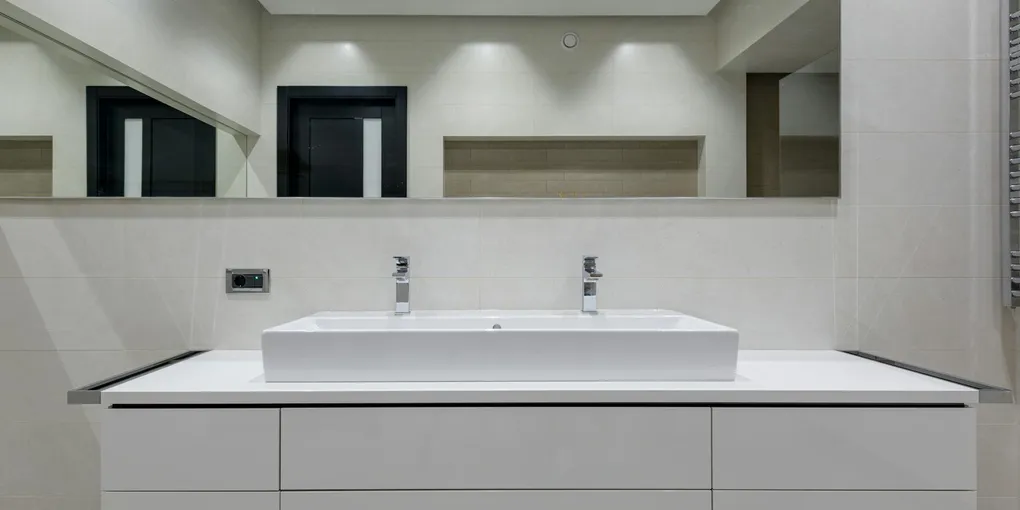
A bathroom vanity costs $150–$800 for the unit in most sizes, plus $200–$600 for professional installation. Total installed cost: $350–$1,400 for a standard single vanity. Double vanities run $600–$3,000+ installed. The biggest cost variable is whether the vanity includes a sink top — vanity + top combos save $100–$400 over buying separately.
Frequently Asked Questions
How much does it cost to install a bathroom vanity?
Professional installation of a bathroom vanity runs $200–$600 for labor alone, depending on complexity. The job includes disconnecting and removing the old vanity, connecting the water supply lines and drain, securing the new cabinet, and reconnecting plumbing. Expect the lower end ($200–$300) for a straightforward replacement and higher end ($400–$600) when the vanity is floating/wall-mounted, the plumbing needs moving, or tile work is involved.
What size bathroom vanity do I need?
Measure your available wall space and subtract at least 15–21 inches from each side for toilet clearance and walkability. Standard single vanity widths: 24", 30", 36", 48". Standard double vanity widths: 60", 72", 84". Minimum clearance: 15 inches from vanity edge to toilet centerline (18 inches preferred). 24" vanities are standard for small bathrooms, 36" for full baths.
Should I buy a vanity with or without a top?
Buy combo (vanity + top included) unless you have a specific countertop preference. Combo units are more economical and the top is pre-designed to match. Buy the top separately if you want a vessel sink, a specific stone slab, or a double-bowl configuration not offered in combo format. Separate cultured marble tops run $80–$200; granite/quartz tops run $200–$600.
What is the difference between a freestanding and floating vanity?
Freestanding vanities sit on legs or a cabinet base that reaches the floor — easiest to install (just connect plumbing) and most like traditional furniture. Floating (wall-mount) vanities are mounted to wall studs with the floor beneath exposed, making the bathroom feel larger and easier to mop. Floating vanities require wall reinforcement (blocking between studs), cost $100–$300 more in labor, and are worth it in smaller bathrooms.
Can I install a bathroom vanity myself?
Yes for basic replacements — a freestanding vanity swap (same footprint, existing plumbing) is achievable in 3–4 hours with basic plumbing skills. You'll disconnect supply lines and drain, remove the old vanity, set the new one in place, reconnect supply lines, and reconnect the drain p-trap. The main skills needed are: tightening supply line fittings without cracking them, and fitting the p-trap to align with the drain stub. Save $200–$400 in labor.
How long does bathroom vanity installation take?
Straightforward replacement: 2–4 hours for a plumber or handyman. Floating/wall-mount: 4–6 hours. Moving plumbing to new location: 4–8 hours, often requires permit. Full vanity swap including removing old tile and patching: full day.
What countertop material is best for a bathroom vanity?
By priority: (1) Quartz — engineered stone, non-porous, doesn't need sealing, resists haircare products and cleaners, $200–$600 for a vanity top. The top choice for durability. (2) Cultured marble — molded resin with a gel coat, inexpensive ($80–$200), comes with integrated sinks, common in builder-grade bathrooms, scratches more easily than quartz but holds up well with normal use. (3) Porcelain slab — very durable, looks like natural stone, $200–$800. (4) Granite — beautiful but porous, requires annual sealing to resist beauty products and toothpaste, $200–$600. (5) Laminate — budget option, $50–$150, susceptible to water damage at seams over time. Avoid marble in bathrooms if you use any acidic products — makeup, perfume, and cleaning sprays etch the surface.
Can I update my bathroom vanity without replacing it entirely?
Yes — partial updates can refresh a vanity for $150–$500 vs $600–$1,400 for a full replacement. Options: (1) New countertop only — replace the top with cultured marble or quartz ($100–$400 for the top, $50–$150 installation), keeps the existing cabinet. (2) Paint the cabinet — chalk paint or cabinet enamel in a satin finish, $30–$80 in materials; works on wood or MDF cabinets that are structurally sound. (3) New hardware — drawer pulls and hinges, $3–$20 per piece, 30-minute job with a screwdriver. (4) New faucet — $50–$200 for the fixture, $100–$200 labor if hiring out, transforms the look without touching the cabinet. A painted cabinet + new countertop + new faucet delivers 80% of the visual impact of a full replacement for 25% of the cost.
A bathroom vanity costs $150–$800 for the unit in most sizes, plus $200–$600 for professional installation. Total installed cost: $350–$1,400 for a standard single vanity.
A vanity replacement is one of the highest-impact bathroom upgrades per dollar spent. New hardware, a fresh countertop, and modern fixtures completely change a bathroom’s feel without a full renovation. Here’s what it actually costs.
Cost by vanity size
| Size | Vanity unit | With top (combo) | Installation labor | Total installed |
|---|---|---|---|---|
| 24” single | $100–$400 | $150–$500 | $200–$400 | $350–$900 |
| 30” single | $150–$500 | $200–$650 | $200–$400 | $400–$1,050 |
| 36” single | $200–$600 | $250–$750 | $200–$450 | $450–$1,200 |
| 48” single | $300–$900 | $400–$1,100 | $250–$500 | $650–$1,600 |
| 60” double | $500–$1,500 | $700–$2,000 | $300–$600 | $1,000–$2,600 |
| 72” double | $700–$2,000 | $900–$2,500 | $350–$700 | $1,250–$3,200 |
What the “installation labor” includes:
- Remove and dispose of old vanity
- Connect supply lines (hot and cold)
- Install drain and p-trap
- Secure cabinet to wall
- Set and caulk top (if separate)
- Basic mirror/light alignment if needed
By style and material
Budget ($100–$400 for the cabinet):
- Ready-to-assemble (RTA) in MDF/particle board with thermofoil finish
- Combo units with pre-attached white cultured marble top
- Brands: Design House, Glacier Bay (Home Depot), Fresca
Mid-range ($400–$900):
- Solid wood or plywood box construction
- Soft-close hinges and drawer slides
- More finish options (navy, gray, white, walnut)
- Brands: Kohler Archer (lower end), Foremost, Wyndham, Allen + Roth
Premium ($900–$3,000+):
- Solid wood, dovetail drawer construction
- Integrated stone tops (quartz, marble)
- Custom sizes and configurations
- Brands: Kohler, James Martin, Strasser, RH (Restoration Hardware)
Tops and sinks: bought separately
If you buy the cabinet-only and add a top separately:
| Top type | Price (installed on vanity) |
|---|---|
| Cultured marble combo (molded sink + top) | $80–$250 |
| Porcelain undermount sink + laminate top | $150–$400 |
| Granite tile top + undermount sink | $300–$600 |
| Quartz slab top + undermount sink | $400–$900 |
| Vessel sink + vanity top (no integrated sink) | $100–$500 |
Additional costs to budget
- Faucet: Not included in most vanities. Budget $50–$300 for a matching faucet. Mid-range bathroom faucet runs $80–$180.
- Drain assembly: Included with most sinks but not all vanity-only packages. $15–$40 for a pop-up drain assembly.
- Supply lines: Replace with new flexible supply lines ($8–$20 each). Old ones should not be reused.
- Mirror / medicine cabinet: Budget $50–$400. Match the finish to the faucet hardware.
- Light bar: $40–$250. Replace if the existing one doesn’t match.
- Tile or flooring changes: If the old vanity covered a different floor material, patching may be needed.
Floating vanity: what extra costs are involved
Wall-mount vanities require:
- Wall blocking between studs behind the mounting location — installed during framing or retrofitted by opening drywall. $100–$300 in labor.
- Strong wall mount bracket — included with quality floating vanities. Verify the bracket is rated for the vanity weight plus a person sitting on the counter.
- Exposed p-trap styling — a chrome or brushed nickel decorative p-trap ($20–$60) looks better than white plastic when the plumbing is visible under a floating cabinet.
DIY installation steps (freestanding, replacing existing)
- Shut off supply valves under the sink (turn clockwise). Open faucet to drain pressure.
- Disconnect supply lines at the supply valves and at the faucet shanks.
- Remove the p-trap and the drain assembly.
- Disconnect any mounting screws attaching the vanity top to the wall, and any cabinet screws in the wall.
- Remove old cabinet.
- Set new cabinet in position. Check level — shim the cabinet base if floor isn’t flat.
- Secure cabinet to wall studs with screws through the back of the cabinet.
- Set and caulk the top (if separate from cabinet).
- Install faucet before setting the top if bottom access is limited.
- Reconnect p-trap and drain.
- Connect supply lines — hand-tight plus a 1/4 turn. Don’t overtighten braided lines.
- Turn water on slowly, check all connections under the cabinet.
- Caulk the top edge where cabinet meets wall.
Tools needed: Adjustable wrench, pliers, level, drill/driver, caulk gun.
Regional Installation Cost Variations
Labor rates for vanity installation vary by metro. These cover labor only (plumber or handyman, standard freestanding replacement):
| Region | Standard Vanity Swap (labor) | Floating Vanity (labor) | Plumbing Relocation (add-on) |
|---|---|---|---|
| Northeast (NY, MA, NJ) | $300–$600 | $450–$800 | $400–$900 |
| Mid-Atlantic (DC, MD, VA) | $275–$550 | $400–$750 | $350–$800 |
| Southeast (FL, GA, TX) | $175–$375 | $275–$550 | $250–$600 |
| Midwest | $200–$425 | $300–$600 | $275–$650 |
| Pacific (CA, WA, OR) | $300–$600 | $450–$800 | $400–$900 |
Handymen handle freestanding vanity swaps at 30–40% below plumber rates in all markets. Use a licensed plumber when the drain or supply location needs to move.
Bathroom Vanity Brand Comparison
| Brand | Price Range | Construction | Best For |
|---|---|---|---|
| Kohler | $500–$3,000 | Solid wood or plywood | Long-term durability; widest sink integration options |
| James Martin | $700–$4,000 | Solid wood, dovetail drawers | Premium quality at mid-price vs. custom cabinetry |
| Wyndham Collection | $400–$2,000 | Plywood box, soft-close hardware | Best value in mid-tier; floating mount options at lower price |
| Fresca | $200–$1,200 | MDF with thermofoil | Budget-friendly modern designs; good for small bathrooms |
| IKEA GODMORGON | $200–$800 | Particleboard, melamine | Best flatpack value; 10-year warranty; huge accessory ecosystem |
| Home Decorators Collection (HD) | $150–$900 | Mixed materials | Widely available; acceptable quality for rental or flip |
| Strasser | $900–$5,000+ | Solid wood, premium joinery | High-end custom-level finish in a stock format |
IKEA GODMORGON is the standout value-tier choice — plywood construction (not particleboard) in several key components, soft-close hinges, wall-mounted or freestanding options, and a 10-year warranty that most budget brands don’t match. The trade-off is assembly time and limited sink compatibility beyond IKEA’s own sinks.
Wyndham Collection consistently earns high marks for plywood construction (vs. particle board in comparably priced alternatives) and pre-assembled cabinets that require only plumbing connection on-site.
Questions to Ask Your Contractor or Plumber
- Does your quote include supply line replacement and drain reconnection? — new braided supply lines ($8–$20 each) should always be replaced; confirm the drain p-trap replacement is included or priced separately
- Will the existing plumbing locations align with the new vanity’s supply and drain holes? — different vanity widths often mean the drain stub doesn’t line up; ask if there’s an offset needed and what that costs
- Is wall blocking needed for a floating vanity? — wall-mounted vanities require reinforcement between studs; if the wall isn’t already blocked, that’s an additional cost of $100–$300
- Is tile or floor repair included if the old vanity footprint differs? — a wider or narrower vanity may expose unfinished floor or wall; confirm whether patching is in scope
- Will you install the faucet and drain before setting the top? — setting a faucet after the countertop is in place is much harder; a good installer handles this in the right sequence
Related guides
- Bathroom Remodel Cost Breakdown — full bathroom renovation budget
- How to Install a Bathroom Vanity — step-by-step installation walkthrough
- Handyman Cost — vanity swaps are a common handyman job; know fair rates before hiring
- How to Replace a Kitchen Faucet — same supply line and drain skills
- Plumber Cost Guide — when to hire and what to expect
- Tile Flooring Installation Cost — if you’re doing the floor while you’re at it
- How to Fix a Floor Tile That Is Loose — repair any loose bathroom tiles before the new vanity goes in
- How to Fix a Loose Kitchen Faucet Handle — fix a wobbly faucet handle while doing bathroom upgrades
- How to Fix a Bathroom Sconce Light — repair wall lights around the mirror while the wall is accessible for vanity work
- Shower Remodel Cost — full shower replacement pricing if the vanity swap is part of a bigger bathroom overhaul; $3,500–$15,000
- Faucet Installation Cost — replace the faucet while you have the vanity plumbing open; $150–$400
- Bathtub Refinishing Cost — refresh the tub while upgrading the vanity; $300–$650
- Cabinet Refacing Cost — reface vanity cabinets instead of replacing the whole vanity; $1,500–$5,000
- Kitchen Countertop Replacement Cost — replace the kitchen countertop while updating the bathroom vanity; $2,000–$6,500
- Shut off supply valves and disconnect plumbing
Turn both supply valves clockwise until closed. Open the faucet to drain pressure. Disconnect the supply lines at the shutoff valve and at the faucet shanks underneath the vanity. Disconnect the p-trap slip joints and remove it. Place a bucket under connections before loosening.
- Remove the old vanity
Open the cabinet and locate any screws fastening the vanity to the wall studs or blocking. Remove them. Score the caulk joint at the backsplash and side walls with a utility knife. Slide the old vanity out — have a helper for heavy tops.
- Set and level the new vanity
Slide the new cabinet into position. Use a 4-foot level to check front-to-back and side-to-side. Shim the base on the low side until level. Mark the wall stud locations through the cabinet back before drilling.
- Reconnect the plumbing
Set the new sink and faucet per manufacturer instructions. Connect the p-trap to align with the drain stub. Reconnect the supply lines hand-tight then snug with a wrench — never overtighten braided stainless lines. Turn supply valves on slowly and check every connection for drips.
- Secure to wall and caulk
Drive screws through the cabinet back into wall studs. Apply a bead of silicone caulk where the cabinet sides and back meet the wall. Leave the front bottom unsealed to allow any future leak to drain visibly rather than inside the cabinet.
Free: 10-Point Home Maintenance Checklist
Prevent costly repairs with this seasonal checklist. Save hundreds every year by catching problems early.
Your checklist is ready!
Open Checklist →Something went wrong. View the checklist here.