How to Install a Bathroom Vanity: A Full DIY Walkthrough
Step-by-step guide to installing a bathroom vanity yourself — tools, prep, plumbing rough-in alignment, leveling, sealing, and the mistakes that cause leaks six months later.
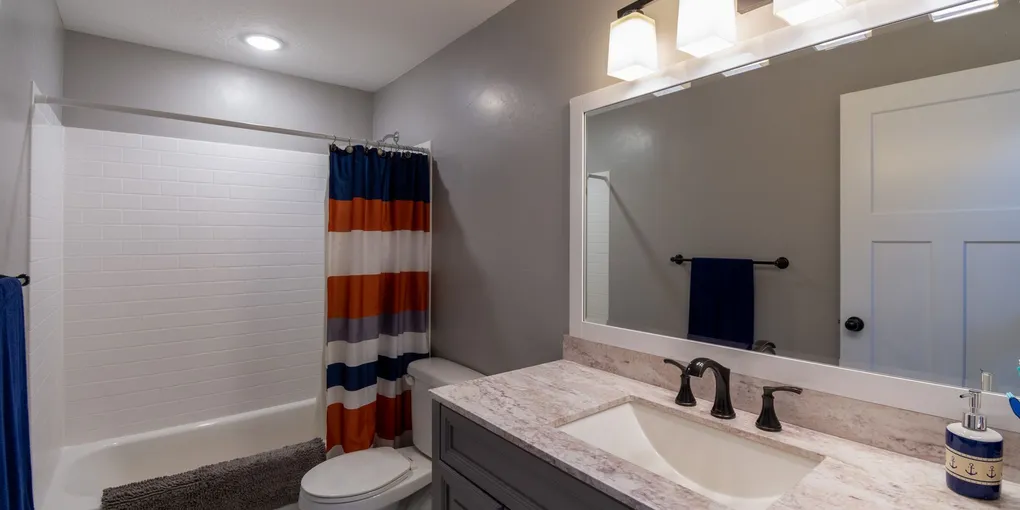
Installing a bathroom vanity takes 3–6 hours and costs $20–$60 in materials (shims, caulk, supply lines, P-trap). Start by shutting off water and removing the old vanity. Check wall and floor for level, scribe the new vanity to fit, anchor to studs with two 3-inch screws, install the faucet and drain before setting the top, connect supply lines and drain, then caulk the backsplash.
Frequently Asked Questions
Do I need a plumber to install a bathroom vanity?
Not if the existing plumbing rough-in is in a standard location and you're replacing like-for-like. A plumber is worth calling only if you're moving the sink location, converting from two-handle to single-handle (different supply line geometry), or if your shutoff valves are corroded and need replacement. Most like-for-like vanity swaps are straightforward DIY.
What tools do I need to install a bathroom vanity?
A level (at least 4 feet), a cordless drill, a stud finder, an adjustable wrench, a basin wrench for faucet nuts, a hole saw (if the vanity has a solid back), a utility knife, a caulk gun, and shims. A pair of channel-lock pliers is also useful for tightening P-trap connections.
How do I hide the plumbing gap behind a floating vanity?
Floating vanities expose the plumbing behind them. Options: use a decorative escutcheon trim kit around the supply stubs, wrap the P-trap in a chrome trap cover, or swap the stock P-trap for a polished brass, matte black, or brushed nickel finish to match the faucet. High-end floating vanities often come with a skirt or false back to hide the gap entirely.
Should I caulk around the bathroom vanity?
Yes — caulk where the vanity top meets the wall (the backsplash joint) and where the vanity base meets the floor if the gap is 1/8 inch or less. Use a 100% silicone or hybrid silicone/acrylic caulk rated for bathrooms. Do not caulk the wall side of a removable top if the manufacturer's instructions say to use the supplied clips only.
Why won't my new vanity sit flush against the wall?
Walls are almost never perfectly flat. Old plaster, taped drywall joints, and baseboard reveals all create gaps. The fix is to scribe the vanity back to match the wall contour, then anchor it to studs through the back rail. A 1/4-inch gap at the top is normal and will be covered by caulk or a backsplash.
Installing a bathroom vanity takes 3–6 hours and costs $20–$60 in materials (shims, caulk, supply lines, P-trap). Start by shutting off water and removing the old vanity.
A bathroom vanity is one of the single best-return DIY upgrades in any house — under $30 in materials, a few hours of work, and a brand-new bathroom feel. It’s also one of the projects that trips up more first-time DIYers than any other, because it combines plumbing, carpentry, and finish work in the same confined space. This guide walks through the full install, the mistakes to avoid, and the judgment calls that separate a tight, leak-free job from a call-a-plumber-in-six-months job.
Before You Start: What to Buy
A quality 30- or 36-inch vanity runs $200–$800 from big-box stores and $800–$3,000 for designer brands. What actually matters:
- Solid wood or plywood box — particle board bottoms warp within a year in a damp bathroom.
- Soft-close drawers and doors — a $50–$100 upgrade that dramatically improves the feel.
- Pre-attached top vs. separate top — pre-attached is easier to install; separate tops let you mix and match.
- Center vs. offset drain — center drain is standard; offset gives more drawer space but requires a matching top.
For tools, you’ll want a cordless drill capable of driving 3-inch screws into studs. Our best cordless drills for homeowners roundup covers the best budget and prosumer picks.
Measuring Twice — The One That Matters
Before you buy anything, measure:
- Width of the existing vanity (wall to wall, or vanity to fixture on the open side)
- Depth of the existing vanity (wall to front edge)
- Height — standard is 32 inches; “comfort height” is 36 inches
- Plumbing rough-in location — measure from the side wall to the center of the drain and each supply stub
- Door/drawer clearance — toilets, bathtubs, and baseboards that would block a drawer from fully opening
Common new-vanity widths: 24, 30, 36, 48, 60, 72 inches. Heights: 32, 34, 36. Depths: 18, 20, 21, 22, 24.
If the bathroom is tight, a shallower 18-inch-deep vanity gives back precious floor space. Small-bathroom considerations are covered in our small bathroom remodel ideas guide.
The Tools List
- 4-foot level
- Stud finder
- Cordless drill and driver bits — our best cordless drills for homeowners picks
- 3-inch #8 or #10 wood screws (2 minimum, 4 for vanities 48 inches or wider)
- Tape measure
- Pencil
- Utility knife
- Basin wrench (for faucet mounting nuts)
- Adjustable wrench (for supply lines and P-trap)
- Channel-lock pliers
- Hole saw or jigsaw (if cutting the back for plumbing)
- Caulk gun
- 100% silicone caulk (clear or color-matched)
- Hardwood shims (not cedar — cedar compresses over time)
- Bucket and rags
Old Vanity Removal: Where People Break Things
The mistake everyone makes on demo: forcing the old top off without scoring the caulk first. A cured silicone bead holds harder than you’d think, and yanking a stone top off the wall takes the drywall paper with it.
Always:
- Shut off water first. Both valves. Open the faucet to confirm zero pressure.
- Disconnect supply lines with a wrench, holding the shutoff valve steady with another wrench so you don’t twist the valve off.
- Place a bucket under the P-trap before loosening the slip nuts — there’s always a cup of water in there.
- Score every caulk seam — top to wall, top to base, base to floor, base to wall.
- Remove the top before the base. Tops weigh 40–80 pounds for laminate, 80–150 for stone.
If the supply line shutoff valves are corroded (green buildup, crusty handles), stop and replace them before going further. A failed shutoff during installation turns a 4-hour DIY into a flooded bathroom.
Fitting the New Vanity: Scribe, Don’t Force
No wall is perfectly flat. No floor is perfectly level. Fighting that reality causes most first-time failures.
The fit sequence:
- Dry-fit the vanity in place, no shims, no caulk, no screws.
- Note where it touches the wall and where it doesn’t.
- If the gap between the back of the vanity and the wall exceeds 1/4 inch on one side, scribe the back to match the wall. Hold the vanity plumb and level, then use a compass or pencil-scribe tool to trace the wall contour onto the back panel. Trim with a jigsaw.
- Check the floor with a level. If the floor tilts more than 1/4 inch across the vanity width, use shims under the toe kick to bring the top edge level.
- Confirm the vanity sits plumb (vertical), level (horizontal), and square before anchoring.
The goal is that the top is level front-to-back and side-to-side so water doesn’t pool on the far end of the counter.
The Plumbing Hole Problem
Most vanities ship with either:
- An open back (easy — just slide the vanity over the plumbing stubs)
- A solid back (requires cutting a hole)
If you have a solid-back vanity, measure the drain and supply stub locations on the wall, transfer those measurements to the back panel, then cut holes with a hole saw (1.5-inch hole saw for supply stubs, 2.5-inch for the drain). Cut holes 1 inch larger than the stub to give you wiggle room.
Dry-fit the vanity against the wall. If the stubs don’t line up perfectly through the holes, enlarge the holes with a jigsaw rather than trying to force the vanity.
Faucet First, Top Second
This is the number-one time-saver nobody tells new DIYers: install the faucet and drain assembly on the top before setting the top on the base.
Working on a top laid flat on sawhorses (or on the floor on a moving blanket) is dramatically easier than lying on your back under a vanity trying to reach faucet mounting nuts. Basin wrenches exist for a reason — they’re still a pain.
The sequence:
- Faucet body through the top’s faucet hole
- Washer, then mounting nut, tightened with a basin wrench
- Supply line tails threaded onto the faucet body (hand-tight is enough at this stage)
- Pop-up drain body through the drain hole, sealed with plumber’s putty or the supplied gasket
- Lift or slide the top onto the base
If the top is separate from the base, most manufacturers provide mounting clips or recommend a bead of silicone adhesive along the top of the base’s sides and back. Press the top down firmly, centered, and wipe any squeeze-out with a rag.
Connecting Supply Lines Without Destroying Them
Stainless braided supply lines from the vanity faucet to the shutoff valves are the current standard. Two mistakes cause most slow leaks:
- Over-tightening — crushes the rubber gasket and causes it to fail in 6–18 months. Hand-tight, then a quarter turn with a wrench.
- Cross-threading — starting the coupling at an angle so it chews up the threads. Always start threading by hand and ensure it spins smoothly for at least two full turns before reaching for a wrench.
Turn water on one valve at a time, slowly, watching for drips. A tiny weep at the connection point means one more eighth-turn; a steady drip means back off, re-seat the washer, and try again.
The P-Trap Geometry Everyone Messes Up
The P-trap has to:
- Connect to the sink’s tailpiece at the top
- Connect to the wall drain stub at the back
- Have a slight downward slope from the tailpiece to the wall (1/4 inch per foot)
- Not be under tension (parts shouldn’t be pulled to meet)
If the trap won’t meet the wall stub naturally, you have three options:
- Extension kit — adds length to the trap arm
- Flexible PVC trap — ugly but fast
- Re-plumb the wall stub — only if you’re comfortable working in the wall
Hand-tighten slip nuts, then a quarter turn with channel-lock pliers. Over-tightening crushes the washers and causes slow leaks.
Leak Testing: Do It Twice
First test: turn water on, watch supply lines for 60 seconds, then open the faucet. Any visible drip — fix it now.
Second test (critical): plug the sink drain, fill the basin to within 1 inch of the overflow, then pull the plug. A full drain of water forces the P-trap under pressure and will reveal any slow leak that a running-faucet test misses.
After both tests, dry every joint with a paper towel, wait 5 minutes, then check again. A clean, dry towel after 5 minutes is a passed test.
Caulk and Finish
Final steps:
- Run a bead of 100% silicone caulk along the backsplash where it meets the wall. Tool smooth with a wet fingertip.
- Fill any toe-kick gap to the floor with caulk (matching color or clear).
- Wipe down the entire vanity with a damp cloth.
- Do not use the sink for 24 hours — the caulk needs to cure before water exposure.
Common Mistakes and How to Avoid Them
- Skipping the dry fit — leads to forcing the vanity into place and cracking the back.
- Over-tightening supply lines — causes slow leaks within a year.
- Caulking before leak-testing — a leak hidden behind fresh caulk is the worst kind of problem.
- Anchoring to drywall instead of studs — the vanity will wobble and eventually fail.
- Buying a vanity 1 inch too wide — always measure the narrowest point of the opening; baseboards and door casings eat space.
- Forgetting the drain assembly — many vanities ship without a pop-up drain. Check before install day.
When to Call a Pro
- Moving the sink location (requires new supply and drain rough-ins)
- Corroded shutoff valves that won’t close
- Mold or soft drywall behind the old vanity
- A stone top over 36 inches (two-person lift, easy to crack)
- Code-required tie-ins to new venting
Otherwise, this is a weekend DIY that saves you $200–$500 in labor and gives the satisfaction of a fully-finished bathroom.
Related Reading
- How to replace a kitchen faucet
- How to caulk a bathtub
- Small bathroom remodel ideas
- How to install a bathroom exhaust fan
- How to Fix a Broken Bathroom Vanity Light — repair the lights around the mirror while the wall is open for vanity work
- Best paint for bathroom walls
- Best cordless drills for homeowners
- How to Fix a Broken Bathroom Towel Ring — tighten or replace a loose towel ring mounting bracket while the bathroom is open
The Bottom Line
A bathroom vanity install is one of the most rewarding weekend DIY projects — low material cost, high visible impact, and a great introduction to basic plumbing and carpentry. The trick is all in the prep: measure carefully, dry-fit before committing, scribe to fit instead of forcing, and leak-test twice before caulking. Follow those four rules and you’ll have a result that looks professional and holds up for the life of the vanity.
- Shut off water and disconnect the old vanity
Close both hot and cold shutoff valves under the sink. Open the faucet to relieve pressure. Disconnect the supply lines with a wrench, place a bucket under the P-trap, loosen the slip nuts, and pull the trap off. Disconnect the drain tailpiece from the sink.
- Remove the old vanity top
Run a utility knife around the caulk bead where the top meets the wall. Check under the top for mounting clips or brackets — most tops are either clipped, glued, or both. Lift the top straight up; for glued tops, pry gently with a flat pry bar. Have a helper for anything over 24 inches wide.
- Remove the old vanity base
Unscrew the base from the wall (typically two screws through a back rail into wall studs). Score the caulk or paint seam along the floor, then pull the base straight out. If the base was shimmed, remove the shims and note where they were.
- Inspect the wall and floor before installing the new vanity
Check the wall for water damage, soft drywall, or mold — address any of it before the new vanity goes in. Vacuum the area, then test the floor for level with a 4-foot level and the wall for plumb. Mark stud locations on the wall where the new vanity's back rail will sit.
- Dry-fit the new vanity and scribe if needed
Slide the vanity into place without attaching it. Check for gaps against the wall and floor. If the gap exceeds 1/4 inch on one side, scribe the back panel to match the wall contour: hold the vanity plumb, run a pencil-and-scribe-tool along the wall, then trim with a jigsaw. Test-fit again.
- Level the vanity with shims
With the vanity in position, check level front-to-back and side-to-side using a 4-foot level on top of the base. Shim under the toe kick wherever needed. Shims go in from the front, and you trim the excess with a utility knife after anchoring.
- Anchor the vanity to wall studs
Drive two 3-inch #8 or #10 wood screws through the back rail into wall studs. Pre-drill the back rail to prevent splitting. Do not over-tighten — you'll bow the back rail and pull the vanity out of level. Check level one more time.
- Install the faucet before setting the top
Faucets are far easier to install with the top on a sawhorse than in place. Install the faucet, pop-up drain assembly, and tailpiece on the top before lifting it onto the base. Hand-tighten supply line connections to the faucet now, but leave them loose until the top is set.
- Set the vanity top
Apply a bead of clear silicone adhesive to the top of the vanity base (or use the supplied mounting clips if the top is a separate piece). Lower the top into place, centered on the base. Press down firmly. Wipe any squeezed-out silicone with a damp rag before it cures.
- Connect supply lines and P-trap
Hand-thread the supply lines onto the shutoff valves (hot on left, cold on right). Snug with a wrench — do not over-torque, and watch for the rubber gasket seating properly. Assemble the P-trap: tailpiece from the drain connects to the trap, trap connects to the wall drain stub. Tighten slip nuts hand-tight plus a quarter turn.
- Turn on water and test for leaks
Slowly open the shutoff valves, one at a time. Watch supply line connections for drips. Open the faucet and let it run for 30 seconds, then fill the sink and let it drain fully while you watch every P-trap joint. Run the faucet again while feeling under each connection with a dry paper towel — even a tiny leak leaves a wet mark.
- Caulk the backsplash seam
With the top fully installed and no leaks, run a bead of 100% silicone caulk along the seam where the backsplash meets the wall. Tool the bead smooth with a wet fingertip or a caulk-tooling tool. Let cure 24 hours before getting the area wet.
Free: 10-Point Home Maintenance Checklist
Prevent costly repairs with this seasonal checklist. Save hundreds every year by catching problems early.
Your checklist is ready!
Open Checklist →Something went wrong. View the checklist here.