How Much Does a Plumber Cost? 2026 Rates: $75–$175/hr + Flat-Rate Jobs
Plumbers charge $75–$175/hr in 2026. Service call: $75–$200. Unclog drain: $150–$350. Fix leaky faucet: $150–$300. Replace toilet: $200–$500. Water heater: $1,000–$3,500. What to DIY vs. hire out + how to get fair quotes.
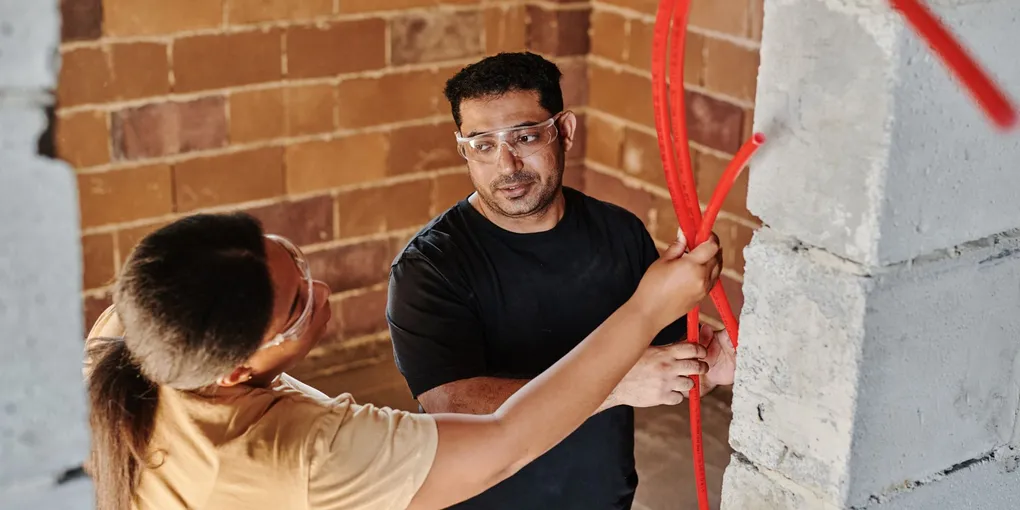
Plumbers cost $75-$175 per hour in 2026, with a $75-$200 service/trip fee. Flat-rate jobs: unclog a drain $150-$350, fix a leaky faucet $150-$300, replace a toilet $200-$500, install a new faucet $200-$400, install a garbage disposal $225-$400, replace a water heater $1,000-$3,500, main sewer line snake $300-$600, hydro-jet main line $500-$900, camera inspection $250-$500. Emergency/after-hours adds 50-150% to rates. DIY is safe for most fixture-level work (faucets, toilets, disposals, supply line swaps) — anything inside walls, involving gas, or the main line legally requires a licensed plumber in most jurisdictions. Get 3 quotes for jobs over $500.
Frequently Asked Questions
How much does a plumber cost per hour?
Licensed plumbers charge $75-$175 per hour in 2026 for standard service. Master plumbers (10+ years) run $100-$200/hour. Apprentices (supervised) run $40-$70/hour. Urban coasts (NYC, SF, LA, Boston, DC) run 30-50% higher than Midwest/Southeast averages. Emergency/after-hours surcharges add 50-150% — a $125/hour plumber becomes $200-$300/hour after hours. Most plumbers charge a service call/trip fee of $75-$200 that may or may not be applied to the job cost.
When do I need a licensed plumber vs DIY?
DIY is generally safe and legal for: fixture-level work (faucets, toilets, garbage disposals, shower heads, shut-off valves at fixtures), replacing flexible supply lines, installing a water softener, unclogging drains with a drum auger, caulking. Licensed plumber required for: anything inside walls (new pipe runs), gas line work, water heater replacement (permit-requiring in most states), main line repair, sewer line work, septic work, backflow preventer work, any work requiring a permit, and most commercial or multi-family work.
How much does it cost to unclog a drain?
Single-drain snake service (sink, tub, toilet): $150-$350. Main sewer line snake: $300-$600. Hydro-jetting (single drain): $300-$500. Hydro-jetting (main line): $500-$900. Camera inspection: $250-$500. Emergency after-hours drain clearing adds 50-100% surcharge. Most clogs clear with basic snake service on the first pass. Recurring clogs suggest deeper issues — see our drain cleaning cost guide for full pricing + DIY vs pro decision.
How much does it cost to replace a water heater?
Standard 40-50 gallon gas tank heater: $1,200-$2,500 installed. Electric tank: $1,000-$2,200 installed. Tankless gas: $2,500-$6,000 installed. Heat pump water heater: $2,500-$5,000 installed. Labor alone runs $400-$900 for a straightforward swap, plus $100-$300 permit in most jurisdictions. See our water heater replacement cost guide for full pricing breakdown by fuel type and size.
What causes the highest plumber bills?
In order: (1) main sewer line replacement — $3,000-$15,000; (2) whole-home repipe — $4,000-$15,000+; (3) tankless water heater install requiring gas line upsize — $2,500-$6,000; (4) slab leak repair (pipe under concrete foundation) — $1,500-$6,000; (5) emergency burst pipe + water damage — $500-$5,000+. These are the big-ticket items. Everything else (faucets, toilets, drains) is typically $150-$500 territory.
How do I avoid getting overcharged by a plumber?
Always get 3 quotes for jobs over $500. Ask for itemized pricing (labor hours × rate, materials, permits, disposal). Be home during the work to supervise and ask questions. Refuse to sign any contract on the spot without reading. Red flags: pressure tactics, won't itemize, recommends pipe replacement without camera inspection, quotes over $500 for a simple drain clog, refuses to pull permits when work clearly requires them.
How much does a plumber charge for common small jobs in 2026?
Common small plumbing jobs in 2026 with typical flat-rate or hour-plus-material pricing: fix a dripping faucet $150-$300 (1-2 hours), replace a toilet flapper $75-$150 (30-45 minutes, often minimum-charge job), replace a toilet fill valve $100-$200, fix a running toilet $100-$250, replace a shut-off valve under a sink $150-$300, clear a slow-draining sink $150-$250, replace a bathroom faucet $200-$400, replace a kitchen faucet $250-$450, install a garbage disposal $225-$400. These prices include the service call fee. If a plumber is already on-site for a larger job, adding a small task typically costs just $50-$100 in extra labor.
How much do plumbers charge by city in 2026?
Plumber hourly rates vary significantly by metro area in 2026. High-cost cities: San Francisco $150-$250/hour, New York City $150-$250/hour, Los Angeles $125-$200/hour, Boston $125-$200/hour, Seattle $125-$200/hour, Washington DC $125-$200/hour. Mid-range cities: Chicago $100-$175/hour, Denver $100-$160/hour, Phoenix $90-$150/hour, Dallas $90-$150/hour, Atlanta $85-$145/hour. Lower-cost markets: rural Midwest and Southeast $75-$125/hour. Rates for the same job in San Francisco can easily be 2-2.5× the rate in rural Arkansas or Mississippi.
Plumbers cost $50–$150 per hour in 2026, plus a service/dispatch fee of $50–$150. Most common flat-rate jobs: unclog a drain $100–$225, replace a toilet $200–$400, fix a leaking pipe $150–$350, install a water heater $800–$1,500. Emergency or weekend rates run 1.5–2× standard. Get 2–3 quotes for any job over $500.
Plumbing is the area where small problems become expensive water damage fastest. A slow leak behind a wall can destroy $10,000 of flooring and drywall before you notice. A legitimate licensed plumber is worth paying for serious work, but overpaying is easy if you don’t know what’s fair. This guide covers 2026 hourly rates, common-job pricing, DIY-vs-pro decisions, and how to avoid the classic overcharge patterns.
2026 Plumber Pricing at a Glance
Hourly Rates
| Region | Standard | Master Plumber | Emergency/After-Hours |
|---|---|---|---|
| Urban coasts (NYC, SF, LA, Boston) | $120-$175/hr | $150-$225/hr | +75-150% |
| Midwest, Southeast, Texas | $80-$125/hr | $100-$160/hr | +50-100% |
| Rural | $65-$100/hr | $85-$140/hr | +50-100% |
| National average | $95-$135/hr | $115-$175/hr | — |
Service Call / Trip Fee
- Standard visit: $75-$200 (often applied to job cost if hired)
- Emergency/after-hours: $200-$450
- Same-day: +$50-$100
- Rural/far location: +$25-$100
Common Job Flat-Rate Pricing
| Job | Typical Cost |
|---|---|
| Unclog single drain (sink/tub) | $150-$300 |
| Unclog toilet (accessible) | $150-$300 |
| Unclog main sewer line | $300-$600 |
| Hydro-jet drain | $400-$900 |
| Camera inspection | $250-$500 |
| Fix leaky faucet (repair) | $150-$300 |
| Replace faucet (new fixture) | $200-$400 |
| Fix running toilet (repair) | $100-$250 |
| Replace toilet (existing plumbing) | $250-$500 |
| Install new toilet (new rough-in) | $400-$900 |
| Install garbage disposal | $225-$400 |
| Replace garbage disposal | $200-$350 |
| Install new sink | $350-$700 |
| Install new bathroom vanity | $400-$800 |
| Install water softener | $800-$2,500 |
| Replace shut-off valve | $150-$300 |
| Repair slab leak | $1,500-$6,000 |
| Replace water heater (40-50 gal tank) | $1,200-$2,500 |
| Install tankless water heater | $2,500-$6,000 |
| Install new water line | $500-$2,000 |
| Repair burst pipe | $300-$800 |
| Main line replacement | $3,000-$15,000 |
| Whole-home repipe | $4,000-$15,000 |
| Backflow preventer install | $300-$800 |
| Gas line work | $250-$1,500 |
When Licensed Plumber Required vs DIY
DIY Is Safe For
- Replacing faucets (kitchen, bathroom) — see how to install a kitchen sink
- Replacing toilet (existing plumbing) — see how to install a toilet
- Replacing garbage disposal — see how to replace a garbage disposal
- Replacing shower heads — see how to replace a shower head
- Replacing supply lines — $5 parts, 10-minute job
- Fixing running toilet — $10-$30 parts kit, 30-minute job (guide)
- Unclogging drains with drum auger — see how to unclog a drain without chemicals
- Installing a water softener — see how to install a water softener
- Replacing fixture-level shutoff valves — careful but DIY-friendly
- Fixing a leaky compression faucet — new washer/O-ring kit
Licensed Plumber Required
- Anything inside walls — new pipe runs, repairs to hidden pipes
- Main water line — between street and house
- Sewer line / main drain
- Gas line (always — life safety)
- Water heater replacement in most states (permit + gas connection)
- Slab leaks — requires concrete cutting
- Septic system work
- Backflow preventer install and testing
- Permit-required work (most work behind walls)
- Commercial/multi-family work
- Whole-home repipe
Emergency vs Non-Emergency
Call Immediately
- Active water flooding from burst pipe
- Sewage backup into house
- Complete loss of water to entire house
- Gas smell near any plumbing
- Water heater leaking into finished space
- Sewage smell combined with drain backing up (main line issue)
Wait for Business Hours
- Slow drain
- Dripping faucet
- Running toilet
- Partial water loss (one fixture only)
- Low water pressure
- Drain making gurgling noises but draining
- Cosmetic issues (rust stains, mineral scale)
Emergency pricing adds 50-150% to normal rates. A $125/hour plumber becomes $200-$300/hour after hours. Before paying emergency rates, verify the issue is truly urgent.
Getting Fair Pricing
Step 1: Three Quotes for Jobs Over $500
Provide clear scope with photos. Quotes should itemize:
- Labor hours and rate
- Materials (or note who supplies)
- Permit + inspection fees
- Trip/service call charge
- Minimum charge policy
- Warranty terms
Quotes agreeing within 20% indicate accurate scope. Wild outliers are red flags.
Step 2: Verify License and Insurance
Every state has a plumber licensing board. Check online:
- License status (active, in good standing)
- Any complaints
- Specialty licenses (gas, backflow, etc.) for specialized work
Ask for a COI showing general liability + workers comp.
Step 3: Clarify Scope Before Work
Written agreement on:
- Exact tasks
- Total estimate
- What happens if surprise issues found (call for approval)
- Timeline
- Payment structure
Text thread or email counts as written.
Step 4: Permit Transparency
Ask whether work requires a permit. Who pulls it. Cost. Inspection timeline.
Skipping permits when required = future sale complication + insurance denial if something fails.
Step 5: Inspect Before Paying
- Run water through every fixture worked on
- Feel every joint with a paper towel for slow leaks
- Test disposal, dishwasher, appliances
- Verify valves turn smoothly
- Review written invoice for accuracy
Common Overcharges to Avoid
“You need pipe replacement” without camera inspection proof. Demand video evidence of damage before authorizing anything structural.
“We found roots” — any root issue requires hydro-jetting or pipe replacement. A $300 snake that “reveals” roots requiring $3,000 of additional work is often bait-and-switch.
Whole-home repipe recommendations from a leak diagnosis — most leaks are local. Whole-home repipes are justified only for very old pipes (galvanized, 50+ years) or documented multiple-point failures.
“Emergency” pricing on non-emergencies — slow drain isn’t emergency. If it can wait 24-48 hours, it’s not emergency pricing territory.
Cash-only demands — reputable plumbers accept credit cards. Cash-only = no dispute protection + often unlicensed.
DIY Tools and Parts Worth Owning
Skip the plumber entirely for routine work with these tools:
- Drum auger — $25-$60 — solves 80% of drain clogs
- Plunger set — $20 — toilet + sink plungers
- Channel-lock pliers — $20-$30 — P-trap, supply lines
- Adjustable wrench — $15-$30
- Teflon tape — $3 per roll — always on hand
- Plumber’s putty — $6 — for drain flanges
- Basin wrench — $15-$25 — reach faucet nuts
- Pipe cutter — $15-$40 — for copper work
- Enzyme drain cleaner — $30 — monthly preventive
One-time investment of $100-$200 in tools pays back after 1-3 avoided plumber visits.
Finding a Good Plumber
Sources:
- State licensing board directory
- Google reviews (4.5+ stars, 20+ reviews)
- Angi, HomeAdvisor (verify reviews)
- Local Facebook/Nextdoor groups
- Realtor preferred-vendor lists
- Neighbor referrals
Avoid:
- Door-to-door solicitation
- Groupon-style discounts on major work
- Unlicensed listings
- Electricians or handymen doing pipe work inside walls
Regional Plumber Cost Variations
Plumbing labor rates vary significantly across US markets:
| Region | Service Call (first hour) | Drain Cleaning | Water Heater Install | Pipe Replacement (per foot) |
|---|---|---|---|---|
| Northeast (NY, MA, NJ) | $150–$300 | $200–$400 | $1,200–$2,200 | $75–$150 |
| Mid-Atlantic (DC, MD, VA) | $125–$275 | $180–$380 | $1,100–$2,000 | $65–$130 |
| Southeast (FL, GA, TX) | $85–$200 | $125–$280 | $850–$1,600 | $45–$100 |
| Midwest | $90–$220 | $135–$300 | $900–$1,700 | $50–$110 |
| Pacific (CA, WA, OR) | $140–$280 | $190–$380 | $1,150–$2,100 | $70–$140 |
Rates reflect licensed master or journeyman plumbers. Emergency (after-hours/weekend) service adds 50–100% to base rates in all regions. States with strong union density (Northeast, Pacific) generally see higher hourly rates.
Plumbing Contractor and Service Comparison
| Contractor Type | Hourly Rate | Service Approach | Best For | Watch For |
|---|---|---|---|---|
| Independent licensed plumber | $80–$180/hr | Full-service repair and installation | Best value for routine work; personal service | Verify state license and insurance before booking |
| Roto-Rooter | $100–$250/hr flat-rate | Drain clearing, emergency plumbing | 24/7 availability; national brand | Higher pricing than local; upsell-heavy on drain jobs |
| Mr. Rooter (franchise) | $100–$225/hr | Flat-rate pricing; full service | Transparent pricing; franchise consistency | Franchise markup; quality varies by local operator |
| Benjamin Franklin Plumbing | $110–$250/hr | ”Punctual Plumber” franchise | Appointment guarantees; full service | Premium pricing for punctuality guarantee |
| Home Depot/Lowe’s plumbing install | Varies | Appliance installation only (water heaters, etc.) | Water heater and fixture installs | Limited scope; subcontracted; not for repair or pipe work |
| HomeAdvisor/Angi pro network | Market rate | Connects you with local licensed plumbers | Price comparison; multiple quotes | Quality varies; screen each plumber independently |
Independent licensed plumbers consistently deliver the best value for non-emergency work. National franchises (Roto-Rooter, Mr. Rooter) are preferable for emergency calls when your local plumber isn’t available — the premium is worth the 24/7 availability.
Questions to Ask Your Plumber
- Are you a licensed master plumber or journeyman, and can I see your state license number? — plumbing licensing is state-specific; a master plumber license is required for permit-pulling and most residential work in most states; ask for the license number and verify it on your state licensing board’s website before authorizing any work beyond a drain clearing
- Is this flat-rate pricing or time-and-materials, and what’s included in the quoted price? — flat-rate pricing is predictable but can be significantly higher for fast jobs; T&M pricing is fair for skilled plumbers but can escalate on slow or complex jobs; ask upfront how you’ll be billed and whether parts are included or invoiced separately at marked-up prices
- Will this work require a permit, and will you pull it? — water line work, drain moves, water heater replacement, and gas line work typically require permits; a plumber who says “it’s just a small job, we don’t need a permit” for work that legally requires one is creating liability if you ever file an insurance claim or sell the house
- What is your diagnostic fee, and does it apply toward the repair if I authorize the work? — most plumbers charge $75–$150 for a service call; reputable plumbers waive or credit this fee when you authorize repair; if the fee is non-refundable regardless of whether you hire them, factor that into comparing competing quotes
- What warranty do you provide on your labor, and what happens if the repair fails within that period? — a reputable plumber warranties their labor for 30–90 days minimum on repairs, 1 year on new installations; ask specifically what the warranty covers (the repair failing vs. a related part failing nearby) and whether return visit is at no charge within the warranty period
Related Reading
- Toilet Installation Cost — toilet replacement cost by type
- Shower Remodel Cost — full shower renovation pricing
- Faucet Installation Cost — kitchen and bathroom faucet replacement pricing
- Septic Tank Pumping Cost — $300–$600 every 3-5 years; a plumber-adjacent service
- Water Softener Installation Cost — $300–$800 labor for a plumber to install a softener
- Handyman Cost — broader small-repair pricing
- Electrician Cost — companion service cost guide
- Drain Cleaning Cost — specific drain service pricing
- Water Heater Replacement Cost — major plumbing project
- How to Fix a Blocked Sewer Vent Pipe — DIY vent clearing to avoid a plumber call for slow drains throughout the house
- How to Fix a Leaky Faucet — DIY alternative
- How to Fix a Running Toilet — DIY alternative
- How to Unclog a Drain Without Chemicals — DIY alternative
- How to Shut Off Water to Your House — emergency prep
- Sewer Line Replacement Cost — major service
- How to Fix a Kitchen Sink Sprayer — DIY sprayer fix that avoids a service call
- How to Fix a Loose Kitchen Faucet Handle — DIY handle fix before calling a plumber
- How to Fix a Broken Outdoor Faucet Cartridge — replace a worn outdoor hose bib cartridge before calling a plumber
- How to Fix a Broken Toilet Handle — replace a broken flush handle instead of calling a plumber
- How to Fix a Broken Toilet Paper Holder — reattach or replace a loose toilet paper holder while working on bathroom repairs
- How to Fix a Broken Toilet Wax Ring — replace a leaking wax ring that causes a rocking toilet and water damage at the base
- How to Fix a Broken Water Pressure Regulator — replace a failing PRV before high pressure damages fixtures and supply lines
- How to Fix a Clogged Kitchen Sink Drain — clear a backed-up kitchen sink drain before calling a plumber
- How to Fix a Clogged Main Sewer Line — clear a slow main line with a drum auger before paying for a plumber snake service
- How to Fix a Clogged Outdoor Drain — clear a blocked yard or patio drain to avoid standing water and plumber calls
- How to Fix a Corroded Copper Pipe — repair or sleeve a pitted copper pipe before it fails and requires emergency plumbing
- How to Fix a Broken Hot Tub Jet — replace a clogged or stuck hot tub jet before calling a plumber for the water circulation system
- How to Fix a Broken Outdoor Spigot Backflow Preventer — replace a faulty hose bib backflow preventer to protect your water supply before a plumber visit
- How to Fix a Cracked Basement Pipe Wrap — replace cracked or fallen pipe insulation in the basement before frozen pipes require emergency plumbing
- How to Fix a Cracked Porcelain Sink — repair a chipped or cracked porcelain sink basin before water damage forces a full plumber replacement
- How to Fix a Cracked Septic Tank Lid — repair or replace a cracked septic tank lid before someone falls through or gases escape — a plumber-adjacent task
- How to Fix a Cracked Toilet Flange — replace a broken toilet flange before calling a plumber for a rocking or leaking toilet
- How to Fix a Cracked Toilet Tank — repair a hairline crack in a toilet tank or replace the tank before water damage requires a plumber
- How to Fix a Cracked Utility Sink — repair a cracked laundry or utility sink basin before the leak requires a plumber visit
- How to Fix a Damp Crawl Space — address moisture accumulation in the crawl space before mold and pipe corrosion require a plumber call
- How to Fix a Dishwasher That Won’t Drain — clear a clogged dishwasher drain before standing water backs up into the sink drain line and requires a plumber
- How to Fix a Drafty Basement — seal basement air leaks around pipe penetrations that a plumber may have left open during previous work
- How to Fix a Dripping Bathroom Faucet — repair a dripping faucet cartridge or seat washer before the steady drip drives up your water bill and warrants a plumber call
- How to Fix a Dripping Bathtub Spout — replace a worn cartridge or diverter in a dripping bathtub spout before calling a plumber for what is often a simple DIY fix
- How to Fix a Dripping Kitchen Faucet Handle — repair a dripping kitchen faucet handle before mineral buildup seizes the cartridge and turns a $20 fix into a plumber bill
- How to Fix a Dripping Showerhead — stop a dripping showerhead by replacing the cartridge or O-rings — often an easy DIY repair that avoids a plumber service call
- How to Fix a Garbage Disposal That Leaks — tighten the mounting flange or replace the sink seal on a leaking disposal before water damage requires a plumber
- Identify whether DIY or pro
DIY: faucet/toilet/disposal replacement (existing connections), drain unclogging with auger, shower head replacement, supply line replacement, shut-off valve at fixtures (fixture-side). Pro: anything behind walls, gas work, water heater install, main line service, slab leaks, sewer line work, any permit-requiring work. When in doubt: if turning off a fixture shutoff stops the water flow, you can DIY the fixture. If you have to turn off the main water supply, call a plumber.
- Get three quotes for jobs over $500
For larger jobs, call 3 local plumbers. Provide clear descriptions with photos if possible. Quotes should itemize: labor hours, hourly rate, materials, permits, inspection fees, trip charges, minimum charge. Quotes that agree within 20% are likely accurate. A quote 40%+ lower than others usually means either underestimated scope or corner-cutting. A quote 40%+ higher means upsells baked in.
- Verify license and insurance
Check your state's plumber licensing board online. Active, in-good-standing plumbers have current licenses visible. Ask for a Certificate of Insurance (COI) — general liability + workers comp. Unlicensed plumbing work often voids homeowner insurance, fails future home inspections, and can cause flood/sewage damage that requires expensive remediation. The $50-$100 you might save on an unlicensed plumber is never worth the risk.
- Ask about permits before work starts
Permit-requiring work varies by jurisdiction. Generally required: water heater replacement, gas line work, any pipe work behind walls, main line work, sewer line work. Not required: fixture swaps, drain cleaning, faucet installation. Who pulls the permit: usually the plumber. Cost: $50-$500 depending on scope + inspection. Skipping permits is cheating yourself — unpermitted work will complicate or kill future home sales.
- Understand emergency vs non-emergency
True emergencies (call immediately): burst pipe with active water damage, sewage backup into the house, complete loss of water to the whole house, gas smell near any plumbing, water heater leaking into a finished space. Non-emergencies (wait for business hours): slow drain, dripping faucet, partial water loss, running toilet, slow-draining main line. Emergency pricing adds 50-150% — if the issue isn't genuinely urgent, wait.
- Prep the work area
Before the plumber arrives: clear access to the work area (move stored items in basements, under sinks, near the water heater), identify the shutoff location for the affected area, have a list of other small plumbing issues if you're paying the service call fee anyway (often $50-$100 in additional work with minimal added time), ensure pets and kids are out of the work area.
- Inspect and test before paying
Before the plumber leaves: run the water through every fixture they touched, check for leaks at every joint (feel with a paper towel for slow leaks), verify any valves turn smoothly, test disposal/dishwasher if those were part of the work, check the drain loop for proper slope if new piping was installed, review the written invoice for accuracy, take photos of any behind-the-wall work in case of future issues.
- Keep all documentation
Save the permit (if applicable), final invoice with itemized work, any inspection certificates, photos of before/after work. Store with your home records. Future buyers and insurance investigations will ask about plumbing work history. Well-documented work increases home value; undocumented work creates friction at sale time and insurance claim time.
Free: 10-Point Home Maintenance Checklist
Prevent costly repairs with this seasonal checklist. Save hundreds every year by catching problems early.
Your checklist is ready!
Open Checklist →Something went wrong. View the checklist here.