How Much Does an Electrician Cost? 2026: $75–$150/hr + Job Price List
Electrician cost 2026: $75–$150/hr, $100–$250 service call. 25+ flat-rate prices: outlet $100–$200, EV charger $750–$2,500, 200A panel upgrade $1,800–$3,500. City rates + 5 legal DIY tasks that save $150–$500.
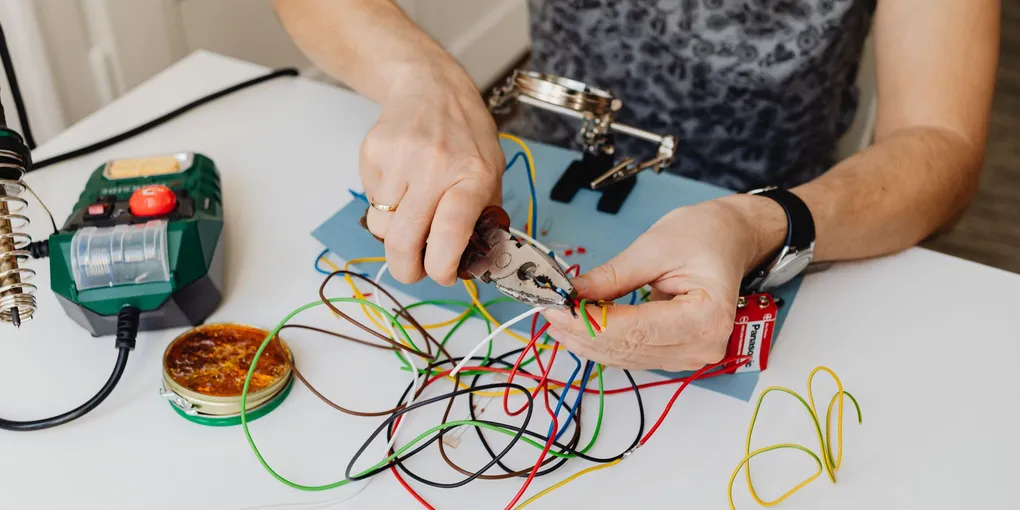
Electricians cost $75-$150 per hour in 2026, with a $75-$150 service/trip fee for most visits. Flat-rate jobs: replace a standard outlet $100-$200, install a GFCI outlet $150-$275, install a ceiling fan $150-$400, install a dedicated circuit $250-$500, add a subpanel $500-$1,500, upgrade from 100A to 200A service $1,800-$3,500, install an EV charger $750-$2,500, whole-home rewire $6,000-$20,000. Emergency/after-hours calls add 50-150% to normal rates. DIY is legal for outlet swaps, switch replacements, and light fixture changes in most states — anything involving running new wire, subpanel work, or main service needs a licensed electrician and often a permit.
Frequently Asked Questions
How much does an electrician cost per hour?
Licensed electricians charge $75-$150 per hour in 2026. Urban coasts run $120-$200/hour. Journeyman electricians (2-4 years experience) are $75-$110/hour. Master electricians (10+ years, licensed) run $100-$175/hour. Apprentices (supervised) run $40-$60/hour but must be supervised by a journeyman or master. Most electricians charge a service/trip fee of $75-$150 that may or may not be applied to the job cost.
What does an electrician charge for a service call?
A standard service call (assessment/diagnosis, minor repair) typically runs $100-$250 all-in — includes the trip fee and 30-60 minutes of work. This covers things like troubleshooting a dead outlet, replacing a switch, or testing a circuit. Anything more complex (running new wire, installing fixtures, etc.) is billed hourly on top of the service call or moves to a flat-rate quote for the full job.
Can I replace outlets and switches without an electrician?
Yes in most US states for one-for-one replacements (standard outlet to standard outlet, switch to switch). This is legal DIY work in 49 states. Restrictions apply in some jurisdictions — Massachusetts requires a licensed electrician for most residential electrical work, and some cities require permits for any work inside walls. The work itself is straightforward with a voltage tester, but you MUST turn off the breaker and verify power is off before touching wires. See our how-to guides on outlet replacement and light switch replacement.
When do I legally need a licensed electrician?
In most states: (1) running new wire inside walls, (2) adding new circuits/breakers, (3) subpanel installation, (4) service upgrade (100A to 200A), (5) anything involving the main service or meter, (6) work that requires a permit (varies by municipality, usually $100-$500). Licensed electricians also typically are required for: EV charger installation (varies), generator transfer switches, commercial/multi-family work, any work involving a permit + inspection.
What's the cost to install a 240V outlet?
$150-$400 for a 240V outlet if existing wiring is nearby (like for a dryer or range). $400-$1,200 if running new wire from the panel to the outlet location. 240V outlets are required for electric dryers, ranges, hot tubs, and most EV chargers. For EV chargers specifically, expect $750-$2,500 total for a level 2 charger installation. The outlet itself is cheap ($10-$30); the cost is in the wiring and permit.
How much is it to rewire a house?
Partial rewire (1-2 rooms): $1,500-$3,500. Full rewire of 1,500 sq ft home: $8,000-$15,000. Full rewire of 2,500 sq ft home: $12,000-$20,000+. Full rewire of older home (knob and tube, aluminum wiring): add 30-50% for added complexity. Rewires usually include a panel upgrade (100A to 200A) at $1,800-$3,500 additional. Most rewires include drywall repair but NOT paint — budget another $1,000-$3,000 for that.
How much do electricians charge by city in 2026?
Electrician hourly rates by metro area in 2026: San Francisco $130-$200/hour, New York City $130-$200/hour, Los Angeles $120-$180/hour, Seattle $120-$180/hour, Boston $120-$185/hour, Washington DC $110-$175/hour, Chicago $100-$160/hour, Denver $100-$155/hour, Phoenix $90-$145/hour, Dallas $90-$145/hour, Atlanta $85-$135/hour, rural Midwest/Southeast $75-$120/hour. Service/trip fees follow similar patterns: $150-$250 in high-cost metros, $75-$125 in lower-cost markets. Emergency/after-hours calls add 50-150% regardless of location.
How much does an electrician charge for common small jobs in 2026?
Common electrician flat-rate jobs in 2026: replace a standard outlet $100-$200 (30 min), install a GFCI outlet $150-$275, replace a light switch $100-$200, install a dimmer switch $150-$250, replace a light fixture $150-$350, install a ceiling fan (no existing wiring) $300-$600, install a ceiling fan (existing wiring) $150-$350, install a dedicated 20A circuit $250-$500, add an outdoor outlet $200-$400, install a GFCI breaker $200-$350, reset a tripping breaker (diagnosis) $100-$200 service call. These include the trip fee. Adding multiple small tasks to one visit typically costs $50-$100 each in additional labor.
What should I ask for when getting electrician quotes?
Request itemized quotes that separate: (1) labor hours and hourly rate, (2) materials cost with specific parts listed, (3) permit and inspection fees, (4) trip/service fee and whether it applies to the job, (5) warranty on workmanship (1 year is standard). Red flags: quotes that provide only a lump-sum total, contractors who can't specify what breaker or wire gauge they'll install, prices 40%+ below other bids (usually indicates cutting corners on materials or skipping permits). Always verify the electrician's state license is current — most states have an online license lookup. Get at least 3 quotes for any job over $500; the range for identical work is typically 20–40%.
Does homeowners insurance cover electrical work or damage?
Homeowners insurance covers sudden electrical damage caused by covered perils (lightning strike, power surge from the utility, fire). It does NOT cover: gradual deterioration of wiring, upgrading old knob-and-tube or aluminum wiring, panel upgrades required by age, or any work done without a permit that later causes damage. If your home has pre-1970 electrical systems (knob-and-tube, aluminum wiring), many insurers require an electrical inspection and may refuse coverage or surcharge premiums — check your policy and call your agent before renovating. An electrical upgrade done properly with permits can actually reduce your homeowners insurance premium by improving the safety rating of your home.
How much does an electrical panel upgrade cost?
Replacing a 100A panel with a new 100A panel costs $1,500–$2,500. Upgrading from 100A to 200A service runs $1,800–$3,500 — the most common upgrade. Upgrading to 400A service costs $3,500–$6,500, typically for large homes or EV charging at scale. These prices include labor, materials, permit, and utility coordination. Federal Pacific Stab-Lok and Zinsco/Sylvania panels are recalled/discontinued brands — replacement is urgent and often required by insurers.
How much does a Level 2 EV charger installation cost?
Installing a Level 2 EV charger (240V, 48A) typically costs $750–$2,500 total including the charger hardware ($200–$800), the 240V circuit from the panel ($200–$600), permit and inspection ($75–$250), and conduit/mounting ($50–$200). If your 100A panel needs an upgrade to accommodate the new circuit, add $1,800–$3,500. Short panel-to-garage run: lower end. Long run or panel in basement: upper end.
Electricians cost $75–$150 per hour in 2026, with most residential jobs billed at a flat rate: replacing an outlet runs $100–$200, installing a ceiling fan $150–$350, and upgrading an electrical panel $1,800–$3,500. A service/trip fee of $75–$150 applies to most visits and may or may not be credited toward the job. Emergency or after-hours calls add 50–150% to standard rates.
Electrical work is the single area where DIY gone wrong can burn your house down, so the price of a licensed electrician is usually worth paying. But overpaying is easy if you don’t know what’s reasonable. This guide covers 2026 hourly rates, common job flat-rate pricing, when DIY is actually safe, and how to avoid the service-call upsell patterns that inflate typical bills.
Top picks for electrical safety and legal DIY:
- Non-Contact Voltage Tester — View on Amazon (verify power is off before touching any wires)
- GFCI Outlet Tester — View on Amazon (diagnose outlet issues before calling an electrician)
- Outlet and Switch Replacement Set — View on Amazon (legal DIY in 49 states — skip the $100–$200 service call)
2026 Electrician Pricing at a Glance
Hourly Rates by Experience Level
| Level | Hourly Rate | Who Uses Them |
|---|---|---|
| Apprentice (supervised) | $40–$60/hr | Larger companies — rate reflects supervision overhead |
| Journeyman (2–4 years licensed) | $75–$125/hr | Most residential work |
| Master electrician (10+ years) | $100–$175/hr | Complex work, pulling permits, code compliance |
| Emergency / after-hours | +50–150% on top of base rate | Any licensed level |
Hourly Rates by Region
| Region | Journeyman | Master | Emergency/After-Hours |
|---|---|---|---|
| Urban coasts (NYC, SF, LA, Boston) | $100-$150/hr | $130-$200/hr | +75-150% |
| Midwest, Southeast, Texas | $75-$110/hr | $95-$150/hr | +50-100% |
| Rural | $60-$95/hr | $80-$130/hr | +50-100% |
| National average | $85-$125/hr | $100-$175/hr | — |
Service Call / Trip Fee
- Standard visit: $75-$150 (often applied to job cost if hired)
- Emergency/after-hours: $150-$350
- Same-day: +$50-$100
- Rural/far location: +$25-$100
Common Job Flat-Rate Pricing
The table below includes the service call / trip fee. These are all-in estimates for a single-visit job.
| Job | Typical Cost | Time on Site |
|---|---|---|
| Replace standard outlet | $100-$200 | 30–45 min |
| Replace GFCI outlet | $150-$275 | 45–60 min |
| Replace light switch | $100-$175 | 30–45 min |
| Replace dimmer switch | $125-$200 | 45–60 min |
| Replace standard light fixture | $125-$250 | 45–60 min |
| Replace chandelier (heavy, high) | $250-$500 | 1–3 hr |
| Install ceiling fan (existing wiring) | $150-$275 | 1–2 hr |
| Install ceiling fan (new box + wiring) | $300-$500 | 2–3 hr |
| Install recessed light (each) | $200-$400 | 1–2 hr each |
| Install under-cabinet lighting | $400-$1,000 per room | 2–4 hr |
| Install smart switches (each) | $150-$300 | 1–2 hr |
| Install outdoor outlet | $250-$500 | 2–3 hr |
| Install 240V outlet (existing access) | $150-$400 | 1–2 hr |
| Install 240V outlet (new wiring) | $400-$1,200 | 2–5 hr |
| Install dedicated 20A circuit | $250-$500 | 2–3 hr |
| Install new circuit with GFCI | $300-$700 | 2–4 hr |
| Install EV charger (level 2) | $750-$2,500 | 3–6 hr |
| Install generator transfer switch | $500-$1,500 | 3–5 hr |
| Replace main breaker | $200-$500 | 1–2 hr |
| Replace electrical panel | $1,500-$3,500 | 4–8 hr |
| Service upgrade 100A to 200A | $1,800-$3,500 | 4–8 hr |
| Subpanel install | $500-$1,500 | 4–8 hr |
| Whole-home surge protector | $250-$600 | 1–2 hr |
| Arc-fault breakers (each) | $50-$150 | 30–60 min |
| Whole-home rewire (1,500 sq ft) | $8,000-$15,000 | 3–5 days |
| Whole-home rewire (2,500 sq ft) | $12,000-$20,000 | 5–7 days |
| Troubleshoot dead circuit | $100-$300 | 1–2 hr |
Electrician Rates by City (2026)
Hourly rates for licensed journeyman electricians, including typical service call range:
| City / Metro | Journeyman Hourly | Service Call |
|---|---|---|
| San Francisco / Bay Area | $130–$200/hr | $175–$300 |
| New York City | $130–$200/hr | $175–$300 |
| Boston | $125–$185/hr | $160–$280 |
| Seattle | $120–$180/hr | $150–$260 |
| Los Angeles | $115–$175/hr | $150–$250 |
| Washington DC | $110–$170/hr | $140–$240 |
| Chicago | $100–$160/hr | $125–$225 |
| Denver | $100–$155/hr | $120–$200 |
| Miami | $95–$150/hr | $110–$185 |
| Phoenix | $90–$145/hr | $100–$175 |
| Dallas / Fort Worth | $90–$140/hr | $100–$175 |
| Atlanta | $85–$135/hr | $95–$165 |
| Minneapolis | $95–$145/hr | $110–$180 |
| Nashville | $85–$130/hr | $95–$165 |
| Rural Midwest / Southeast | $70–$110/hr | $80–$140 |
Why rates vary so much: electrician licensing, union presence, cost of living, and local permit requirements all factor in. A union electrician in NYC has significantly higher wages than a non-union journeyman in rural Tennessee — both are legitimate but the rates reflect market realities, not quality differences.
Panel Upgrade and Service Upgrade Costs
Panel replacement and service upgrades are among the most common large electrical jobs homeowners face. Cost range: $1,500–$4,500.
| Job | Typical Cost Range | Why You Need It |
|---|---|---|
| Replace 100A panel (same amperage) | $1,500–$2,500 | Old/damaged panel, brand recall |
| Upgrade 100A to 150A service | $1,800–$3,000 | Added load from addition/appliances |
| Upgrade 100A to 200A service | $1,800–$3,500 | EV charger, hot tub, major addition |
| Upgrade 200A to 400A service | $3,500–$6,500 | Whole-home EV fleet, large addition |
| Replace subpanel | $500–$1,500 | Garage, workshop, guest house |
| Add subpanel (from existing 200A) | $500–$1,800 | Distribute load, add breaker spaces |
Brands to know: Federal Pacific Stab-Lok panels (identified by orange breaker tips) and Zinsco/Sylvania panels are discontinued and have documented failure rates — many insurers refuse to cover homes with them. Expect to replace these regardless of age.
Permit note: all service upgrades require a permit and utility coordination. The utility company must disconnect and reconnect power at the meter — this typically adds 2–4 hours of waiting time to the job day.
EV Charger Installation Cost
Installing a Level 2 EV charger (240V / 48 amp) typically costs $750–$2,500 including the EVSE hardware, circuit, permit, and inspection.
| Component | Typical Cost |
|---|---|
| EVSE hardware (Level 2 charger unit) | $200–$800 |
| 240V / 50A circuit from panel | $200–$600 |
| Panel upgrade (if 100A panel is full) | $1,800–$3,500 |
| Permit + inspection | $75–$250 |
| Wall mounting and conduit | $50–$200 |
Total without panel upgrade: $750–$1,500 for most homes with a 200A panel and available breaker space.
The most common variable is the distance from the panel to the garage. Short run (10–20 feet, panel near garage): lower end. Long run (50+ feet, panel in basement): upper end or more.
Some EV chargers (Tesla Wall Connector, ChargePoint Home Flex, Enel X JuiceBox) qualify for a federal tax credit when installed at your primary residence — confirm with your tax preparer since the credit rules change frequently.
When Licensed Electrician Is Required vs DIY
DIY Is Legal (in 49 states)
- Replace outlets — standard, GFCI, USB — as long as replacing like-for-like or upgrading amperage within existing circuit capacity
- Replace switches — standard, 3-way, dimmer — swap-outs
- Replace light fixtures — ceiling, wall sconces, pendants
- Install ceiling fans — if existing ceiling box is fan-rated
- Replace circuit breakers — like-for-like same amperage
- Install plug-in smart devices — any outlet-plug-in device
All the above requires ONLY: turn off the breaker, verify power off with a non-contact voltage tester, match wire colors (black to black, white to white, bare copper to ground), work to the correct torque on terminal screws (often overlooked — loose screws cause arcing).
Licensed Electrician Required
- Running new wire behind walls
- Adding new circuits to the panel
- Upgrading service (100A to 200A)
- Subpanel installation
- Generator transfer switches (most jurisdictions)
- EV charger circuit (most jurisdictions)
- Any permit-required work (varies by city, usually $100-$500 permit)
- Commercial or multi-family work
- Any work by a homeowner who isn’t confident — the liability if something goes wrong is real
Massachusetts Exception
MA requires a licensed electrician for most residential electrical work. Outlet swaps are a gray area — always check with the local building department before DIY.
Understanding the Invoice
A legitimate electrician’s invoice itemizes:
- Service call/trip fee — $75-$150
- Hourly rate × hours worked — break out labor from materials
- Materials — each item listed with price
- Permit fees — if required, passed through at cost
- Inspection fees — if required
- Disposal fees — for old fixtures
- Warranty terms — most reputable companies warranty work for 1-2 years
Red flags in invoices:
- Flat “all-in” quote with no itemization
- Labor and materials bundled as single line
- Permit fees missing when work clearly requires one
- No warranty mentioned
- Payment due in cash only
When to Get Multiple Quotes
- Under $500: get one quote if the electrician has good local reputation
- $500-$2,000: get three quotes, confirm they itemize consistently
- Over $2,000: get three quotes, ask for detailed scope, check online reviews thoroughly, verify license status
Electricians offering quotes 30-50% lower than competitors are either (a) underestimating scope (expect surprise charges), (b) cutting quality (using cheaper materials, skipping inspections), or (c) unlicensed/uninsured (avoid regardless).
Emergency vs Not-Emergency
Call an electrician immediately for:
- Active sparking from outlets, switches, or panel
- Burning smell from an outlet, switch, or fixture
- Warm/hot outlet covers
- Circuit breaker that trips and won’t stay reset (not just once — repeatedly)
- Loss of power to the whole house when neighbors have power
- Visible damaged/frayed wiring
- Shock when touching metal appliances
- Smoke from any electrical source
These can wait until business hours:
- Single dead outlet (isolate: plug a different appliance in to verify)
- Single dead light fixture (isolate: is it just the bulb?)
- Flickering lights (note frequency — chronic flickering is a warning, not an emergency)
- Tripped breaker that resets and stays on
- One switch not working
- Planned upgrade work
Emergency pricing adds 50-150% to the job — wait until business hours unless the issue is genuinely dangerous.
DIY Tasks Worth Learning
The tasks that a handyman charges $100-$300 for that take 20-30 minutes DIY with basic tools:
- Replace an outlet — see our how to replace an outlet guide — saves $100-$200 per outlet
- Install a GFCI outlet — see how to install a GFCI outlet — saves $150-$275 per outlet
- Replace a light switch — see how to replace a light switch — saves $100-$175 per switch
- Install a dimmer switch — see how to install a dimmer switch — saves $125-$200
- Install a ceiling fan — see how to install a ceiling fan — saves $150-$275
Required tools (one-time $50-$100):
- Non-contact voltage tester — $15-$25
- Wire stripper/cutter — $15-$30
- Insulated screwdriver set — $20-$40
- Lineman’s pliers — $20-$35
- Wire nuts assorted — $10-$15
Invest once, save on every future small electrical task.
Safety Non-Negotiables for DIY
- Always turn off the breaker first — confirm with voltage tester before touching wires
- Never work on a live circuit — ever
- Match wire gauges — a 15A circuit needs 14-gauge wire; a 20A needs 12-gauge. Wrong gauge = fire hazard
- Torque terminal screws to manufacturer spec (usually printed on the outlet/switch body)
- Secure wire nuts — tug-test each nut to confirm it’s tight
- Never work alone on complex jobs — have someone know you’re working and check in
- Know your limits — if anything feels wrong, stop and call an electrician
When to Upgrade vs Patch
Patch (replace individual component):
- Single outlet or switch failed
- Single fixture dead
- Circuit breaker old/worn
Upgrade (larger project):
- House is 40+ years old with knob-and-tube or aluminum wiring (safety hazard)
- Breaker trips frequently on multiple circuits (overloaded panel)
- Not enough outlets in kitchen, bathroom, or home office
- Installing major new appliance (EV charger, pool heater, workshop)
- 100A service with modern high-draw appliances (consider 200A upgrade)
Average age of homes in the US is 40+ years. Knob-and-tube wiring (pre-1950s) is a known fire risk. Aluminum wiring (1960s-1970s) has documented connection issues. If your home has either, budget for a partial or full rewire in the next 5-10 years.
Questions to Ask Before Hiring an Electrician
Ask these before committing. A qualified electrician answers these without hesitation:
- Are you licensed in [your state] and can I look it up? — Every state has an online license lookup. The electrician should give you their license number.
- Do you carry general liability and workers comp insurance? — Ask for a Certificate of Insurance (COI) emailed to you. Refusing means no.
- Who will do the work — you or a sub? — Larger companies send whoever is available. Ask whether the person who gives the quote does the work or hands it to a junior.
- Will this require a permit, and who pulls it? — Electricians typically pull permits on your behalf and include it in the quote. Beware “let’s skip the permit” suggestions — this transfers legal liability to you.
- What wire gauge and breaker amperage will you install? — A specific answer shows knowledge. Vague answers (“whatever it needs”) is a yellow flag.
- What is your warranty on labor? — Standard is 1 year. Some offer 2. Get it in writing.
- When can you start, and what is the payment schedule? — Never pay 100% upfront. Standard is 50% at start, 50% at completion (or material deposit, labor on completion).
Finding a Good Electrician
Sources:
- State licensing board directory (Google “[your state] electrical license lookup”)
- Google reviews (aim for 4.5+ stars with 20+ reviews minimum)
- Local Facebook/Nextdoor groups (neighborhood-specific referrals are highly reliable)
- Referrals from neighbors who’ve had work done recently
- Realtors often have preferred-vendor lists built from client feedback
Verify the license yourself: don’t just take the contractor’s word for it. Most states make this a 60-second search. Confirm the license is active, not expired, and not under complaint.
Avoid:
- Door-to-door electrical sales (almost always scams)
- Groupon-style discounts (electricians don’t discount to acquire customers this way)
- Unlicensed Craigslist listings
- Any electrician refusing to show a COI
- “Cash only” payment requirements
Related Reading
- Handyman Cost — different trade, different pricing
- How to Replace a Light Switch — DIY guide
- How to Fix a Bathroom Sconce Light — diagnose and fix a sconce before calling an electrician
- Light Fixture Installation Cost — fixture swap vs. new circuit pricing
- How to Install a GFCI Outlet — DIY guide
- How to Install a Dimmer Switch — DIY guide
- How to Reset a Tripped Circuit Breaker — first DIY step before calling
- Electrical Panel Upgrade Cost — 100A to 200A pricing, dangerous panel replacement, subpanel costs
- Recessed Lighting Installation Cost — cost to hire an electrician to install can lights; $100–$250 per fixture
- EV Charger Installation Cost — specific high-voltage install
- Hot Tub Installation Cost — 240V dedicated circuit + GFCI disconnect is required for every portable spa
- Best Portable Generators for Home Backup — backup power option
- Outdoor Lighting Installation Cost — professional landscape and security lighting; $100–$400 per fixture
- How to Add an Electrical Outlet — DIY approach that saves $150–$300 per outlet
- Annual Home Maintenance Schedule — electrical inspection timing
- Whole House Generator Cost — cost to install a standby generator with automatic transfer switch
- How to Fix a Blown Circuit Breaker — DIY breaker replacement to try before calling an electrician
- How to Fix a Broken Light Fixture — diagnose and replace a ceiling or wall fixture before calling an electrician
- How to Fix a Broken Porch Light — repair or replace an outdoor porch light before calling an electrician
- How to Fix a Broken Outdoor Deck Light — diagnose and replace a dead deck or patio light fixture
- Bathroom Exhaust Fan Installation Cost — electrical work for code-required bathroom ventilation; $150–$550
- Fireplace Installation Cost — electrical circuits for electric fireplaces and ignition systems; $1,200–$10,000
- Determine if DIY is legal in your area
Check your state and city requirements. 49 of 50 states allow homeowners to do basic DIY electrical (outlets, switches, fixtures, breakers on existing circuits). Massachusetts is the exception — licensed electrician required for most residential work. Some cities require permits for any work inside walls or new circuits. Check your local building department's website or call for a 5-minute verification.
- Get three quotes for jobs over $500
Anything over $500 warrants three quotes. Licensed electricians should itemize: hourly rate, estimated hours, materials cost, permit fees, inspection fees, and trip/service fees. Refuse flat-rate 'all-in' quotes that don't itemize. Legitimate quotes usually agree within 20%. If one is 40%+ lower, the electrician is either cutting corners or the scope wasn't explained clearly.
- Verify license and insurance
Every state has a licensing board — look up the electrician's license on your state's licensing website. Confirm it's active and not under complaint. Ask for a Certificate of Insurance (COI) showing general liability + workers comp coverage. Unlicensed electrical work often voids homeowner insurance if something goes wrong (fire, shock, code violation). The cost savings of an unlicensed electrician are never worth the risk.
- Understand permits
Ask whether the work requires a permit, who pulls it (electrician usually), what it costs ($50-$500 depending on scope), and whether an inspection is required after completion. Permit-required work without a permit will fail the home inspection when you sell. Many insurance claims are denied if unpermitted electrical work is discovered. Don't skip the permit to save $200.
- Know when emergency pricing kicks in
Emergency/after-hours rates add 50-150% to standard pricing. Call during business hours for anything non-urgent. True emergencies: active sparking, burning smell from outlets, circuit breaker that keeps tripping and won't stay on, lost power to the whole house after a storm (and your neighbors have power). Non-emergencies: dead outlet, one light not working, flickering light. Wait until Monday business hours for non-urgent work.
- Prep the work area
Before the electrician arrives: clear the work area (move furniture 4+ feet from outlets/fixtures), ensure access to the panel (don't block it with boxes), identify the specific problem if there is one, have a list of any other small issues to tackle if hiring for a service call (often $50-$100 of additional work gets added with minimal time increase). Keep pets and kids out of the work area.
- Inspect and test before paying
Before the electrician leaves: test every fixture/outlet they worked on, run any dedicated circuits under load (plug in appliance, verify it runs), verify GFCI outlets trip when tested, confirm any new breakers are labeled correctly, review the written invoice with work itemized, take photos of anything inside the panel or walls in case of future issues. Pay only after verification.
- Keep records for insurance and resale
Save the permit documentation, final invoice, and any inspection certificates. Keep photos of the work (especially anything in the panel or behind walls). Store with your home records. Future home buyers or insurance investigations will ask about electrical work history — having documentation protects you. Unpermitted work discovered during a home sale can delay or kill deals.
Free: 10-Point Home Maintenance Checklist
Prevent costly repairs with this seasonal checklist. Save hundreds every year by catching problems early.
Your checklist is ready!
Open Checklist →Something went wrong. View the checklist here.