How to Install a Kitchen Sink: Drop-In, Undermount, and Farmhouse
DIY kitchen sink installation guide covering drop-in, undermount, and farmhouse styles. Tools, measurements, clip placement, drain assembly, and how to avoid the under-sink leak.
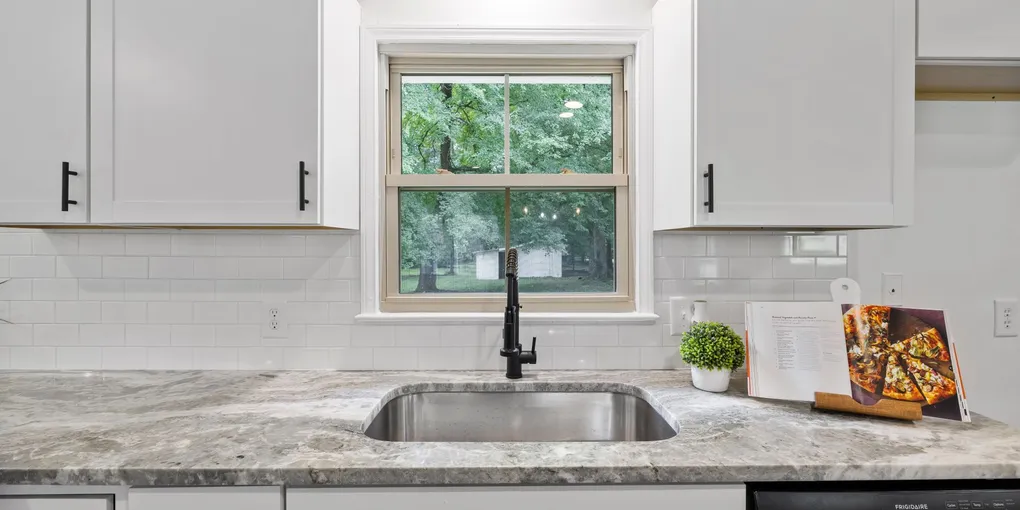
Installing a kitchen sink takes 2–5 hours depending on style. Drop-in sinks are the easiest (2–3 hours); undermount sinks require special clips and countertop prep (3–4 hours); farmhouse apron-front sinks need cabinet modifications (4–6 hours). Budget $20–$50 in materials (silicone, plumber's putty, supply lines, P-trap kit) plus the sink and faucet themselves.
Frequently Asked Questions
Can I replace a kitchen sink by myself?
Yes, most homeowners can install a drop-in kitchen sink solo in an afternoon. Undermount and farmhouse sinks are still DIY-friendly but benefit from a helper for lifting the sink into place (cast iron farmhouse sinks weigh 100+ pounds). The main risk factors are unfamiliar plumbing connections and overly tight cabinet spaces — if either feels dangerous, stop and call a plumber.
Do I need to replace the faucet when I replace the sink?
Not always, but you almost always should. Faucet mounting holes on the old sink rarely match exactly on a new sink, and reusing old flexible supply lines and a well-worn faucet body guarantees leaks within a year. A new faucet and new supply lines together cost $80–$250 and eliminate 90% of post-install callbacks.
How do I know what size sink I need?
Measure the existing sink's cutout (length, width, depth) and the base cabinet's inside dimensions (width, depth, and clearance above and below). A standard 33-inch or 36-inch cabinet accepts most 30-inch or 33-inch sinks. Never buy a sink wider than the inside of the base cabinet minus 1 inch — the cabinet sides need room for mounting hardware.
What's the difference between drop-in and undermount sinks?
A drop-in sink has a visible rim that rests on top of the countertop. It's supported by the rim and sealed with silicone or putty. An undermount sink mounts below the countertop with the sink edge hidden beneath the counter's edge. Undermount sinks require a stone, quartz, or solid-surface countertop (not laminate) because the cutout edge is exposed. They're harder to install but offer easier countertop cleanup and a cleaner look.
How long after installing a kitchen sink can I use it?
Run water through for leak-testing immediately after installation, but avoid heavy use (dishwashing, disposal grinding) for 24 hours. Silicone sealant needs 24 hours to fully cure. Dishwasher use should also wait 24 hours if you reconnected the dishwasher drain during the installation.
Installing a kitchen sink takes 2–5 hours depending on style. Drop-in sinks are the easiest (2–3 hours); undermount sinks require special clips and countertop prep (3–4 hours); farmhouse apron-front sinks need cabinet modifications (4–6 hours).
Replacing a kitchen sink is one of the biggest-impact DIY kitchen upgrades. A new sink transforms how the kitchen looks and works — deeper basins for big pots, a quieter stainless gauge, a no-faucet-hole design for a pull-down faucet, or a stunning fireclay farmhouse apron.
This guide walks through installing all three major sink styles: drop-in, undermount, and farmhouse. The basics are similar; the mounting technique and countertop requirements differ significantly.
Choosing the Right Sink Style
Drop-In (aka Top-Mount or Self-Rimming)
- Easiest to install and replace
- Works with any countertop: laminate, wood, tile, stone
- Visible rim around the top
- Cost: $75–$400 for stainless; $150–$600 for composite
- DIY time: 2–3 hours
Undermount
- Mounts below the countertop — rim is hidden
- Requires stone, quartz, solid-surface, or sealed wood — not laminate
- Easier counter cleanup (sweep crumbs straight into the sink)
- Cost: $200–$800
- DIY time: 3–4 hours
Farmhouse (Apron-Front)
- Front apron is visible; back edge is undermount or flush-mount
- Requires cabinet modification (most kitchens need custom work)
- Usually fireclay or heavy cast iron (90–150 lbs empty)
- Cost: $400–$1,500
- DIY time: 4–6 hours (plus cabinet prep)
For most homeowners replacing an existing sink like-for-like, sticking with the same style keeps the project manageable. Switching from drop-in to undermount is a significant project because the countertop is usually cut differently.
Sizing and Cabinet Considerations
Standard sink widths: 25, 27, 30, 33, 36 inches. Most 36-inch base cabinets accept up to a 33-inch sink. Taller, deeper basins (9–10 inches deep) give you more capacity for stock pots but eat cabinet space — make sure your garbage disposal and P-trap still fit underneath.
Measure:
- Inside width of the base cabinet (stile to stile)
- Inside depth of the base cabinet (back of face frame to back wall)
- Vertical clearance from inside bottom of countertop to cabinet bottom (most disposals need 14+ inches)
- Existing cutout dimensions if you’re replacing like-for-like
If buying a sink online, confirm the product’s cutout template dimensions match your existing cutout within 1/8 inch. A template download is essential — never assume.
Tools Needed
- Cordless drill (our best cordless drills for homeowners roundup)
- Basin wrench for reaching faucet nuts
- Adjustable wrench
- Channel-lock pliers
- Plumber’s putty and/or 100% silicone caulk
- Utility knife
- Safety glasses
- Bucket and rags
- Flashlight or headlamp
- Plastic putty knife or scraper
- Shop vacuum — see our best wet/dry shop vacuums roundup
For countertop cuts on new installations:
- Jigsaw with a fine-tooth blade (laminate or wood)
- Cannot DIY stone cuts — those are done by the fabricator during install
The Removal Step Everyone Rushes
Before doing anything else, take photos of the existing plumbing under the sink. Every angle. You’ll thank yourself when you’re trying to remember which supply line went to the hot side, how the dishwasher drain routed, and what brand P-trap you had.
Then:
- Shut off water. Both shutoff valves. Open the faucet to confirm zero pressure. If the valves are corroded and don’t turn, stop the project and replace the valves first.
- Unplug the disposal. Don’t trust the under-counter switch.
- Disconnect supply lines. Use two wrenches — one on the shutoff valve, one on the supply nut. Applying torque to the valve without counter-support can twist the valve right off the pipe.
- Disconnect the dishwasher drain hose. Loosen the hose clamp and pull the hose off the disposal inlet.
- Disconnect the P-trap. Bucket underneath. Loosen the slip nut at the tailpiece first, then the slip nut at the wall stub.
- Remove the disposal (if applicable). Most disposals have a twist-off mounting ring — rotate 1/4 turn counterclockwise to release.
- Score the sink sealant with a utility knife, then lift the sink out from above.
Installation: Drop-In Sinks
The easiest style. Most DIYers finish the installation in 2–3 hours.
- Dry-fit the new sink in the existing cutout. Confirm it sits fully in the opening with about 1/8-inch clearance all around.
- Install the faucet on the sink while it’s still on the floor. Tighten the mounting nut from below with a basin wrench. Thread the supply line tails onto the faucet body.
- Install the drain flange with plumber’s putty or the supplied gasket. From below, add the friction ring, gasket, and locknut. Tighten with channel-lock pliers while holding the flange with a pair of pliers from above (protect the finish with a rag).
- Apply silicone around the perimeter of the cutout where the sink rim will rest — a 1/4-inch continuous bead.
- Lower the sink into the opening. Do not slide — silicone will smear. Press down evenly to seat the rim.
- Install the sink clips from below. Most sinks come with 4–8 clips that hook onto the sink rim and screw into the countertop underside. Tighten in a crisscross pattern so the sink seats evenly.
- Wipe excess silicone from the rim with a damp paper towel before it skins over.
- Install the disposal, P-trap, and supply lines — see the “Plumbing Reconnect” section below.
Installation: Undermount Sinks
Undermount sinks hang from the countertop underside. Most stone fabricators pre-install mounting bolts or clips in the counter during fabrication. If yours didn’t, you’ll need a 2-part epoxy kit designed for stone (about $25).
- Test-fit the sink using temporary 2x4 braces laid across the counter cutout from above, with straps hanging down to hold the sink in position.
- Apply silicone to the top flange of the sink, about a 1/4-inch bead all the way around.
- Lift the sink into position from below and press it against the counter underside.
- Attach the mounting clips to the pre-installed studs or epoxy studs on the counter. Tighten each nut a few turns at a time, crisscrossing around the sink so it pulls evenly against the counter.
- Support the sink from below with 2x4 braces or adjustable jack posts for 24 hours while the silicone cures.
- Install the faucet through the deck holes (usually in the countertop itself, behind the sink).
- Install the drain flange, disposal, P-trap, and supply lines as with any sink.
Installation: Farmhouse Sinks
The most involved. Farmhouse sinks require a custom cabinet or a cabinet modification: the face frame is cut away to accept the sink’s apron, and a support platform is built inside the cabinet to carry the sink’s weight.
- Confirm cabinet is ready. The support platform should be level, solid (plywood or 2x framing), and sized to the sink manufacturer’s specs.
- Dry-fit the sink. The apron should sit flush with or slightly proud of the cabinet face. The back edge should have 1/8-inch clearance from the wall.
- Install the faucet through the countertop behind the sink opening.
- Lift the sink into position. Fireclay and cast iron farmhouse sinks weigh 100–150 pounds — use a helper and lift with your legs, not your back.
- Shim to level. Farmhouse sinks must be level in all directions or water won’t drain properly. Use hardwood shims under the sink’s bottom ledge.
- Seal the perimeter with silicone. The top edges where the sink meets the countertop, and the apron-to-cabinet junction.
- Reconnect plumbing.
Plumbing Reconnect (All Styles)
Regardless of sink style, the plumbing connections are the same.
Faucet supply lines:
- Hot (red) to the left shutoff valve
- Cold (blue) to the right shutoff valve
- Hand-tight, then a quarter turn with a wrench. Not more.
P-trap:
- Tailpiece from the drain flange down to the disposal (if present) or directly to the trap
- P-trap below, trap arm running to the wall drain stub
- All slip nuts hand-tight plus 1/4 turn with channel-lock pliers
Disposal:
- Snap onto the mounting ring (rotate 1/4 turn clockwise to lock)
- Dishwasher drain hose onto the disposal inlet, secured with a new hose clamp
- Knockout in the disposal’s dishwasher inlet must be removed before connecting the dishwasher drain (use a hammer and screwdriver to tap it out, then retrieve the loose piece from inside the disposal)
Leak Testing: Do Not Skip
After everything is connected:
- Slowly open both shutoff valves. Watch for drips at every connection.
- Run the faucet for 60 seconds. Check the faucet body, supply lines, and shutoff valves with a dry paper towel.
- Plug the sink drain and fill the basin to about 2 inches below the overflow.
- Pull the plug. The full drain of water pressurizes the P-trap and will reveal any slow leaks.
- Run the garbage disposal with water flowing. Listen for leaks and check the disposal’s gasket.
- Run the dishwasher on a rinse cycle. Check the drain hose clamp on the disposal.
- Come back in 10 minutes. A slow leak that doesn’t show up in 2 minutes will show up in 10.
Common Mistakes and How to Avoid Them
- Over-tightening supply line nuts — crushes the rubber gasket, causes slow leaks in 6–12 months.
- Forgetting to remove the dishwasher drain knockout in the disposal inlet — the disposal floods on first dishwasher run.
- Reusing old plumber’s putty — it dries out and cracks. New putty every time.
- Skipping the 10-minute leak re-check — slow leaks ruin cabinet bottoms.
- Installing an undermount sink without support during cure — sinks can pull away from the countertop under their own weight.
- Buying a sink wider than the inside of the cabinet — measure inside-of-cabinet, not outside.
- Mixing up hot and cold supply lines — easy fix, but embarrassing.
When to Call a Plumber
- Shutoff valves don’t fully close (replace them first)
- Galvanized or cast-iron drain pipes in the wall (brittle, easy to crack during work)
- No existing shutoff valves — you’d be working from the main water shutoff
- Switching from drop-in to undermount (requires countertop rework)
- Farmhouse installation where the cabinet isn’t pre-modified
Related Reading
- How to replace a kitchen faucet
- Kitchen countertop replacement cost
- How to install a tile backsplash
- How to fix a garbage disposal
- How to install a dishwasher
- Best cordless drills for homeowners
The Bottom Line
Kitchen sink replacement is one of those projects where careful prep makes the difference between a 3-hour DIY and a weekend of troubleshooting. Take photos before disconnecting anything, install the faucet on the sink before setting it, use fresh plumber’s putty and silicone on every joint, and leak-test twice. The material cost is small — under $50 in supplies plus the sink and faucet — and the result is a new centerpiece for your kitchen that works and looks its best.
- Measure and buy the right sink
Measure your existing sink cutout and cabinet width. Buy a sink that matches or is slightly smaller than the cutout. For new cutouts, buy the sink first and use its template to cut the counter — every brand has slightly different dimensions.
- Shut off water and disconnect the old sink
Close both shutoff valves under the sink and open the faucet to relieve pressure. Disconnect supply lines, dishwasher drain line, and garbage disposal power (unplug it — don't trust the switch). Disconnect the P-trap with a bucket positioned under it.
- Remove the old sink
For drop-in sinks, score the silicone bead around the rim with a utility knife, then lift the sink out from below. Some have clips under the rim that need loosening first. Undermount sinks require loosening the support clips and lowering the sink straight down — two people recommended for cast iron or fireclay.
- Clean the countertop opening
Scrape off old silicone and plumber's putty with a plastic scraper (metal scratches stone). Wipe the surface with denatured alcohol to remove residue. Test-fit the new sink — it should sit fully in the opening with no binding.
- Install the faucet on the new sink before setting it
Installing a faucet through countertop-mounted holes with your head under the cabinet is miserable. With the new sink on the floor or a sawhorse, install the faucet, supply line tails, and sprayer through the deck holes. It takes 10 minutes here vs. 30 minutes later.
- Install the drain assembly
Apply plumber's putty or the supplied gasket around the drain flange. Drop the flange through the drain hole. From below, add the gasket, friction ring, and locknut. Tighten the locknut with channel-lock pliers while holding the flange from moving with a pair of pliers (use a rag to protect the finish). Wipe excess putty.
- Set drop-in sinks with clips and sealant
Run a continuous bead of 100% silicone caulk around the perimeter of the countertop opening where the sink rim will rest. Lower the sink into the opening — do not slide it. From below, install the sink clips (usually 4–8 clips around the perimeter), tightening each a little at a time in a crisscross pattern to avoid warping.
- Mount undermount sinks to the countertop
Undermount sinks typically come with mounting clips that attach to the underside of the stone countertop with epoxy (often pre-installed by the fabricator). Apply a bead of silicone to the sink's top flange, lift the sink up into position from below, and tighten the clips. Use 2x4 braces across the sink opening to support the sink while the silicone cures for 24 hours.
- Install the farmhouse sink on a modified cabinet
Farmhouse sinks sit on a custom support platform inside the base cabinet, with the apron face flush with or slightly proud of the cabinet face. The cabinet must be modified (typically by the cabinet maker or during a remodel) before the sink goes in. Lower the sink carefully into place, shim as needed, and seal the perimeter with silicone.
- Connect supply lines and drain
Thread flexible supply lines onto the faucet tails and shutoff valves — hand-tight plus a quarter turn, not more. Assemble the P-trap: tailpiece from the sink drain, P-trap, and trap arm into the wall stub. Check alignment, tighten slip nuts hand-tight plus 1/4 turn. Reconnect the dishwasher drain line with a new hose clamp.
- Reconnect and test the garbage disposal
If you have a disposal, install the new disposal per its instructions (most snap onto a mounting ring in the drain). Connect the disposal's drain outlet to the P-trap. Plug in the disposal and test-run it with water flowing before calling the install complete.
- Leak-test everything
Slowly open the shutoff valves. Run the faucet for 60 seconds, checking every joint with a dry paper towel. Fill both sink basins and let them drain fully. Run the dishwasher on a short cycle. Check every connection again after 10 minutes for slow leaks.
Free: 10-Point Home Maintenance Checklist
Prevent costly repairs with this seasonal checklist. Save hundreds every year by catching problems early.
Your checklist is ready!
Open Checklist →Something went wrong. View the checklist here.