Water Damage Restoration Cost 2026: $1,500–$50,000 by Category
Water damage restoration costs $1,500–$5,000 for minor damage, $5,000–$15,000 moderate, $15,000–$50,000+ severe. Pricing by damage category, square footage, and drying timeline.
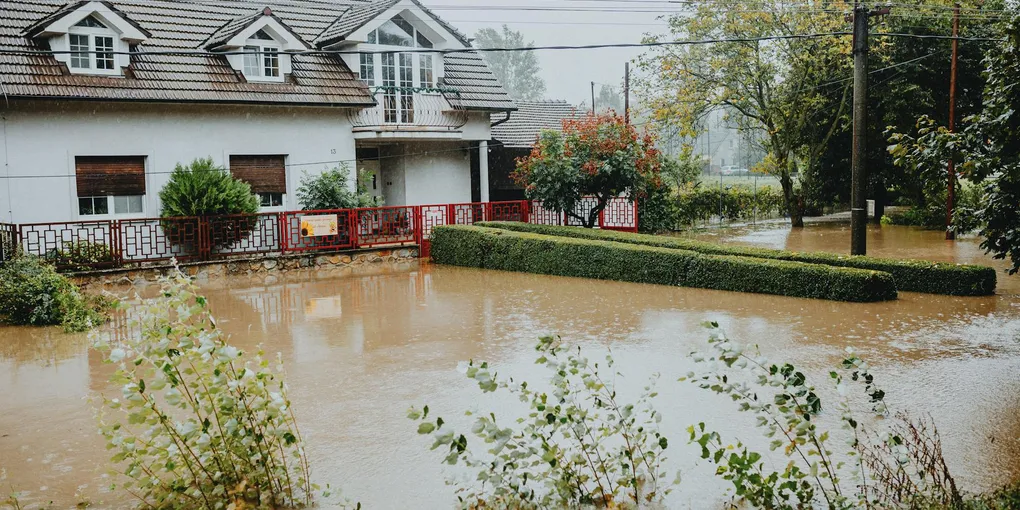
Water damage restoration costs $1,500–$5,000 for minor damage (single room, Category 1 clean water), $5,000–$15,000 for moderate damage (multiple rooms, Category 2 gray water, some structural involvement), and $15,000–$50,000+ for major flooding, sewage backup, or extensive structural damage. The average homeowner insurance claim for water damage is $11,000–$13,000. Speed of response is the single biggest cost factor — damage doubles within 48 hours as mold begins growing.
Frequently Asked Questions
How much does water damage restoration cost?
Water damage restoration costs $1,500–$5,000 for minor incidents (Category 1 clean water, contained to one room) and $5,000–$20,000 for moderate damage across multiple rooms. Sewage backup (Category 3 black water) or flood damage across the whole house runs $20,000–$100,000+. Costs break into extraction ($3–$7/sq ft), drying ($1–$2/sq ft per day), and structural repairs (drywall, flooring, cabinets — highly variable). Most homeowners pay $3,000–$10,000 for a significant residential water event.
Does homeowner's insurance cover water damage?
Insurance covers sudden, accidental water damage from internal sources: burst pipes, appliance failures (washing machine hose, water heater), roof leaks from sudden storm damage, and overflowing fixtures. It does NOT cover: flooding from outside (requires separate flood insurance through NFIP), gradual leaks and seepage, maintenance failures, sump pump failure (requires a rider in most policies), or sewer backup (requires a separate rider). File immediately — most policies have a 14–30 day reporting window. Document all damage with photos before cleanup begins.
How much does water extraction cost?
Water extraction (truck-mounted or portable industrial extractors) costs $3–$7 per square foot, with a minimum service call of $300–$500. Extracting water from a 500 sq ft flooded basement runs $500–$1,500 for extraction alone, before drying equipment rental, structural assessment, and repairs. Emergency extraction after hours or on weekends adds $200–$500. Extraction must happen within 24–48 hours to prevent mold growth.
How long does water damage restoration take?
Water damage restoration typically takes 3–7 days for drying alone (professional dehumidifiers and air movers run continuously), followed by 2–4 weeks for structural repairs (drywall replacement, flooring, painting). A moderate single-room water event takes 1–2 weeks total. A whole-house flood can take 2–6 months. The drying phase cannot be rushed — moisture meters confirm when structural materials reach target moisture content before reconstruction begins.
What is the difference between water damage categories?
Category 1 (clean water): Source is sanitary (burst supply pipe, overflowing sink). Least hazardous, lowest restoration cost. Category 2 (gray water): Source contains contaminants (dishwasher, washing machine overflow, toilet overflow without feces). Requires more thorough cleanup, biocide application. Category 3 (black water): Source is grossly contaminated (sewage backup, flooding from outside). Requires full protective equipment, complete replacement of porous materials (drywall, carpet, insulation), and biohazard disposal. Categories escalate quickly — clean water sitting more than 48 hours becomes gray water as bacterial growth occurs.
Should I use a water damage restoration company or DIY?
For Category 1 damage in a limited area (less than 100 sq ft), competent homeowners can handle extraction and drying with rental equipment: a commercial dehumidifier ($60–$100/day) and air mover fans ($25–$40/day). For anything involving Category 2/3 water, structural materials, more than one room, or suspected mold — hire a professional restoration company (IICRC-certified). DIY incomplete drying is the most common cause of mold developing behind walls weeks after an incident, turning a $3,000 problem into a $15,000 one.
Water damage restoration costs $1,500–$5,000 for minor damage (single room, Category 1 clean water), $5,000–$15,000 for moderate damage (multiple rooms, Category 2 gray water, some structural involvement), and $15,000–$50,000+ for major flooding, sewage backup, or extensive structural damage. The average homeowner insurance claim for water damage is $11,000–$13,000.
Water damage escalates faster than almost any other home problem. What’s a $2,000 fix in the first 24 hours becomes a $10,000 mold remediation job if drying is delayed. This guide covers what professional restoration costs and when you can handle it yourself.
Water Damage Restoration Cost by Scope
| Scenario | Estimated Cost |
|---|---|
| Single room, Category 1, extraction + drying | $1,500–$4,000 |
| Single room + drywall/flooring repair | $3,000–$7,000 |
| Two rooms + structural drying | $5,000–$12,000 |
| Basement flood (500–1,000 sq ft) | $3,000–$10,000 |
| Whole house flood (1,500–2,500 sq ft) | $15,000–$50,000 |
| Sewage backup (Category 3) | $7,000–$30,000 |
| Roof leak + interior damage | $2,000–$8,000 |
| Burst pipe in winter (multiple rooms) | $5,000–$20,000 |
Cost Breakdown by Phase
Emergency Mitigation (Extraction + Drying)
- Water extraction: $3–$7/sq ft
- Drying equipment (dehumidifiers + air movers): $500–$1,500/day for a standard setup
- Typical drying duration: 3–7 days
- Antimicrobial treatment: $1–$3/sq ft
- Content removal and storage: $500–$2,000
Reconstruction
After drying is complete and moisture readings confirm structural materials are at target:
- Drywall replacement: $2–$5/sq ft
- Flooring replacement: $3–$20/sq ft (varies by material)
- Insulation replacement: $1–$3/sq ft
- Painting: $2–$5/sq ft
- Cabinet replacement: Highly variable ($200–$1,000+ per linear foot)
The 48-Hour Rule
Water damage doubles in severity every 24–48 hours without intervention:
| Time Since Damage | What’s Happening |
|---|---|
| 0–2 hours | Water is saturating porous materials |
| 2–24 hours | Drywall, wood framing, insulation reaching saturation |
| 24–48 hours | Category 1 water transitions to Category 2, mold spores begin activating |
| 48–72 hours | Active mold growth begins on wet organic materials |
| 72+ hours | Structural wood begins to warp, buckle, and swell; mold colony growth accelerates |
This timeline makes same-day professional response non-negotiable for any significant water event. Waiting for insurance authorization, contractor availability, or business hours frequently turns a covered $5,000 claim into a $20,000+ remediation project.
Insurance Claims: What to Know
What’s Typically Covered
- Burst pipe from sudden freeze or failure: Yes (most policies)
- Appliance supply line failure: Yes (most policies)
- Washing machine overflow: Yes (most policies)
- Roof leak from sudden storm damage: Yes (most policies)
- HVAC drain pan overflow: Yes (most policies)
What’s Typically NOT Covered
- Groundwater flooding (requires NFIP flood insurance)
- Gradual leaks (seepage under sink that you didn’t notice for months)
- Sewer backup (requires endorsement/rider)
- Sump pump failure (requires endorsement/rider)
- Maintenance failure (roof you knew needed repair)
Filing a Claim
- Photograph all damage before cleanup (mandatory)
- Call insurance immediately — document the call with date/time
- Start mitigation (extraction) — do not wait for adjuster
- Save all receipts for mitigation expenses
- Request a written claim number and adjuster assignment
Average claim processing time: 7–30 days for initial payment. Supplemental claims for discovered damage are common — document everything found during restoration.
Mold: The Hidden Cost of Delayed Drying
Mold remediation costs $500–$6,000 for localized issues and $10,000–$30,000+ for extensive contamination. If drying is incomplete after a water event, mold typically appears 2–6 weeks later:
- White fuzzy growth on wood framing
- Musty smell in walls without visible cause
- Discoloration on drywall that was “dried out”
Preventing mold costs nothing when drying is done right. Remediating it after the fact costs more than the original water damage in many cases. See our mold remediation cost guide for what to expect if mold is found.
Finding a Qualified Restoration Company
IICRC certification (Institute of Inspection, Cleaning and Restoration Certification) is the industry standard. Verify at iicrc.org. IICRC-certified companies follow ANSI/IICRC S500 Water Damage standard.
Red flags:
- Can’t show proof of IICRC certification
- Won’t provide written moisture readings
- Pushes for immediate repair contract during emergency mitigation (conflict of interest)
- No references for similar-scope residential work
- Pressure to sign assignment of benefits (gives them direct control of insurance payout)
Regional Water Damage Restoration Cost Variations
Restoration labor rates and contractor availability vary by region. Hurricane and flood-prone markets have more capacity but higher demand after major events.
| Region | Single Room Mitigation (Category 1) | Basement Flood (500 sq ft) | Whole-House Event |
|---|---|---|---|
| Northeast (NY, MA, NJ) | $2,000–$5,500 | $4,500–$12,000 | $20,000–$60,000 |
| Mid-Atlantic (DC, MD, VA) | $1,800–$5,000 | $4,000–$11,000 | $18,000–$55,000 |
| Southeast (FL, GA, TX) | $1,500–$4,000 | $3,000–$9,000 | $15,000–$45,000 |
| Midwest | $1,600–$4,200 | $3,200–$9,500 | $15,000–$48,000 |
| Pacific (CA, WA, OR) | $1,900–$5,200 | $4,200–$11,500 | $19,000–$58,000 |
Post-disaster surge pricing (hurricanes, winter freeze events) can add 50–100% above normal rates due to demand. Scheduling within a regular weather event at normal times avoids surge pricing. Franchise operators (SERVPRO, ServiceMaster) are more consistently priced; local operators may price 20–30% lower.
Water Damage Restoration Company Comparison
| Company / Type | Coverage | Avg. Cost vs. Baseline | IICRC Certified | Notes |
|---|---|---|---|---|
| SERVPRO | National (1,700+ locations) | Baseline | Yes (corporate standard) | Largest network; insurance company preferred vendor; higher pricing |
| ServiceMaster Restore | National (900+ locations) | Baseline | Yes | Second largest; strong insurance relationships; consistent quality |
| Belfor | National (80+ US offices) | +10–20% | Yes | Commercial/complex specialist; good for severe/complex residential |
| Rainbow International | National franchise | Baseline | Yes | Mid-market residential; often priced competitively vs. SERVPRO |
| Local IICRC-certified | Regional | −20–30% | Verify at iicrc.org | Often best value; quality varies; verify insurance and references |
Franchise operators (SERVPRO, ServiceMaster) are often pre-authorized by insurance companies as preferred vendors, which simplifies claims but can mean higher invoices. Independent IICRC-certified operators frequently deliver equivalent work at lower cost — verify their certification at iicrc.org before hiring.
Questions to Ask Your Restoration Company
- Are you IICRC-certified, and can you provide the certification number? — verify at iicrc.org; IICRC certification means they follow ANSI/IICRC S500 drying standards, the minimum acceptable for a proper dry-out
- Will you provide daily moisture meter readings in writing? — the only objective way to confirm drying is complete; any company that won’t commit to written readings is not following IICRC standards
- Does your quote include a written scope of work before extraction begins? — prevents open-ended billing; the scope should identify all affected materials and confirm what will be removed vs. dried in place
- Do you handle reconstruction, and will you break out the mitigation and repair costs separately? — combined quotes obscure pricing; getting the mitigation cost separate lets you competitively bid reconstruction
- Are you a direct insurance billing company, and will you assign benefits to yourself? — assignment of benefits (AOB) signs over your insurance rights to the contractor; legitimate companies don’t require AOB and will bill insurance directly without it
DIY supplies (if you tackle it yourself)
- Dehumidifier (commercial grade)
- Moisture meter (wall/floor)
- Antimicrobial spray for mold
- Air scrubber/HEPA filter
Related Reading
- Mold Remediation Cost
- Basement Waterproofing Cost
- Drywall Repair Cost
- How to Fix Water Damage on a Ceiling
- How to Fix a Water Damaged Wall
- Plumbing Leak Repair Cost — pipe and supply line leaks that cause water damage; $150–$850
- Roof Repair Cost
- Plumber Cost
- Egress Window Installation Cost — add egress when water damage requires basement structural work; $2,500–$5,500
- Floor Joist Repair Cost — water damage frequently rots floor joists; $500–$5,000
- Wallpaper Removal Cost — water damage destroys wallpaper that needs removal before repainting; $400–$1,200
- Bathtub Refinishing Cost — refinish a water-damaged tub instead of replacing it; $300–$650
- Stop the source and document before calling anyone
The first 30 minutes are critical. Stop the water source (shut off the supply valve to the affected fixture, or the main shut-off if needed). Then photograph everything before moving anything — insurance requires documentation of the original damage. Do not discard any damaged materials until the adjuster has seen them. Once documented, call your insurance company and a restoration company simultaneously. Do not wait for insurance authorization to start extraction — delayed extraction voids most restoration cost coverage.
- Call a restoration company within 2 hours of discovery
IICRC-certified restoration companies have 24/7 emergency response. Response within 2 hours prevents escalation: mold begins in 48 hours, structural wood swells and buckles within 24 hours in soaked conditions, and Category 1 water becomes Category 2 as bacteria multiply. SERVPRO, ServiceMaster, and Belfor are national networks with local franchises. Independent local IICRC-certified companies often cost 20–30% less than franchise operators. Verify IICRC certification at iicrc.org.
- Get the moisture readings in writing before restoration begins
Professional restorers use moisture meters and thermal cameras to identify affected areas. Ask for a written moisture map showing where elevated readings were found and in which wall cavities, floors, and ceilings. This document protects you in three ways: (1) It proves the scope of damage to insurance. (2) It ensures the restorer is working the full affected area, not just visible damage. (3) It gives you a baseline for post-drying verification. Any restorer who won't provide moisture readings in writing is not following IICRC standards.
- Don't accept a drying completion claim without moisture verification
Drying is complete when the moisture meter readings in all affected materials reach the dry standard (typically under 16% for wood, under 0.5% for concrete). Do not let contractors close walls or install new flooring until moisture readings are documented at target levels. Premature closure is the #1 cause of mold claims 2–6 weeks after restoration. A reputable restorer provides a signed drying log showing daily readings to target. If they won't, find a different company.
- Get independent repair bids before accepting the restoration company's repair quote
Many restoration companies offer one-stop service: extraction, drying, AND repairs. Convenient, but repairs (drywall, flooring, cabinets, painting) are typically 30–50% above market rate when bundled with emergency restoration. Once drying is complete and the scope of repair work is clear, get independent contractor bids for the reconstruction phase. The restoration company handles the emergency mitigation; a general contractor or specialty trades do the repairs more competitively.
Free: 10-Point Home Maintenance Checklist
Prevent costly repairs with this seasonal checklist. Save hundreds every year by catching problems early.
Your checklist is ready!
Open Checklist →Something went wrong. View the checklist here.