Roof Repair Cost 2026: $150–$3,500 by Damage Type
How much does roof repair cost? Average prices for fixing leaks, replacing shingles, repairing flashing, and patching damage — plus when repair makes more sense than replacement.
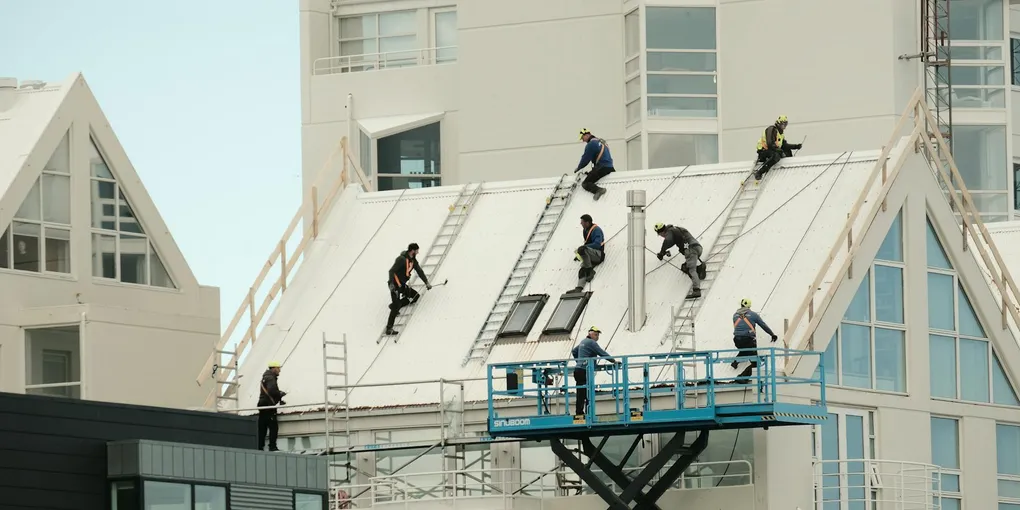
Roof repair costs $150–$400 for minor repairs (a few shingles, small leak), $400–$1,500 for moderate damage (larger section, valley flashing, chimney flashing), and $1,500–$3,500+ for major repairs (large sections, structural damage, multiple leak sources). Emergency tarping runs $200–$500. The average homeowner pays $750–$1,500 for a single repair visit. Repairs make sense on roofs under 15 years old; roofs over 20 years old with multiple issues typically warrant replacement.
Frequently Asked Questions
How much does it cost to repair a roof leak?
Roof leak repair costs $150–$500 for a single leak source — typically a cracked flashing seal, missing shingle, or open valley seam. If the leak has caused interior damage (wet insulation, damaged drywall or wood sheathing), add $300–$2,000 for interior repairs. Multiple leak sources on an aging roof often signal the roof is near end of life and replacement ($8,000–$18,000) may be more cost-effective.
How much does it cost to replace a few shingles?
Replacing 1–10 shingles costs $150–$400 for a standard asphalt shingle roof, including labor and materials. The minimum service charge from most roofing contractors is $150–$250 regardless of how small the job is. Matching the color and texture of existing shingles can be challenging on older roofs — aged shingles weather to a different tone than new ones.
Is it worth repairing or replacing a roof?
Repair if: the roof is under 15 years old, damage is limited to one area, and repairs cost under 30% of replacement cost. Replace if: the roof is over 20 years old (asphalt shingle lifespan is 20–30 years), multiple areas need work, shingles are granule-bare or curling widespread, or the roof has had two or more significant repairs already. If repair costs exceed $3,000–$4,000, get a full replacement quote before committing.
What causes most roof leaks?
The most common sources of roof leaks: (1) flashing failures around chimneys, skylights, and vents (estimate 40% of leaks), (2) missing, cracked, or wind-lifted shingles (30%), (3) open or clogged valleys where two roof planes meet (15%), (4) ice dam damage in northern climates (10%), (5) worn pipe boot seals around plumbing vents (5%). Flashing and pipe boots fail before shingles on most roofs.
How much does emergency roof repair cost?
Emergency roof repair (same-day response for an active leak) costs $300–$800 for tarping and temporary protection, plus the cost of permanent repair once weather permits. Tarping alone runs $200–$500 depending on roof area covered. After-hours and weekend emergency calls add $100–$250 to any repair price. Document everything with photos for insurance claims.
Does homeowner's insurance cover roof repair?
Insurance covers sudden, accidental damage — storm damage, falling trees, hail. It does not cover normal wear and tear, maintenance failures, or gradual deterioration. File a claim for storm or hail damage immediately and photograph the damage before any repairs. Many policies have separate wind/hail deductibles ($1,000–$5,000) that are higher than the standard deductible. Contact your insurer before authorizing emergency repairs to understand coverage.
Roof repair costs $150–$400 for minor repairs (a few shingles, small leak), $400–$1,500 for moderate damage (larger section, valley flashing, chimney flashing), and $1,500–$3,500+ for major repairs (large sections, structural damage, multiple leak sources). Emergency tarping runs $200–$500.
A leaking roof is the one home repair that can’t wait — water intrusion causes structural damage, mold, and ruined insulation faster than almost any other problem. Understanding repair costs before you’re in crisis mode prevents emergency overpaying.
Roof Repair Costs by Problem Type
| Repair Type | Average Cost |
|---|---|
| 1–5 shingles replaced | $150–$350 |
| 6–20 shingles replaced | $250–$600 |
| Pipe boot/plumbing vent seal | $150–$300 |
| Chimney flashing repair | $200–$500 |
| Chimney flashing full replacement | $400–$1,200 |
| Skylight leak repair | $300–$800 |
| Valley repair | $300–$1,000 |
| Ridge cap replacement (section) | $250–$500 |
| Gutter flashing repair | $150–$400 |
| Flat roof patch | $200–$800 |
| Emergency tarp | $200–$500 |
| Decking replacement (per sheet) | $150–$350 |
Cost by Damage Extent
Minor repair (1–10 sq ft): $150–$450
- A few missing or cracked shingles
- Single pipe boot seal
- Small flashing crack sealed with roofing cement
Moderate repair (10–100 sq ft): $400–$1,500
- Larger shingle section
- Full chimney flashing replacement
- Valley re-flashing
- Multiple leak sources from a single storm event
Major repair (100+ sq ft): $1,500–$4,000
- Large section replacement approaching a “partial reroof”
- Structural decking replacement
- Multiple unrelated leak sources
- Ice dam damage with decking compromise
At $3,000–$4,000+, full replacement quotes become competitive. A roof that costs $10,000–$15,000 to replace becomes worth replacing over patchwork repairs approaching $3,000–$4,000.
The Most Common Repairs: Flashing
Flashing accounts for an estimated 40% of roof leaks — it’s the metal or rubberized material that seals roof penetrations and transitions.
Chimney flashing: The two-piece flashing system where the chimney meets the roof fails when the caulk or step flashing cracks. Full chimney reflashing costs $400–$1,200 and should be done by a roofing contractor (not a general handyman) to ensure proper integration with the shingle system.
Pipe boot seals: The rubber collar around plumbing vents degrades in 10–15 years. Replacement costs $150–$300 and is one of the most cost-effective repairs on any aging roof. Many roofers will replace all pipe boots during any repair visit for $75–$100 each when they’re already on the roof.
Step flashing along dormer walls: Each piece of step flashing is 4×4 inches of metal tucked under each shingle course along a vertical wall. When wind lifts the shingles or ice works under the flashing, water enters. Full step flashing replacement for a dormer wall runs $300–$800.
Repair vs. Replace: The Decision Framework
Repair makes sense when:
- Roof is under 15 years old (25+ years of expected life remain)
- Damage is isolated to one area
- Repair cost is under 25–30% of replacement cost
- Shingles are still in good condition overall (no widespread granule loss or curling)
- No structural decking damage
Replacement makes sense when:
- Roof is over 20 years old
- Multiple areas need work at once
- Shingles show widespread granule loss, curling, or brittleness
- Two or more significant repairs have already been made
- Insurance is paying — many adjusters will write replacement if damage exceeds 25–30% of the roof surface
The inspector test: Many roofing contractors will inspect for free when quoting repairs. Ask specifically: “If this were your roof, would you repair or replace?” A contractor who immediately pushes replacement on a 12-year-old roof with isolated damage is overselling. One who recommends repair on a 22-year-old roof with granule-bare shingles and active leaks is underselling.
Storm and Hail Damage: Insurance Claims
Hail damage is the most common insurance claim in home insurance. Hail leaves circular impact marks (bruising) on asphalt shingles that may not be visible from the ground.
How to handle a storm claim:
- Call your insurer to report the claim before authorizing any permanent repair
- Document damage with photos, including date and time stamp
- Get a repair estimate from a licensed contractor (not a storm-chaser with no local presence)
- Request an adjuster visit — most carriers send one for claims over $2,000–$3,000
- Get a second estimate if the adjuster’s scope seems low
Watch for storm-chasing scams: After major hail events, contractors solicit door-to-door. Common red flags: requiring you to sign an “assignment of benefits” form (gives them control of your insurance payment), offering to waive your deductible (illegal in most states), or claiming to have a “special relationship” with your insurer.
DIY vs. Professional Roof Repair
Minor repairs are technically DIY-possible for those comfortable on a ladder and roof:
- Replacing 1–5 shingles: $30–$80 in materials
- Pipe boot replacement: $20–$50 in materials
- Re-sealing exposed nail heads with roofing cement: $15–$25
When to hire a pro:
- Any repair on a steep-pitch roof (over 6:12 pitch)
- Any flashing work around chimneys, skylights, or dormers
- Any time the decking (plywood/OSB) is suspected to be damaged
- Any repair that affects a warranty on newer roofs
- Any time you’re not confident about your ladder or roof safety
A fall from a one-story roof is a life-threatening event. The $300 you save on a repair isn’t worth it if your safety isn’t certain.
Regional Roof Repair Cost Variations
Roofing labor rates track local construction markets. Storm-heavy markets (hail corridor, hurricane zones) have higher contractor demand and pricing after major weather events:
| Region | Minor Repair (1–10 shingles) | Chimney Flashing Replacement | Major Repair (large section) |
|---|---|---|---|
| Northeast (NY, MA, NJ) | $200–$500 | $500–$1,400 | $2,000–$5,000 |
| Mid-Atlantic (DC, MD, VA) | $180–$450 | $450–$1,200 | $1,800–$4,500 |
| Southeast (FL, GA, TX) | $150–$380 | $350–$1,000 | $1,500–$4,000 |
| Midwest (hail corridor) | $160–$400 | $380–$1,050 | $1,600–$4,200 |
| Pacific (CA, WA, OR) | $190–$480 | $480–$1,300 | $1,900–$4,800 |
Hurricane-zone markets (FL, TX Gulf Coast) carry impact-rated shingle premiums and higher labor during storm season. Post-storm surge pricing can add 20–50% above normal rates in affected areas.
Roofing Contractor and Brand Comparison
| Contractor Type / Brand | Typical Cost vs. Baseline | Best For | Watch For |
|---|---|---|---|
| Local licensed roofer (10+ yr, insured) | Baseline | Best value for standard repairs; verify insurance | Check references; no storm-chaser fly-by-nights |
| National franchise (CertainTeed SELECT, GAF Master Elite) | +10–20% | Manufacturer warranties on installation; certified workmanship | Slightly higher price but better warranty backstop |
| Handyman / general contractor | −10–20% | Minor repairs, pipe boots | Not appropriate for complex flashing or structural work |
| Storm-chasing contractor | Variable | None recommended | Deductible waivers (illegal in most states); assignment of benefits; no local presence |
Roofing shingle brands:
| Brand | Grade | Warranty | Notes |
|---|---|---|---|
| GAF Timberline HDZ | Standard/premium | Limited lifetime (with GAF Master Elite installer) | Most installed US brand; excellent value |
| CertainTeed Landmark | Standard | SureStart limited lifetime | Second largest US brand; good wind resistance |
| Owens Corning Duration | Standard/premium | Limited lifetime | TruDefinition color technology; strong impact ratings |
| Atlas StormMaster | Impact-resistant | Class 4 impact | Best for hail-prone areas; insurance premium discounts |
| IKO Dynasty | Mid-range | Limited lifetime | Good value; strongest in Canadian/northern markets |
Questions to Ask Your Roofing Contractor
- Are you licensed and carry both liability and workers’ compensation insurance? — roofing injuries are common; an uninsured worker falling on your property can result in personal liability
- Will you provide a written scope specifying which shingles, flashing, and decking you’ll address? — repair quotes should list specific areas and materials; vague “roof repair” contracts allow scope creep
- Are you a certified installer for the shingle brand you’re using? — GAF Master Elite and CertainTeed SELECT installers can offer manufacturer warranty coverage on the installation itself; standard installers cannot
- What is your labor warranty on this repair? — reputable roofing contractors warrant repair work for 1–5 years; no labor warranty is a red flag
- Will you inspect the rest of the roof while you’re up there, and provide a written condition report? — a contractor who identifies only the single problem you called about and misses five other failing flashings is doing you a disservice; ask for a written condition assessment of the whole roof while they’re on it
DIY supplies (if you tackle it yourself)
Related Reading
- Roof Replacement Cost
- Signs You Need a New Roof
- How to Fix a Blown-Off Roof Shingle — DIY shingle replacement before water gets in
- Chimney Repair Cost — roof and chimney repairs often go together; $150–$2,000 for masonry work
- Gutter Replacement Cost
- Gutter Cleaning Cost
- How to Extend a Gutter Downspout
- How Much Does a Handyman Cost?
- How to Fix a Damaged Roof Shingle — replace a cracked or lifted shingle before water infiltrates the roof deck
- Locate the leak source from inside the attic first
Before getting on the roof, go into the attic with a flashlight and look for water stains, wet insulation, or daylight penetration. Water travels before it drips — a stain on the ceiling is often 3–6 feet from the actual entry point. Finding the entry point (often a nail hole, open seam, or rotted wood) helps you describe the problem accurately to a contractor and verify their diagnosis.
- Document everything with photos before calling a contractor
Photograph the interior water stain, the damaged shingles or flashing from ground level, and any debris from the storm. Good documentation speeds insurance claims and prevents contractors from adding damage that wasn't there. Date-stamp photos with your phone's camera. If you can safely do so, photograph the specific area from the roof before the contractor arrives.
- Get two bids for any repair over $500
Roofing bids vary widely. For small repairs under $500, the first available qualified contractor is usually fine — the markup on a 2-shingle repair isn't worth shopping. For repairs over $500, or any time a contractor recommends replacing more than 25% of the roof, get a second opinion. Some contractors diagnose repairs as replacement opportunities, especially on roofs over 15 years old.
- Ask specifically what is being repaired and what warranty covers it
A proper repair bid specifies: which shingles are being replaced (number and location), what flashing work is included, whether the decking (plywood underneath) will be inspected, and what labor warranty applies. Reputable contractors warrant their repair work for 1–5 years. Get the warranty in writing — verbal warranties mean nothing when there's a callback dispute.
- Address the interior damage after the roof is fixed
Once the roof is sealed, address any wet insulation, water-stained drywall, or damaged wood sheathing. Wet insulation loses R-value and grows mold — it must be replaced, not dried in place. Wet OSB decking that isn't dried within 24–48 hours may need replacement. Interior drywall water stains should be primed with a stain-blocking primer before repainting.
Free: 10-Point Home Maintenance Checklist
Prevent costly repairs with this seasonal checklist. Save hundreds every year by catching problems early.
Your checklist is ready!
Open Checklist →Something went wrong. View the checklist here.