Roof Replacement Cost 2026: $8,000–$35,000 by Material
Roof replacement costs $8,000-$35,000 in 2026. Full breakdown by material (asphalt, metal, tile), square footage, and what drives price — plus when to repair vs replace.
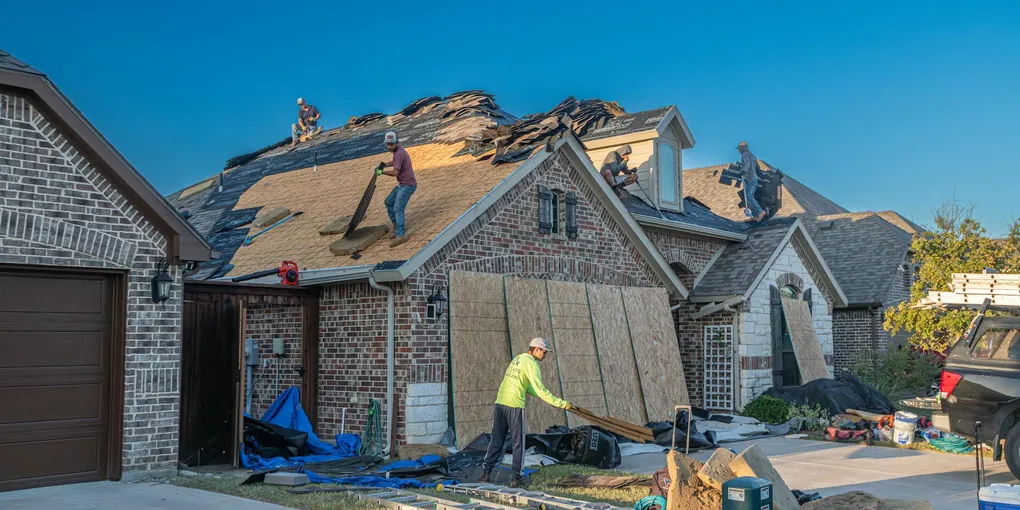
Roof replacement costs $8,000-$35,000 in 2026 for a typical 2,000 sq ft home, or $4-$18 per square foot installed. Asphalt shingles are cheapest at $4-$8/sq ft ($8,000-$18,000 total). Metal roofing runs $9-$15/sq ft ($18,000-$32,000). Clay or concrete tile is $12-$22/sq ft ($25,000-$45,000). Labor is 40-60% of the total. Get 3 quotes, verify the contractor carries liability and workers' comp, and never pay more than 10% up front.
Frequently Asked Questions
How often should a roof be replaced?
Asphalt shingles last 20-30 years. Architectural shingles 25-35 years. Metal roofs 40-70 years. Clay and concrete tile 50-100 years. Slate 75-100+ years. Most homeowners replace once per 25-year ownership. If your roof is 20+ years old and showing granule loss, curling, or leaks, start getting quotes.
Is it cheaper to repair or replace a roof?
Repair if damage covers less than 30% of the roof and the roof is under 15 years old. Replace if the roof is over 20 years old, has multiple leaks, or repair estimates exceed 30% of replacement cost. Patching an old roof rarely buys more than 2-3 years.
Can I have a new roof installed over the old one?
Sometimes. One layer-over is allowed in most jurisdictions if the existing roof is flat, structurally sound, and only one previous layer exists. This saves $1,500-$3,000 in tear-off but reduces the new roof's lifespan 15-20% due to heat retention. Most roofers recommend tear-off for best long-term value.
Is insurance likely to cover my roof replacement?
Depends on the damage cause. Sudden damage (hail, wind, tree fall) is typically covered. Gradual wear and age-related failure is not covered. Claims cover replacement minus your deductible, often $1,000-$5,000. Document damage with photos before filing, and get a contractor inspection before the insurance adjuster visits.
What adds to roofing cost beyond the materials?
Tear-off of old roof ($1-$3/sq ft), replacing damaged decking ($2-$5/sq ft where needed), new underlayment ($0.50-$1.50/sq ft), flashing around chimneys and vents ($300-$800 each), ridge and soffit ventilation ($200-$1,000), gutters ($1,500-$3,500 if replacing), and skylights or dormers. Steep pitch or tall homes add 20-40% for labor.
How long does roof replacement take?
1-3 days for a standard 2,000 sq ft home with asphalt shingles. Metal roofs take 3-5 days. Tile can take 5-10 days. Bad weather or extensive decking replacement adds time. Plan for the work to start early morning and end by sunset each day.
What questions should I ask a roofing contractor before hiring?
Ask: Are you licensed and insured in this state? (Request the certificate of insurance — verify it before signing.) Do you carry workers' comp? How many squares of decking do you estimate need replacement, and what's the per-sheet price if more is found? Who hauls the debris, and is that included? What is the warranty on the shingles and on your labor separately? Will you pull the permit? Avoid any contractor who can't answer all of these.
What is the best time of year to replace a roof?
Late summer and fall (August–October) are ideal: mild temps make shingle installation easier (asphalt shingles need warmth to seal properly), contractors are available, and you're ahead of winter weather. Spring is also acceptable. Avoid January–February in cold climates — shingles below 40°F don't seal and can crack during installation. Emergency replacements happen year-round regardless of season.
What roof decking problems are found during replacement and what do they cost?
Decking (the OSB or plywood under the shingles) is only visible during tear-off. Common problems: soft or spongy panels from trapped moisture ($2–$5 per sq ft to replace), delaminated plywood where the layers have separated, or rot around chimneys and valleys. Ask for the per-sheet replacement rate in your contract before signing — most contractors charge $80–$150 per 4x8 sheet including labor. Budget a 10–20% contingency for decking on homes over 20 years old. On newer homes with a clean inspection, decking surprises are rare. The contractor should walk you through any damaged decking found before patching so you can verify scope.
Is it worth paying extra for Class 4 impact-resistant shingles?
In hail-prone states (Texas, Colorado, Kansas, Nebraska, Oklahoma, Missouri), Class 4 impact-resistant shingles are almost always worth the premium. They cost 10–20% more than standard architectural shingles ($1,500–$3,500 extra on a typical roof) but qualify for 15–30% homeowners insurance premium discounts in many states — often paying back in 3–5 years. Call your insurer before signing the roofing contract to verify the discount and confirm which products qualify. In non-hail-prone regions (Pacific Northwest, Southeast coast), Class 4 adds cost without the insurance benefit and is rarely the right choice. GAF Timberline HDZ-RC and Owens Corning Duration FLEX are the most widely available Class 4 options from major manufacturers.
Roof replacement costs $8,000-$35,000 in 2026 for a typical 2,000 sq ft home, or $4-$18 per square foot installed. Asphalt shingles are cheapest at $4-$8/sq ft ($8,000-$18,000 total).
Roof replacement is the single most expensive regular maintenance project on a typical US home. Skip it too long and leaks damage interior finishes, drywall, insulation, and framing — each a significantly more expensive repair. This guide breaks down real 2026 costs so you can budget, compare quotes, and know when you’re getting a fair deal.
The Short Answer: 2026 National Averages
For a typical 2,000 sq ft house with a 2,500 sq ft roof (roofs are about 20-25% larger than floor area due to pitch and overhang):
| Material | Cost per sq ft installed | Total (2,500 sq ft roof) | Lifespan |
|---|---|---|---|
| 3-tab asphalt shingles | $4-$6 | $10,000-$15,000 | 20-25 years |
| Architectural shingles | $6-$9 | $15,000-$22,500 | 25-35 years |
| Metal panel | $9-$13 | $22,500-$32,500 | 40-60 years |
| Standing seam metal | $12-$18 | $30,000-$45,000 | 50-70 years |
| Clay tile | $12-$20 | $30,000-$50,000 | 50-100 years |
| Concrete tile | $10-$15 | $25,000-$37,500 | 50-75 years |
| Slate | $20-$40 | $50,000-$100,000 | 75-100+ years |
Average mid-range job (architectural shingles, 2,500 sq ft roof, standard pitch, full tear-off): $17,000-$22,000.
What Drives the Cost
1. Material Choice (30-50% of Total)
Asphalt is cheapest upfront and by far the most common residential choice. Metal costs 2-3x more but lasts 2-3x longer, so cost-per-year is similar. Tile and slate are premium and mainly chosen for appearance, climate fit (tile in hot climates), or historical match.
Budget breakdown examples for 2,500 sq ft:
Architectural Asphalt Shingle Job — $18,000
- Shingles: $4,500
- Underlayment: $1,000
- Flashing, vents, ridge cap: $1,200
- Labor: $9,000
- Tear-off: $2,300
Standing Seam Metal Job — $35,000
- Metal panels: $13,000
- Underlayment + felt paper: $1,200
- Trim, flashing, ridge: $2,000
- Labor: $16,000
- Tear-off: $2,800
2. Roof Size and Complexity (Major Factor)
Roof area is typically 1.1-1.4x the house’s footprint depending on pitch. Steeper pitches and complex shapes (dormers, multiple gables, cross-hips) add labor time.
Roof complexity tiers:
- Simple: One or two gables, no dormers. Low labor cost.
- Moderate: Cross-gable with one dormer. +10-15% labor.
- Complex: Multiple hips/valleys, dormers, skylights, intersecting pitches. +20-40% labor.
3. Tear-Off vs. Layer-Over
- Full tear-off: $1-$3 per sq ft. Removes old roof completely, exposes decking for inspection and repair.
- Layer-over: Skips tear-off. Saves $2,500-$7,500 but reduces new roof lifespan 15-20% and can hide decking problems.
Most 2026 roofers will recommend tear-off. Layer-over is mainly done on budget jobs or when the existing roof is in good shape but needs new surface material.
4. Decking Replacement
Roof decking (the wood panels under your shingles) is inspected during tear-off. Damaged sections (rot, delamination, water damage) are replaced at $2-$5 per sq ft.
Most jobs need 5-20% decking replacement. A bad surprise is a job where 60%+ decking needs replacement — adds $3,000-$8,000.
5. Flashing, Vents, and Accessories
These are often line items beyond the main shingle or metal cost:
- Chimney flashing: $400-$1,000
- Skylight flashing: $300-$800 per skylight
- Ridge vents: $300-$1,000
- Soffit vents: $200-$600
- Pipe boots (bathroom/kitchen vents): $50-$150 each
- Ice-and-water shield in eaves and valleys: $500-$1,500
These add $1,500-$5,000 to most jobs. They’re also where cheap jobs cut corners — insist on proper flashing on every penetration.
6. Labor (40-60% of Total)
Regional labor rates in 2026:
- Southern US: $50-$80/hour per roofer
- Midwest: $55-$85/hour
- Northeast: $70-$110/hour
- West Coast: $75-$120/hour
A 2,500 sq ft asphalt roof takes a 4-person crew 2 days (64 labor hours) = $3,500-$7,000 in labor.
Steep-pitch roofs (over 8:12) and tall homes (2+ stories) add 20-40% for safety equipment, scaffolding, and slower work.
When to Repair vs. Replace
Repair if:
- Roof is under 15 years old
- Damage is localized (one area under 100 sq ft)
- Shingles are mostly intact with isolated issues
- No signs of interior water damage
Typical repair costs: $400-$2,500.
Replace if:
- Roof is over 20 years old
- Multiple leak points
- Granules washing off into gutters (end-of-life sign)
- Curling, cracking, or lifted shingles across large areas
- Sagging rooflines (structural warning)
- Repair estimates exceed 30% of replacement
Signs Your Roof Needs Replacement
Look for:
- Granule loss — bare spots showing the black fiberglass mat under shingles. Also check gutters for granule buildup.
- Curling or lifting — shingle edges turn up or pull away from the roof deck.
- Cracked shingles — especially in south-facing exposure.
- Missing shingles — wind damage, or brittleness from age.
- Moss or dark streaks — indicate moisture retention and shingle degradation.
- Interior signs — water stains on ceilings, attic sunlight, damp insulation.
- Age alone — a 25+ year old asphalt roof has likely reached end of life even without visible damage.
How to Get Accurate Quotes
Get 3 Written Quotes
Quality roofers are busy — expect 1-2 weeks for initial quotes in peak season (summer and fall). Don’t go with whoever can start tomorrow; that’s a red flag.
Verify These for Every Contractor
- Current license in your state
- General liability insurance (minimum $1M)
- Workers’ compensation (verify with certificate, not just their word)
- Manufacturer certifications (GAF Master Elite, CertainTeed SELECT ShingleMaster — these give you longer warranties)
- Local references — call at least 2
- Written warranty — labor plus manufacturer
What to Look for in the Quote
- Itemized line items (not just “roof replacement $18,000”)
- Specific shingle or metal brand, product line, and color
- Underlayment type (synthetic is better than 30-lb felt)
- Ice-and-water shield coverage area
- Flashing (specify replacement on every penetration, not reuse)
- Cleanup and haul-away included
- Permit included
- Final price includes tax
- Payment terms (never more than 10% up front)
Red Flags
- Door-to-door solicitation after a storm (storm chasers — often out-of-state, poor warranty follow-through)
- Demand for large deposit — anything over 20% up front is a warning
- “Free” roof in exchange for insurance claim — common fraud pattern
- No written contract — never proceed without one
- Verbal warranty only — warranties must be in writing
Financing Options
Typical paths:
- Cash — safest, often gets a 5-10% discount
- Home equity line of credit (HELOC) — 6-9% interest in 2026
- Contractor financing — often 0% for 12 months, then 15-20% APR
- Insurance claim — for storm damage (see below)
Avoid credit cards unless paying off within the statement period.
Insurance Claims
If storm damage caused your roof failure:
- Document before cleanup — photos of damage from multiple angles.
- File claim promptly — most policies require notification within 60 days.
- Get a contractor inspection first — they’ll create a detailed damage report. This gives you leverage if the adjuster lowballs.
- Meet the adjuster on-site — your contractor should be present.
- Get the claim in writing before signing anything.
Insurance typically covers full replacement minus your deductible. Some policies now carry a separate “wind/hail” deductible (1-5% of home value) — check before assuming.
Cost-Cutting Strategies
- Shingle grade, not brand — A GAF architectural shingle costs similar to CertainTeed. Don’t overpay for brand name.
- Schedule in off-season — Spring (April-May) and late fall (October-November) are often 10-15% cheaper than peak summer. Winter in warm climates too.
- Bundle with gutters or siding — Crews already on site can save 15-25% on combined work.
- Get 3 quotes in writing — Competition pulls prices down. Share quotes (without identifying the competitor) to negotiate.
- Skip premium upgrades you don’t need — Designer shingles, algae-resistant coatings, extended warranties add 15-30% with marginal benefit in most climates.
Warranty Basics
Two warranties matter:
- Manufacturer warranty — Covers shingle defects. Standard is 25 years limited; 50-year non-prorated if the contractor is manufacturer-certified.
- Contractor labor warranty — Covers installation defects. Quality roofers offer 5-10 years of workmanship coverage.
Read the fine print. Most manufacturer warranties require proper underlayment, ventilation, and installation to stay valid.
Green and Cool-Roof Options
- Cool asphalt shingles — Reflective coatings reduce attic heat. Typically 5-15% premium. Some utilities offer rebates.
- Solar shingles (Tesla, GAF Timberline Solar) — $35-$75/sq ft. Only make sense if your energy bill is high and your roof gets sun.
- Metal with cool coating — Very effective in hot climates. Can reduce cooling costs 10-25%.
Regional Roof Replacement Cost Variations
Roofing labor rates and material costs vary significantly by market:
| Region | Asphalt (1,500 sq ft, arch shingles) | Metal Roof (1,500 sq ft) | Low-Slope/Flat (1,000 sq ft) |
|---|---|---|---|
| Northeast (NY, MA, NJ) | $8,500–$15,000 | $14,000–$28,000 | $6,000–$12,000 |
| Mid-Atlantic (DC, MD, VA) | $8,000–$14,000 | $13,000–$26,000 | $5,500–$11,000 |
| Southeast (FL, GA, TX) | $6,500–$12,000 | $11,000–$22,000 | $4,500–$9,500 |
| Midwest | $7,000–$13,000 | $12,000–$24,000 | $5,000–$10,500 |
| Pacific (CA, WA, OR) | $8,500–$15,000 | $14,000–$28,000 | $6,000–$12,500 |
Prices include tear-off, underlayment, and standard installation. Hurricane-rated fasteners (FL, TX coast) and ice and water shield (all zones 5–7) add $500–$1,500. California’s Title 24 cool-roof requirements apply to replacement roofs.
Roofing Shingle Brand Comparison
| Brand | Type | Price Range (per square, material) | Best For | Notes |
|---|---|---|---|---|
| GAF Timberline HDZ | Architectural asphalt | $90–$130/sq | Most widely installed; best value-to-performance | GAF Master Elite contractor required for full system warranty |
| CertainTeed Landmark | Architectural asphalt | $95–$140/sq | Premium mid-range; comprehensive warranty | SureStart Plus warranty among the best in class |
| Owens Corning Duration | Architectural asphalt | $90–$135/sq | Wind resistance; SureNail technology | Strong wind uplift performance; widely available |
| Atlas Pinnacle Pristine | Architectural asphalt | $85–$125/sq | Budget-to-mid; built-in algae protection | 3M Scotchgard algae protection built in; good value |
| IKO Dynasty | Architectural asphalt | $90–$130/sq | Cold-climate regions; strong wind ratings | Popular in Northern US and Canada; armourzone fastening strip |
| Metal (standing seam, local fab) | Steel/aluminum | $300–$700/sq | 50-year lifespan; energy efficiency | Best long-term ROI; requires specialized installer |
GAF Timberline HDZ is the most widely installed residential shingle in North America. For the best warranties, ensure your contractor is GAF Master Elite or CertainTeed SELECT ShingleMaster — these certifications unlock the best system warranty terms.
Questions to Ask Your Roofing Contractor
- Are you installing a full roofing system (underlayment, ice and water shield, ridge cap) or just new shingles? — a proper re-roof includes removing old shingles, inspecting and replacing damaged decking, installing ice and water shield in required areas (valleys, eaves, all penetrations), and a full synthetic underlayment before any shingles; ask for the specific underlayment and ice-and-water product, not just “we do everything right”
- Are you a manufacturer-certified installer (GAF Master Elite, CertainTeed SELECT ShingleMaster) and what warranty level comes with this installation? — standard shingle warranties are 25–30 years on materials; manufacturer-certified contractors can issue system warranties covering both materials and labor for 25–50 years; ask specifically which warranty you’ll receive, who issues it, and what installation standards are required to maintain it
- Will you replace damaged decking, and what is the per-sheet price? — decking rot is discovered during tear-off; ask for the price per sheet of replacement decking before work starts to prevent change-order surprises mid-project; standard is $75–$150 per sheet; contractors who refuse to give this rate upfront may be planning large additions
- What is your flashing process at chimneys, skylights, and valleys — are you replacing all flashing or reusing existing? — flashing failures cause the majority of roof leaks; new flashing (not reused) should be installed at every penetration, valley, and wall intersection; ask whether step flashing at walls and counter-flashing at chimneys are in the base quote
- How will you protect landscaping and gutters during installation, and does cleanup include magnetic nail sweeping? — roof replacement generates significant debris; ask whether a magnetic roller will collect roofing nails from landscaping, whether gutters will be protected from granule accumulation, and whether full debris removal is included in the quoted price
DIY supplies (if you tackle it yourself)
Related Reading
- Signs You Need a New Roof — when to start getting replacement quotes
- Roof Repair Cost — when repair makes more sense than full replacement
- How to Clean Gutters — protect the new roof you’re paying for
- Gutter Replacement Cost — budget for new gutters if yours are original to an old roof
- Chimney Sweep Cost — schedule sweep before roof work to avoid ladder trips later
- How to Fix Broken Chimney Flashing — repair flashing leaks before they cause interior water damage
- Attic Insulation Cost Guide — good time to upgrade during a roof replacement
- Annual Home Maintenance Schedule — keep the new roof lasting longer
- Fence Installation Cost — companion cost guide for exterior work
- Bathroom Remodel Cost Breakdown — interior project cost breakdown
- Eco-Friendly Home Improvements — energy efficiency upgrades that pair with roofing
Free: 10-Point Home Maintenance Checklist
Prevent costly repairs with this seasonal checklist. Save hundreds every year by catching problems early.
Your checklist is ready!
Open Checklist →Something went wrong. View the checklist here.