Gutter Replacement Cost 2026: $4–$40/Linear Foot by Material
New gutters cost $4–$40/linear ft installed — aluminum $800–$2,500, copper $3,500–$8,000 for a typical home. Pricing by material, style, and linear footage.
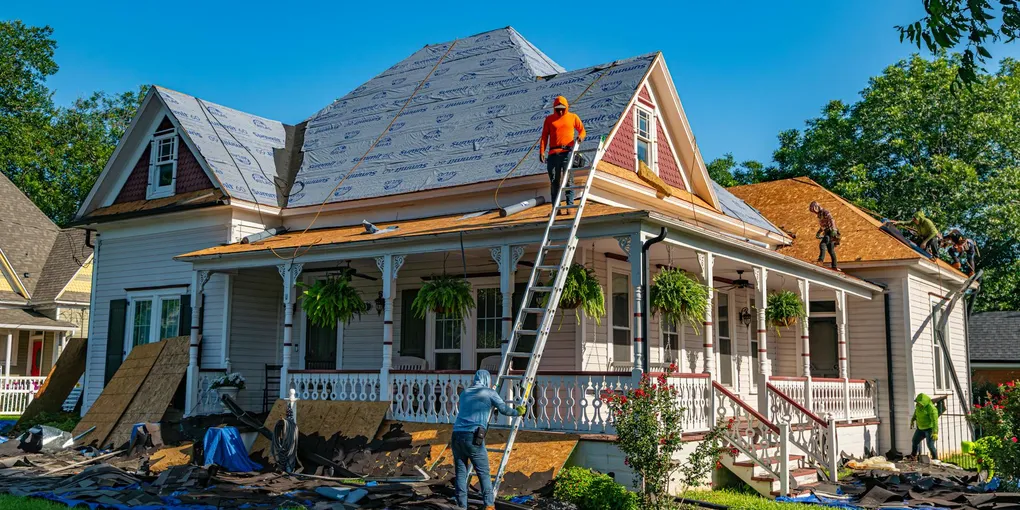
New gutters cost $4-$40 per linear foot installed depending on material. A typical 160-foot run on a single-story home runs $800-$2,500 for aluminum, $1,500-$4,000 for steel, and $3,500-$10,000+ for copper. Seamless gutters cost 20-40% more than sectional, but leak less. Fascia replacement, downspouts, gutter guards, and steep-roof labor are extras.
Frequently Asked Questions
How much do new gutters cost on a typical house?
A standard 2,000 sq ft single-story home has about 150-180 linear feet of gutters and 4-6 downspouts. Budget $800-$2,500 for aluminum seamless, $1,500-$4,000 for galvanized steel, and $3,500-$10,000 for copper. Two-story homes cost 30-60% more due to staging and safety requirements.
Is seamless or sectional gutter better?
Seamless gutters — custom-rolled on-site from a single piece of aluminum or steel — leak far less than sectional. Sectional gutters have seams every 10 feet that eventually fail. Seamless is worth the 20-40% premium unless you're replacing a short run yourself.
Do I need gutter guards?
Gutter guards cost $4-$12 per linear foot installed and cut cleaning frequency from 2-4 times a year to once every 1-3 years. They pay back quickly if you have a two-story home or lots of trees. Budget foam inserts don't work long-term — mesh or micromesh screens are worth the price.
How long should gutters last?
Aluminum gutters: 20-30 years. Galvanized steel: 20-30 years (rusts eventually). Copper: 50-100 years. Vinyl: 10-20 years. Zinc: 80-100 years. Lifespan drops in harsh climates or if gutters are left clogged, causing standing water and ice damming.
Can I install gutters myself?
Sectional aluminum gutters from a home center can be DIY-installed on a single-story home for $300-$700 in materials. Seamless gutters require a specialized roll-forming truck and a trained crew — not a DIY job. Roof pitch, height, and proper slope (about 1/4 inch per 10 feet) all make professional installation worth the cost on most homes.
What size gutters should I choose — 5-inch or 6-inch?
5-inch K-style gutters are standard for most residential homes — they handle normal rainfall volumes and match the aesthetic of most homes. Upgrade to 6-inch gutters when: (1) Your roof has a large drainage area — high-pitch roofs and large roof planes shed water faster than flat roofs of the same square footage. (2) You're in a high-rainfall climate (Pacific Northwest, Gulf Coast, Southeast) where heavy downpours exceed what 5-inch gutters can handle. (3) You've had overflow problems with your existing 5-inch gutters during heavy rain and downspout improvements didn't solve it. 6-inch gutters carry approximately 40% more water than 5-inch and cost 15–25% more. Pair with larger downspouts (4-inch instead of 3-inch) when upgrading to 6-inch gutters.
What causes gutters to fail and need full replacement?
Common failure modes that require replacement rather than repair: (1) Multiple section separations or open seams on sectional gutters — once the sealant in the joints fails at multiple points, resealing rarely holds long-term. (2) Widespread rust on galvanized steel gutters — surface rust can be treated, but full-depth rust creates holes that spread. (3) Gutters pulling away from the fascia at multiple locations — often caused by rotted fascia behind the gutter, requiring fascia repair and gutter re-hanging. (4) Gutters that have lost their slope — improperly sloped gutters hold standing water, promoting rust and mosquito growth; re-hanging is sometimes possible but often triggers full replacement. (5) Physical damage from a falling tree, ice storm, or ladder accident. Single sections can sometimes be replaced, but matching older profiles is difficult.
New gutters cost $4-$40 per linear foot installed depending on material. A typical 160-foot run on a single-story home runs $800-$2,500 for aluminum, $1,500-$4,000 for steel, and $3,500-$10,000+ for copper.
Gutters are easy to ignore until they fail, and then they wreck your foundation, siding, and landscaping in a single rainstorm. Replacement is one of those projects that gets quoted all over the map — $800 from one contractor, $4,500 from another for the same house. This guide explains what a fair 2026 price looks like and what you’re actually paying for.
Quick Answer on Gutter Replacement Cost
Most homes have 150-250 linear feet of gutter, 4-8 downspouts, and some amount of fascia behind the gutter that may need repair. Installed costs per linear foot in 2026:
| Material | Sectional ($/LF) | Seamless ($/LF) | Typical 180 LF Home |
|---|---|---|---|
| Vinyl | $3 - $6 | N/A | $540 - $1,080 |
| Aluminum (standard) | $5 - $10 | $6 - $14 | $900 - $2,520 |
| Aluminum (heavy-gauge .032”) | $7 - $12 | $8 - $16 | $1,260 - $2,880 |
| Galvanized steel | $8 - $14 | $10 - $18 | $1,440 - $3,240 |
| Galvalume steel | $10 - $16 | $12 - $20 | $1,800 - $3,600 |
| Zinc | $15 - $25 | $18 - $30 | $2,700 - $5,400 |
| Copper | $20 - $35 | $25 - $40+ | $3,600 - $7,200 |
That’s just the horizontal trough. Downspouts add $6-$12 per linear foot, and vertical runs typically total 30-50 feet on a standard house ($180 - $600 for aluminum, $800 - $1,500 for copper).
What Drives Gutter Cost Up
House Height and Roof Pitch
Single-story homes are cheap. Two-story homes add 30-60% because of staging, ladder safety, and slower work. Three-story or homes on slopes often require scaffolding or boom lifts, pushing labor 50-100% higher.
Steep roofs (over 8/12 pitch) also slow installers and trigger extra safety equipment fees. Expect a 15-25% labor bump for a 10/12 or 12/12 pitch.
Fascia Board Replacement
Behind every gutter is a fascia board (usually 1x6 or 1x8 pine or cedar). When gutters leak or clog, fascia rots. Replacement runs $6 - $15 per linear foot installed. Budget $500 - $2,500 if your current fascia has obvious water damage.
PVC or composite fascia boards (like Azek) cost $10 - $20 per linear foot installed but never rot. If you’re replacing gutters anyway, it’s often worth upgrading fascia at the same time.
Downspouts and Extensions
Standard 3x4 inch aluminum downspouts cost $6 - $12 per linear foot. Oversized 4x5 inch (better for heavy rain and leaf-heavy areas) run $8 - $15 per linear foot.
Underground drain tie-ins — where downspouts empty into a buried drain pipe that carries water 10+ feet from the foundation — cost $150 - $500 per downspout depending on soil and distance. This is the single most valuable foundation-protection upgrade you can make.
Above-ground extensions (pop-up emitters, flexible downspout extensions, splash blocks) are cheap add-ons at $15 - $75 per downspout.
Gutter Guards
Mesh or micromesh gutter guards add $4 - $12 per linear foot installed. On a 180-foot home, that’s $720 - $2,160 on top of the base gutter cost.
Guard types, roughly priced low to high:
- Foam inserts ($1-$3/LF): Degrade in UV, hold debris. Skip these.
- Brush inserts ($2-$5/LF): OK for needles but clog with leaves.
- Screen guards ($3-$8/LF): Decent budget option. Fine mesh clogs, coarse mesh lets in shingle grit.
- Micromesh (stainless) ($6-$12/LF): The best performers. LeafFilter, Gutter Helmet, MasterShield.
- Reverse-curve ($8-$15/LF): Work via surface tension. Can overshoot in heavy rain.
Whole-home installed quotes from national brands (LeafFilter, Gutter Guards America) often start at $4,500-$8,000 for retrofit. That’s 2-4x what a local roofer charges for the same mesh guards, so get comparison quotes.
Tear-Off and Disposal
Removing old gutters adds $1 - $3 per linear foot. Asbestos-lined gutters (rare, pre-1980s) require hazmat disposal — $5-$15 per LF.
Leaf Screens, Heated Cables, and Rain Chains
- Heated gutter cables to prevent ice dams: $3 - $8 per linear foot plus electrician for a GFCI outlet ($200 - $600).
- Rain chains as decorative downspout alternatives: $50 - $300 each, easy DIY swap.
- Leaf screens (simple wire mesh): $1 - $3 per linear foot, less effective but better than nothing.
Material Deep Dive
Aluminum — The Default
About 80% of residential gutters in the US are aluminum. It’s light, doesn’t rust, comes in dozens of colors, and is cheap. Standard gauge is .027 inches; upgrade to .032 for heavier snow loads or large trees.
Pros: Cheap. Rust-proof. Paintable. Light (less stress on fascia). Cons: Dents from ladders and branches. Can loosen from house in big ice events. Best for: Most homes.
Galvanized and Galvalume Steel — For Heavy Snow and Big Trees
Steel holds up to impact and heavy snow better than aluminum. Galvalume (aluminum-zinc alloy coating) lasts longer than plain galvanized before rust sets in.
Pros: Strong. Holds ice and snow without deforming. Cons: Heavier. Eventually rusts (20-30 years). Needs repainting when coating wears. Best for: Snow country, homes with large overhanging trees.
Copper — The 80-Year Gutter
Copper is gorgeous, effectively permanent (50-100 year life), and expensive. It starts shiny and weathers to a dark brown, eventually developing the green patina that gives old buildings their character.
Pros: Lifetime product. Stunning on historic or upscale homes. Virtually no maintenance. Cons: 3-5x the cost of aluminum. Theft risk in some areas. Any soldering requires skilled labor. Best for: Historic renovations, architecturally significant homes, homeowners who never want to think about gutters again.
Vinyl — The Bargain Bin
Vinyl gutters snap together from sectional pieces, have no professional seamless option, and last 10-20 years. They get brittle in cold and sag in heat.
Pros: Cheapest. DIY-friendly. Cons: Short life. Limited colors. Sectional seams always leak eventually. Best for: Short-term fixes, rental properties, detached garages and sheds.
Zinc — The European Luxury Choice
Zinc gutters are common in Europe, rare in the US. They develop a protective patina and last 80-100 years. Premium pricing and limited installer pool.
Pros: Nearly permanent. Low maintenance. Cons: Specialized installers only. Expensive. Best for: Design-forward homes with the budget.
Seamless vs. Sectional
Seamless gutters are formed on-site from a coil of aluminum or steel fed through a roll-former truck. One continuous piece runs the length of the roof edge. Only seams are at corners and downspout outlets.
Sectional gutters come in 10-foot pre-formed pieces that install with rubber gaskets or sealant at each seam. Cheaper, DIY-friendly, but seams leak and fail over time.
For professional installs, go seamless. For DIY on a shed or detached garage, sectional from a home center is fine.
Getting Real Quotes
Three-quote rule applies to gutters too. When comparing:
- Confirm linear footage. Your quotes should all have similar LF totals for gutters and downspouts. Big discrepancies mean someone measured wrong.
- Check gauge/material thickness. “.027 aluminum” vs “.032 aluminum” changes durability and price. It should be in the contract.
- Ask about hidden hangers. Hidden gutter hangers screwed into fascia are stronger than old-style spike-and-ferrule. Modern installers should be using them every 24 inches.
- Fascia inspection protocol. What happens if rot is found? Is there a per-LF rate?
- Color-matched gutters and downspouts. Most aluminum manufacturers offer 25+ baked-on colors. Upgrading from white to a custom color usually adds $0.50-$1.50 per LF.
- Warranty. Material warranties run 20-50 years; labor warranties from the installer typically 1-5 years.
Red Flags
- Quotes that don’t specify gauge or material
- No line item for fascia inspection/repair
- “Cleanup included” is vague — ask about gutter debris, fascia scraps, old downspout metal
- Refusal to pull permits where required (many municipalities don’t require them for gutters, but new downspout drain tie-ins often do)
- Very low quotes from national gutter-guard companies that “include free gutters” — the guards are where they make their margin
DIY Considerations
Installing sectional aluminum gutters yourself saves $500-$1,500 on a single-story home. You need:
- Aluminum gutters and sealant
- Hidden hangers
- Cordless drill/driver
- Tin snips or angle grinder
- Stable extension ladder and a ladder stabilizer
- Chalk line and level
Critical: gutters need about 1/4 inch of slope per 10 feet toward the downspout. Install too level and water pools. Too steep and water overshoots in heavy rain.
For two-story homes, steep roofs, or anything with multiple corners and intersecting rooflines, hire it out. The labor savings aren’t worth the fall risk.
Maintenance to Protect Your Investment
- Clean gutters twice a year (spring, fall) if you don’t have guards. Once a year with guards.
- Flush downspouts with a hose to check for clogs.
- Inspect gutters after major storms for sagging, pulled-away sections, or pooling water.
- Check fascia and soffit behind gutters every 2-3 years for early rot.
- Trim branches overhanging the roof to reduce debris.
How to Budget the Project
For a 180 LF single-story home in 2026, a realistic middle-of-the-road budget:
- Seamless aluminum gutters (.032): $12 × 180 = $2,160
- Downspouts (40 LF): $10 × 40 = $400
- Hidden hangers every 24”: included
- Fascia contingency: $500
- Tear-off old gutters: $2 × 180 = $360
- Permit (if required): $0-$150
- Total: $3,420 - $3,570
Add 15-25% for two-story ($4,000 - $4,500) or gutter guards (add $720 - $2,160).
Regional Gutter Replacement Cost Variations
Gutter installation labor and material costs vary by market:
| Region | Aluminum (per linear foot) | K-style (100 LF, 1-story) | Seamless (150 LF, 2-story) | Copper Premium |
|---|---|---|---|---|
| Northeast (NY, MA, NJ) | $8–$16/LF | $900–$1,800 | $1,800–$4,000 | +50–100% |
| Mid-Atlantic (DC, MD, VA) | $7–$14/LF | $800–$1,600 | $1,600–$3,600 | +50–100% |
| Southeast (FL, GA, TX) | $5–$12/LF | $600–$1,300 | $1,300–$3,000 | +50–100% |
| Midwest | $6–$13/LF | $650–$1,400 | $1,400–$3,200 | +50–100% |
| Pacific (CA, WA, OR) | $7–$15/LF | $800–$1,700 | $1,700–$3,800 | +50–100% |
Prices include removal of old gutters, standard aluminum seamless gutters, downspouts, and hangers. Gutter guards add $5–$15/LF installed depending on type and brand.
Gutter Brand and System Comparison
| Brand / System | Material | Price (installed, per LF) | Best For | Notes |
|---|---|---|---|---|
| Standard seamless aluminum (local contractor) | Aluminum | $5–$12/LF | Most installations; best value | On-site formed; no seams to leak; contractor installed only |
| LeafGuard (single-piece curved) | Aluminum | $9–$20/LF | All-in-one gutter + cover system | Integrated hood design; no separate guard needed; higher install cost |
| Englert (commercial/residential) | Aluminum, steel | $7–$15/LF | Quality mid-range; contractor standard | Popular with professional gutter contractors; consistent quality |
| Gutter Helmet (surface tension cover) | Aluminum cover + existing gutter | $12–$25/LF | Retrofit guard on existing gutters | Professional installation only; good debris shedding performance |
| Leaf Home Safety Solutions | Aluminum seamless + stainless mesh guard | $10–$22/LF | Full-service national company | Consistent nationwide availability; higher price than local contractor |
| Generic sectional (Amerimax, Genova) | Aluminum, vinyl | $1–$3/LF (DIY material) | DIY repairs; budget patches | Sectional joints are future leak points; not recommended for full replacement |
Seamless aluminum gutters formed on-site by a local contractor are the industry standard — no joints means fewer leaks, and competitive labor pricing beats national gutter companies significantly. Avoid sectional gutters for full replacement.
Questions to Ask Your Gutter Contractor
- Will these be seamless gutters formed on-site, or sectional gutters? — seamless gutters formed on-site from a coil of aluminum have zero joints along their length (joints only at corners and downspout connections); sectional gutters have joints every 10 feet that become future leak points; seamless is the only appropriate choice for full gutter replacement and the price difference is minimal
- What gauge aluminum are you using, and how many hangers per linear foot? — standard residential gutters are .027” gauge; heavier .032” gauge aluminum is worth the small premium in regions with ice or heavy snow; ask how many hangers are installed per linear foot — minimum 2 feet apart, 12–18 inches apart is better for areas with heavy rainfall or ice
- What pitch will you install the gutters at, and how are you handling the downspout discharge? — gutters must slope toward downspouts (1/4” per 10 feet is standard) to drain properly; ask specifically where downspouts will terminate — proper discharge is 4–6 feet from the foundation using extenders; improper downspout termination is the most common source of basement water intrusion
- Is old gutter removal and haul-away included in the quote? — tear-off of old gutters adds $1–$2/LF in most markets; some quotes are installation-only and require you to arrange separate haul-away; confirm whether the complete scope from tear-off to haul-away is included before comparing bids
- If you’re adding gutter guards, what is the warranty and how does the guard perform with your specific debris type? — gutter guard performance varies dramatically by debris type; micro-mesh guards work well for pine needles but may struggle with shingle grit; surface-tension guards shed leaves well but allow small debris through; ask what guard type you’re getting, how it handles your specific tree cover, and what the product warranty covers if debris bypasses it
Related Reading
- Gutter Guard Cost — add guards during replacement for better long-term protection
- Siding Replacement Cost
- Roof Replacement Cost
- How to Clean Gutters
- Gutter Cleaning Cost
- Window Replacement Cost
- Spring Home Maintenance Checklist
- Annual Home Maintenance Schedule
- How to Repair Soffit and Fascia — soffit and fascia repairs commonly done alongside gutter replacement
- Soffit and Fascia Repair Cost — professional soffit and fascia replacement pricing when damage is beyond DIY; $300–$6,000
Free: 10-Point Home Maintenance Checklist
Prevent costly repairs with this seasonal checklist. Save hundreds every year by catching problems early.
Your checklist is ready!
Open Checklist →Something went wrong. View the checklist here.