How to Fix a Broken Kitchen Cabinet Door
Sagging, crooked, or gap-showing cabinet doors are almost always a hinge adjustment — here is how to diagnose and fix European cup hinges and traditional overlay hinges.
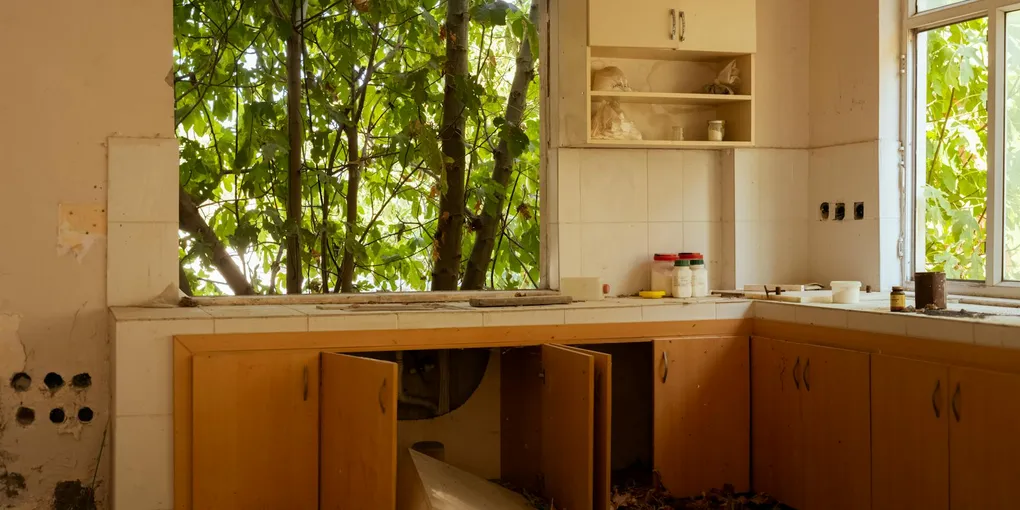
Fixing a kitchen cabinet door: (1) Door won't close or stay closed: most kitchen cabinet doors use European cup hinges — they have three adjustment screws. The front/back screw moves the door in or out; the side screw moves it left or right; the depth screw moves it up or down. Adjust until the door closes squarely with an even gap. (2) Door hinge screws stripped: fill holes with toothpicks and wood glue, let cure, re-drive. If the cabinet box is plywood or particle board, use a larger machine screw with a larger washer. (3) Cracked door panel (raised panel style): glue with wood glue and clamp; fill remaining gaps with wood filler, sand, and repaint. (4) Delaminating veneer door: apply contact cement to both surfaces, let tack, press together firmly. (5) Full door replacement: take measurements (height, width, overlay, hinge location) to a cabinet door company — custom doors start at $30 to $60 each for simple profiles.
Frequently Asked Questions
What type of hinges do most kitchen cabinets use?
Most kitchen cabinets built after the 1990s use European-style cup hinges (also called concealed hinges or 35mm hinges). These are fully adjustable in three directions: up/down, left/right, and in/out. If you open a cabinet door and see a round metal cup mortised into the back of the door with a two-part hinge arm, you have European hinges. Older cabinets may use surface-mounted butt hinges or decorative hinges, which have fewer adjustment options.
How do I adjust a European cup hinge?
European cup hinges have adjustment screws that move the door in three axes. The side screw (closest to the door edge) moves the door left and right. The depth screw (farthest from the door) moves the door in or out (closer to or farther from the frame). The mounting plate screws (on the cabinet box side) can be loosened to slide the door up or down. Small turns make noticeable differences — adjust in quarter-turn increments and check the gap after each adjustment.
Why is there a gap on one side of my cabinet door?
An uneven gap usually means the door is tilted — one corner is closer to the cabinet frame than the other. On European hinges, this is fixed by adjusting the side screws on each hinge in opposite directions: move the top hinge one way and the bottom hinge the other way to bring the door into parallel alignment with the frame.
Can I replace a broken European cup hinge myself?
Yes. European cup hinges are standardized — the cup diameter is almost universally 35mm and the mounting hole pattern is consistent across brands. Take the broken hinge to a hardware store or search by the brand name stamped on the hinge body. Replacement hinges are inexpensive and the installation only requires a screwdriver.
My cabinet door is crooked even after adjustment. What else could be wrong?
If the door remains crooked after full hinge adjustment, check whether the hinge cup mounting holes in the door have stripped out or enlarged. If the screws spin without gripping, fill the holes with toothpicks and wood glue, let dry, and re-drive the screws. Also inspect the cabinet box for squareness — a racked cabinet box will never allow a door to hang perfectly regardless of hinge adjustment.
How do I fix a cabinet door that has a cracked or broken panel?
A cracked raised panel in a traditional cabinet door can be repaired with wood glue if the panel is split but structurally intact. Apply wood glue along the crack, clamp firmly, and allow to cure for 24 hours. Sand flush, prime, and paint or refinish to match. For a through-crack on a flat-panel door (MDF or plywood), the panel often needs replacement rather than repair, as gluing flat panels together rarely holds long-term under the stress of repeated door use.
Fixing a kitchen cabinet door: (1) Door won’t close or stay closed: most kitchen cabinet doors use European cup hinges — they have three adjustment screws. The front/back screw moves the door in or out; the side screw moves it left or right; the depth screw moves it up or down.
Kitchen cabinet doors that sag, show uneven gaps, or refuse to close properly are frustrating to live with — but in most cases the fix takes under 15 minutes with a single screwdriver. Modern European cup hinges are designed for easy adjustment without any tools except a Phillips-head screwdriver.
This guide covers diagnosing the problem, adjusting European hinges, replacing damaged hinges, and fixing stripped mounting holes.
What You Need
- Phillips-head screwdriver (#2)
- Replacement European cup hinges (35mm) — for replacing broken or cracked hinges
- Wood glue — for regluing loose joints or filling stripped holes
- Toothpicks — for filling stripped screw holes
- Tape measure or ruler
- Painter’s tape (optional, for marking reference positions)
Step 1: Identify Your Hinge Type
Open a cabinet door and look at the hinges from the inside of the cabinet:
European cup hinges (most common in modern cabinets): You will see a round metal cup pressed into the back face of the door, with a two-part arm connecting it to a mounting plate screwed to the cabinet box interior. These hinges have visible adjustment screws.
Traditional butt or surface-mount hinges: Flat metal plates visible from the front or back edge of the door, with no built-in adjustment. These require shimming or physical plate relocation rather than screw adjustment.
This guide focuses on European cup hinges. If you have traditional hinges, the adjustment process involves loosening the mounting screws, physically shifting the door, and re-tightening — a similar principle but without the adjustment screw precision.
Step 2: Diagnose the Problem
Stand in front of the cabinet with the door closed. Look for:
Uneven gap at one side: The door is tilted. One corner is closer to the cabinet frame than the other. Common after years of use as hinges shift.
Door does not reach the cabinet face or protrudes: The door needs in/out adjustment. It may also be preventing the adjacent door from opening properly.
Door hangs lower on one side or sits crooked: The mounting plates have shifted, or the hinge cup screws have worked loose.
Door springs open or will not stay closed: The hinges are set too far out (depth issue) or the door is warped. Also check if the magnetic catch or roller catch has failed.
Door makes grinding contact with adjacent door or cabinet frame: Usually a lateral alignment problem.
Step 3: Adjust European Cup Hinges
European cup hinges have three adjustments. The screws vary slightly by brand but the function is standardized:
Side adjustment (left/right): The screw closest to the door edge on the hinge arm. Turning it moves the door laterally — toward or away from the adjacent door or the cabinet frame side. This is the most frequently needed adjustment for gap equalization.
Depth adjustment (in/out): The screw farthest from the door (the one that changes how far the door protrudes from the cabinet face). Use this if the door is not flush with adjacent doors or is sticking out too far.
Height adjustment (up/down): Loosen the screws on the mounting plate (the part screwed to the cabinet box wall, not the door). With the screws loose, the entire hinge arm and door can slide up or down along a slot. Retighten once positioned.
To correct an uneven gap:
- Identify which corner is too close to the frame.
- On the hinge closest to that corner, adjust the side screw to move the door edge away from the frame.
- On the opposite hinge, adjust the same screw the opposite direction to bring that edge of the door in.
- Make quarter-turn adjustments and close the door to check the gap after each change.
- Aim for a consistent 1/8-inch gap on all sides.
Step 4: Replace a Broken or Damaged Hinge
If a hinge cup is cracked, the arm is bent, or the adjustment mechanism is stripped, replacement is the right call. European cup hinges are inexpensive and widely available.
Identify the correct replacement hinge. Note the overlay type (full overlay, half overlay, or inset), which determines how the hinge arm is configured. Most standard kitchen cabinets use full-overlay hinges. If you can see the hinge brand name (often stamped on the metal), you can order an exact replacement. Otherwise, bring the broken hinge to a hardware store for matching.
Remove the broken hinge:
- Open the door fully.
- Loosen and remove the screws holding the mounting plate to the cabinet box wall. The hinge arm will come free from the cabinet side.
- The cup portion stays in the door. To remove it, unscrew the two screws holding the cup to the door face. The cup pulls straight out.
Install the replacement:
- Press the new hinge cup into the existing cup hole in the door (no drilling needed if the diameter matches — standard 35mm).
- Drive the two cup screws to secure it.
- Clip or screw the arm onto the mounting plate on the cabinet box wall.
- Adjust as described in Step 3.
Step 5: Fix Stripped Hinge Screw Holes
If hinge cup screws spin without gripping in the door, the screw holes have stripped out. This causes the door to hang at an angle that no amount of hinge adjustment will fix.
Toothpick repair (most doors):
- Remove the hinge cup from the door.
- Dip 2 to 3 toothpicks in wood glue and push them into the stripped hole until packed.
- Break the toothpicks flush with the door surface.
- Allow the glue to dry for at least 1 hour (ideally overnight).
- Drive the original screw back in slowly. It will grip the toothpick material and create a firm hold.
For MDF doors (common in painted cabinets), the same technique works but the wood glue cure time matters more — MDF does not hold screws as tenaciously as solid wood, so a full overnight cure is preferable.
Step 6: Reattach a Fully Detached Cabinet Door
If a door has completely fallen off because all hinge screws pulled out of the cabinet box wall, you need to remount both hinges.
Check the cabinet box mounting hole locations. If the original pilot holes have stripped, fill them with toothpicks and wood glue as above. If the cabinet box is particleboard (as many are) and has been damaged beyond what toothpick filling can address, use larger-diameter cabinet repair screws or hinge-specific threaded inserts for a stronger hold.
Hang the door by clipping the hinge arms onto the mounting plates while a helper holds the door, then tighten all mounting plate screws. Adjust gaps as in Step 3.
When to Call a Cabinet Professional
Consider professional help if:
- Multiple doors show the same problem across the kitchen — this may indicate the cabinet boxes themselves are out of plumb and need shimming or releveling
- The door frame (stile and rail) joints are coming apart — structural door repairs require clamps, specialized glue, and woodworking skill
- The cabinet box carcass is damaged or out of square — no amount of hinge adjustment compensates for a box that has racked
Related Reading
- How to Install Under-Cabinet Lighting
- How to Paint Kitchen Cabinets
- How to Fix a Garbage Disposal
- How to Fix a Broken Kitchen Drawer Slide — repair sticky or falling-out drawers while you have the cabinet open
- How to Fix a Broken Kitchen Drawer Front — reattach or replace a loose or detached drawer front panel
- How to Fix a Broken Drawer Bottom — repair or replace a sagging or damaged drawer bottom panel
- How to Fix a Broken Kitchen Cabinet Hinge Cup — replace a cracked or stripped European hinge cup while the cabinet door is already off
- How to Fix a Broken Cabinet Lazy Susan — repair a lazy susan that no longer spins or has dropped a shelf
- Identify Your Hinge Type
Open a cabinet door and look at the hinges from the inside of the cabinet:
- Diagnose the Problem
Stand in front of the cabinet with the door closed. Look for:
- Adjust European Cup Hinges
European cup hinges have three adjustments. The screws vary slightly by brand but the function is standardized:
- Replace a Broken or Damaged Hinge
If a hinge cup is cracked, the arm is bent, or the adjustment mechanism is stripped, replacement is the right call. European cup hinges are inexpensive and widely available.
- Fix Stripped Hinge Screw Holes
If hinge cup screws spin without gripping in the door, the screw holes have stripped out. This causes the door to hang at an angle that no amount of hinge adjustment will fix.
- Reattach a Fully Detached Cabinet Door
If a door has completely fallen off because all hinge screws pulled out of the cabinet box wall, you need to remount both hinges.
Free: 10-Point Home Maintenance Checklist
Prevent costly repairs with this seasonal checklist. Save hundreds every year by catching problems early.
Your checklist is ready!
Open Checklist →Something went wrong. View the checklist here.