How to Fix a Broken Kitchen Drawer Slide
Learn how to diagnose, remove, and replace a broken or sagging kitchen drawer slide so your drawers open and close smoothly again.
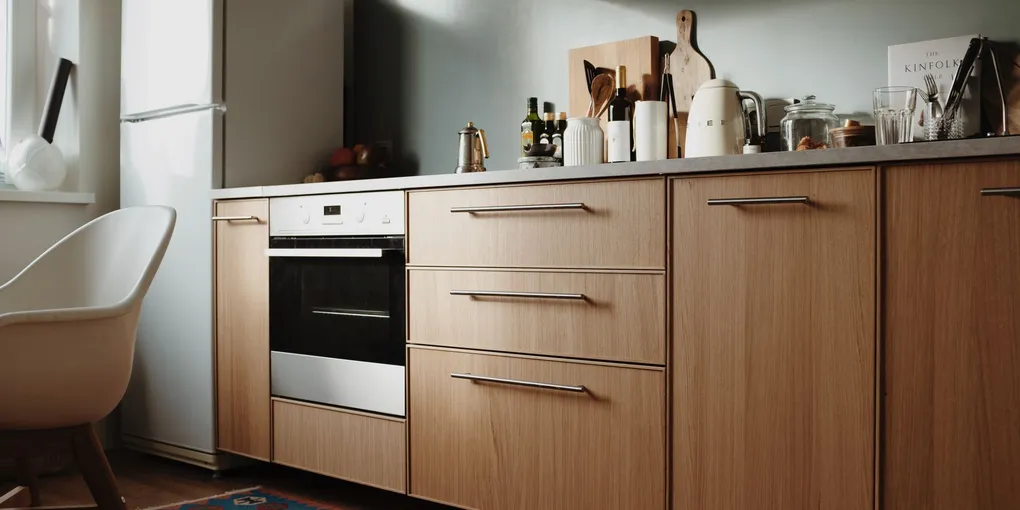
A kitchen drawer that sticks, sags, or won’t close flush is one of the more frustrating daily annoyances — especially in a busy kitchen. In almost every case, the culprit is a worn or broken drawer slide.
A kitchen drawer that sticks, sags, or won’t close flush is one of the more frustrating daily annoyances — especially in a busy kitchen. In almost every case, the culprit is a worn or broken drawer slide. Replacing slides is a beginner-level repair that costs $10–$30 per pair and takes about an hour.
How Drawer Slides Work
Most kitchen drawers use side-mount ball-bearing slides, which consist of two interlocking rails — one mounted to the cabinet wall and one attached to the drawer box — with a row of ball bearings between them that enable smooth travel. Over years of use, the bearings wear, the rails bend, or the mounting screws loosen, causing the failures you’re experiencing.
Older kitchens may have simpler roller slides (a center-mount or two-wheel side-mount style) that are even easier to replace.
What You’ll Need
- Phillips screwdriver (and possibly a flathead)
- Measuring tape
- Replacement drawer slides (matching length and mount type)
- Drill and drill bits (if the new slide holes don’t align with old ones)
- Level (optional but helpful for precise installation)
- Pencil
For most kitchens, Blum Tandem Plus Blumotion Undermount Slides represent a premium upgrade with excellent soft-close performance. For a budget-friendly option, KV 8400 Series Full Extension Side-Mount Slides are a reliable standard replacement found in most big-box stores.
Step 1: Remove the Drawer
Pull the drawer open as far as it will go. Look for a plastic locking lever or tab on each slide rail — typically near the front of the cabinet-mounted rail. Press or lift the lever on both sides simultaneously while pulling the drawer outward.
If there’s no lever, tilt the front of the drawer upward at roughly a 30-degree angle while pulling. Some older slides release by pressing down on the rear of the drawer first.
Step 2: Remove the Old Slides
With the drawer removed, you’ll see one rail section still attached to the drawer box on each side, and the cabinet-mounted rail remaining in the cabinet. Unscrew both parts of each slide — the drawer-mounted piece and the cabinet-mounted piece.
Note the screw hole positions before removing everything. If the new slides share the same hole pattern, reinstallation is straightforward. If not, you may need to drill new pilot holes.
Step 3: Measure and Buy the Right Replacement
Measure the depth of the drawer box from the back face to the front face. This is your slide length. Most kitchen drawers use 18-inch or 22-inch slides. Write down this measurement and note whether the slides are side-mount (attached to the left and right walls of the cabinet) or bottom-mount/undermount.
Also check the weight rating — standard slides handle 75 to 100 lbs, which is sufficient for most kitchen drawers. For heavy pot-and-pan drawers, look for 150 lb rated slides.
Step 4: Install the Cabinet-Side Rails
Attach the outer (cabinet-mounted) rail of each new slide to the cabinet wall. Most slides include a front bracket that hooks over a standard cabinet face frame, and a rear bracket that mounts to the back wall of the cabinet.
Use a level to ensure the two rails are perfectly horizontal and at the same height on both sides. Even a slight slope causes the drawer to slide open on its own or bind on one side. Mark the screw positions with a pencil before driving screws.
Step 5: Attach the Drawer-Side Rails
Mount the inner slide member to each side of the drawer box. The front of the slide should be flush with the front face of the drawer box. Use the provided screws and drive them firmly without stripping the wood.
Step 6: Reinstall the Drawer
Slide the inner (drawer-mounted) rails into the outer (cabinet-mounted) rails and push the drawer in until it clicks into place. Open and close it several times to test the action. It should glide smoothly with no binding, tilting, or side-to-side play.
If the drawer doesn’t sit flush when closed, most modern slides have a front-adjustment screw or cam that allows fine-tuning left-right and up-down alignment. Use a Phillips screwdriver to adjust until the drawer front is even with adjacent drawers.
Tips for Long-Term Performance
- Apply a small amount of dry PTFE lubricant spray to the ball bearing tracks once a year to keep slides operating smoothly.
- Avoid overloading drawers beyond their rated weight — this is the number-one cause of premature slide failure.
- Tighten mounting screws every few years; vibration from daily use gradually backs them out.
With the right replacement slides installed correctly, a kitchen drawer should glide smoothly for another decade or more.
- Remove the Drawer
Pull the drawer open as far as it will go. Look for a plastic locking lever or tab on each slide rail — typically near the front of the cabinet-mounted rail. Press or lift the lever on both sides simultaneously while pulling the drawer outward.
- Remove the Old Slides
With the drawer removed, you'll see one rail section still attached to the drawer box on each side, and the cabinet-mounted rail remaining in the cabinet. Unscrew both parts of each slide — the drawer-mounted piece and the cabinet-mounted piece.
- Measure and Buy the Right Replacement
Measure the depth of the drawer box from the back face to the front face. This is your slide length. Most kitchen drawers use 18-inch or 22-inch slides.
- Install the Cabinet-Side Rails
Attach the outer (cabinet-mounted) rail of each new slide to the cabinet wall. Most slides include a front bracket that hooks over a standard cabinet face frame, and a rear bracket that mounts to the back wall of the cabinet.
- Attach the Drawer-Side Rails
Mount the inner slide member to each side of the drawer box. The front of the slide should be flush with the front face of the drawer box. Use the provided screws and drive them firmly without stripping the wood.
- Reinstall the Drawer
Slide the inner (drawer-mounted) rails into the outer (cabinet-mounted) rails and push the drawer in until it clicks into place. Open and close it several times to test the action.
Free: 10-Point Home Maintenance Checklist
Prevent costly repairs with this seasonal checklist. Save hundreds every year by catching problems early.
Your checklist is ready!
Open Checklist →Something went wrong. View the checklist here.