How to Fertilize Your Lawn (Spring, Summer, Fall Schedule)
A simple year-round lawn fertilizer schedule. What to apply and when, NPK ratios explained, how much to buy, and the 3 biggest mistakes homeowners make.
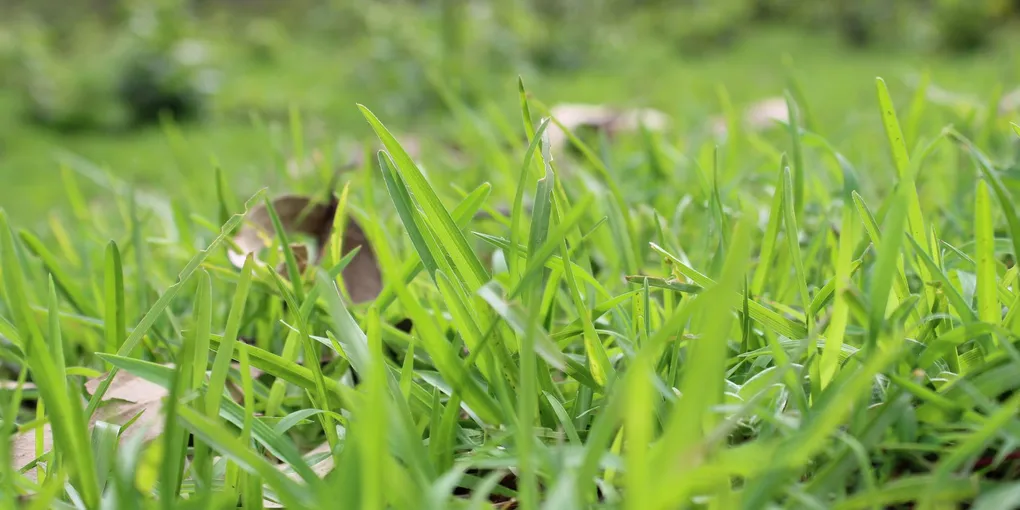
For most US lawns, apply fertilizer 3-4 times per year. Spring (April-May): a slow-release nitrogen fertilizer like Scotts Turf Builder to start green growth. Early summer (June): a balanced feed plus weed control. Fall (September-October): the most important feeding — a winterizer with potassium to build root reserves. Skip summer feeding in hot climates. Never fertilize dormant (brown) or stressed grass, and always water lightly after applying granular fertilizer.
Frequently Asked Questions
When should I fertilize my lawn in spring?
Apply the first spring fertilizer when soil temps reach 55°F consistently — typically when forsythia blooms or lilacs leaf out in your region. In most of the US this is mid-March to mid-May. Fertilizing too early (when grass is still dormant) feeds weeds instead of grass and can damage roots.
How many times a year should I fertilize?
3-4 times is optimal for cool-season grasses (fescue, bluegrass, rye). 4-5 times for warm-season grasses (Bermuda, Zoysia, St. Augustine) during their growing season. More than 5 applications per year risks nitrogen burn and runoff pollution.
What do the 3 numbers on fertilizer mean?
The numbers are NPK: nitrogen, phosphorus, potassium. Example: 28-0-4 means 28% nitrogen, 0% phosphorus, 4% potassium. Nitrogen drives leaf growth, phosphorus drives root and flower growth, potassium drives overall health and winter hardiness. For established lawns, use zero-phosphorus formulas (many states ban phosphorus in lawn fertilizer).
Should I fertilize before or after mowing?
After. Mow 1-2 days before fertilizing to reduce clippings that would block the fertilizer from reaching the soil. Then apply to dry grass, and water lightly within 24 hours to move the fertilizer to the soil.
How long until I see results after fertilizing?
Greening typically shows in 5-7 days with granular fertilizer, 2-4 days with liquid. Thicker, denser growth takes 2-4 weeks. Slow-release formulas show slower greening but provide more consistent feeding for 6-10 weeks.
Can you over-fertilize a lawn?
Yes — and it's the most common homeowner mistake. Too much nitrogen burns roots (yellow/brown patches) and promotes disease. Follow the spreader settings on the bag. Never apply more than the recommended rate, even for a 'weak' lawn. If you over-apply, water heavily for 2-3 days to flush nitrogen through the soil.
What fertilizer should I use for a new lawn or overseeding?
For new lawns (seed or sod) and overseeding, use a starter fertilizer with higher phosphorus — a 16-6-4 or similar ratio. Phosphorus (the middle number) drives root development in new grass, which is more critical than leaf growth at establishment. Scotts Turf Builder Starter Food and Pennington Ultragreen Starter are common options. Apply at seeding time, then follow with a regular lawn fertilizer schedule once grass is established (6–8 weeks after germination). For sod: apply starter fertilizer 2 weeks after installation when the roots begin to establish. Never apply high-nitrogen fertilizers to new seed — too much nitrogen promotes blade growth at the expense of root development, and seedlings can't handle nitrogen burn.
Should I use weed-and-feed or apply weed killer and fertilizer separately?
Separate products give better results in most cases. Weed-and-feed products apply herbicide and fertilizer at the same time, which sounds efficient but creates timing conflicts: pre-emergent herbicide (for crabgrass) works best in early spring before weeds germinate, but fertilizer is applied when grass is actively growing (mid-spring). Post-emergent weed killers are most effective on young actively growing weeds in late spring, while the best fertilizer timing may be earlier or later. If you use a weed-and-feed, you're optimizing for neither product. Exceptions: for a simple, low-effort approach on a typical suburban lawn with both weeds and thin grass, a spring weed-and-feed (Scott's Turf Builder Plus Weed Control) is a reasonable single-pass solution. Don't use weed-and-feed if you're overseeding — the herbicide kills germinating grass seed.
For most US lawns, apply fertilizer 3-4 times per year. Spring (April-May): a slow-release nitrogen fertilizer like Scotts Turf Builder to start green growth.
A well-fertilized lawn is greener, denser, and crowds out weeds. A poorly-fertilized lawn looks patchy, invites disease, and costs more to maintain. The good news: lawn fertilizing is simple if you follow a calendar and resist the urge to over-apply.
This guide gives you a complete year-round schedule for both cool-season (north) and warm-season (south) grass, explains the NPK numbers, and covers the 3 mistakes that ruin lawns.
First: What Type of Grass Do You Have?
Your grass type determines when to fertilize.
Cool-Season Grasses (North US)
- Kentucky bluegrass
- Tall fescue
- Fine fescue
- Perennial ryegrass
- Common in: Northeast, Midwest, Pacific Northwest, mountain states
Grows actively in spring and fall. Goes semi-dormant in hot summer. Fertilize primarily in spring and fall.
Warm-Season Grasses (South US)
- Bermuda
- Zoysia
- St. Augustine
- Centipede
- Bahia
- Common in: Southeast, Gulf Coast, Southwest
Grows actively in hot summer. Goes dormant (brown) in winter. Fertilize primarily in late spring through summer.
Not sure which you have? Cool-season grasses are typically narrow and bright green; warm-season are coarser and blue-green or gray-green. If your lawn is green in December, it’s cool-season. If it’s brown in January, it’s warm-season.
The Year-Round Fertilizer Schedule
For Cool-Season Lawns (Kentucky Bluegrass, Fescue, Rye)
Early Spring (March-April): Light first feed
- When soil temps hit 55°F (forsythia blooming)
- Apply a slow-release nitrogen product
- Scotts Turf Builder (32-0-4) — 5,000 sq ft covered per bag
Late Spring (May): Crabgrass preventer + fertilizer
- Before crabgrass germinates (soil temp 55-60°F)
- Scotts Halts Crabgrass Preventer — 5,000 sq ft, prevents crabgrass + feeds lawn
Summer (optional, June-August): Light maintenance feed
- Only if grass looks stressed and there’s no drought
- Use a slow-release organic like Milorganite (6-4-0) — low burn risk
Early Fall (September): The most important feeding
- Apply a high-nitrogen fertilizer when temps drop below 80°F
- Scotts Turf Builder Fall Lawn Food or same spring product
Late Fall (October-November): Winterizer
- When grass slows but before dormancy
- Scotts Turf Builder WinterGuard — higher potassium for winter hardiness
For Warm-Season Lawns (Bermuda, Zoysia, St. Augustine)
Late Spring (April-May): First feed as green-up begins
- When grass is 50% green
- Slow-release high-nitrogen product
Early Summer (June): Main growth feed
- Peak growing season — maximum feeding benefit
- Scotts Turf Builder Southern Lawn Food (32-0-10)
Late Summer (August): Secondary feed
- Helps grass stay vigorous through heat stress
- Same product as summer feed
Early Fall (September-October): Winterizer
- Warm-season grasses also benefit from potassium before dormancy
- Scotts Turf Builder WinterGuard
Understanding NPK
The three numbers on every fertilizer bag tell you the nitrogen, phosphorus, and potassium ratio.
- Nitrogen (first number): Drives green color and leaf growth. The most important number for established lawns.
- Phosphorus (second number): Critical for seeding and new lawns. Largely banned from maintenance fertilizers in many states due to water pollution.
- Potassium (third number): Improves winter hardiness, disease resistance, and drought tolerance.
For established lawns, look for:
- Spring/summer: high nitrogen, low phosphorus, moderate potassium (e.g., 28-0-4, 32-0-4)
- Fall winterizer: lower nitrogen, higher potassium (e.g., 20-0-10)
- New lawn starter: balanced with phosphorus (e.g., 18-24-12)
Tools You Need
Broadcast Spreader (Best for Most Lawns)
Covers wide areas quickly. Throws fertilizer in a 6-10 ft arc.
- Budget: Scotts Classic Drop Spreader — $40-$60
- Best value: Scotts Turf Builder Edgeguard DLX — $65-$90
Drop Spreader (Best for Small or Narrow Lawns)
Drops fertilizer directly below the spreader. Precise for bordered areas.
- Agri-Fab Drop Spreader — $80-$120
Handheld Spreader (Small Lawns)
For lawns under 2,000 sq ft.
- Scotts Wizz Handheld Spreader — $30-$50
Soil Test Kit
Before you guess at fertilizer needs, test. A $20 soil test tells you exactly what your lawn needs.
- MySoil Professional Soil Test — $30
- Or request a mailed kit from your state’s agricultural extension office — usually free to $15
How to Apply Fertilizer (Step-by-Step)
Step 1: Mow and Water (1-2 Days Before)
- Mow the grass to its usual height.
- Water lightly the day before — soil should be slightly moist, not soaked.
Step 2: Set the Spreader
Every fertilizer bag lists spreader settings. Match the number to your spreader’s dial. If in doubt, set lower — you can always do a second pass.
Step 3: Apply the Perimeter First
- Fill the spreader over a tarp or driveway (not over the lawn — spills concentrate in one spot).
- Walk the perimeter of your lawn first, with the spreader closed until you start.
- This creates a “header strip” that you’ll overlap when doing the main area.
Step 4: Apply the Main Area
- Walk in straight, parallel lines across the lawn.
- Overlap each pass by about 6 inches to avoid striping.
- Walk at a consistent pace — about 3 mph. Too slow = over-application; too fast = under-application.
- Close the spreader hopper when turning or stopping.
Step 5: Water Lightly Within 24 Hours
- After application, water the lawn with 1/4 inch of water.
- This moves the granular fertilizer from the grass blades down to the soil.
- Don’t water heavily — you’ll wash fertilizer off the lawn.
Step 6: Wait Before Walking or Mowing
- Keep pets and children off the lawn for 24 hours after most granular fertilizers.
- Wait 2-3 days before mowing.
- Wait 3-4 weeks between fertilizer applications.
The 3 Biggest Mistakes Homeowners Make
1. Over-Application
Applying more fertilizer than recommended is the fastest way to burn your lawn. Yellow or brown patches appear within days. Once burned, grass takes 4-8 weeks to recover — if it recovers at all.
Fix: Always measure your lawn first. Follow the spreader settings exactly. “More = better” is wrong with fertilizer.
2. Fertilizing Dormant or Stressed Grass
Applying fertilizer to dormant (brown) grass does nothing useful. Applying to drought-stressed or freshly-seeded grass can kill it.
Fix: Wait for active growth. Brown grass in August isn’t hungry — it’s dormant and conserving resources.
3. Skipping the Fall Feeding
The biggest mistake in cool-season lawns is skipping fall fertilizing to save money. Fall is when grass builds root reserves for next year. Skipping this feeding means a thinner, weaker lawn next spring.
Fix: Prioritize fall feeding above all others. If you can only afford one application per year, make it fall.
Organic vs. Synthetic
Synthetic fertilizers — faster results, cheaper per pound, higher risk of burn and runoff. Most homeowner products are synthetic.
Organic fertilizers — slower release, improve soil over time, lower burn risk, more expensive per application.
For most homeowners, a mix works well: synthetic for spring jumpstart, organic (like Milorganite) for summer maintenance. Organic-only programs take 2-3 years to build full soil health but result in lower long-term costs and better drought tolerance.
What About Weed and Feed?
Weed-and-feed products combine fertilizer with herbicide. Convenient but with tradeoffs:
- Use in spring when weeds are actively germinating
- Skip if you have trees — the herbicide (2,4-D) can damage tree roots
- Wait 4 weeks after seeding before using weed-and-feed — will kill new grass
For pure feeding, stick with straight fertilizer. For weed problems, treat weeds separately with a targeted herbicide.
Cost Breakdown
For a typical 5,000 sq ft lawn:
- Soil test: $0-$30 (once every 3 years)
- 4 fertilizer applications per year: $80-$160
- Spreader: $40-$90 (one-time; lasts 10+ years)
- Annual cost after year 1: $80-$160
Compare to lawn care service: $400-$800 per year for the same applications.
When to Call a Pro
- Lawns over 20,000 sq ft — DIY becomes a significant time investment
- Severe compaction or bare patches — aeration and overseeding work best together with a pro
- Persistent disease or insect damage — needs diagnosis before treatment
- Commercial or HOA lawns — often need certified applicators for compliance
For standard residential lawns under 15,000 sq ft, DIY fertilizing is straightforward and saves $300-$600/year vs. services.
Related Reading
- Spring Lawn Care Schedule — where fertilization fits in the month-by-month plan
- Lawn Aeration Cost — pair aeration + fertilization for maximum uptake
- How to Overseed a Lawn — starter fertilizer timing for new seed
- How to Kill Weeds in Your Lawn — dense fertilized turf crowds out weeds
- Best Lawn Mowers for Homeowners — gas, battery, and robotic picks
- Sprinkler System Installation Cost — pair consistent watering with fertilization
- Stump Grinding Cost — clear old stumps before reseeding
- Pest Control Cost — grub prevention protects new growth
- Spring Home Maintenance Checklist — full spring yard and home prep
- Annual Home Maintenance Schedule — year-round homeowner calendar
- How to Clean Gutters — spring exterior maintenance
- Best Budget Power Washers — clean driveways and decks in spring
- How to Stain a Deck — pair with lawn care for complete yard refresh
- Garage Organization Ideas — organize the new spreader and tools
- First: What Type of Grass Do You Have?
Your grass type determines when to fertilize.
- The Year-Round Fertilizer Schedule
When soil temps hit 55°F (forsythia blooming) Apply a slow-release nitrogen product
- Understanding NPK
The three numbers on every fertilizer bag tell you the nitrogen, phosphorus, and potassium ratio.
- How to Apply Fertilizer (Step-by-Step)
Mow the grass to its usual height. Water lightly the day before — soil should be slightly moist, not soaked.
- Organic vs. Synthetic
Synthetic fertilizers — faster results, cheaper per pound, higher risk of burn and runoff. Most homeowner products are synthetic.
- What About Weed and Feed?
Weed-and-feed products combine fertilizer with herbicide. Convenient but with tradeoffs:
Free: 10-Point Home Maintenance Checklist
Prevent costly repairs with this seasonal checklist. Save hundreds every year by catching problems early.
Your checklist is ready!
Open Checklist →Something went wrong. View the checklist here.