Garage Organization: How to Go From Chaos to Clean for Under $300
Transform a cluttered garage into an organized workspace with these proven storage systems, layout strategies, and budget-friendly solutions.
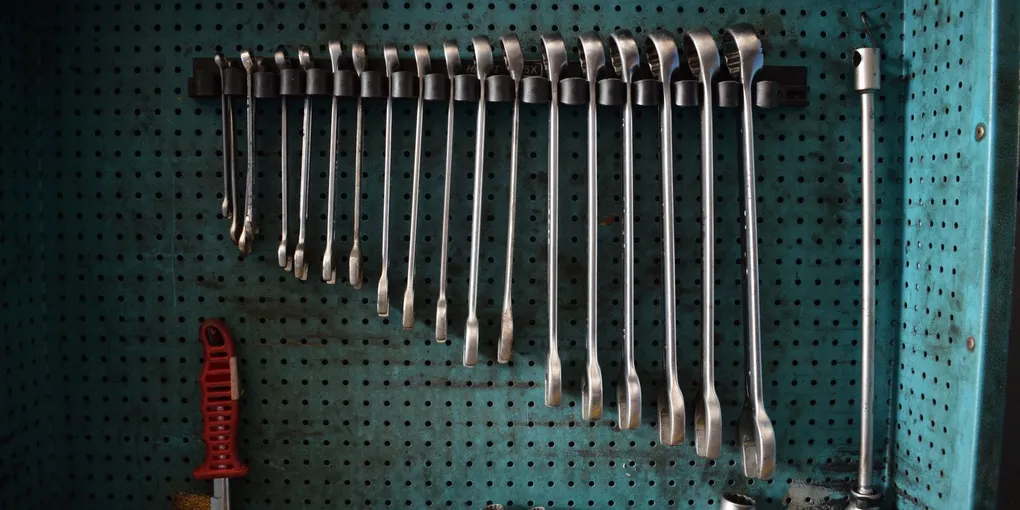
You can organize a cluttered garage for $250-350 using wall-mounted shelving, ceiling storage racks, pegboard tool walls, and labeled bins. The key is going vertical to free up floor space. Start by purging everything you have not used in a year, then zone the garage into areas for vehicles, tools, long-term storage, and sports gear.
Frequently Asked Questions
How much does it cost to organize a garage?
A DIY garage organization using shelving, ceiling racks, pegboard, and bins costs $220-480. Most garages can be fully organized for $250-350. Professional garage organization companies charge $2,000-8,000 for custom cabinets and shelving.
What is the best way to store things in a garage?
Go vertical. Wall-mounted shelves, ceiling storage racks, and pegboard tool walls free up floor space. Use clear labeled bins on shelves so everything is visible and accessible. Mount the bottom shelf at least 24 inches off the floor.
How do I organize a garage full of stuff?
Start by pulling everything out and sorting into keep, relocate, donate, and trash piles. Be ruthless — most people keep 30-50% more than they need. Then zone the garage into distinct areas and install storage systems for each zone.
What should I hang from the garage ceiling?
Overhead ceiling racks are ideal for items accessed rarely like seasonal decorations, camping gear, and suitcases. Ceiling-mounted bike hoists are great for bicycles. Always mount into joists with lag bolts, never just drywall.
What is the best garage shelving system in 2026?
The best garage shelving systems in 2026 by category: Best heavy-duty freestanding: Gladiator GARS774TEG 4-shelf steel shelving unit ($120–$180) — 2,000 lb capacity, adjustable shelves, no wall anchoring needed. Best wall-mounted: Rubbermaid FastTrack Garage Rail System ($60–$150 for a starter kit) — modular rail system accepts shelves, hooks, and baskets, fully adjustable and expandable. Best budget: Husky 5-tier steel shelving ($60–$80) — available at Home Depot, solid for typical storage needs, 2,000 lb total capacity. Best heavy-use workbench area: Gorilla Rack 3-shelf steel shelves ($50–$70) — wide, open shelves great for large bins and power tools. Buying tips: look for at least 1,000 lb total capacity (200 lb per shelf), steel construction over particle board, adjustable shelf spacing, and feet with leveling adjusters for uneven concrete. Wall-mounted systems maximize floor space but require solid framing or concrete anchors — always check for studs before installing rails.
How do I organize a two-car garage with limited space?
A two-car garage (typically 400–480 sq ft) can hold two vehicles and substantial storage with these strategies: (1) Use the full ceiling: install two ceiling storage racks (4×8 ft each, $150–$200 total) at 7–8 ft height for seasonal items — this alone reclaims 64 sq ft of floor space. (2) One dedicated wall for the workbench and tools: a 6–8 ft pegboard panel ($20–$30) above a wall-mounted fold-down workbench ($100–$150) keeps tools organized and frees the floor completely. (3) Side walls for vertical storage: wall-mounted shelving on both side walls (6–8 ft tall units, $80–$120 each) for bins, sports equipment, and gardening supplies. (4) Use a modular wall track system: Rubbermaid or Gladiator rail systems let you reconfigure storage as needs change. (5) Mark vehicle positions: hang a tennis ball from the ceiling on a string at windshield height so drivers know exactly when to stop — prevents parking conflicts with stored items. Two-car garages fit two cars and full storage when all floor items move to walls and ceiling. If you cannot fit both cars, 80% of the time the problem is on the floor and the walls are empty.
You can organize a cluttered garage for $250-350 using wall-mounted shelving, ceiling storage racks, pegboard tool walls, and labeled bins. The key is going vertical to free up floor space.
The average two-car garage has 400-600 square feet of floor space, yet most homeowners cannot fit a single car inside because every inch is buried under boxes, tools, sports equipment, and seasonal decorations. A full garage renovation with custom cabinets runs $3,000-10,000 (and if the door itself is shot, see how much garage door replacement costs), but you can organize a disaster zone for under $300 with the right approach.
The secret is going vertical. Most garage clutter lives on the floor because there is nowhere else to put it. Wall-mounted and ceiling-mounted storage changes everything.
Phase 1: Purge (2-3 Hours)
You cannot organize clutter. You have to eliminate it first.
Pull everything out of the garage. Everything. Lay it on the driveway and sort into four groups:
Keep — Things you have used in the past 12 months.
Relocate — Things that belong elsewhere in the house (tools in the kitchen junk drawer, shoes that should be in a closet).
Donate/Sell — Things in good condition that you have not used in over a year. List larger items on Facebook Marketplace. Box smaller items for Goodwill.
Trash — Broken items, dried-out paint, expired chemicals, mystery boxes you moved from your last house and never opened.
Be ruthless. Most people keep 30-50% more than they actually need in the garage. If you have not used it in two years and it is not seasonal or sentimental, it goes.
Phase 2: Zone Your Garage (30 Minutes)
Before buying a single storage product, plan where everything goes. A well-organized garage has distinct zones:
Vehicle zone — The center of the garage, kept clear for parking. Mark the floor with tape or a tennis ball hanging from the ceiling to guide your pull-in distance.
Workbench zone — One section of wall dedicated to a workbench, pegboard for tools, and task lighting. Position this near an electrical outlet. If you’re still building out your tools, start with our new homeowner toolkit guide.
Long-term storage zone — Overhead or high shelving for seasonal decorations, camping gear, suitcases, and other items accessed 1-2 times per year.
Sports and outdoor zone — Near the garage door for easy grab-and-go access. Bikes, balls, gardening tools, and dog-walking gear.
Lawn and garden zone — Rakes, shovels, the mower, hoses, and fertilizer. Usually along one wall near the garage door.
Sketch this layout on paper before buying anything. Measure your walls and ceiling height.
Phase 3: Install Storage Systems
Wall-Mounted Shelving ($40-120)
Heavy-duty wall shelves are the foundation of garage organization. They get boxes off the floor and make everything visible.
Best options:
- Wire shelving units ($40-80 for a 4-shelf unit) — Affordable, sturdy, and adjustable. Can hold 200-350 lbs per shelf. Attach to wall studs for maximum load.
- Wall-mounted bracket shelves ($15-30 per shelf) — Metal L-brackets screwed into studs with a plywood or melamine shelf on top. Customizable to any length and spacing. The most cost-effective option for heavy loads.
Tip: Mount the bottom shelf at least 24 inches off the floor. This keeps items above splash range from a wet car and leaves room underneath for tall items or bins.
Ceiling Storage ($50-150)
The ceiling is the most underutilized space in a garage. Overhead storage platforms are perfect for items you access rarely.
Overhead storage racks ($50-150) mount to ceiling joists and hold 250-600 lbs. They typically provide 16-32 square feet of storage in space that was previously wasted. Install them above the hood of the car where there is no useful floor or wall space.
Ceiling-mounted bike hoists ($15-25 each) use a pulley system to lift a bike flat against the ceiling. One hoist per bike. Much better than floor stands, which eat up walking space.
Safety note: Always mount ceiling storage into joists, never just drywall. Use a stud finder to locate joists, and use lag bolts rated for the expected weight.
Pegboard and Tool Organization ($30-60)
A 4x8-foot sheet of pegboard costs $15-25. Add $15-35 worth of hooks, baskets, and holders, and you have a tool wall that holds hundreds of tools in plain sight.
Installation: A cordless drill makes this quick. Screw the pegboard to the wall studs with spacers (1/2-inch furring strips) behind it. The spacers create the gap that hooks need to insert into the holes.
Organization tip: Trace the outline of each tool on the pegboard with a marker. This makes it obvious where every tool belongs and instantly shows you what is missing.
Bin and Label System ($30-50)
Clear storage bins with lids keep items clean, dry, and visible. Label every bin with a label maker or painter’s tape and a marker.
Recommended sizes:
- Large bins (60-80 qt) for seasonal decorations, camping gear, sports equipment
- Medium bins (30-40 qt) for categories like “automotive supplies,” “painting supplies,” or “gardening chemicals”
- Small bins (6-15 qt) for hardware, fasteners, small tools, and miscellaneous parts
Stack large bins no more than three high to prevent crushing and keep everything accessible. Better yet, put bins on shelves so you can see and reach every one.
Specialty Storage ($20-80)
Garden tool rack ($15-30) — Wall-mounted rail with spring clips holds rakes, shovels, brooms, and other long-handled tools. Keeps them off the floor and prevents the domino effect of leaning tools.
Hose reel ($20-40) — Wall-mounted reel keeps the garden hose coiled and out of the way. Beats a hose lying across the floor.
Magnetic tool bar ($10-20) — Mount a magnetic strip on the wall to hold screwdrivers, wrenches, pliers, and other metal hand tools. Keeps your most-used tools within arm’s reach of the workbench.
Sports ball rack ($15-25) — Wall or floor rack that holds basketballs, soccer balls, footballs, and volleyballs in one visible spot instead of scattered across the floor.
Budget Breakdown
| Item | Cost |
|---|---|
| Wire shelving (2 units) | $80-160 |
| Overhead ceiling rack | $50-150 |
| Pegboard + hooks | $30-60 |
| Storage bins (10-15 bins) | $30-50 |
| Garden tool rack | $15-30 |
| Miscellaneous (labels, hooks, fasteners) | $15-30 |
| Total | $220-480 |
Most garages can be fully organized for $250-350. The expensive part is your time, not the materials.
Maintenance Habits That Keep It Clean
Organization systems only work if you maintain them. Three habits prevent backsliding:
One in, one out. Every time something new enters the garage, something old leaves. This is the single most effective rule.
Annual purge. Once a year (spring cleaning is ideal), repeat the sort from Phase 1. Donate or trash anything that has sat untouched for another year.
Put it back. The pegboard outlines and labeled bins make this easy. If putting something away takes more than 10 seconds, the storage system needs adjusting — not your discipline.
When to Hire Help
Do it all yourself for most garages, but consider hiring if:
- You want built-in cabinets or a custom workbench (cabinet installation requires precision carpentry)
- The garage needs new flooring (epoxy coating runs $1,500-3,000 professional, $300-500 DIY)
- You need electrical work (adding outlets for a workbench or upgrading to a sub-panel)
- The garage has structural issues (sagging ceiling joists that cannot support overhead storage)
A professional garage organization company charges $2,000-8,000 for a full makeover including custom shelving and cabinets. The DIY approach in this guide achieves 80% of the result for 5-10% of the cost.
Related Reading
- How to Apply Garage Floor Epoxy — the floor finish that ties the whole space together
- Epoxy Garage Floor Cost — what pros charge to coat a garage floor; $3–$12/sq ft
- Garage Door Opener Installation Cost — upgrade to a smart opener while reorganizing; $200–$500
- Best Wet/Dry Shop Vacuums — essential for garage cleanup and workshop dust
- Best Garage Door Openers — upgrade to smart/quiet while everything is being reorganized
- How to Install a Garage Door Opener — DIY opener replacement walkthrough
- Best Cordless Drills for Homeowners — what to mount on your new pegboard wall
- How to Install Shiplap — add a finished look to garage walls and workshop spaces
- How to Fix a Broken Cabinet Shelf — repair stripped shelf pin holes in garage cabinets before adding storage
- How to Fix a Garage Floor Crack — repair cracks in the slab before coating or organizing the space
- How to Fix a Broken Garage Shelf — repair a sagging or collapsed shelf bracket before reloading it with storage bins
- How to Fix a Broken Garage Wall Shelf — reinforce a wall-mounted shelf that has pulled loose or is bowing under weight
Free: 10-Point Home Maintenance Checklist
Prevent costly repairs with this seasonal checklist. Save hundreds every year by catching problems early.
Your checklist is ready!
Open Checklist →Something went wrong. View the checklist here.