How to Install Shiplap in a Weekend: DIY Wall Guide (2026)
Install a shiplap accent wall in a weekend for $2–$7/sq ft in materials. Mark studs, work bottom-up, nail through tongues, stagger seams. Tools: nail gun, miter saw, level. Pro tips for tight joints and a clean painted finish.
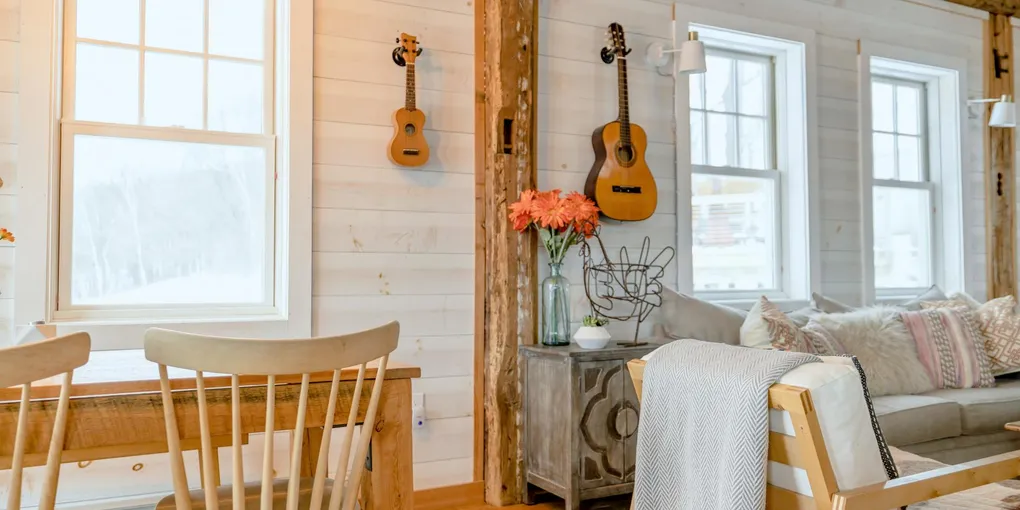
DIY shiplap installation takes a weekend for an average accent wall and costs $2-$7 per square foot in materials. You'll need a nail gun, miter saw, level, stud finder, and primed shiplap boards. Mark studs, plan your layout from the bottom up, nail through tongues at studs, and stagger seams for a professional look.
Frequently Asked Questions
Do I need to remove existing drywall before installing shiplap?
No. Shiplap can be installed directly over drywall as long as the drywall is in good condition and flat. Most DIYers install shiplap over existing walls to preserve insulation and avoid the mess of demolition.
What's the difference between real shiplap and faux shiplap?
Real shiplap has rabbet joints on the top and bottom edges that overlap to create the signature gap. Faux shiplap uses square-edged plywood strips with spacers (nickels or tile spacers) to create the gap look. Faux costs 50-70% less but lacks the authentic overlap.
Can I install shiplap horizontally and vertically?
Yes. Horizontal is the traditional farmhouse look and easiest for beginners. Vertical shiplap makes ceilings appear taller and works well in entryways. Diagonal and herringbone patterns are advanced but striking.
Do I need to caulk shiplap gaps?
No—the gaps are the signature feature and should never be caulked. However, you should caulk the outer edges where shiplap meets corners, baseboards, and ceilings to hide installation gaps.
How much does it cost to shiplap a room professionally?
Professional shiplap installation runs $4-$10 per square foot for labor plus $2-$7 per square foot for materials. A 12×12 room costs $900-$2,500 professionally versus $300-$1,000 DIY.
What size boards are best for shiplap?
1x6 boards (3/4 inch thick, 5.5 inches wide) are the most common shiplap size for walls — they're proportional for 8-10 foot ceilings and easy to handle solo. 1x4 boards look good in small bathrooms or tight spaces. 1x8 boards work well on large walls with tall ceilings. For the authentic farmhouse look, use true shiplap with rabbet joints; for budget-conscious projects, rip 3/4-inch plywood into strips to match any width.
How do I cut around electrical outlets when installing shiplap?
Use an oscillating multi-tool or jigsaw to cut outlet cutouts in the shiplap boards. Measure carefully from the last installed board to the top and bottom of the outlet box, mark the board, and cut the opening. You'll also need electrical box extenders to bring the outlet flush to the new wall surface — shiplap adds 3/4 inch to the wall, which pushes the outlet below the finished surface. Electrical box extenders cost $3-$8 each at hardware stores.
What is the cheapest way to install shiplap in 2026?
The cheapest shiplap option in 2026 is DIY faux shiplap made from 3/4-inch plywood ripped into strips: a 4×8 sheet of plywood costs $35–$55 at Home Depot, and a table saw (or a circular saw with a fence) cuts it into 3-, 4-, or 6-inch strips. Total material cost for an 80 sq ft accent wall runs $80–$150 using this method. Compare that to buying pre-milled tongue-and-groove shiplap boards at $1.50–$3/linear foot. Other cost-saving tips: (1) Buy pre-primed boards to skip a coat of primer. (2) Use a pneumatic brad nailer ($40 rental) instead of hand nailing. (3) Source from lumber yards rather than box stores — often 20–30% cheaper for 1×6 pine. (4) Use paint-grade pine rather than finger-jointed or premium wood — you'll paint it anyway. (5) DIY vs. hiring a contractor saves $4–$10 per square foot in labor. A 10×8 accent wall (80 sq ft) costs $160–$450 DIY vs. $480–$1,350 installed.
How do I shiplap a bathroom — is it moisture-safe?
Shiplap can be installed in bathrooms with the right material choice and finish: (1) Material: use moisture-resistant options — PVC shiplap trim boards (Azek, KOMA) are fully waterproof and ideal for high-humidity areas. Cedar and redwood are naturally moisture-resistant. Standard pine shiplap works in half-bathrooms and low-moisture bathroom walls but not inside shower areas. Avoid MDF shiplap in any bathroom — it swells and disintegrates when wet. (2) Install over moisture-resistant drywall (purple board/green board) rather than standard drywall. (3) Finish: apply 2–3 coats of semi-gloss or satin paint — the smoother the sheen, the more moisture-resistant. Oil-based primer under latex paint adds extra protection. (4) Seal all cut edges before installation — end grain absorbs moisture fastest. (5) Never install shiplap inside a shower surround or anywhere that gets direct water contact. The gaps between boards will trap moisture and cause rot. For shower areas, use tile or a solid waterproof surface. Properly finished pine shiplap on bathroom walls (not shower walls) can last 20+ years without moisture issues.
DIY shiplap installation takes a weekend for an average accent wall and costs $2-$7 per square foot in materials. You’ll need a nail gun, miter saw, level, stud finder, and primed shiplap boards.
Shiplap has dominated interior design for a decade, and for good reason: it transforms flat, boring walls into textured focal points with farmhouse charm that works in modern, traditional, and coastal homes alike. The best news? It’s one of the most beginner-friendly DIY projects in home improvement.
This guide walks you through the entire shiplap installation process—from planning and material selection through the final coat of paint. Whether you’re tackling a single accent wall or whole-room installation, you’ll finish with pro-level results and save hundreds or thousands over hiring a contractor.
Quick Cost & Time Overview
| Metric | DIY | Professional |
|---|---|---|
| Material cost (per sq ft) | $2–$7 | $2–$7 |
| Labor cost (per sq ft) | $0 | $4–$10 |
| Total (per sq ft) | $2–$7 | $6–$17 |
| Time for 12×12 room | 1–2 weekends | 2–3 days |
| Skill level | Beginner–Intermediate | N/A |
A typical 10×8 accent wall (80 sq ft) costs $160–$560 DIY versus $480–$1,360 professionally—savings of $320–$800.
Real Shiplap vs. Faux Shiplap
Before you buy materials, you need to choose between authentic shiplap boards and DIY faux shiplap made from plywood strips.
Real Shiplap (Tongue-and-Groove)
Real shiplap boards have rabbet joints milled into the top and bottom edges. When installed, the rabbets overlap and create the signature even gap. Common options:
- Pine shiplap: $3–$5 per sq ft. Pre-primed options speed painting.
- Cedar shiplap: $5–$9 per sq ft. Natural rot resistance for bathrooms.
- MDF shiplap: $2–$4 per sq ft. Smooth finish, paint-ready, budget-friendly.
Faux Shiplap (Plywood Strips)
Cut 4×8 sheets of plywood into 6-inch-wide strips. Install with small spacers (nickels work perfectly) to mimic the gap.
- Cost: $0.50–$2 per sq ft (70% cheaper)
- Pros: Cheapest option, easy to customize width
- Cons: Lacks true overlap, edges need sanding, more finicky alignment
For beginners, we recommend pre-primed MDF shiplap—smooth, straight, affordable, and paint-ready.
Tools You’ll Need
Investing in the right tools makes this project dramatically easier. Here’s what we recommend:
Essential Power Tools:
- Brad nailer or finish nailer: The DEWALT 20V MAX Cordless Brad Nailer drives 18-gauge brad nails perfectly for shiplap. Cordless saves time versus pneumatic.
- Miter saw: A DEWALT 12-inch Sliding Compound Miter Saw makes clean crosscuts. A 10-inch saw works for most shiplap widths.
- Cordless drill: For pilot holes near edges. The DEWALT 20V MAX Cordless Drill Kit is a workhorse.
- Jigsaw or oscillating tool: For outlet and window cutouts. The DEWALT 20V MAX Oscillating Multi-Tool handles tricky cuts.
Layout & Measuring:
- 4-foot level: Critical for ensuring horizontal courses stay level. The Empire True Blue Heavy Duty Level is a contractor standard.
- Stud finder: The Franklin Sensors ProSensor 710 locates studs instantly with no calibration.
- Tape measure: 25-foot minimum.
- Carpenter’s pencil and square: For marking cuts.
- Chalk line: For snapping long level lines.
Consumables:
- 18-gauge brad nails (1.5” and 2”): Buy a variety pack.
- Wood filler or spackle: Fills nail holes.
- Painter’s caulk: For outer edges only.
- Sandpaper: 120 and 220 grit.
- Primer and paint: If not using pre-primed boards.
Step-by-Step Installation
Step 1: Prep the Wall
Remove electrical outlet covers, switch plates, baseboards, and any crown molding or chair rails. Stack these carefully—you’ll reinstall them over the shiplap.
Vacuum and wipe down the wall. Fill any major gouges with spackle. Minor imperfections don’t matter since shiplap covers them.
Use your stud finder to locate every stud. Mark each one with a pencil line from floor to ceiling using a 4-foot level. You’ll nail into these marks throughout the installation.
Pro tip: Studs are typically 16 inches on center in interior walls. Once you confirm the first stud, measure 16 inches to find the next.
Step 2: Plan Your Layout
Measure the wall height and divide by the effective width of your shiplap (the exposed face after overlap). This tells you how many rows you’ll need.
Critical layout rule: Don’t end with a tiny sliver at the top or bottom. If your wall is 96 inches tall and your shiplap exposes 5.5 inches per board, you’d get 17 full rows (93.5”) plus a 2.5” strip at top. Instead, rip (cut lengthwise) the first and last boards so they’re equal—both 4.25” for example.
Plan vertical seams to stagger across rows like a brick pattern. A three-seam stagger (seam at 1/4, 1/2, 3/4 of wall width) looks most professional.
Step 3: Install the First Row
Start at the bottom of the wall. Measure and cut your first board on the miter saw.
Position the board against the wall and check with a 4-foot level. Even if your floor isn’t perfectly level, your first row must be level—shim gaps at the bottom and cover with baseboard later.
Nail through the face of the first board at stud locations. Use 2-inch brad nails and drive two nails per stud (one near top, one near bottom of board). Face-nailing the first row is necessary since there’s nothing to hide blind nails in.
Step 4: Install Subsequent Rows
Here’s where shiplap installation gets fun and fast:
- Fit the tongue of your new board into the groove of the board below.
- Press firmly to seat the joint.
- Shoot brad nails at 45 degrees through the tongue at every stud location.
This technique is called blind nailing—the next board’s groove covers the nail heads, leaving no visible fasteners.
Continue up the wall, cutting each board to length and staggering seams. Use a rubber mallet to gently seat stubborn joints.
Pro tip: For faux shiplap or square-edge boards, use a nickel, carpenter’s spacer, or 1/8” tile spacer between boards to maintain consistent gaps.
Step 5: Cut Around Obstacles
Outlets, switches, windows, and doors require precise cutouts. Here’s the process:
- Hold the board in position (don’t nail yet).
- Mark the obstacle outline with a pencil.
- Transfer marks to the flat side.
- Use a jigsaw or oscillating tool to cut.
- Test fit, trim if needed, then nail in place.
For outlets, you’ll need to install outlet box extenders since the shiplap adds depth to the wall. Get a pack of outlet box extenders before starting.
Step 6: Handle Corners and Trim
Inside corners (e.g., two walls meeting): Butt the boards against the adjacent wall. A slight gap is fine—caulk will fill it.
Outside corners: More complex. Options include:
- Mitered corners (advanced, most invisible)
- Corner trim molding (easiest, defines the corner)
- Overlapping one wall over the other (moderately easy)
Top of wall: If going to the ceiling, the top board may need ripping to fit. Otherwise, end at chair-rail or picture-rail height and install capping trim.
Step 7: Finish the Installation
Fill all visible nail holes with wood filler or spackle. Sand smooth with 220-grit sandpaper after drying.
Caulk the outer perimeter where shiplap meets corners, baseboard area, and ceiling. Never caulk the shiplap gaps themselves—that destroys the signature look.
Reinstall baseboards and crown molding. These cover the bottom row nail holes and top edge cleanly.
Step 8: Prime and Paint
If using pre-primed shiplap, skip to paint. Otherwise, prime first with a quality primer.
For painting:
- Brush: Use a 2.5-inch angled sash brush for the gaps. The Purdy XL Elite Brush is our favorite.
- Roller: Use a 4-inch mini-roller for the flat faces. Small roller reaches into recesses without flooding gaps.
- Two coats minimum: Shiplap reveals every streak.
Classic farmhouse colors include Benjamin Moore White Dove, Sherwin-Williams Alabaster, and Behr Marquee White.
Common Mistakes to Avoid
After installing shiplap in hundreds of rooms, contractors see the same DIY mistakes repeatedly. Avoid these:
- Not accounting for wood expansion. Wood expands and contracts with humidity. Leave 1/8” gap at ends against walls and trim to prevent buckling.
- Nailing between studs. Brad nails alone won’t hold shiplap if you miss studs. Always confirm stud location.
- Ignoring the first row level. An out-of-level first row cascades through the entire installation. Take your time here.
- Caulking the gaps. This defeats the entire purpose. Only caulk the outer perimeter.
- Using the wrong nail size. 2-inch 18-gauge brad nails are ideal. Too short and they won’t hold; too long and they’ll split the tongue.
- Not acclimating the boards. Let shiplap sit in the installation room for 48–72 hours before installing. This prevents post-install gapping from humidity changes.
- Forgetting outlet box extenders. Standard outlet boxes sit flush with drywall. Adding 1/2”–3/4” of shiplap creates a recess that violates electrical code without extenders.
Creative Shiplap Ideas
Beyond the classic horizontal white wall, consider these design variations:
- Ceiling shiplap: Creates cottage charm. Install perpendicular to ceiling joists.
- Vertical shiplap: Makes rooms feel taller. Great for entryways and mudrooms.
- Half-wall shiplap: Install to chair-rail height and paint the top portion.
- Bold color shiplap: Navy, forest green, and black shiplap walls are trending.
- Stained shiplap: Skip paint and apply stain for a rustic look.
- Herringbone pattern: Advanced but dramatic. Cut boards at 45 degrees.
Room-Specific Considerations
Bathrooms: Use cedar, PVC, or MDF specifically rated for bathrooms. Seal all edges with waterproof caulk. Ensure adequate ventilation.
Kitchens: Grease and humidity damage painted shiplap. Use semi-gloss or satin paint for easy cleaning. Keep shiplap away from direct cooktop splash zones.
Bedrooms: Consider an accent wall behind the headboard rather than whole-room shiplap, which can feel overwhelming.
Outdoor/Covered Porches: Use cedar, redwood, or PVC shiplap rated for exterior use. Prime with exterior-grade primer.
Shiplap Alternatives to Consider
If shiplap doesn’t fit your style, these popular alternatives offer similar texture:
- Beadboard: Tighter, more traditional grooves. Often installed as wainscoting.
- V-groove paneling: Looks like shiplap but with V-shaped grooves.
- Board and batten: Horizontal boards at top/bottom with vertical strips.
- Nickel-gap paneling: Smooth 1/8” gap with no tongue-and-groove texture.
Each delivers a textured look with slightly different character. Shiplap remains the most versatile and beginner-friendly.
Maintenance and Longevity
Properly installed shiplap lasts decades with minimal maintenance:
- Dust quarterly with a microfiber cloth or vacuum brush attachment.
- Clean marks with a damp cloth and mild soap. Avoid abrasive cleaners on painted finishes.
- Touch up paint every 3–5 years or as needed.
- Inspect caulk lines annually. Recaulk if cracking appears.
- Control humidity: Keep indoor humidity 30–50% to prevent warping.
Quality painted shiplap can last 30+ years before needing significant refurbishment.
When to Hire a Professional
DIY shiplap is genuinely beginner-friendly, but consider hiring out if:
- You have ceilings over 10 feet tall (scaffolding and working overhead gets dangerous)
- Your walls are out-of-plumb by more than 1/2” (requires advanced shimming)
- You want advanced patterns like herringbone or chevron
- Your rooms have complex trim, arches, or non-standard corners
- You need it done fast for a home sale or event
Expect to pay $4–$10 per square foot in labor, with total project costs of $6–$17 per square foot installed.
Final Thoughts
Shiplap installation is one of the highest-impact, lowest-skill DIY projects in home improvement. An average homeowner can transform an accent wall in a weekend and save hundreds over professional installation. With the right tools, good planning, and patience on the first row, you’ll get professional-looking results on your first try.
Start with an accent wall in a low-stakes room like an office or guest bedroom. Once you’ve nailed the technique, you’ll be eyeing every wall in your house for shiplap potential.
Related Reading
- How to Install Crown Molding
- Interior Door Replacement Cost
- How to Paint a Room Like a Pro
- Best Cordless Drills for Homeowners
- Kitchen Backsplash Cost
- How Much Does It Cost to Paint a Room
Product links on this page are Amazon affiliate links. As an Amazon Associate, Fix Up First earns from qualifying purchases. All recommendations reflect independent product research.
- Prep the wall
Remove outlet covers, baseboards, and crown molding. Locate studs with a stud finder and mark them with a pencil line from floor to ceiling. Clean the wall surface.
- Plan your layout
Measure the wall and calculate rows. Aim for equal-sized boards at top and bottom rather than a tiny strip. Stagger vertical seams across rows like brick pattern for a professional finish.
- Cut and install the first row
Start at the bottom. Cut the first board to length on a miter saw. Use a level to ensure perfectly horizontal. Nail through the board face at stud locations with 2-inch brad or finish nails.
- Install subsequent rows
Fit the tongue of each new board into the groove of the board below. Nail at 45 degrees through the tongue at each stud (blind nailing hides the nail heads). Use a shim or nickel to maintain consistent spacing if using faux shiplap.
- Cut around obstacles
Use a jigsaw or oscillating tool for cutouts around outlets, switches, and window trim. Measure twice and mark with a carpenter's square before cutting.
- Finish and trim
Fill nail holes with spackle. Caulk outer edges (not the shiplap gaps). Reinstall baseboards and crown molding. Prime and paint, or leave natural wood finish.
Free: 10-Point Home Maintenance Checklist
Prevent costly repairs with this seasonal checklist. Save hundreds every year by catching problems early.
Your checklist is ready!
Open Checklist →Something went wrong. View the checklist here.