Interior Door Replacement Cost 2026: $150–$650 Per Door
Interior door replacement costs $150-$650 per door installed. See pricing by slab vs. pre-hung, solid core vs. hollow, and DIY savings of $100-$200.
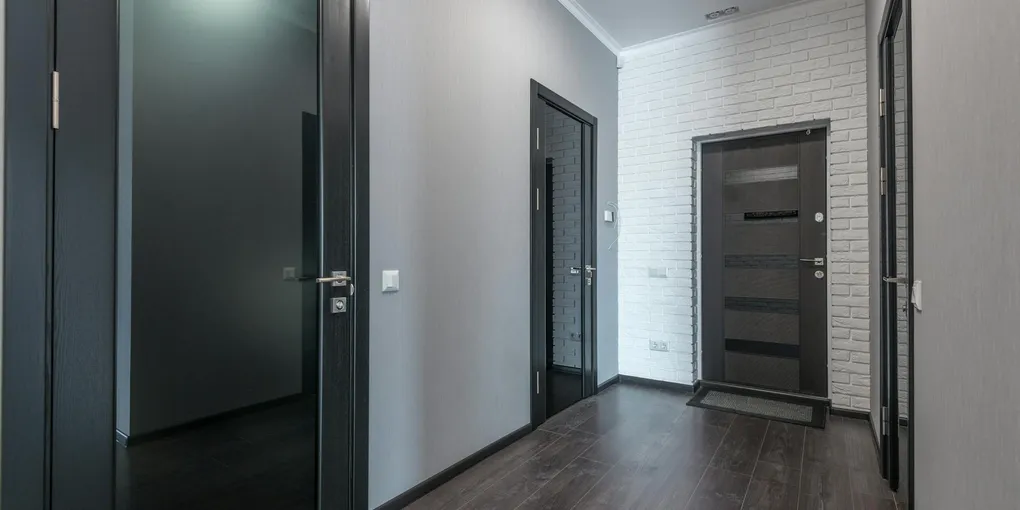
Interior door replacement runs $150-$650 per door installed. Slab doors (replacing just the door, keeping the frame) cost $75-$300 for the door plus $75-$200 labor. Pre-hung doors (with new frame) cost $150-$450 plus $150-$400 labor. Solid core runs 2-3× hollow-core pricing but cuts noise significantly.
Frequently Asked Questions
What's the difference between slab and pre-hung doors?
A slab door is just the door itself — no frame, no hinges. You install it in your existing frame using existing hinges. $75-$300 per door. A pre-hung door comes with the frame, hinges, and strike plate pre-installed — just slides into a rough opening. $150-$450 per door. Pre-hung is faster and cleaner if you're also replacing the frame; slab is cheaper if your existing frame is in good shape.
Is it worth upgrading to solid core interior doors?
Yes if sound control matters. Solid core doors weigh 50-80 lbs, cut room-to-room sound transmission by 8-15 decibels, and feel substantial like a high-end home. Hollow core doors weigh 20-30 lbs, transmit sound easily, and feel hollow when knocked. Upgrade cost: about $80-$150 extra per door. Worth it for bedrooms, bathrooms, and home offices.
Can I install an interior door myself?
Slab doors: yes, a beginner project. Budget 2-3 hours per door. Pre-hung doors: moderate difficulty — you need level, plumb, and square installation. Budget 2-4 hours if you're experienced. The hardest part is shimming the frame correctly. For rough openings that are out of square, hire a carpenter for the first door, then DIY the rest.
How long does interior door replacement take?
Slab door (reuse frame): 1-2 hours per door for a pro. Pre-hung door: 2-4 hours per door including trim work. Whole-house 12-door replacement: 1-2 days with a 2-person crew. Painting/staining adds another 1-2 days depending on finish.
How much does it cost to replace all interior doors in a house?
For a typical 3-bedroom home with 10-12 interior doors: $1,800-$7,800 installed. Budget hollow-core slabs replaced with same: $1,500-$3,000. Mid-range solid-core upgrades: $3,500-$5,500. Full pre-hung replacement with new frames and trim: $5,500-$10,000+. Doing them all at once is more efficient than one at a time.
Interior door replacement costs $150–$650 per door installed in 2026 — door slab $50–$300, prehung door $150–$500, labor $75–$200. Hollow-core doors (standard builder grade) cost $50–$150; solid-core doors (better sound blocking) run $150–$400. Painting or priming adds $50–$100 per door. DIY prehung door installation takes 2–3 hours per door with basic carpentry skills.
Interior doors are one of the easiest upgrades to overlook — until you realize how much room-to-room noise bleeds through hollow-core builder doors, or how dated the old 6-panel pine looks. Replacing interior doors runs $150-$650 per door installed, and the ROI on modern shaker or solid-core doors is among the best small-renovation upgrades you can do. This guide breaks down the real cost, the slab-vs-pre-hung decision, and when DIY saves meaningful money.
Interior door replacement cost at a glance
| Door category | Door cost | Labor | Total installed |
|---|---|---|---|
| Hollow-core slab, basic | $35-$80 | $75-$150 | $110-$230 |
| Hollow-core slab, 6-panel | $60-$130 | $75-$150 | $135-$280 |
| Hollow-core pre-hung | $80-$180 | $150-$300 | $230-$480 |
| Solid-core slab | $120-$300 | $100-$200 | $220-$500 |
| Solid-core pre-hung | $200-$450 | $175-$350 | $375-$800 |
| Shaker-style or designer | $200-$500 | $150-$300 | $350-$800 |
| French doors (pair) | $250-$800 | $250-$500 | $500-$1,300 |
| Pocket door (new install) | $250-$700 | $400-$1,000 | $650-$1,700 |
| Barn door kit | $150-$400 | $100-$300 | $250-$700 |
Most single-door replacements land between $200 and $450 installed. Whole-house 10-12 door projects run $2,000-$5,500.
Slab vs. pre-hung: the first decision
Slab doors ($75-$300 each)
A slab door is just the door itself — no frame, no hinges. You reuse the existing jamb and hardware. Installation involves:
- Remove old door from hinges (usually just tap out the hinge pins)
- Mark new hinge mortises on the slab door (if not factory-mortised)
- Chisel mortises and install hinges
- Mark and bore latch/lock holes
- Hang the door in the existing frame
Best for:
- Replacing existing doors when the frames are fine
- DIY upgrade projects where budget is primary
- Matching existing hardware
Tools needed: Chisel set, hammer, drill, 1” spade bit and 2-1/8” hole saw, hinge template (optional but helpful)
Pre-hung doors ($150-$450 each)
A pre-hung door comes as a complete unit: door + frame + hinges + strike plate, all pre-assembled. You install the whole unit in a rough opening. Labor involves:
- Remove old door and frame (or demo old frame if new construction)
- Shim and plumb the new frame in the rough opening
- Nail frame to framing
- Install casing/trim
- Set strike plate and hardware
Best for:
- New construction or additions
- Rooms where the existing frame is damaged or warped
- Upgrading trim style (e.g., swapping colonial for shaker casing)
- Matching all doors to the same brand and style
Tools needed: Level, shims, finish nails, miter saw (for trim), caulk gun
Cost by door type
Hollow-core doors
The standard builder-grade interior door. Hollow interior with honeycomb cardboard for structure, covered with thin luan or masonite.
Pros: Cheap ($35-$130 per slab), lightweight, easy to cut and trim. Cons: Transmits sound, dents easily, hollow feel when closed, can’t hold heavy hardware.
Typical cost installed: $110-$280. Best for: closets, utility rooms, budget rentals.
Solid-core doors
Particleboard or MDF core covered in luan or primed masonite. Much heavier and more substantial than hollow-core.
Pros: Better sound insulation (8-12 dB reduction), holds hardware well, feels premium, modestly priced. Cons: 2-3× cost of hollow-core, heavier (50-80 lbs), harder to install alone.
Typical cost installed: $220-$500. Best for: bedrooms, bathrooms, home offices — basically everywhere except closets.
Solid wood doors
Traditional construction with real wood panels and stiles/rails. Usually pine, oak, mahogany, or other hardwoods.
Pros: Best sound insulation (12-15 dB), beautiful natural wood grain, very durable, holds hardware indefinitely. Cons: Expensive ($300-$1,500 per door), heavy, can warp with humidity changes, requires finishing.
Typical cost installed: $500-$2,000+ per door. Best for: high-end homes, architectural focal points.
Shaker-style doors
Any door in the shaker style (typically 5-panel flat design). Available in hollow-core ($80-$180), solid-core ($150-$350), or solid wood ($300-$1,500).
Pros: Clean modern aesthetic, timeless style, works in almost any decor. Cons: Shows dust on flat panels, price premium over 6-panel colonial.
Currently the most popular interior door style for 2020s homes.
French doors (pair)
Two doors hinged side-by-side with glass panels. Used for offices, dining rooms, and en suites.
Pros: Light transmission between rooms, elegant appearance, good for rooms that need some separation without full visual blockage. Cons: Expensive ($500-$1,300 installed), poor sound insulation due to glass, need frame wider than standard.
Pocket doors
Door that slides into a wall cavity. Space-saving alternative to swing doors.
Pros: Saves the floor space a swing door takes; great for tight bathrooms and closets. Cons: New install requires opening the wall to add a pocket frame — $400-$1,000 just for the frame system before the door itself. Retrofitting a pocket door in an existing wall often requires re-routing electrical and plumbing. Replacement of an existing pocket door is easy; first-time installation is a small renovation.
Barn doors
Sliding door mounted to an exterior track on the wall.
Pros: Trendy aesthetic, good for closets and bathrooms where swing space is tight, easier install than pocket doors. Cons: Don’t fully seal (sound, light, and air pass around edges), require wall space beside the opening equal to the door width.
Cost: $250-$700 for the full kit installed. Track hardware alone runs $80-$250.
DIY vs. hiring
Slab door replacement (DIY-friendly)
Tools needed:
- Chisel set — $25-$60
- Hammer — $15-$35
- Drill + bits — if you don’t own one, $80-$150
- Hole saw kit (2-1/8”) — $20-$50
- Hinge installation template — $30-$60 (optional but game-changing)
- Door latch/handle set — $20-$60 per door
DIY savings per slab door: $75-$150 in labor. Whole-house 10 doors: $750-$1,500 saved.
Time per door: 2-4 hours the first time, 1-2 hours once you have the process down.
Pre-hung installation (intermediate DIY)
Requires these additional tools:
- 4-foot level — $25-$60
- Cedar shim pack — $8-$15
- Miter saw for trim — $150-$350 buy, $40-$60/day rent
- Finish nailer — $100-$250 or compressor + nailer kit
DIY savings per pre-hung door: $150-$300 in labor. Whole-house: $1,500-$3,000 saved.
Time per door: 3-5 hours first time, 2-3 hours after practice.
When to hire a carpenter
- Your rough openings are badly out of square (older homes)
- You’re replacing 12+ doors and want consistent quality
- Stain-grade solid wood doors where scratches and dings matter
- You’re installing pocket doors (complex framing)
- You’re also doing baseboard/crown molding refinish work
Carpenter rates: $40-$90/hour. A 2-door job takes a pro 2-4 hours. A 12-door whole-house job: 1.5-2 days.
Material and hardware costs
Hinges and hardware
- Standard interior hinges (3 per door): $10-$30 per door
- Upgraded hinges (brass, black, satin nickel): $20-$70 per door
- Interior door handle/knob: $15-$50
- Privacy lock (bathroom, bedroom): $20-$60
- Barn door hardware kit: $80-$250
Trim and finish
If replacing casing with the pre-hung:
- Primed MDF casing: $0.75-$1.50/linear ft
- Solid pine casing: $1.50-$3/linear ft
- Hardwood casing (oak, maple): $3-$6/linear ft
- Painter’s caulk and filler: $10-$25 total
- Paint for doors: $30-$80 per gallon (one gallon does 4-6 doors)
- Primer if painting: $20-$40
Add $30-$80 per door in trim materials for pre-hung replacements with new casing.
Cost by project scope
Single door replacement
Hollow-core slab:
- Door: $60
- Hardware (hinges + knob): $30
- Paint: $10 (from existing can)
- Labor: DIY (2 hours)
- Total: $100 DIY, $250-$350 hired
Solid-core slab, primed/painted:
- Door: $180
- Hardware: $40
- Paint: $15
- Labor: DIY
- Total: $235 DIY, $400-$500 hired
Whole-house 12 doors
Replacing 12 hollow-core builder doors with solid-core shaker-style:
| Item | Cost |
|---|---|
| 12 solid-core slab shaker doors @ $150 | $1,800 |
| 12 hinge sets @ $25 | $300 |
| 12 door handle sets @ $30 | $360 |
| Paint (2 gallons + supplies) | $120 |
| Labor (DIY) | 0 |
| Total DIY | $2,580 |
| Total hired | $4,200-$5,800 |
Pre-hung whole-house
Replacing existing hollow-core pre-hung units with solid-core pre-hung:
| Item | Cost |
|---|---|
| 12 solid-core pre-hung doors @ $275 | $3,300 |
| Hardware (hinges + knobs for each) | $720 |
| New casing materials | $400 |
| Caulk, nails, shims | $80 |
| Paint | $180 |
| Labor (DIY or hired) | $0-$3,600 |
| Total DIY | $4,680 |
| Total hired | $7,500-$10,000 |
Cost drivers that affect pricing
- Door size: Standard interior is 28”, 30”, 32”, or 36” wide × 80” tall. Non-standard sizes (older homes, 6’8” short doors) cost 20-40% more and may need custom order.
- Glass inserts: Any glass adds $50-$250+ per door.
- Pre-finished vs. primed: Pre-finished (stain or painted) costs 30-70% more but saves finishing labor.
- Custom hardware positioning: ADA-height handles, unusual strike plates: $25-$75 extra per door.
- Re-sizing or cutting down: Trimming a door to fit a non-standard opening: $25-$75 per door.
- Hardware mounting holes: Pre-bored at standard heights; non-standard positioning requires fresh drilling.
When to replace vs. refinish
Consider refinishing instead of replacing if:
- The door is solid wood and only needs sanding + fresh stain/paint
- Hardware is dated but the door is structurally fine (new hardware is $30-$60)
- The door is out of style (6-panel colonial) but you love the solid feel — cut flat panels over the raised panels to modernize
Replace if:
- Door is hollow-core and you want sound reduction (refinishing won’t fix this)
- Door is warped, cracked, or delaminated
- You’re updating the entire house to a new style
- Frame is damaged too
Quick upgrade wins
Instead of full replacement, these smaller upgrades refresh dated doors cheaply:
- New hardware alone: $30-$60 per door. Changes the whole feel of the room.
- Fresh paint: $20 per door for 1-2 coats on primed white doors.
- Add shoe molding and fresh casing: Makes older frames look finished.
- Swap knobs for levers: ADA-friendly and feels more modern.
- Door sweeps or weatherstripping: $10-$30 per door. Cuts light and sound bleed.
Regional Interior Door Replacement Cost Variations
| Region | Hollow-Core Swap (slab) | Solid Core Prehung | Prehung + New Casing |
|---|---|---|---|
| Northeast (NY, MA, NJ) | $200–$450 | $450–$900 | $600–$1,200 |
| Mid-Atlantic (DC, MD, VA) | $180–$400 | $400–$825 | $550–$1,100 |
| Southeast (FL, GA, TX) | $140–$325 | $300–$650 | $425–$875 |
| Midwest | $150–$340 | $325–$675 | $450–$900 |
| Pacific (CA, WA, OR) | $200–$450 | $450–$900 | $600–$1,200 |
Prices include door and labor. Solid-core prehung prices include door, frame, hinges, and trim. Pocket door or barn door conversions add $400–$900 for frame modification.
Interior Door Brand Comparison
| Brand | Price Range | Best For | Notes |
|---|---|---|---|
| Masonite | $60–$400 (slab) | Widest selection; best availability | No. 1 residential interior door brand; extensive style and panel options; sold at Home Depot |
| Jeld-Wen | $70–$450 (slab) | Solid mid-range quality; wide distribution | Competitive with Masonite; slightly better solid-core construction at same price points |
| Steves & Sons | $65–$350 (slab) | Value pricing; solid construction | Good mid-range option; less selection than Masonite/Jeld-Wen |
| Simpson Door | $200–$1,200 (slab) | Premium; real wood options | Custom and semi-custom wood doors; significant price premium for natural wood look |
| TruStile Doors | $300–$1,500+ (slab) | Modern styles; custom sizing | MDF and wood; clean flat-panel and contemporary styles; popular for design-forward renovations |
| Craftmaster (local mills) | $250–$900 (custom) | Period-appropriate styles; custom sizing | Regional mills for craftsman, colonial, and non-standard sizes |
Masonite and Jeld-Wen offer the best value for standard residential replacement. TruStile and Simpson are the choices when appearance matters more than price.
Questions to Ask Your Door Installer
-
Is this a slab replacement or full prehung installation, and which is right for my existing frame condition? — A slab swap (new door hung in the existing frame) is less expensive and appropriate when the existing frame is plumb, square, and in good condition. A prehung door (door + new frame) is right when the frame is out of square, damaged, or when you want new trim. Ask the installer: “Will you assess the existing frame before quoting?” Installing a slab into a frame that’s out of square produces a door that won’t latch, won’t hang straight, or will swing open on its own. The assessment takes 5 minutes and completely changes the recommendation.
-
What is the door material — hollow-core, solid-core, or solid wood — and what is the core construction? — “Solid core” means an engineered wood or composite core (stave core, particleboard core, or agrifiber core) that is significantly heavier and quieter than hollow-core. True solid wood doors are different still. Ask: “Is this hollow-core, solid-core, or solid wood?” and “What is the core material?” For bedrooms and bathrooms where sound transmission matters, solid-core doors reduce noise passage by 10–15 STC points vs. hollow-core. The weight difference also affects hinge requirements — solid-core doors need 3 hinges, hollow-core typically requires 2.
-
Are three hinges included for solid-core doors, and are the hinges specified as ball-bearing or standard? — Solid-core doors (typically 60–80 lbs) require 3 hinges to distribute the weight and prevent sagging. Ball-bearing hinges are quieter and longer-lasting than standard hinges. Ask: “How many hinges will you install, and are they ball-bearing?” For a door you’ll use multiple times daily for 10–20 years, this is a $15 upgrade with real impact. Installers who hang solid-core doors with 2 hinges are setting up a future sag and latch problem.
-
Does the quote include bore holes for the lockset and strike plate, and what hardware is included? — Interior door replacement may or may not include the lockset (knob or lever), bore holes (drilled through the door for the lockset), and strike plate installation on the jamb. Ask: “Is hardware included, and what brand?” and “Are bore holes included?” If the new door needs bore holes in different locations than the old door, that’s a drill press or door jig operation — some installers charge extra for this. Specifying the hardware upfront (Schlage vs. Kwikset vs. Baldwin) also avoids a mismatch between the door prep and the hardware you want.
-
What is the cleanup scope — does the installation include removing the old door and any debris — and is patching included if trim needs to be modified? — Door installation often requires trim adjustments: removing existing casing, modifying or replacing it, and dealing with paint lines where old trim was. Ask: “What condition will you leave the room in?” specifically: does the quote include removing the old door and disposing of it, reinstalling or replacing casing, and patching any wall damage? For prehung installations especially, the trim work around the new frame is where the visual quality of the job is determined — a door that’s plumb and latching properly but has rough casing is still a half-finished job.
Related Reading
- How to Stop a Squeaky Door
- Cost to Replace Front Door
- How to Install a Storm Door
- How to Install Crown Molding
- Best Smart Locks for Home Security
- How to Install a Smart Doorbell
- How to Fix a Loose Door Handle
- How to Fix a Broken Door Sweep — replace the sweep that seals the bottom gap on the new door
- How to Fix a Broken Door Hinge Pin — replace a bent or missing hinge pin before swapping a full door
- How to Fix a Broken Door Threshold — repair or replace a worn threshold strip at the base of the new door
- How to Fix a Broken Doorknob Spindle — replace a stripped spindle before replacing the entire door
- How to Fix a Broken Pocket Door Track — repair or replace a derailed pocket door track as an alternative to full door replacement
- How to Fix a Broken Door Peephole — replace a damaged or missing peephole lens on an exterior door
Bottom line
Interior door replacement runs $150-$650 per door installed, with solid-core slabs typically hitting the $220-$500 sweet spot. DIY slab replacement saves $75-$150 per door and is fully reasonable for most homeowners. If you’re doing the whole house, buy doors in bulk from Home Depot or a local lumberyard for 10-20% off list, and upgrade to solid-core for bedrooms — the sound-reduction difference alone is worth the $80-$150 per-door premium.
Free: 10-Point Home Maintenance Checklist
Prevent costly repairs with this seasonal checklist. Save hundreds every year by catching problems early.
Your checklist is ready!
Open Checklist →Something went wrong. View the checklist here.