How to Install Crown Molding (DIY Guide, 2026)
Install crown molding with perfect corners. Coped cuts, compound miters, shortcut tricks, and tool list. Full DIY guide for clean, professional results.
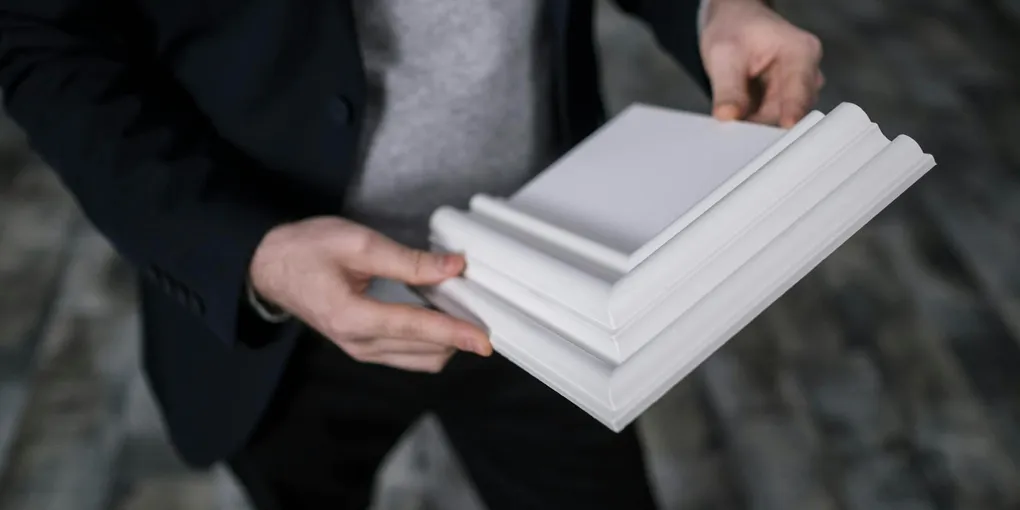
Installing crown molding in a standard 12x15 room costs $150-$400 DIY for materials or $600-$1,500 professionally installed. Budget a weekend for your first room if you've never cut crown before — the coped inside corners are the hardest woodworking cut most DIYers attempt. Use MDF or primed pine for paintable rooms ($1-$3/linear foot) and poplar or oak for stained or natural-wood looks ($3-$8/linear foot). A compound miter saw and a coping saw are the only specialty tools required. Buy 10-15% more molding than you measure to allow for miscuts.
Frequently Asked Questions
Can I install crown molding with just a miter saw?
Yes for outside corners (both pieces cut at 45° angles meet at the corner). Inside corners are the tricky part — miters work only if walls are perfectly square (rare). For walls that aren't exactly 90°, coping gives a tighter joint. A coping saw ($15-$25) handles coping; it's the one extra tool you need beyond a miter saw.
What's the easiest crown molding for beginners?
3.5 inch pre-primed MDF crown is the easiest beginner choice. It's cheap ($1-$2 per linear foot), cuts cleanly, and paint hides small gaps and caulk fills. Stained wood crown shows every imperfection. For your first install, buy MDF, paint after.
Do I need a nail gun for crown molding?
A 16-gauge or 18-gauge finish nailer is strongly recommended. Hand-nailing is possible but frustrating — one missed swing mars the piece, and corners spring apart before the next nail goes in. Rent a nailer for $30-$40/day or buy a [cordless brad nailer](https://www.amazon.com/s?k=ryobi+18v+brad+nailer&tag=fixupfirst-20) ($100-$200).
How tall a ceiling can I crown?
Any ceiling, but match the molding size to the height. 8-foot ceilings look balanced with 3-5 inch crown. 9-10 foot ceilings take 5-7 inch crown. 12+ foot ceilings need 7-10 inch crown. Undersized molding on high ceilings looks cheap; oversized molding on 8-foot ceilings overwhelms the room.
Do walls need to be straight for crown molding?
No, and they won't be. Minor wall bows (up to 1/4 inch across 8 feet) hide under crown naturally because the molding bridges from wall to ceiling. Major bows require scribing or caulk-and-paint tricks. Don't skip the project over imperfect walls.
Should I caulk the gaps?
Yes — caulk the ceiling and wall seams after install with paintable latex caulk. Small gaps between pieces at corners are also caulked and painted. Don't caulk if you're staining — stain won't hide caulk the way paint does.
How much does it cost to install crown molding?
DIY crown molding installation: $1-$5 per linear foot in materials for basic MDF or paint-grade wood crown (a standard 10x12 ft room with 44 linear feet runs $50-$220 in molding). Add $20-$40 for nails, caulk, and primer. Hiring a finish carpenter: $3-$10 per linear foot in labor on top of materials, or $150-$450 for a single room. Custom wood crown (oak, cherry) runs $8-$20 per linear foot in materials alone.
What is the hardest part of installing crown molding?
The inside corners are where most DIY installs look unprofessional. A miter joint (two pieces cut at 45 degrees) looks fine when installed but opens up as the house moves seasonally. A coped joint — one piece cut square and the other coped to overlap it — stays tight permanently. Learning to cope crown molding is the single skill that separates a professional-looking job from an amateur one. It takes 30-60 minutes of practice cuts to get right.
What size crown molding should I use for an 8-foot ceiling?
For 8-foot ceilings, use 3.5 to 4.5 inch crown molding. This is the sweet spot: wide enough to be visually substantial but not so large it overwhelms the room. A common and attractive choice is a 3-5/8 inch spring-angle crown (sold as 'colonial' or 'craftsman' profile at most lumber yards). Avoid crown wider than 5 inches on 8-foot ceilings — it will look heavy and make the room feel lower. For very small rooms (under 100 sq ft) or rooms with low furniture, 3 inch crown is more proportional. If your ceilings are 9 feet, bump up to 4.5–5.5 inch crown. At 10 feet or higher, 5.5–7 inch crown reads correctly from the floor. The rule: divide ceiling height in feet by 1.5 to get the ideal crown width in inches (8 ft ÷ 1.5 = 5.3 max; 4 inches is safer).
Can I install crown molding without a compound miter saw?
Yes — two methods work without a compound miter saw: (1) Simple miter saw + crown molding jig ($20–$40): A jig holds the molding at the correct spring angle while you cut on a standard single-bevel miter saw. This is the most beginner-friendly approach and produces the same cuts as a compound saw. The jig sets the 38° or 45° spring angle for you — just set the miter angle and cut. (2) Hand miter box + coping saw: For small rooms or single walls, a $15 plastic hand miter box handles straight 45° cuts. Cope the inside corners with a coping saw ($15) rather than trying to cut compound miters by hand. Hand cutting is slower but works. What you cannot do without any saw: outside corners require precise angle cuts — there is no workaround. If your room has only inside corners (common in square rooms), a hand miter box and coping saw handle the whole job. For a room with outside corners, rent a compound miter saw ($40–$60/day) rather than struggle with hand tools.
Installing crown molding in a standard 12x15 room costs $150-$400 DIY for materials or $600-$1,500 professionally installed. Budget a weekend for your first room if you’ve never cut crown before — the coped inside corners are the hardest woodworking cut most DIYers attempt.
Crown molding is one of the highest-impact, lowest-cost upgrades for any room. Done well, a $150 room install reads like a $5,000 renovation. Done poorly, crooked miters and visible gaps make the room look worse than bare walls. This guide shows the full process — including the one cut that separates amateur from pro: the cope.
Crown Types and Cost
MDF (Medium Density Fiberboard) — $1-$2/linear ft
Cheap, paintable, cuts clean. Always buy pre-primed. Can’t get wet — not for bathrooms.
MDF Crown Molding — default choice for painted finishes.
Pine (Primed) — $1.50-$3/linear ft
Slightly more expensive than MDF but takes paint better and resists denting. Good middle ground for painted crown.
Poplar — $3-$5/linear ft
Softwood that takes paint or stain well. The pro’s choice for painted work when a denser wood is preferred.
Oak and Maple — $4-$8/linear ft
Stained-finish hardwoods. More expensive, harder to cut cleanly, but beautiful in traditional or craftsman-style rooms.
Polyurethane / Foam Crown — $3-$6/linear ft
Lightweight, glues up with adhesive (no nails), paints like wood. Good for retrofit over complicated ceilings or irregular walls.
Polyurethane Crown Molding — easier install, similar look.
Sizing Guide
| Ceiling Height | Crown Size | Look |
|---|---|---|
| 8 ft | 3-5 inches | Proportional |
| 9 ft | 4-6 inches | Balanced |
| 10 ft | 5-7 inches | Elegant |
| 12 ft | 7-10 inches | Grand |
Rule of thumb: Crown molding height = ceiling height in feet * 0.5-0.7 inches.
Tools You’ll Need
Essential
- 10-inch Compound Miter Saw ($200-$500) — DeWalt DWS779 or Ryobi are great DIY picks. Rent for $40/day if not reusable.
- Coping Saw ($10-$25) — The tool that separates pro from amateur inside corners.
- Brad Nailer (18-gauge) or Finish Nailer (16-gauge) ($100-$250) — Rent if you’re one-and-done.
- Stud Finder ($25-$50) — Must hit ceiling joists and wall studs.
- Tape Measure ($10-$20)
- Caulk and Caulk Gun ($15-$25)
- Painter’s Putty ($5-$10) — For nail holes.
Nice to Have
- Crown Molding Jig / Stops ($20-$50) — Holds crown at correct angle on miter saw for upside-down-and-backwards cuts.
- Laser Level ($40-$100) — For marking a reference line.
- Files or Rasps ($15-$30) — Fine-tunes coped joints.
- Pencil Compass ($10-$15) — For scribing on irregular walls.
Material List (12x15 Room, 54 Linear Feet)
| Item | Qty | Cost |
|---|---|---|
| Crown molding (with 15% waste) | 62 linear ft | $80-$400 |
| 1.5-inch brad or finish nails | 1 box | $8 |
| Caulk (paintable, white) | 2 tubes | $10-$20 |
| Painter’s putty | 1 tub | $5-$10 |
| Paint (if painting) | 1 quart | $15-$30 |
| Total Materials | $118-$468 |
Planning the Room
Measure Each Wall
Walk the room with a tape measure. Record each wall length. Note corner types:
- Inside corner (90° angle, both pieces cope together)
- Outside corner (walls project outward, both pieces mitered)
- Dead end (wall ends at a door, window, or jog)
Determine Cut Order
- Start on the longest wall
- Start with both inside corners (easier — square cut first, cope the second)
- End with outside corners (harder — two 45° miters meeting)
Buy 10-15% Extra
If you measure 50 linear feet, buy 58-60 feet. Mistakes happen, especially on your first cope.
Before You Cut: Understand Crown Angles
Crown molding sits at an angle — it’s not flush to the wall or ceiling. When the molding sits “in the corner” between wall and ceiling, the actual molding face is angled.
Two Cutting Methods
Method 1: Compound Miter (Accurate But Tricky) Lay the crown flat on the miter saw table. Use compound settings:
- 45° walls (typical): Miter 31.6°, Bevel 33.9° (for 38° spring angle crown)
- 45° walls (52° spring angle): Miter 35.3°, Bevel 30°
Method 2: Upside-Down-and-Backwards (Easier for Beginners) Stand the crown against the miter saw fence upside-down, back-to-the-fence. The ceiling edge touches the saw table; the wall edge touches the fence. Cut at 45° miter, 0° bevel.
Which method? Method 2 is easier for beginners because the miter angle is a simple 45° — much more forgiving.
Use a Crown Jig
A crown molding jig holds the molding at the exact spring angle when cutting upside-down-and-backwards. It eliminates setup mistakes and makes every cut consistent.
Step 1: Cut the First Piece (Square-to-Cope)
Square End
On your starting wall, one end will butt into a wall corner. Cut this end square (0° miter, straight across).
Coped End
The other end will cope into the adjacent wall’s piece.
- Cut a 45° inside miter (as if coping the piece)
- Follow the profile of the cut with a coping saw
- Back-cut slightly (angle the saw away from the face) so only the face of the profile touches the next piece
Why Coping Works
A coped joint bridges the actual wall angle (often not 90°). The coped piece “hugs” the face profile of the adjacent piece. Even if walls are 88° or 92°, coped joints close cleanly.
Step 2: Nail the First Piece
Find Studs and Joists
Use a stud finder to mark:
- Ceiling joists (run perpendicular to the crown at regular intervals)
- Wall studs (usually 16 inches on center)
Position the Crown
Hold the piece against the wall-ceiling corner. Make sure:
- Bottom edge touches the wall
- Top edge touches the ceiling
- Piece is level along its length
Nail
- Drive 1.5-inch finish or brad nails through the bottom flat face into the wall stud
- Drive nails through the top flat face into the ceiling joist
- Nail every 16 inches at each stud/joist
- 2 nails per stud (top and bottom)
What If No Joist Lines Up?
- Install a plywood backing strip at an angle inside the wall-ceiling corner (before drywall) — for new construction
- Use construction adhesive in addition to nails for retrofits
- Short nails and careful pre-finding is usually enough
Step 3: Cope the Adjacent Piece
Cut the Cope
- Measure wall-to-wall
- Cut one end to the miter/cope setup
- Test-fit the cope against the installed piece. Adjust with a file if the cope doesn’t close.
Fit
- The coped piece butts into the face of the installed piece
- Gaps at the top or bottom indicate the cope needs filing
- Small gaps (under 1/16”) close with caulk
Step 4: Outside Corners (Both Miters)
Cut Both Pieces at 45°
- Piece 1: 45° miter cut, long-to-short facing left
- Piece 2: 45° miter cut, long-to-short facing right
Test-Fit
Before nailing, test both pieces together at the corner. Adjust angles if the joint doesn’t close.
Common Fix
If the corner opens at the ceiling, your wall corner is more than 90° (obtuse) — cut miters at 42-44° instead of 45°. If it opens at the bottom, the corner is acute.
Step 5: Fill and Caulk
Fill Nail Holes
With the pad of your finger, press putty into each nail hole. Wipe smooth. Larger gaps need wood filler, sanded smooth after drying.
Caulk Joints
- At the ceiling seam, run a bead of paintable caulk
- At the wall seam, run a bead of caulk
- At corner joints with visible gaps, fill with caulk
- Smooth with a wet finger or a small caulk tool
Caulk Tips
- Keep the tube cut small (1/8 inch opening)
- Apply steadily — stop-starts leave bumps
- Wipe with a wet finger or rag within 2 minutes of laying the bead
- Don’t over-fill — less is easier to smooth
Step 6: Paint or Stain
Painted Finish
- Prime if using raw wood
- Sand lightly between coats
- Apply 2 coats of satin or semi-gloss trim paint
- Cut in carefully at wall-ceiling seams
Stained Finish
- Sand entire piece lightly
- Apply stain per manufacturer instructions
- Wipe off excess after specified dwell time
- Apply 2-3 coats of polyurethane
Shortcuts and Pro Tricks
The “Backer Block” Method
Some DIYers nail a triangular backer block at each ceiling-wall corner, then install crown as flat trim against the block. Easier than compound cuts, but looks slightly different (more visible from below).
Pre-Finished Crown
Buy pre-primed and pre-painted crown, minimizing touch-ups after install. Costs 30-50% more but saves 3-4 hours of finish work.
Crown With LED Strip
For modern spaces, consider crown with a built-in shelf for an LED strip light. Creates an uplit cove effect. Adds $30-$80 per room in materials.
Cost: DIY vs. Pro
DIY (12x15 Room)
- Materials: $120-$470
- Tool rental (if needed): $60-$120
- Time: 8-16 hours first room
Professional
- Labor: $400-$1,200 for 12x15 room
- Materials: $100-$400 (usually marked up)
- Total: $500-$1,600 installed
When to Hire Pro
- Stained hardwood crown (mistakes are expensive and visible)
- Rooms over 10-foot ceilings (safety and reach)
- Houses with severely uneven walls or ceilings
- Intricate rooms with multiple corners, jogs, or arches
- If you value your weekend more than $500
Common Mistakes
Wrong Spring Angle
Not all crown has the same “spring” (the angle between the wall and the back of the molding). 38° and 52° are both common. Confirm yours before cutting — the wrong jig or setup produces bad cuts.
No Test Cut
Always cut a 6-inch scrap first and test-fit at the actual corner. Catch jig or setting errors before wasting long pieces.
Nailing Without Hitting Studs
Brad nails into drywall alone hold for a week, then pop. Always nail into a joist or stud.
Over-Sanding
Over-sanding MDF or soft pine chews through the primed surface and shows as discoloration through paint.
Caulking Before Paint
Painter’s caulk looks messy before paint. Paint first? Test the caulk-paint adhesion first (some caulks reject paint). Caulk-then-paint is the standard order.
Inspiration
- Traditional painted white crown on 8-foot ceiling: 4.5 inch MDF, satin white paint
- Modern minimalist: 3-inch flat-face crown, matte white
- Farmhouse with uplighting: Stepped crown with LED strip for ambient glow
- Craftsman / Arts & Crafts: Stained oak with flat shelf profile
- Victorian restoration: Ornate multi-step crown, 6-8 inches, gloss paint
Related Reading
- How to Paint Kitchen Cabinets — related painting techniques
- How Much Does Drywall Repair Cost — fix walls before trim
- How to Patch a Drywall Hole — wall prep before trim
- How to Remove Popcorn Ceiling — do this before crown
- How to Install Shiplap — add accent-wall paneling alongside crown for a finished room
- How to Remove Wallpaper — strip old paper before trim goes up
- How to Install Under Cabinet Lighting — LED technique applies here
- New Homeowner Toolkit — essential tools for projects like this
- Measure the room and plan
Measure each wall. Add 10-15% for waste. Sketch the room and mark inside corners, outside corners, and end walls.
- Choose a starting wall
Start on the longest wall with both ends inside corners. Cut square on one end, cope the other.
- Make a crown molding test cut
On scrap, practice the compound miter (48° rotation, 33.9° bevel on most crowns) or use a crown molding jig to cut upside-down-and-backwards.
- Cut square ends for outside walls
Pieces that end at a wall (no corner) get a 90° square cut.
- Cut coped joints for inside corners
First, cut a 45° inside miter. Then use a coping saw to cut along the profile, removing the back material behind the face line.
- Cut 45° miter for outside corners
Both pieces cut at 45° opposite angles. Test-fit before nailing.
- Nail the first piece
Position against ceiling and wall. Nail through the flat faces into ceiling joists and wall studs every 16 inches.
- Fit and install coped pieces
Butt the coped end against the previously installed piece. Adjust cope with a file if needed. Nail.
- Fill gaps and nail holes
Fill nail holes with painter's putty. Caulk gaps at corners, walls, and ceiling.
- Paint or stain
Sand putty and caulk smooth. Prime if using raw wood. Paint or stain to finish.
Free: 10-Point Home Maintenance Checklist
Prevent costly repairs with this seasonal checklist. Save hundreds every year by catching problems early.
Your checklist is ready!
Open Checklist →Something went wrong. View the checklist here.