Cost to Replace a Garage Door 2026: $750–$4,000 Installed
Garage door replacement costs $750-$4,000 installed. See pricing by door size, material, insulation, and whether to replace the opener at the same time.
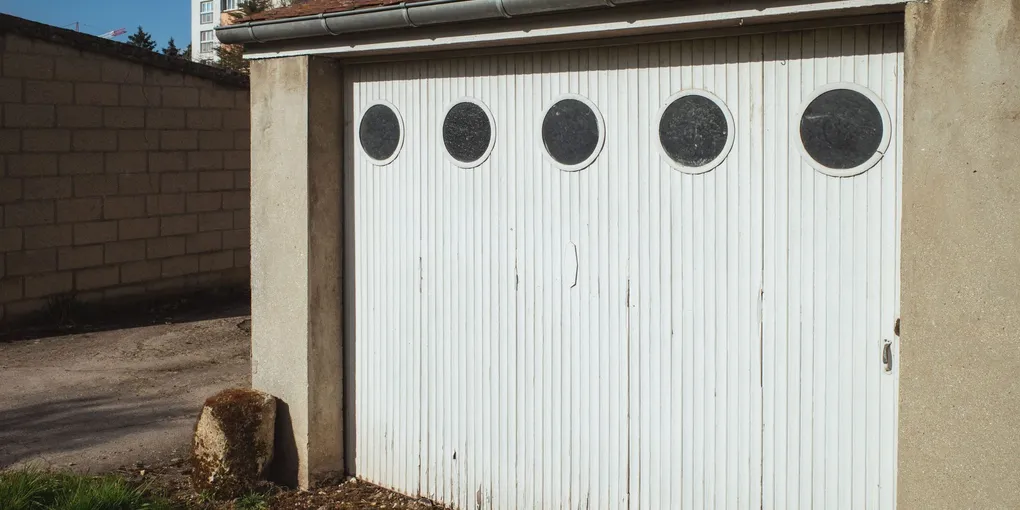
Replacing a garage door costs $750-$4,000 installed for most homes. A standard single-car steel door runs $750-$1,800; a standard double-car steel door runs $1,200-$2,800. Insulated and custom wood or glass doors run $3,000-$8,000+. Labor is $200-$500. Add $300-$700 to replace the opener at the same time. DIY is feasible for the door panel swap if the old tracks are reusable, but torsion spring installation is dangerous — most homeowners hire out.
Frequently Asked Questions
How long does a garage door last?
A typical steel garage door lasts 15-30 years. Springs wear out first at 7-12 years (10,000-20,000 cycles — roughly 2 open/close cycles per day). Openers last 10-15 years. Wood doors need refinishing every 2-5 years and last 20+ years with upkeep. If your door is over 20 years old and you're replacing the opener or springs anyway, full replacement often makes financial sense.
Should I replace the garage door opener at the same time?
Yes, if your opener is over 10 years old. New doors are heavier (especially insulated models) and can strain old openers. Modern smart openers ($250-$400) add WiFi control, battery backup, and better safety sensors. Bundling install with the door saves $100-$200 vs. calling a tech back later. Chamberlain, LiftMaster, and Genie are the top three reliable brands.
What's the cheapest garage door replacement?
Non-insulated single-layer steel from Home Depot or Lowes runs $400-$700 for the door panel plus $200-$400 installation. Total: $600-$1,100 for a standard 9×7 single-car door. It will be noisier, less energy efficient, and dent easier than insulated models, but lasts 15+ years. Avoid hollow-core aluminum — not worth the $100 savings.
Is it cheaper to repair or replace a garage door?
Repair if: one panel is damaged (replace single panel $150-$400), spring broke (new spring pair $150-$350 installed), or opener died. Replace if: multiple panels damaged, door is over 15 years old, or rust/rot is widespread. Rule of thumb: if the repair estimate exceeds 50% of replacement cost, replace.
Does a new garage door add home value?
Yes — highest ROI of any single home improvement. Remodeling Magazine's 2025 Cost vs. Value report puts garage door replacement at 194% ROI, meaning a $4,500 upgrade adds roughly $8,700 to resale value. Curb appeal drives most of the return. Insulated steel in a modern style (carriage-house or contemporary flat) outperforms traditional raised-panel for resale.
Can I install a garage door myself?
Partial DIY: yes on panel replacement if tracks and springs stay. Full DIY install: not recommended. Torsion springs store enormous energy and can injure or kill if improperly wound. If you do go full DIY, budget a full day, have a helper, and buy a winding bar set. Most homeowners spend the $200-$500 on professional install.
How do I choose between a single-layer, double-layer, and triple-layer garage door?
Single-layer: steel skin only, cheapest ($400–$700), noisiest, no insulation. Double-layer: steel plus a polystyrene foam backing, better insulation (R-6 to R-9), less dent-prone, $600–$1,200. Triple-layer: steel + foam core + interior steel skin, best insulation (R-12 to R-18), quietest, $900–$2,000. For an attached garage or a room above the garage, triple-layer is worth the extra $300–$500 — the energy savings and noise reduction pay back quickly. For a detached garage, single-layer is fine.
How do I maintain a garage door to extend its lifespan?
Four maintenance tasks keep a garage door running for 20+ years: (1) Lubricate springs, hinges, and rollers every 6 months with white lithium grease or a dedicated garage door lubricant spray — do NOT use WD-40, which attracts dirt. (2) Test the door balance monthly: disconnect the opener, lift the door manually to waist height, and let go. A balanced door stays put. A door that falls or rises has worn springs that need professional adjustment. (3) Check the auto-reverse safety feature monthly: place a 2x4 flat on the floor in the door's path and trigger the close cycle. The door should reverse on contact. (4) Inspect weatherstripping at the bottom and sides annually — replace when cracked or compressed. Most maintenance takes under 15 minutes and costs nothing but a can of lubricant.
What smart garage door features are worth paying for?
Three features deliver genuine utility: (1) WiFi/smartphone control (MyQ, LiftMaster 84501R, Chamberlain B6765) — lets you open, close, and monitor the door remotely. Worth it for homeowners who frequently forget to close the garage or need to grant access while away. Adds $50–$150 to opener cost. (2) Battery backup — keeps the door operating during power outages, which most commonly happen during severe weather when you need the door most. Adds $80–$150 to opener cost and is highly recommended in storm-prone areas. (3) Built-in camera — useful for monitoring the garage interior, but standalone security cameras offer more flexibility and better resolution at similar or lower cost. The main benefit of the built-in camera is integration with the opener app for a single interface.
Replacing a garage door costs $750-$4,000 installed for most homes. A standard single-car steel door runs $750-$1,800; a standard double-car steel door runs $1,200-$2,800.
A garage door is the largest moving part of your house — and usually the first thing visitors see from the street. When it finally gives out after 20+ years of daily use, the replacement cost can surprise homeowners who haven’t shopped in decades. Prices range wildly from $600 for a basic single-car steel door to $8,000+ for custom wood or glass. This guide breaks down exactly what drives cost, when to DIY vs. hire, and how to avoid the $800 “installation” upcharge that most big-box quotes hide.
Garage door replacement cost at a glance
| Door type | Size | Total installed cost |
|---|---|---|
| Single-car, non-insulated steel | 9×7 | $600 – $1,100 |
| Single-car, insulated steel | 9×7 | $850 – $1,800 |
| Double-car, non-insulated steel | 16×7 | $900 – $1,600 |
| Double-car, insulated steel | 16×7 | $1,400 – $2,800 |
| Double-car, premium insulated | 16×7 | $2,500 – $4,500 |
| Wood (cedar, mahogany) | 16×7 | $3,500 – $8,000+ |
| Aluminum + glass (modern) | 16×7 | $3,000 – $8,500 |
| Custom carriage house | 16×7 | $4,000 – $10,000+ |
Ballpark: $1,200-$2,800 installed for the most common upgrade — a standard 16×7 double-car insulated steel door. Labor alone is $200-$500; the rest is door, hardware, and warranty.
What actually drives the price
Four factors dominate the quote:
Size. Double-car doors cost 1.5-2× single-car — not 2× — because the crew and setup time is similar. Oversized (18×7 or 16×8) adds 20-40%.
Material. Steel dominates the market because it’s durable, light, and cheap. Wood is the luxury option but requires ongoing refinishing. Aluminum + glass hits the contemporary design trend but dings easily. Fiberglass is the quiet middle ground — rust-free and light but more expensive than steel.
Insulation. Single-layer (no insulation) panels start at $400. Two-layer (steel + polystyrene) runs $600-$1,200. Three-layer (steel + polyurethane + steel) runs $1,000-$2,500 and delivers R-12 to R-19. If the garage is attached and heated, the energy savings alone justify the $400-$600 upcharge over 5-7 years.
Style and windows. Carriage-house and contemporary styles run $300-$800 more than raised panel. Window rows add $200-$600. Decorative hardware (hinges, handles) adds $75-$200.
Opener replacement at the same time
If your opener is 10+ years old, replace it with the door. Modern openers are quieter, safer, and smarter:
| Opener type | Price (unit) | Install | Best for |
|---|---|---|---|
| Chain drive | $150-$250 | $100-$200 | Detached garages where noise doesn’t matter |
| Belt drive | $250-$400 | $100-$200 | Attached garages (much quieter) |
| Direct drive (jackshaft/wall-mount) | $350-$550 | $200-$350 | Low-ceiling garages, high-lift conversions |
| Smart WiFi opener | Add $50-$100 | — | Almost all new installs — MyQ / Chamberlain |
Most garage door companies bundle opener install at a $100-$200 discount vs. a separate service call. Take the bundle.
Belt drive with smart WiFi is the sweet spot for attached garages — $400-$500 total installed, near-silent, and works with Amazon Key, Apple HomeKit (via bridge), and automotive apps.
Insulated vs. non-insulated — when does it actually matter?
Insulation matters most in three cases:
- Attached garage, heated home. Every opening of the door dumps conditioned air. Insulated doors cut winter heat loss 30-50%.
- Garage is a workshop or gym. You’ll actually use the space if it’s 20°F warmer in January.
- Bedrooms above the garage. R-12+ insulation reduces sound transmission and prevents cold floors upstairs.
Skip insulation if: garage is detached, unheated, and only used for parking. The $400-$600 upcharge has no meaningful ROI.
DIY vs. pro: what you can actually do yourself
Safe DIY:
- Panel replacement on existing tracks (2-4 hours for one panel)
- Weather stripping replacement
- Lubrication and basic tune-up
- Remote/keypad programming
- Opener replacement if tracks and door stay
Do NOT DIY:
- Torsion spring replacement. A wound torsion spring stores 300-500 ft-lbs of energy. Improper winding or release causes serious injury or death every year. Extension springs are safer but still risky.
- Full door replacement from scratch (tracks, springs, panels, cables, opener). Requires specialty tools and experience.
The $200-$500 you save DIYing the whole install isn’t worth the hospital bill. This is the one home improvement category where “hire it out” is almost always the right call.
Cost-saving tactics that actually work
- Shop end-of-quarter. Garage door companies hit sales targets in March, June, September, and December. Quotes in the last 2 weeks of these months often drop 5-10%.
- Buy through Costco or Sam’s Club. Both run garage door installation programs with 10-15% member pricing and free opener upgrade promos 2-3 times per year.
- Choose builder-grade steel over premium brand. Clopay, Amarr, and CHI are the top three brands and price similarly. Big-box house brands (Home Depot, Lowes) are often the same manufacturer with a different sticker — 10-20% less for the same panel.
- Keep existing tracks if compatible. New tracks add $100-$200 in materials + labor. If your tracks are straight and rust-free, most installers will reuse them.
- Skip the extended warranty. Most panels carry a 10-year limited warranty standard. Extended warranties rarely cover the failure modes (dents, rust through, hardware wear) that actually happen.
What to watch out for in quotes
Low-ball quotes under $600 for installed doors almost always mean:
- Non-insulated single-layer steel (fine for detached, not for attached)
- No haul-away of old door (adds $75-$150)
- No opener reprogramming (adds $50-$100)
- Extension springs instead of torsion (cheaper but shorter life)
Always ask: is this price final, does it include removal, what spring type, and what’s the panel warranty?
When to replace vs. repair
| Issue | Repair cost | Replace cost | Call it |
|---|---|---|---|
| Broken spring | $150-$350 | $1,200-$2,800 | Repair (unless door is 20+ years old) |
| One damaged panel | $150-$400 | $1,200-$2,800 | Repair if panel color match is available |
| Multiple damaged panels | $500-$1,000 | $1,200-$2,800 | Replace — cheaper long-term |
| Bent tracks | $150-$300 | $1,200-$2,800 | Repair |
| Dead opener | $300-$600 installed | — | Replace opener only |
| Cables snapped | $150-$300 | — | Repair |
| Door won’t balance | $100-$250 | — | Repair (spring tuning) |
| 20+ years old + any major issue | — | $1,200-$2,800 | Replace — ROI on energy + curb appeal |
Regional Garage Door Replacement Cost Variations
Garage door installation labor and material costs vary by region:
| Region | Single Car (16×7, steel) | Double Car (16×7, steel) | Double Car (insulated, carriage style) |
|---|---|---|---|
| Northeast (NY, MA, NJ) | $1,000–$2,200 | $1,400–$3,000 | $2,200–$5,500 |
| Mid-Atlantic (DC, MD, VA) | $900–$2,000 | $1,300–$2,800 | $2,000–$5,000 |
| Southeast (FL, GA, TX) | $750–$1,700 | $1,100–$2,400 | $1,700–$4,200 |
| Midwest | $800–$1,800 | $1,150–$2,500 | $1,800–$4,500 |
| Pacific (CA, WA, OR) | $950–$2,100 | $1,350–$2,900 | $2,100–$5,200 |
Prices include door equipment and standard installation. Opener addition adds $300–$600. Custom sizes, wood or aluminum doors, or hurricane-rated doors add $500–$2,000 to base price.
Garage Door Brand Comparison
| Brand | Material/Style | Price Range (door only) | Best For | Notes |
|---|---|---|---|---|
| Clopay (Reserve/Avante series) | Steel, aluminum, glass | $700–$4,000 | Best national availability; mid-to-premium | Most widely sold residential brand; Costco carries select models |
| Wayne Dalton (ModelS/ModernElegance) | Steel, aluminum | $600–$3,500 | Value tier; wide model selection | Good reliability at competitive pricing; broad dealer network |
| Amarr (Heritage/Classica series) | Steel with insulation | $650–$3,200 | Insulated steel; mid-range | Popular with builders; solid quality at mid-market price |
| Overhead Door (Destiny/Odyssey) | Steel, wood, aluminum | $800–$5,000 | Premium quality; dealer network | Long-standing brand; higher price with excellent warranty |
| Martin Door (Carriage series) | Steel, faux wood | $900–$4,500 | Faux wood carriage style; durable finish | Best faux-wood finish quality in the industry |
| CHI Overhead Doors (Model 2250/3216) | Steel insulated | $700–$3,000 | Best value insulated steel | Factory-direct pricing through local dealers; excellent insulation specs |
Clopay is the benchmark mid-range brand with the widest retail availability. CHI offers the best value-per-R-value in insulated steel. For premium curb appeal, Overhead Door and Martin Door deliver the best material quality and longevity.
Questions to Ask Your Garage Door Installer
- What R-value is the door’s insulation, and does that matter for my garage use? — an uninsulated steel door (R-0) is fine for a detached garage; an attached garage that shares a wall with living space benefits significantly from R-12 to R-18 insulation; ask for the door’s DASMA R-value rating and compare it to the current door’s performance if energy cost is a concern
- Is this a full door replacement or just a panel replacement, and why? — individual panel replacement is possible on many steel doors if the frame and hardware are sound; if the installer recommends full replacement, ask what is wrong with the frame or hardware that makes panel replacement impractical — some installers prefer full replacement for higher ticket value regardless of whether it’s necessary
- What spring system does the door use — torsion or extension — and what is the cycle rating? — torsion springs (above the door, horizontal) are superior to extension springs (along the sides) for longevity, safety, and smooth operation; standard residential springs are rated 10,000 cycles (4–7 years); upgrade to 25,000-cycle springs for about $100–$150 extra and avoid a premature spring replacement call
- Is the opener included in the quote, or is it separate? — many garage door quotes are for the door only, with opener as an add-on; if you’re replacing both, ask for a bundled price and specify whether you want a belt drive (quietest), chain drive (most affordable), or jackshaft (best for low-clearance garages); confirm the opener brand and horsepower in writing
- Who performs the installation — your employees or subcontractors — and what is the workmanship warranty? — garage door installation quality determines how long the door operates quietly and correctly; ask whether installers are employees (better accountability) or subs (variable quality), and what the labor warranty covers if the door comes off track, springs break prematurely, or hardware fails within the first year
DIY supplies (if you tackle it yourself)
- Garage door bottom seal
- Garage door weatherstrip (sides)
- Garage door lubricant
- Torsion spring replacement kit
Related guides
- Smart Doorbell Installation Guide — pair with a new garage door for a modern front-of-house refresh
- Home Security System Installation Cost — garage is a common break-in point; integrate door sensors
- Best Smart Locks for Home Security — smart garage access + smart front door is the modern standard
- Best Garage Door Openers — top smart openers if you’re upgrading alongside the door
- How to Install a Garage Door Opener — DIY opener swap if the door itself is still good
- Garage Organization Ideas — redesign the space while the old door is out
- Garage Door Repair Cost — when repair makes more sense than full replacement; spring, cable, and panel pricing
- Epoxy Garage Floor Cost — upgrade the garage floor while doing major garage work; $3–$12/sq ft
- Garage Door Opener Installation Cost — bundle opener replacement with a new door; $200–$500
Bottom line
For most homes, the right answer is a double-car insulated steel door in carriage-house or modern style for $1,400-$2,800 installed, plus a belt-drive smart opener for $400-$500 installed if the existing one is over 10 years old. Total project: $1,800-$3,300. The resale ROI (194% per Remodeling Magazine) plus the energy savings and daily quality-of-life upgrade make this one of the highest-value home improvements you can make. Get 2-3 local quotes, skip the extended warranty, and tip the install crew $20-$40 — they’ll remember you when you call for future service.
- Measure the opening
Measure width and height of the rough opening (not the existing door). Standard sizes: 8×7, 9×7, 16×7. Check side-room (3-5 inch minimum each side for tracks) and headroom (12-18 inches above opening for torsion spring). Custom sizes add 20-40% to cost.
- Choose material and style
Steel (80% of market): $400-$2,500 for door. Insulated steel: $700-$3,500. Wood: $1,200-$6,000. Fiberglass: $1,000-$3,000. Aluminum + glass: $2,000-$8,000. Style: raised panel (traditional), carriage-house (classic), contemporary (flat/modern).
- Pick insulation (R-value)
R-0 to R-6: uninsulated or light insulation. R-8 to R-12: standard insulated. R-13 to R-19: premium insulated. If garage is heated/cooled or attached to living space, go R-12+. If detached and unheated, R-6 is fine. Insulation also reduces noise significantly.
- Get 2-3 quotes
Quotes should include removal and haul-away of old door, new door with hardware, professional installation, and warranty (10-year panel, 3-5 year hardware minimum). Avoid door-only pricing — the $200-$500 installation charge is where markup hides.
- Schedule install and prep
Clear 6 feet in front of and behind garage opening. Typical install takes 3-5 hours for one door, 5-8 for a double. Ask for old door to be recycled (most steel doors are 98% recyclable).
- Test and tune
After install, test balance (door should stay in place when lifted 3-4 feet halfway). Test auto-reverse with a 2×4 on the floor. Lubricate hinges and rollers every 6-12 months with silicone spray (not WD-40). Tighten bolts annually.
Free: 10-Point Home Maintenance Checklist
Prevent costly repairs with this seasonal checklist. Save hundreds every year by catching problems early.
Your checklist is ready!
Open Checklist →Something went wrong. View the checklist here.