How to Fix a Broken Garage Shelf
Repair a sagging or collapsed garage shelf by reinforcing brackets, sistering broken supports, and reattaching shelving to studs for a strong, lasting hold.
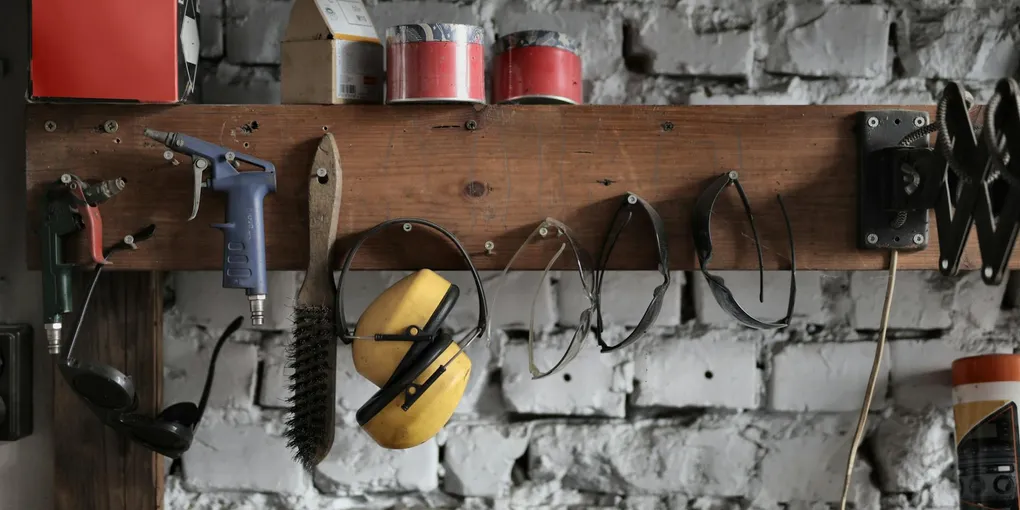
Fixing a broken garage shelf: (1) Sagging shelf board: most garage shelves use 3/4-inch plywood or OSB. A 4-foot span with heavy tools will sag. Add a center bracket or reduce the span to 24 inches by adding an intermediate support. (2) Bracket pulling out of the wall: the screws missed the studs or used drywall anchors that weren't rated for the load. Reinstall brackets into studs (16-inch centers, use a stud finder) with 2-1/2 to 3-inch screws. (3) Wall-mount bracket bent: steel L-brackets are cheap — replace with 12-inch heavy-duty angle brackets ($5 to $8 each). (4) Freestanding wire shelving tipping: add diagonal anti-tip brackets from the back of the unit to the wall. (5) Full replacement: freestanding metal shelf systems (Edsal, Muscle Rack) in 18x36x72 inch configurations hold 1,000 to 2,000 lbs total and take 30 minutes to assemble. This is usually cheaper than repairing a deteriorated custom shelf.
Frequently Asked Questions
Why did my garage shelf collapse?
The most common causes are overloading beyond the shelf or bracket rating, screws pulling out of drywall instead of studs, and wood shelf boards that cracked or delaminated from moisture exposure over time. Garage shelves mounted to drywall alone with no stud connection will always eventually fail under real load.
How do I find studs in a garage wall?
Use an electronic stud finder along the wall at shoulder height. Garage walls typically have studs on 16-inch or 24-inch centers. Probe with a finish nail if you are unsure — when the nail slides in without resistance past 1 inch, you are in a stud. Mark each stud center with a pencil before drilling.
What screws should I use for shelf brackets in a garage?
Use 3-inch or 3.5-inch construction screws (GRK or Spax) driven into studs. Never rely on drywall anchors for heavy garage shelves — even 50-lb rated anchors pull out under dynamic load. Two screws per bracket into a stud hold hundreds of pounds when properly driven.
How much weight can a garage shelf hold?
A properly built shelf mounted to studs with good brackets can hold 50 to 100 pounds per linear foot. The limiting factors are the bracket spacing (closer is stronger), the shelf board thickness (3/4-inch plywood is far stronger than 1x12 pine), and whether the brackets hit studs. Overloading is the number one cause of garage shelf failure.
Can I repair a cracked shelf board or do I need to replace it?
A clean crack in a solid wood board can be glued and clamped if the crack runs with the grain and the board is otherwise sound. Delaminated plywood or boards with splits running across the grain should be replaced — they will crack again under load. Replacement boards are inexpensive at any home center.
How do I strengthen an existing garage shelf without taking it down?
Add a middle bracket between existing brackets if spacing exceeds 24 inches, sister a new board under a sagging shelf, and add an L-bracket or angle iron at the back wall connection. These three additions can double the effective load rating of an existing shelf system without a full rebuild.
Fixing a broken garage shelf: (1) Sagging shelf board: most garage shelves use 3/4-inch plywood or OSB. A 4-foot span with heavy tools will sag.
A collapsed or sagging garage shelf is a common problem — and almost always a preventable one. Whether the brackets pulled out, the board cracked, or the whole unit tilted, you can fix it properly in an afternoon with basic tools and the right fasteners.
What You Need
- Heavy-duty shelf brackets — 12-inch or 16-inch
- 3-inch construction screws — GRK or Spax
- 3/4-inch plywood sheet or 1x12 pine board — if board replacement is needed
- Electronic stud finder
- Drill-driver with Phillips and drill bits
- Level — 24-inch or 48-inch
- Wood glue — Titebond III — for cracked board repair
- Pencil, tape measure, clamps
Step 1: Clear the Shelf and Assess the Damage
Remove everything from the shelf. With the shelf empty, you can see the actual failure points clearly.
What to check:
- Bracket-to-wall connection: Are the screws still in the wall, or did they pull out? Screws that pulled out of drywall without hitting a stud are the most common failure cause.
- Bracket condition: Is the bracket itself bent or broken? Metal brackets can deform under overload. Bent brackets need replacement.
- Shelf board condition: Set a level on the board. More than 1/4 inch of sag over 4 feet means the board has deformed. Check for cracks along the board — run your hand along the underside.
- Wall anchor condition: If the shelf used drywall anchors (plastic or toggle), assume they are inadequate and plan to replace them with stud-mounted screws.
Take photos of the existing configuration before removing anything — they help you reinstall brackets at exactly the right height.
Step 2: Locate and Mark Studs
Every bracket must hit a stud. This is non-negotiable for any shelf holding meaningful weight.
- Run a stud finder along the wall at the shelf height. Most garage walls have studs at 16-inch or 24-inch centers.
- Mark each stud center with a pencil — put two marks per stud, one at shelf height and one 2 inches above, so you can see the stud location clearly after brackets are positioned.
- Verify with a nail: Drive a finish nail at the stud center mark. It should go in firmly with solid resistance. If it slides through drywall into hollow space, shift 3/4 inch in each direction until you hit the stud.
For a shelf running along a full wall, you should be able to hit a stud every 16 or 24 inches. Plan bracket placement to land on studs, not between them.
Step 3: Remove Damaged Brackets and Repair the Wall
Pull the damaged brackets off the wall. If screws are stuck in the wall, back them out with a drill set to reverse.
Patch drywall holes:
- Small screw holes: fill with spackling compound, let dry, sand smooth. No need to tape.
- Large pulled-out anchor holes (3/4-inch or bigger): cut a piece of drywall mesh tape over the hole, apply two thin coats of joint compound, sand, and prime before painting if appearance matters. In a garage, a rough patch is typically fine — just needs to be solid.
Allow any patching compound to dry fully before remounting brackets — usually overnight for joint compound.
Step 4: Install New or Replacement Brackets
Use brackets sized for your shelf depth. A 12-inch-deep shelf needs a 12-inch bracket; a 16-inch shelf needs a 16-inch bracket. Oversized brackets are fine; undersized brackets cause the shelf board to tip forward under load.
Installation:
- Hold the first bracket against the wall on a stud line. Use a level to make sure it is plumb (vertical).
- Mark the top and bottom screw hole locations on the wall through the bracket holes.
- Remove the bracket and pre-drill pilot holes with a 1/8-inch bit to prevent the screw from splitting the stud edge.
- Drive 3-inch construction screws through the bracket holes into the stud. Two screws per bracket minimum. Three screws if the bracket has a third hole.
- Install subsequent brackets at stud locations, checking with a level that all brackets are at the same height. A 48-inch level spanning two brackets is the easiest way to confirm they are co-planar.
Bracket spacing: for 3/4-inch plywood shelves, space brackets no more than 24 inches apart. For 1x12 solid wood, no more than 16 to 18 inches apart. Closer spacing is always better for heavy loads.
Step 5: Repair or Replace the Shelf Board
If the board has a clean grain-aligned crack:
- Apply wood glue into the crack, working it in with a putty knife.
- Clamp across the crack with bar clamps or strap clamps. Wipe excess glue.
- Allow to cure 24 hours before loading.
- Add a 1x4 sister board glued and screwed to the underside of the repaired board for additional support.
If the board is delaminated, cross-grain cracked, or badly sagging:
- Remove the board entirely.
- Cut a replacement from 3/4-inch plywood or buy a pre-cut 1x12 pine board. Plywood is preferred for heavy garage loads — it does not sag under weight the way solid pine does.
- Cut the board to length so it spans all brackets with 1 to 2 inches of overhang on each end.
Step 6: Attach the Board to the Brackets
Lay the shelf board on top of the mounted brackets.
- Check that the board is level side to side — shim with a washer behind a bracket if needed.
- Pre-drill through the bracket shelf platform holes into the board underside — use a 1/8-inch bit to avoid splitting.
- Drive 1-1/4-inch screws up through the bracket holes into the board. Do not over-drive — the screw tip should just bite into the board without breaking through the top surface.
- On shelves longer than 36 inches, add an angle iron or L-bracket at the wall behind the shelf for a rear support that prevents the shelf from racking forward under heavy load.
Step 7: Load Test Before Trusting It
Before putting tools, bins, or equipment back on the shelf:
- Stand beside the shelf (not under it) and push down firmly on the center of the shelf board. It should feel solid with no flex or creak.
- Apply and remove load gradually — add heavy items first while watching the bracket connections.
- After 24 hours of normal load, visually check all bracket-to-wall screws. None should have moved.
Do not exceed 50 pounds per linear foot on a standard bracket shelf. For heavier storage (car parts, paint cans, water softener salt), build a freestanding shelving unit from 2x4 lumber anchored to the wall — it distributes load to the floor and is far more capable.
When to Call a Professional
This is one of the most DIY-friendly repairs in the home. Call a carpenter or handyman only if:
- The garage wall framing itself is damaged — water-rotted studs or termite damage require a framing repair before any shelving
- You want a complete built-in shelving system with overhead cabinets — a cabinetmaker or garage organizer company will provide engineered solutions for complex layouts
Related Reading
- How to Organize a Garage — full garage layout and storage planning
- How to Build Garage Shelves from 2x4s — build a freestanding heavy-duty system from scratch
- How to Install a Garage Pegboard — tool wall organization for a cleaner garage
- How Much Does a Handyman Cost?
- Clear the Shelf and Assess the Damage
Remove everything from the shelf. With the shelf empty, you can see the actual failure points clearly.
- Locate and Mark Studs
Every bracket must hit a stud. This is non-negotiable for any shelf holding meaningful weight.
- Remove Damaged Brackets and Repair the Wall
Pull the damaged brackets off the wall. If screws are stuck in the wall, back them out with a drill set to reverse.
- Install New or Replacement Brackets
Use brackets sized for your shelf depth. A 12-inch-deep shelf needs a 12-inch bracket; a 16-inch shelf needs a 16-inch bracket. Oversized brackets are fine; undersized brackets cause the shelf board to tip forward under load.
- Repair or Replace the Shelf Board
If the board has a clean grain-aligned crack:
- Attach the Board to the Brackets
Lay the shelf board on top of the mounted brackets.
Free: 10-Point Home Maintenance Checklist
Prevent costly repairs with this seasonal checklist. Save hundreds every year by catching problems early.
Your checklist is ready!
Open Checklist →Something went wrong. View the checklist here.