Sprinkler System Installation Cost 2026: $2,500–$5,500 Installed
Sprinkler system installation costs $2,500–$5,500 for an average yard. See per-zone pricing, DIY vs pro costs, and how to avoid the 3 most expensive mistakes.
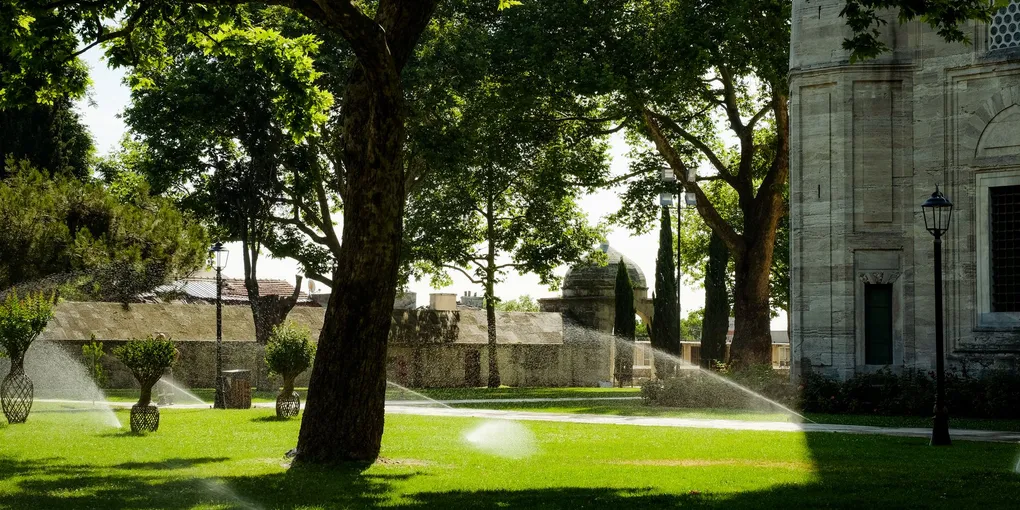
Sprinkler system installation costs $2,500–$5,500 for a typical ¼-acre residential yard — roughly $0.20–$0.40 per square foot irrigated, or $500–$1,000 per zone. DIY PEX/poly installations run $800–$1,800 in materials. The cost drivers are number of zones, soil type, whether the system ties into municipal water or a well, and local permit + backflow-preventer requirements.
Frequently Asked Questions
How much does it cost to install a sprinkler system for a ¼-acre yard?
Expect $2,500–$5,500 for professional installation of a 4–6 zone system on a typical ¼-acre lot. This includes trenching, pipe, heads, valves, controller, backflow preventer, and permits. DIY with rented trenching equipment drops the cost to roughly $800–$1,800 in materials.
What's the cost per zone for a sprinkler system?
Budget $500–$1,000 per zone installed professionally. A zone covers 1,500–3,000 sq ft depending on head type. Most residential yards need 4–8 zones — one for each section with similar water needs (front lawn, back lawn, flower beds, strips along driveways).
Is a sprinkler system worth the cost?
For lawns over 5,000 sq ft or gardens that genuinely need consistent watering, yes — a well-designed system uses 30–50% less water than hose watering while adding $1,500–$2,500 to home resale value. Below 5,000 sq ft, a quality hose-end timer and oscillating sprinkler usually provides better ROI.
Can I install a sprinkler system myself?
Yes, if you're comfortable renting a trencher (~$200/day), reading a water-pressure chart, and handling PVC or poly pipe. A 4-zone DIY install takes 2–3 weekends and saves $1,800–$3,500 in labor. The main risks are under-sizing pipe (leading to pressure loss) and skipping the backflow preventer (often illegal and a health hazard).
How long does sprinkler system installation take?
Professionals complete a 4–6 zone residential system in 1–2 days. DIY installations take 2–3 weekends because trenching, gluing joints, and tuning each zone can't be rushed without creating leaks or coverage gaps.
Sprinkler system installation costs $2,400–$6,800 for a typical ¼-acre lot in 2026 — roughly $0.50–$1.50 per square foot of lawn. A 6-zone system on a standard suburban lot runs $3,000–$4,500 installed. DIY installation costs $500–$1,500 in materials (controller, heads, PVC pipe, valves) and a weekend of work. Annual winterization blowout by a pro: $75–$150.
Sprinkler System Installation Cost: What a Pro or DIY Build Really Costs in 2026
A built-in irrigation system is the difference between a yard that stays green through August and one that browns out by the fourth of July. It’s also one of the most price-variable home projects — I’ve seen quotes on the same ¼-acre lot range from $2,400 to $6,800. Here’s exactly what drives the price, how to evaluate a quote, and when DIY actually makes sense.
Average Sprinkler System Installation Cost
For a typical ¼-acre residential yard (roughly 10,000 sq ft), expect $2,500–$5,500 professionally installed.
Nationally, you’ll see these ballparks:
| Yard size | Typical zones | Professional install | DIY materials |
|---|---|---|---|
| Small (under 5,000 sq ft) | 2–3 zones | $1,500–$2,800 | $500–$1,000 |
| Medium (¼ acre / ~10,000 sq ft) | 4–6 zones | $2,500–$5,500 | $800–$1,800 |
| Large (½ acre / ~20,000 sq ft) | 6–10 zones | $4,500–$9,000 | $1,500–$3,500 |
| Very large (1 acre) | 10–16 zones | $8,000–$16,000 | $3,000–$6,500 |
The industry rule of thumb is $500–$1,000 per zone installed, or $0.20–$0.40 per square foot irrigated. The low end assumes flat, easy-trenching soil and a simple municipal tie-in. The high end builds in tougher soil, more heads per zone, a smart controller, and a master valve.
What’s Inside a Sprinkler Quote
A written sprinkler quote should line-item these components so you can compare apples to apples:
- Main line and laterals — 1-inch poly or schedule-40 PVC for the main, ¾-inch laterals to each zone
- Valves and manifold — one anti-siphon valve per zone, usually grouped in a single valve box
- Sprinkler heads — typically Hunter or Rain Bird; rotors for lawns, fixed sprays for beds, drip for shrubs
- Controller — from a basic dial-knob unit ($40) to a smart Wi-Fi controller ($250+)
- Backflow preventer — required by code; a basic RPZ costs $120–$300, professional install adds $200–$400
- Trenching — vibratory plow or open trench; adds $200–$500/day in equipment
- Permits and backflow test — $75–$250 depending on municipality
- Labor — typically $60–$120/hour per tech for a 2–3 person crew
What Actually Drives the Price
1. Soil and terrain. Sandy loam is a dream to trench — a plow cuts through at walking speed. Clay, rocky, or root-bound soil can double labor time. Grade changes above 10% may force a pressure-reducing valve or a master valve to protect the system.
2. Water source. Municipal water needs a backflow preventer, a permit, and a tie-in at the main. A well source typically needs a booster pump and a larger pressure tank. Budget $400–$1,200 more for well-fed systems.
3. Number of zones. Zones aren’t just for coverage — they’re about pressure. Every sprinkler has a flow rate (GPM). Your service line typically delivers 10–15 GPM. If your design needs more than that, you must split it across additional zones, which means more valves, more wire, and more controller stations.
4. Head type. Gear-driven rotors cost more than fixed sprays but cover 2–3x the area. Drip tubing is cheap per foot but labor-heavy to lay out in beds. Rotary nozzles (the MP Rotator style) are premium but reduce runoff dramatically on slopes.
5. Smart controller. A Rachio 3 or similar Wi-Fi controller adds $200–$350 to the build but typically cuts water use by 30–50% over a dial controller. Most local water utilities rebate $50–$100 for installing a WaterSense-rated smart controller.
DIY vs Professional: The Honest Comparison
DIY makes sense when
- You have a weekend or two free and access to a trencher or vibratory plow rental (or mini-trencher)
- Your yard is under ½ acre and has mostly sandy or loamy soil
- You’re comfortable with basic plumbing (PVC solvent, poly clamps) and pulling a simple permit
- You want a smart controller from day one — most pros upsell basic controllers
Professional install makes sense when
- You have rocky, clay, or heavily rooted soil
- You’re irrigating more than ½ acre (crew speed is real)
- You need a well booster pump or a pressure-regulating master valve
- Your local code is strict on backflow testing (some cities require a licensed tester annually)
- Resale timing matters — a “professionally installed with transferable warranty” line adds value
The DIY cost breakdown (4-zone, ¼-acre)
| Line item | Cost |
|---|---|
| 1-inch poly main + ¾-inch lateral (500 ft total) | $150 |
| 4 anti-siphon valves + manifold | $180 |
| 16 rotor heads + 8 spray heads | $240 |
| Basic smart controller | $200 |
| Backflow preventer | $150 |
| Wire, fittings, clamps, solvent | $120 |
| Trencher rental (2 days) | $400 |
| Permit + backflow test | $150 |
| Total DIY materials + rental | ~$1,590 |
Labor you save: roughly $1,800–$3,500 vs a full pro install.
The honest trade-off: DIY takes 2–3 weekends and there will be one leak that forces you to dig up a joint. Pros finish in 1–2 days with a warranty.
The 3 Most Expensive Sprinkler Mistakes
Mistake 1: Under-sizing the main line. A ¾-inch main can only flow about 11 GPM before pressure losses get ugly. If your design needs 14 GPM, upsize to 1-inch. Fixing this later means re-trenching the entire main — effectively a rebuild.
Mistake 2: Skipping the backflow preventer. In most states it’s illegal to tie sprinkler heads into a city main without one. It’s also a real health hazard — a pressure drop in the street main can suck contaminated irrigation water back into your drinking water. Don’t cut this corner.
Mistake 3: Ignoring the frost line. In northern climates, pipe must run below the frost line (often 12–18 inches) and the system must be blown out each fall with a portable air compressor or professional winterization service ($75–$150). A frozen lateral cracks and you won’t know until spring turn-on.
Saving Money Without Cutting Corners
- Bundle with landscape grading. If you’re re-sodding, re-doing beds, or grading, the trenching cost piggybacks for free.
- Install a smart controller from day one. The rebate alone often offsets the controller upcharge, and water savings typically hit 20–40% annually.
- Zone for efficiency, not symmetry. Group south-facing lawn together, north-facing lawn together, beds together — don’t just divide by geometry. Water needs vary by sun exposure.
- Consider drip for beds. Drip tubing is cheaper to install and uses 70% less water than spray heads in planted areas.
- Get 3 quotes. Sprinkler quote variance is notorious — I’ve seen identical systems quoted at $3,200 and $5,800 from two reputable local companies on the same street.
- Ask about a winterization contract. Paying $125/year to a pro is cheaper than a cracked manifold from a missed blowout.
Smart Controllers: Where to Spend, Where to Save
Smart Wi-Fi controllers are the one component almost always worth the upcharge. They pull local weather and skip watering before rain, adjust run times by season, and let you control zones from your phone. The Rachio 3 and Hunter Hydrawise both qualify for most utility rebates. See our smart sprinkler controller roundup for specific model comparisons.
Cheap-outs that are actually fine:
- Basic Rain Bird or Hunter rotors — the pro-grade and pro-mid lines use the same internals. You only need the “commercial” line for high-traffic parks.
- Poly over PVC in northern climates — poly flexes instead of cracking when residual water freezes.
- Standard controller enclosure — rarely do you need a metal-rated outdoor enclosure if your controller is in a garage.
Permits, Backflow, and Code
Most jurisdictions require:
- A permit pulled before trenching ($50–$150)
- An approved backflow preventer at the tie-in point
- An initial backflow test by a licensed tester ($50–$100)
- An annual backflow re-test in many municipalities
These aren’t optional line items a contractor can skip to lower a bid. If a quote omits them, ask why — either the contractor is bidding illegally or they’ve rolled the costs into “labor” in a way that makes comparison impossible.
Bottom Line: What to Budget
- Under 5,000 sq ft yard: $1,500–$2,800 pro, $500–$1,000 DIY
- ¼-acre yard, 4–6 zones (most common): $2,500–$5,500 pro, $800–$1,800 DIY
- ½-acre yard: $4,500–$9,000 pro, $1,500–$3,500 DIY
- Smart controller upgrade: add $200–$350 (usually pays back in 1–2 seasons via water savings)
- Well-fed system premium: add $400–$1,200 for booster pump
A properly designed sprinkler system pays back in water savings alone over 5–7 years and typically returns 80–100% of its install cost at resale. The wrong time to cheap out is at the design stage — a pro walk-through to confirm zones and head counts before you (or your contractor) pulls a trencher is the single most valuable $0 expense you can make.
Regional Sprinkler System Installation Cost Variations
| Region | 1/4-Acre Yard (4–6 zones) | 1/2-Acre Yard (8–10 zones) | Smart Controller Upgrade |
|---|---|---|---|
| Northeast (NY, MA, NJ) | $3,500–$7,000 | $6,000–$12,000 | $350–$700 |
| Mid-Atlantic (DC, MD, VA) | $3,200–$6,500 | $5,500–$11,000 | $300–$650 |
| Southeast (FL, GA, TX) | $2,500–$5,000 | $4,500–$9,000 | $250–$550 |
| Midwest | $2,700–$5,500 | $4,800–$9,500 | $275–$575 |
| Pacific (CA, WA, OR) | $3,300–$6,800 | $5,800–$11,500 | $325–$675 |
Prices include trenching, pipe, heads, backflow preventer, and controller. Irrigation permit fees ($50–$200) and tap fees for dedicated meter add $200–$800 in some municipalities.
Irrigation System Brand and Installer Comparison
| Provider Type | Best For | Equipment | Notes |
|---|---|---|---|
| Local certified irrigation contractor | Best all-around; competitive pricing | Rain Bird, Hunter, Toro | Irrigation Association-certified contractors design for local soil and water pressure; best accountability |
| Rain Bird authorized installer | Standard residential systems | Rain Bird exclusively | Rain Bird is the industry standard; authorized installers receive product training |
| Hunter Industries dealer | Residential and commercial systems | Hunter exclusively | Hunter MP Rotators are industry favorites for water efficiency; good dealer network |
| National franchise (Mr. Sprinkler, U.S. LawnWorks) | Convenience; standardized pricing | Varies | Consistent pricing model; quality varies by franchise owner |
| Home Depot / Lowe’s installation service | Simple retrofit zones for existing plumbing | Varies | Good for adding zones; not a full system design service |
| DIY with retail heads | Budget; simple flat lawns; 2–3 zones | Orbit, Rainbird retail | Orbit timer + PVC pipe is realistic for simple rectangular zones; complex layouts need pro design |
Irrigation Association (IA) certification is the primary professional credential for irrigation contractors. Find certified contractors at irrigation.org. Certified contractors use evapotranspiration-based scheduling that saves 20–40% on water vs. timer-only systems.
Questions to Ask Your Irrigation Contractor
-
Will you perform a water pressure and flow test before designing the system, and how does that affect your zone design? — Irrigation system design starts with knowing your available water pressure (PSI) and flow rate (GPM) at the point of connection. Too many heads on a zone with insufficient flow creates inadequate coverage; too few wastes water and zones. Ask: “Will you measure water pressure and flow before finalizing zone design?” A contractor who designs from a standard template without measuring your specific supply is guessing — and guessing wrong means coverage gaps or low-pressure heads that don’t rotate properly.
-
What head types will you use in each zone — fixed spray, rotor, or MP rotator — and why are they matched to each area? — Fixed spray heads (pop-ups) cover small areas precisely but use more water per minute. Rotor heads cover larger areas with a slower precipitation rate, which reduces runoff on slopes and heavy clay soils. MP Rotators (Hunter, Rain Bird) are the most water-efficient for most residential lawns — lower precipitation rate, excellent distribution uniformity. Ask: “What head type will you use in each zone, and why?” Mixing head types on the same zone (different precipitation rates) is a common installation error that creates overwatering in one area and underwatering in another.
-
Is a backflow preventer included, and will the installation meet local code for backflow protection? — Backflow preventers protect the municipal water supply from contamination by irrigation water (fertilizers, pesticides, soil bacteria). In most jurisdictions, backflow protection is code-required for irrigation systems connected to municipal water. Ask: “Is a backflow preventer included, and what type?” For residential systems: a pressure vacuum breaker (PVB) or reduced pressure zone (RPZ) device is standard. Some municipalities require annual backflow testing — ask about the local requirement so you can budget for it.
-
What smart controller do you install, and does it support weather-based ET scheduling? — A smart controller using ET (evapotranspiration) data adjusts watering schedules based on actual weather conditions — reducing runtime after rain, increasing on hot/windy days. Ask: “What controller brand are you installing, and does it support weather-based scheduling?” Rachio and Rain Bird ESP-TM2 are the leading smart controllers for residential systems. A controller that requires you to manually adjust the schedule based on weather is a basic timer, not a smart controller. Smart controllers typically save $50–$150/year in water costs and qualify for water utility rebates in many regions.
-
What does your quote include for winterization/blowout service, and what is the annual service cost? — In climates with freezing winters (Zones 1–7), sprinkler systems must be winterized — compressed air is blown through the system to evacuate water from pipes and heads before freezing temperatures arrive. This service costs $75–$150/visit if not included in the installation package. Ask: “Is annual blowout service included in this contract, and if not, what is the cost?” Also ask: “What is your annual service package for spring startup and fall winterization?” Understanding the ongoing service cost before installation helps you budget accurately for the full system cost of ownership.
Related Reading
- Best Smart Sprinkler Controllers for 2026
- Sod vs Seed: Lawn Installation Cost Guide
- Spring Home Maintenance Checklist
- How to Fertilize Your Lawn
- EV Charger Installation Cost
- Annual Home Maintenance Schedule
- Design the zone layout
Map your yard, mark water-pressure-tested zones, and group plants with similar water needs. Use the manufacturer's head-spacing chart to plan 100% head-to-head overlap.
- Call 811 and pull a permit
Dial 811 at least 3 business days before digging to mark utilities. Most cities require a permit for sprinkler tie-ins to city water and a backflow-preventer inspection.
- Trench and lay pipe
Rent a vibratory plow or trencher. Dig 8–12 inches deep (below frost line in cold regions). Run poly pipe or PVC from the manifold to each zone, gluing/clamping connections carefully.
- Install valves, heads, and controller
Set valves in a single manifold box for easy servicing. Connect each zone wire to the controller. Install rotors for large lawn zones and fixed-spray heads for beds.
- Pressurize, tune, and program
Open the main, run each zone, and adjust head arcs for full coverage with no pavement overspray. Program the controller by zone — deeper, less-frequent watering is better than daily shallow cycles.
Free: 10-Point Home Maintenance Checklist
Prevent costly repairs with this seasonal checklist. Save hundreds every year by catching problems early.
Your checklist is ready!
Open Checklist →Something went wrong. View the checklist here.