Deck Staining Cost 2026: $1–$3/sq ft ($300–$900 for 300 sq ft)
Deck staining costs $1–$3/sq ft professionally — a 300 sq ft deck runs $300–$900. DIY costs $100–$200. Deck cleaning adds $150–$350. How often to restain by wood type.
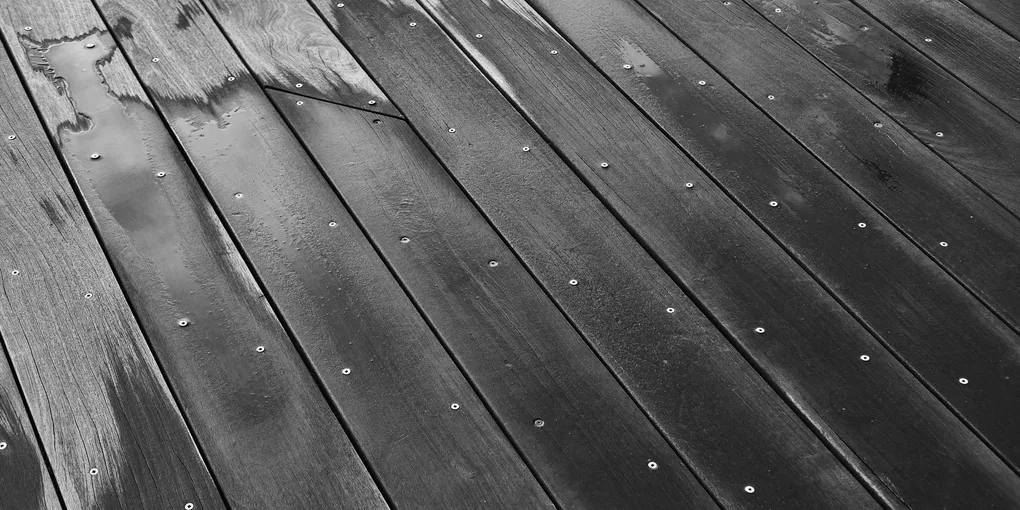
Deck staining costs $1–$3 per square foot for professional application. A 300 sq ft deck runs $300–$900 professionally stained, or $100–$200 DIY. Deck cleaning and prep (required before staining) adds $150–$400 professionally. Full deck staining project (clean + sand + stain) costs $500–$1,500 for a typical deck. Restain every 2–3 years for semi-transparent stains, every 3–5 years for solid stains.
Frequently Asked Questions
How much does it cost to stain a deck?
Professional deck staining costs $1–$3/sq ft for the stain application alone. A 200 sq ft deck runs $200–$600; a 400 sq ft deck runs $400–$1,200. Prep work (cleaning, light sanding, possibly power washing) adds $150–$400 professionally. Total project cost including prep: $350–$1,500 for most residential decks. DIY staining materials cost $80–$200 for a standard deck (stain + cleaner + supplies). Labor is the main cost driver for professional work.
Should I stain or paint my deck?
Stain penetrates wood fibers, resisting peeling. Paint sits on the surface and is prone to peeling and blistering on horizontal deck boards exposed to foot traffic and weather. Semi-transparent or semi-solid stains are the standard recommendation for decks — they let wood grain show, are easier to apply and reapply, and don't peel. Solid stains (essentially thin paint) hide grain but last longer before reapplication on weathered decks. Deck paint requires stripping before reapplication; stain can be restained over existing stain without stripping if same brand/type.
How often does a deck need to be restained?
Semi-transparent deck stain: every 2–3 years. Semi-solid stain: every 3–4 years. Solid deck stain: every 4–5 years. Deck sealer only (no color): every 1–2 years. Signs it's time to restain: water beads instead of soaking in within 30 seconds (sealer is still working) vs. water absorbs quickly (protection gone); wood looks gray or silver (UV damage to unprotected surface); stain is visibly peeling, flaking, or wearing through in high-traffic areas.
What is the best deck stain?
Top-rated deck stains: Armstrong Clark ($75–$90/gal) — consistently rated best penetrating stain for raw or lightly weathered wood; TWP (Total Wood Preservative) series ($75–$90/gal) — best for aged or weathered decks; Defy Extreme Wood Stain ($55–$75/gal) — best value semi-transparent. For DIY restaining without stripping: same brand and product type as existing stain (or Armstrong Clark which is compatible over many existing stains). For solid coverage on a heavily weathered deck: TWP 1500 Series. Avoid big-box house-brand stains — they under-deliver on UV protection vs. professional-grade products.
What preparation does a deck need before staining?
Minimum prep for new or recently cleaned decks: sweep, wash with deck cleaner (Defy Wood Cleaner or similar), let dry 48 hours, lightly sand rough areas, apply stain. Full prep for weathered or previously stained decks: pressure wash at 500–1,000 PSI (not higher — high pressure raises wood grain), apply deck brightener/cleaner (oxygen bleach or oxalic acid based) to restore wood color, rinse, let dry 48–72 hours, sand any raised grain, then stain. Grayed or mildewy wood must be cleaned and brightened before staining — staining over gray wood locks in the gray and prevents proper stain penetration.
Can I stain a deck myself?
Yes — deck staining is one of the most DIY-accessible exterior projects. Tools needed: pump sprayer or roller/brush (sprayer is fastest; brush/roller required for spindles), deck cleaner, deck brightener, stain. Plan one weekend: Saturday clean, Sunday or Monday stain (48-hour dry window). The main mistakes: not cleaning properly (stain won't penetrate dirty wood), not allowing adequate dry time after cleaning (moisture prevents stain absorption), and applying too thick (causes peeling). Thin, even coats always outperform heavy single coats.
Deck staining costs $1–$3 per square foot for professional application. A 300 sq ft deck runs $300–$900 professionally stained, or $100–$200 DIY.
Deck staining is one of the highest-ROI maintenance tasks in exterior home care: $80–$200 in materials every 2–3 years prevents $3,000–$8,000 in deck repair or replacement costs from wood rot and UV damage that an unprotected deck accumulates over 5–10 years.
Deck Staining Cost by Deck Size
| Deck Size | DIY Cost | Professional Cost |
|---|---|---|
| Small (100–200 sq ft) | $60–$120 | $200–$600 |
| Medium (200–400 sq ft) | $100–$200 | $400–$1,200 |
| Large (400–600 sq ft) | $150–$300 | $600–$1,800 |
| Two-level or complex | $200–$400 | $800–$2,500 |
Professional costs include prep (cleaning + brightening) plus stain application.
Stain Type Comparison
| Type | Coverage | Grain Show | Reapplication | Best For |
|---|---|---|---|---|
| Clear sealer | Surface protection only | Full | 1–2 yr | New cedar, IPE |
| Semi-transparent | Light color + UV block | Yes | 2–3 yr | Most decks |
| Semi-solid | More color, some grain | Partial | 3–4 yr | Weathered decks |
| Solid | Full color, hides grain | No | 4–5 yr | Old weathered decks |
Professional vs. DIY: When Each Makes Sense
DIY: Small/medium deck under 400 sq ft, simple flat boards (no spindle railing), you have a weekend available. Savings: $200–$600.
Professional: Large or complex deck (spindles, underdecking, multiple levels), deck was previously painted or heavily weathered (strip + restain), or you don’t have the time/comfort level for prep work.
Regional Cost Variations
| Region | Professional Staining (300 sq ft deck) |
|---|---|
| Northeast (NY, MA, CT) | $500–$1,400 |
| Southeast (FL, GA, SC) | $350–$900 |
| Midwest | $350–$1,000 |
| Southwest | $300–$900 |
| Pacific Northwest | $450–$1,200 |
Best Deck Stain Products: What Professionals Use
Budget stains from big-box stores (Behr DeckOver, Cabot) often under-deliver on UV protection and require more frequent reapplication. Professional-grade penetrating stains last 2–4× longer:
| Brand | Price/Gallon | Coverage | Type | Best For |
|---|---|---|---|---|
| Armstrong Clark | $75–$90 | 200–250 sq ft | Semi-trans/semi-solid | New or lightly weathered wood |
| TWP 100 Series | $75–$85 | 150–200 sq ft | Semi-transparent | All wood types |
| TWP 1500 Series | $75–$90 | 150–200 sq ft | Semi-solid | Weathered decks |
| Defy Extreme | $55–$75 | 150–200 sq ft | Semi-transparent | Best value |
| Superdeck (Sherwin-Williams) | $50–$70 | 150–200 sq ft | Semi-solid | Professional application |
| Cabot Australian Timber Oil | $40–$60 | 150–200 sq ft | Oil/semi-trans | Cedar, redwood, tropical |
Armstrong Clark and TWP are the most consistently rated by professional deck contractors for longevity. Both require prep and won’t work over existing film-forming products.
Deck Staining Timeline: Full Project Schedule
A proper deck staining project takes 2–4 days:
| Day | Task | Notes |
|---|---|---|
| Day 1 | Clean and brighten | Apply deck cleaner, wait 30 min, rinse; apply brightener, wait 10 min, rinse |
| Day 1–2 | Dry time | 48 hours minimum; longer if humid or cool |
| Day 2–3 | Light sand | 80-grit on any raised grain areas; sweep clean |
| Day 3 | First coat | Apply in grain direction; back-brush immediately |
| Day 3–4 | Second coat | Apply while first coat is still tacky (1–3 hours) OR wait 24 hours if first coat fully dry |
Weather window needed: no rain for 24–48 hours before staining (deck must be dry), no rain for 24–48 hours after staining (stain must cure before getting wet).
Strip or Restain: Deciding When
| Deck Condition | Action |
|---|---|
| Stain fading but intact, same brand available | Restain over existing |
| Stain peeling in spots | Strip and restain |
| Previously painted or solid-stained | Full strip required before penetrating stain |
| Heavy gray weathering, stain all gone | Clean, brighten, and restain (no strip needed) |
| Oil-based stain over water-based | Check compatibility or strip |
Stripping a deck costs $200–$600 professionally using chemical stripper (Restore-A-Deck Stripper, Ready Seal Stripper). DIY stripping costs $50–$100 in materials and a full day of labor.
Questions to Ask a Deck Staining Contractor
- What product do you use? — should name a specific brand and product (not just “quality stain”)
- Does your quote include cleaning and brightening? — prep is not optional; skip this step and the stain won’t adhere properly
- Do you back-brush after spraying? — spray-only application without back-brushing misses between deck boards and doesn’t penetrate adequately
- How many coats? — one coat of a penetrating stain is typically adequate if applied correctly; two thin coats is better on thirsty wood
- What’s your warranty? — reputable contractors offer 1–2 year warranty against premature peeling or failure
DIY supplies (if you tackle it yourself)
- Deck stain (semi-transparent)
- Deck cleaner/brightener
- Deck paint roller set
- Deck brush/stain applicator
Related Reading
- How to Stain a Deck
- How to Fix a Broken Deck Board — replace damaged boards before staining so the finish coats a solid surface
- How to Fix a Peeling Deck Stain
- Deck Repair Cost
- Deck Building Cost per Square Foot
- Pressure Washing Cost
- Annual Home Maintenance Schedule
- How to Fix a Cracked Composite Deck Board — repair a cracked composite board before applying a fresh stain coat
- How to Fix a Cracked Porch Railing Cap — repair or replace a cracked railing cap before staining the deck and porch surround
- How to Fix a Cracked Wood Deck Board — repair a split or checked deck board before applying stain so the finish penetrates evenly
- Test whether your deck can absorb stain before buying product
Sprinkle water on the deck surface. If water beads and sits on top, the wood has an existing sealer or stain that blocks penetration — you'll need to strip or wait for the sealer to wear away before a penetrating stain will work. If water absorbs within 30 seconds, the wood is ready for stain. If the deck was previously painted or solid-stained, those coatings must be stripped before applying a penetrating stain. Stripping costs $200–$500 professionally, or $50–$100 in stripper products for DIY. Applying penetrating stain over film-forming products produces peeling within one season.
- Clean and brighten the deck 48–72 hours before staining
Cleaning removes dirt, mildew, and old surface material. Brightening restores the wood's natural pH and color after cleaning (cleaning with bleach or alkaline cleaners raises pH; brightening lowers it back to the neutral range where stain adheres best). Use an oxygen-bleach based cleaner (30 Seconds, Defy, or Simple Green Deck and Fence) rather than chlorine bleach, which damages wood fibers. After cleaning and brightening, let the deck dry completely — 48–72 hours in dry weather, longer if humidity is high. Testing: press a finger firmly to a board; if it feels cool and slightly damp, not ready. If it feels warm and room temperature, it's dry.
- Apply stain in the shade on a cool day — not in direct sun
Deck stain applied in direct sunlight dries too quickly and doesn't penetrate properly. Ideal conditions: overcast day or shaded deck, 50–80°F air temperature, no rain in the forecast for 24–48 hours. Apply stain in the direction of the wood grain, working 2–3 boards at a time so wet edges don't dry before you return to them (lap marks form when stain dries between passes). On spindles and vertical surfaces, work top to bottom and catch drips immediately. Two thin coats are always better than one thick coat — let the first coat dry until tacky (1–2 hours) before applying the second.
- Don't overapply — wipe back excess within 5 minutes of application
Penetrating stains can only absorb as much as the wood will accept. Excess stain sitting on the surface forms a film that eventually peels. Apply a coat, wait 5 minutes, then wipe back any excess that hasn't absorbed with a rag or foam applicator. Tight-grain wood (IPE, cedar heartwood) absorbs less than open-grain wood (pressure-treated pine) and is more prone to excess buildup. If you're unsure, do a test section and check after 24 hours — if the surface feels tacky or has a sheen in areas, you've applied too much and should wipe back immediately.
- Restain on a regular schedule to avoid full stripping
The economics of deck maintenance: light restain every 2–3 years ($80–$200 DIY) vs. full strip + restain every 7–10 years ($400–$800) when neglect requires starting over. Catching the restain window before the existing stain fully weathers means you can apply fresh stain over worn but intact stain (same brand/type) without stripping. Once the existing stain peels, you must strip completely before restaining — which is more expensive, more labor-intensive, and produces worse results than a timely maintenance coat. Set a calendar reminder for 2.5 years after each stain project.
Free: 10-Point Home Maintenance Checklist
Prevent costly repairs with this seasonal checklist. Save hundreds every year by catching problems early.
Your checklist is ready!
Open Checklist →Something went wrong. View the checklist here.