How to Clean a Shower Head: Vinegar Bag Method in 30 Minutes
How to clean a clogged or low-pressure shower head. Covers the vinegar bag soak (no removal needed), removal-and-soak for heavy buildup, and when to just replace the shower head.
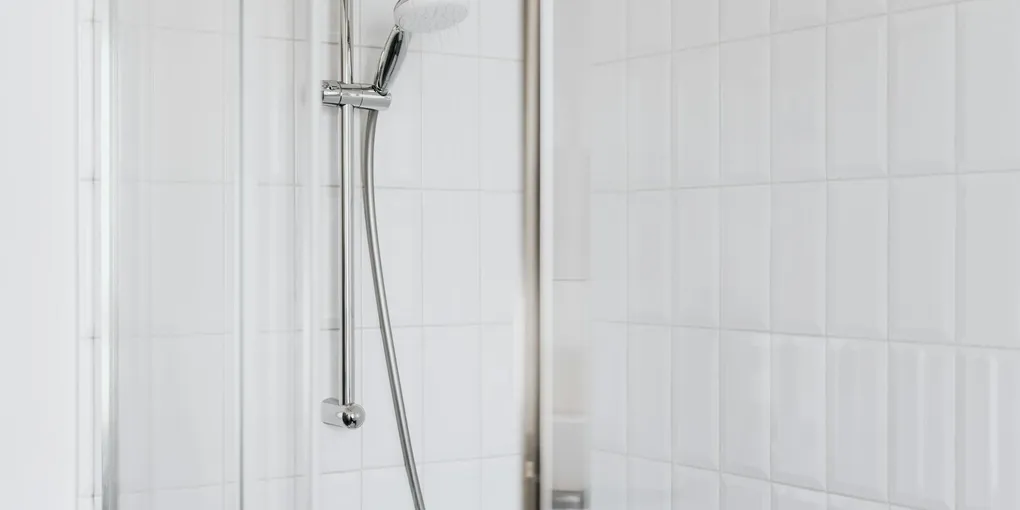
Clean a clogged shower head by filling a plastic bag with 1-2 cups of distilled white vinegar, securing the bag over the shower head with a rubber band so the shower head is fully submerged, and letting it soak for 30 minutes (up to overnight for heavy buildup). Remove the bag, run hot water for 60 seconds to flush, then gently scrub remaining buildup with an old toothbrush. Mineral scale is the #1 cause of low shower pressure — this fixes it without removing the shower head. For stubborn cases, unscrew the shower head, soak submerged in vinegar for 2-4 hours, scrub, reinstall with fresh Teflon tape.
Frequently Asked Questions
Why is my shower head losing pressure?
90% of the time it's mineral scale (calcium and magnesium deposits) clogging the small holes. Hard water deposits build up inside the shower head over months and eventually block individual jets. The vinegar bag soak dissolves the buildup and restores flow in 30 minutes. If cleaning doesn't restore pressure, the issue is upstream — low water pressure from the house, a failing pressure regulator, or a plumbing restriction. See our how-to-fix-low-water-pressure guide for diagnosis.
Can I use CLR or commercial descaler on a shower head?
Yes, but vinegar works just as well at 5% of the cost. CLR, Lime-A-Way, and other commercial descalers are acidic cleaners that dissolve the same calcium carbonate that vinegar dissolves. The vinegar bag method is safer on chrome finishes and doesn't require special ventilation. Skip commercial products unless vinegar has failed after two 4-hour soaks — at that point the buildup is severe and you may want to just replace the shower head.
Should I remove the shower head to clean it?
Not initially. The bag-over-the-head method works for 80% of cases and takes no tools. Reserve removal for: (1) heavy buildup that doesn't clear after an overnight bag soak, (2) shower heads that need internal disassembly for deep cleaning, (3) shower heads that are due for replacement anyway. If you do remove, wrap the flange with a rag before using pliers to avoid marring the finish.
How often should I clean my shower head?
Every 3-6 months if you have hard water (10+ grains per gallon), every 6-12 months if you have soft water. Signs you're overdue: reduced pressure, uneven spray pattern (some holes not spraying), visible white/green deposits on the face. Preventive cleaning every 3 months prevents the low-pressure complaint that drives most shower head cleaning in the first place.
When should I just replace the shower head?
Replace instead of clean if: (1) scale has damaged the finish (pitting, permanent staining), (2) the flow is still weak after thorough cleaning, (3) plastic components are cracked, (4) the shower head is 10+ years old (internal seals wear out), (5) you want a flow upgrade (low-flow units 10+ years old use 2.5 GPM — modern low-flow heads produce the same feel at 1.8 GPM). New shower heads: $20-$200. Our [how to replace a shower head](/blog/how-to-replace-a-shower-head/) guide covers the swap.
Is it safe to use vinegar on chrome or finished shower heads?
Yes, white distilled vinegar is safe for chrome, brushed nickel, stainless steel, and most plated finishes for the 30-minute to overnight soak durations recommended. Avoid vinegar on unfinished brass (can etch) and on shower heads marked 'not vinegar-safe' (rare, but some manufacturer specs require it). Never leave vinegar on any shower head for more than 24 hours — acid exposure over extended time can damage rubber seals inside.
How do I clean hard water stains around the shower head wall plate (escutcheon)?
The trim plate and the wall around the shower arm accumulate the same mineral scale as the shower head. Method: soak a cloth, paper towel, or sponge in undiluted white vinegar and press it firmly against the stained area. Tape or hold it in place for 30 minutes to 2 hours depending on buildup severity. Then scrub with an old toothbrush and rinse. For rust stains from well water (orange-brown staining), CLR or Lime-A-Way is more effective than vinegar — apply, let sit 2 minutes, and rinse. Bar Keepers Friend soft cleanser (not the powder) works on chrome, tile, and fiberglass without scratching. Never use abrasive pads on chrome finishes — they permanently dull the surface.
What is the best shower head for low water pressure?
Look for shower heads with a low-pressure-optimized design: smaller nozzle openings that increase water velocity at low pressure, and settings that concentrate flow (jet or massage modes) rather than dispersing it. Key spec to look for: rated for use at 30–40 PSI rather than the standard 60–80 PSI. Top-rated low-pressure models include the Speakman S-2252 (high-pressure precision nozzles), the Waterpik XPG-383ME (massage mode concentrates flow), and the AquaDance Premium (high-pressure setting maintains good feel at 30 PSI). Avoid any shower head with more than 2.0 GPM rating at low pressure houses — these require higher pressure to perform as advertised. Replacing a 2.5 GPM head with a 1.8 GPM low-pressure model often feels stronger because the same water volume is more concentrated.
Clean a clogged shower head by filling a plastic bag with 1-2 cups of distilled white vinegar, securing the bag over the shower head with a rubber band so the shower head is fully submerged, and letting it soak for 30 minutes (up to overnight for heavy buildup). Remove the bag, run hot water for 60 seconds to flush, then gently scrub remaining buildup with an old toothbrush.
A shower head that’s lost pressure isn’t broken — it’s clogged with mineral scale. Every shower head in North America accumulates calcium and magnesium deposits from ordinary tap water, and after 6-18 months of use, the small jet holes get blocked. The fix takes 30 minutes, costs under $5 in vinegar, and doesn’t require removing the shower head in most cases. This guide covers the bag-soak method that works for 80% of cases, plus the removal-and-soak approach for stubborn buildup.
The 30-Minute Vinegar Bag Method
Supplies:
- Distilled white vinegar (1-2 cups)
- Plastic bag (1-quart or gallon Ziploc)
- Rubber band or twist tie
- Old toothbrush (optional, for finishing)
Process:
- Fill the bag with vinegar
- Pull it up over the shower head so the face is fully submerged
- Secure with a rubber band at the pipe
- Soak 30 minutes (overnight for heavy buildup)
- Remove bag, flush with hot water for 60 seconds
- Scrub any remaining buildup with a toothbrush
That’s it. Most shower heads restore full pressure in a single 30-minute soak.
Soak Duration by Buildup Severity
| Buildup Level | Signs | Soak Time |
|---|---|---|
| Light | Light white coating | 30-60 min |
| Medium | Visible white crust, half-blocked jets | 2-4 hours |
| Heavy | Thick green/white crust, most jets blocked | Overnight (8-12 hours) |
| Extreme | Doesn’t clear after overnight | Remove + submerge 4-8 hours |
Never leave vinegar on a shower head for more than 24 hours — extended acid exposure can degrade rubber seals inside the head.
Removal for Stubborn Cases
If the bag method fails after 2 attempts:
-
Protect the finish. Wrap a rag around the base of the shower head where it connects to the shower arm (the pipe coming out of the wall). This prevents pliers from marring the finish.
-
Unscrew. Turn counter-clockwise with an adjustable wrench. Most shower heads are finger-tight + a quarter turn — shouldn’t require extreme force.
-
Submerge. Drop the shower head into a bowl filled with white vinegar, fully covered. Leave 4-8 hours.
-
Disassemble if possible. Many modern shower heads unscrew into 2-3 pieces for internal cleaning. Use a coin or screwdriver slot on the faceplate. Scrub internal passages with a brush.
-
Flush. Run water through the disconnected shower arm for 30 seconds to flush any loose scale downstream.
-
Reassemble and reinstall. Apply fresh Teflon tape to the threads (2-3 wraps in the direction of thread rotation). Screw the shower head back on hand-tight plus 1/4 turn with a wrench. Don’t overtighten — risks cracking the shower arm.
When to Replace Instead
Don’t waste time cleaning if any of these apply:
- Shower head is 10+ years old (internal seals wear out)
- Finish is pitted or permanently stained
- Plastic components are visibly cracked
- Flow is still weak after 2 thorough cleanings
- You want a flow/feature upgrade (handheld, multi-spray, high-pressure low-flow)
New shower heads are $20-$200. Installation is 5-10 minutes. See our how to replace a shower head guide for the process.
Recommended replacements:
- Basic chrome: Delta Faucet Fixed Shower Head ($25-$50)
- Handheld: Moen Handheld Shower Head ($60-$120)
- High-pressure: High Sierra 1.5 GPM Low-Flow ($40-$80) — low-flow but strong pressure
- Luxury rain head: Rainfall Shower Head ($50-$150)
Still Low Pressure After Cleaning?
If scale wasn’t the issue, check upstream:
- Main shutoff valve — partially closed. Open fully (counter-clockwise).
- Pressure regulator — failing regulators drop whole-house pressure. Test pressure at an outdoor spigot with a pressure gauge ($10-$15). Normal: 40-60 PSI. Low: below 40.
- Flow restrictor — removable in most shower heads. Federal regulations limit shower heads to 2.5 GPM; some have an internal disc reducing flow further. See manufacturer instructions to remove (legal for individual homeowner use).
- Supply line kink — behind the wall, rarely the issue.
- Whole-house water filter — if clogged, reduces pressure.
See our how to fix low water pressure guide for the full diagnostic sequence.
Preventive Maintenance
- Every 3 months (hard water): run the bag soak even if pressure seems fine. Prevents buildup from accelerating.
- Every 6 months (soft water): same routine.
- Weekly: a quick wipe of the shower head face with a damp microfiber cloth removes early deposits before they set.
- Monthly: look at the spray pattern. If any jet is weak or misdirecting, a quick toothbrush scrub often clears early clogs before they require a full soak.
Hard Water Long-Term
If you’re descaling your shower head every 3 months, you have hard water causing ongoing damage to:
- Water heater (shortened by 50%)
- Dishwasher
- Washing machine
- Faucet cartridges
- Toilet flappers
A whole-house water softener eliminates the root cause. Installed cost $1,500-$2,500. Typically pays back in 3-5 years through extended appliance life alone.
See our water softener cost guide for full pricing.
Related Reading
- How to Replace a Shower Head — when cleaning isn’t enough
- How to Fix Low Water Pressure — if cleaning doesn’t restore pressure
- How to Install a Water Softener — prevent future scale buildup
- Water Softener Cost — full pricing for hard water remediation
- How to Clean a Dishwasher — similar descaling logic
- How to Clean a Coffee Maker — another hard-water victim
- How to Caulk a Bathtub — complete bathroom maintenance
- Assess the buildup
Look at the shower head face. Light scale (light white coating, some jets partially blocked): bag soak 30-60 minutes will fix it. Medium scale (visible white crust, half the jets partially blocked): bag soak 2-4 hours or overnight. Heavy scale (thick green/white crust, most jets blocked): remove shower head and submerge in vinegar for 4+ hours, or consider replacement.
- Prepare the vinegar bag
Fill a gallon-size or 1-quart Ziploc or plastic grocery bag with 1-2 cups of distilled white vinegar — enough to fully submerge the shower head face when the bag is tied over it. For extra cleaning power on heavy buildup, add 1 tablespoon of baking soda (it'll foam initially, then settle). No need for hot vinegar — cold works fine at longer dwell times.
- Secure the bag over the shower head
Fit the bag over the shower head so the entire face is submerged in vinegar. The shower arm (pipe) goes through the bag opening. Secure with a rubber band, twist tie, or piece of string at the neck where the bag meets the pipe. Check that the face is fully submerged — tilt the shower head if needed.
- Soak for 30 minutes (or longer for heavy buildup)
Light buildup: 30 minutes. Medium: 2-4 hours. Heavy: overnight (up to 12 hours, don't exceed 24). During the soak, the acid dissolves calcium carbonate buildup. No action required — just wait.
- Remove the bag and flush
Carefully untie the bag and lower it away from the shower head (catch any dripping vinegar in the bag). Run hot water through the shower head at full pressure for 60-90 seconds. This flushes dissolved scale out of the internal passages. You'll often see small chunks of white/brown debris fall out — this is normal.
- Scrub remaining spots
If visible buildup remains on the face, scrub gently with an old toothbrush. Don't use metal tools or abrasive pads — they scratch the finish. For individual clogged jets, push a [safety pin or needle](https://www.amazon.com/s?k=safety+pin+assortment&tag=fixupfirst-20) into each one to clear debris. Run hot water one more time to flush.
- Check pressure and spray pattern
Turn the shower on and observe. Pressure should be restored to normal. All jets should spray evenly. If some are still weak, repeat with a longer soak or an overnight treatment. If pressure is still low after two thorough cleanings, the problem is upstream — see the how-to-fix-low-water-pressure guide.
- Consider removal for stubborn cases
If the bag method fails after 2 attempts: use a wrench with a rag wrapped around the connection (protects finish) to unscrew the shower head counter-clockwise. Submerge the entire head in a bowl of vinegar for 4-8 hours. Disassemble if possible (most heads unscrew into 2-3 pieces for internal cleaning). Scrub internal surfaces with a brush. Reassemble with fresh Teflon tape on the threads. Reinstall hand-tight plus 1/4 turn with a wrench.
Free: 10-Point Home Maintenance Checklist
Prevent costly repairs with this seasonal checklist. Save hundreds every year by catching problems early.
Your checklist is ready!
Open Checklist →Something went wrong. View the checklist here.