Furnace Replacement Cost 2026: $3,000–$15,000 Installed
2026 furnace replacement cost: gas, electric, oil, and propane. AFUE efficiency, sizing, ductwork, and how to compare HVAC contractor quotes without overpaying.
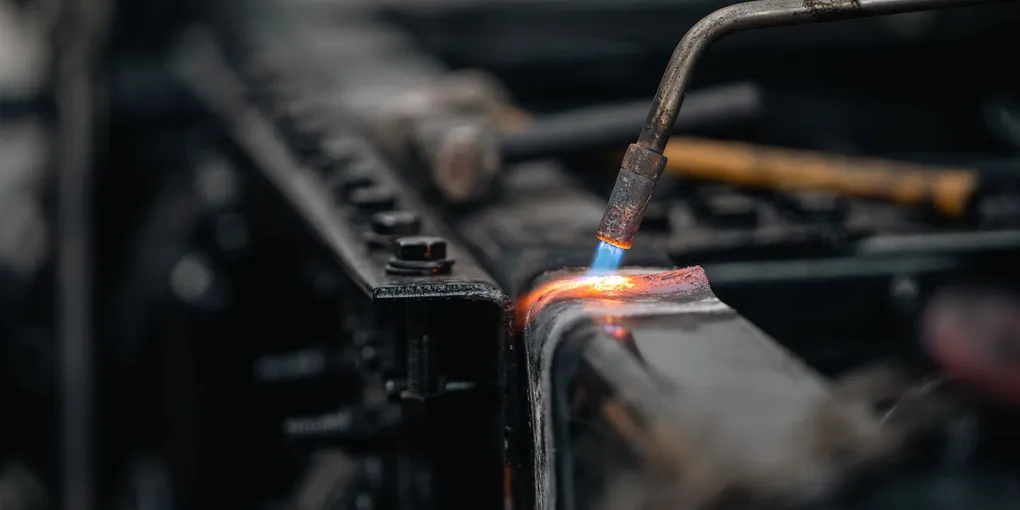
A new gas furnace in 2026 costs $3,000-$8,500 installed for standard 80-96% AFUE efficiency, and $8,500-$15,000 for high-efficiency 97%+ variable-speed models. Electric furnaces run $2,500-$6,000 installed. Oil furnaces $5,000-$10,000. Propane $4,000-$9,000. The single biggest variable is whether new ductwork, a new flue, or a gas line upgrade is required.
Frequently Asked Questions
How much does a new gas furnace cost installed?
For a standard 80% AFUE single-stage gas furnace: $3,000-$5,500 installed. For a 95-96% AFUE two-stage: $5,500-$8,500. For a 97-98% AFUE variable-speed modulating furnace with ECM blower: $8,500-$15,000. All figures assume a straightforward swap with existing ductwork and gas line.
How long does a gas furnace last?
15-20 years is typical for a well-maintained gas furnace. Oil furnaces last 20-30 years. Heat pumps 12-18 years. Replace before the old unit fails mid-winter — planned replacements avoid emergency installation premiums and let you shop contractors.
Should I upgrade to high-efficiency 95%+ AFUE?
In cold climates where heating dominates, yes — the 10-15% fuel savings can pay back the upgrade cost in 7-12 years. In mild climates, the payback is longer and a standard 80% AFUE furnace often makes more financial sense. High-efficiency units also require a sidewall PVC flue, which may add or reduce install cost depending on your house.
Is a heat pump cheaper than replacing a furnace?
Depends on climate. In moderate climates (zones 3-4), cold-climate heat pumps often beat gas furnaces on total cost of ownership, especially with federal tax credits and utility rebates. In very cold climates, dual-fuel (heat pump + gas backup) is often the optimal system. Get quotes for both before committing to a direct gas swap.
What size furnace do I need?
A properly sized furnace handles your worst-case heating load at your design temperature, not your peak. Typical US homes need 30-60 BTU per square foot of heated space — a 2,000 sq ft home in a cold climate needs 80,000-100,000 BTU. A Manual J load calculation (included in any good quote) determines exact sizing. Oversized furnaces short-cycle and waste fuel.
Are there tax credits or rebates for a new furnace in 2026?
Yes. The federal Inflation Reduction Act provides a 30% tax credit (up to $600/year) for qualifying 97%+ AFUE gas furnaces and a 30% credit up to $2,000 for heat pumps. Many utility companies offer $100–$600 rebates on high-efficiency equipment. Check EnergyStar.gov and your utility's website before purchasing — stacking federal, state, and utility incentives can reduce the effective cost by $1,000–$3,500 on a high-efficiency system.
How do I know when to replace vs. repair a furnace?
Repair if: the furnace is under 12 years old, the repair cost is under $500, and the unit has been maintained annually. Replace if: the furnace is over 15 years old, it's had multiple repairs in the last 3 years, heating bills have risen 15–25% without an obvious cause, or the heat exchanger is cracked (a safety-critical failure that cannot be patched). An aging furnace that's constantly breaking down costs more to maintain than a new one costs to install.
What AFUE furnace rating makes sense for my climate?
AFUE (Annual Fuel Utilization Efficiency) guidance by climate zone: Zones 1–3 (South, Gulf Coast, Southwest) — a standard 80% AFUE furnace is typically sufficient. Heating season is short; the payback period for high-efficiency equipment is often 15+ years. Zones 4–5 (Mid-Atlantic, Midwest, Pacific Northwest) — 95–96% AFUE two-stage units hit the best cost-efficiency balance. Zones 6–8 (Northern US, mountains, Great Lakes, New England) — 96–98% AFUE variable-speed modulating furnaces pay back in 6–10 years due to heavy heating loads. The key calculation: each AFUE point above 80% saves roughly $8–$12 per year per 10,000 sq ft of heating load. A 95% vs 80% system saves 15 points × $8–$12 = $120–$180/year on a typical 2,000 sq ft home in a cold climate.
What furnace brands are most reliable in 2026?
By reliability tier: Premium — Carrier, Trane, and Lennox consistently rank highest in long-term reliability studies and have the widest parts/service availability. Their variable-speed and modulating units are especially well-regarded. Mid-tier — Rheem, Ruud (same company), and York offer solid mid-grade reliability at 10–15% lower purchase cost. Budget — Goodman (owned by Daikin) has improved significantly in build quality and now offers strong 10-year parts warranties even on budget models. For a furnace that will run 15+ years, avoid off-brand or imported no-name units even if significantly cheaper. Installation quality matters as much as brand — a premium furnace installed by an inexperienced contractor underperforms a mid-tier unit installed correctly. Always verify NATE certification for the installing technician.
Furnace replacement costs $3,000–$7,000 fully installed for a standard gas furnace in 2026 — equipment $1,500–$3,500, labor $1,000–$2,500. High-efficiency (96%+ AFUE) furnaces cost $1,000–$2,000 more upfront but save $200–$400/year in gas. Heat pump alternatives run $4,000–$10,000 installed and qualify for a 30% federal tax credit. Get 3 quotes — furnace installation pricing varies up to 50% between contractors.
Replacing a furnace is one of the most expensive mechanical projects in a home, and one of the most commonly overpriced. This guide breaks down 2026 costs for gas, electric, oil, and propane furnaces, explains what’s worth paying for (and what’s not), and shows how to compare HVAC quotes without getting squeezed.
Quick Answer on Furnace Replacement Cost
Installed in a typical 2,000 sq ft home in 2026:
| Furnace Type / Efficiency | Installed Cost |
|---|---|
| Gas 80% AFUE single-stage | $3,000 - $5,500 |
| Gas 90-95% AFUE single-stage | $4,500 - $7,000 |
| Gas 95-96% AFUE two-stage | $5,500 - $8,500 |
| Gas 97-98% AFUE variable-speed modulating | $8,500 - $15,000 |
| Electric furnace | $2,500 - $6,000 |
| Oil furnace | $5,000 - $10,000 |
| Propane furnace | $4,000 - $9,000 |
| Heat pump (cold-climate) | $7,500 - $16,000 |
| Dual fuel (heat pump + gas) | $10,500 - $20,000 |
These assume straightforward swaps: existing ductwork stays, gas line is in place, flue adaptation is minor. Complex installs push costs 20-40% higher.
What Drives Furnace Cost Up
Fuel Type
- Natural gas: Cheapest fuel in most US regions. Most homes.
- Electric resistance: Cheapest to install, most expensive to operate. Rare outside of apartments and mild climates.
- Oil: Expensive fuel and shrinking contractor base. Most oil furnaces are replacements where switching fuel isn’t practical.
- Propane: Similar installed cost to natural gas. Fuel cost varies by region.
Efficiency (AFUE Rating)
AFUE (Annual Fuel Utilization Efficiency) tells you what percentage of the fuel becomes usable heat:
- 80% AFUE: Mid-efficiency. 80 cents of every fuel dollar becomes heat. Vents through the existing masonry chimney.
- 90-96% AFUE: High-efficiency. Requires sidewall PVC flue. Uses a secondary heat exchanger to extract more heat from exhaust.
- 97-98% AFUE: Condensing modulating. Top-tier. Varies output in small increments for consistent comfort.
Going from 80% to 95% AFUE saves 15% on heating bills. In cold climates with high gas prices, payback is 7-12 years. In mild climates, payback can stretch past 20 years.
Staging and Modulation
- Single-stage: Full-blast or off. Cheapest. OK for mild climates and smaller homes.
- Two-stage: Low-fire (~65% output) and high-fire. Better comfort, less on/off cycling.
- Modulating: Adjusts in 1% increments from 35-100% output. Best comfort. Pairs with variable-speed ECM blower.
Blower Type
- PSC (Permanent Split Capacitor): Fixed speed. Inefficient. Being phased out.
- ECM (Electronically Commutated Motor): Variable speed. Uses 25-50% less electricity. Quieter. Better for high-end systems.
- Variable-speed ECM: Ramp-up/ramp-down for quieter operation and better comfort.
Sizing and Load Calculation
Oversizing is the most common mistake in US HVAC installs. An oversized furnace short-cycles — turns on, heats fast, shuts off — which:
- Wastes fuel during startup and shutdown cycles
- Leaves temperature swings in the house
- Stresses components and shortens life
A proper Manual J load calculation is the first deliverable from any competent contractor. It considers square footage, insulation, windows, air leakage, and climate. Any contractor who sizes a furnace by “rule of thumb” or “same size as the old one” should be disqualified — the old one is probably oversized too.
Typical residential sizes:
- 1,500 sq ft in mild climate: 40,000-60,000 BTU
- 2,000 sq ft in cold climate: 80,000-100,000 BTU
- 3,000 sq ft in cold climate: 100,000-120,000 BTU
Ductwork Issues
Existing ducts are often:
- Too leaky (20-40% air leakage is typical in older homes)
- Undersized for modern high-efficiency airflow
- Poorly balanced between rooms
Sealing ducts with mastic or aeroseal costs $400-$1,500 and often delivers bigger savings than the furnace upgrade itself. Undersized returns cause airflow problems that reduce efficiency and shorten equipment life — fixing them adds $500-$2,500.
Venting
80% AFUE furnaces vent through the chimney. Upgrading to 95%+ AFUE requires a PVC sidewall flue out the side of the house. If your chimney is shared with a water heater, you may need to reline it ($400-$1,500) so the water heater vents safely after the furnace is removed.
Gas Line Upgrades
If the old furnace was 80,000 BTU and the new one is 100,000 BTU, the gas line may need upsizing. Expect $300-$900 for a short run, more for long runs through finished areas.
Thermostats and Controls
Modern furnaces support communicating thermostats (ecobee Premium, Honeywell T10 Pro) that optimize staging and comfort. A good smart thermostat is $200-$350 installed and included in most premium quotes.
Permits and Code
Most jurisdictions require a permit and inspection for furnace replacement. Permits are $75-$500 depending on locality. Skipping the permit is risky — insurance claims can be denied and home sales delayed when unpermitted work is discovered.
Gas vs. Heat Pump: The Big Decision
In 2026, many homeowners face a real choice between replacing a gas furnace with another gas furnace, or switching to a cold-climate heat pump. The tradeoffs:
Gas furnace pros:
- Lower install cost
- Simpler system
- Works in any climate
- No disruption to existing electrical service
Heat pump pros:
- Federal tax credit up to $2,000 (Energy Efficient Home Improvement Credit)
- Utility rebates often $500-$8,000
- Combined heating + cooling (replaces both furnace and AC)
- Lower operating cost in moderate climates
- Aligns with gas phase-out policies in some states (CA, NY, etc.)
Dual fuel: Heat pump for most heating, gas backup for the coldest nights. Common in climate zones 5-6 where heat pumps alone struggle below 20°F. Most expensive upfront but optimizes operating cost.
Before replacing a gas furnace with gas, get at least one heat pump quote for comparison. The economics have shifted dramatically with tax credits and rebates.
Getting Real Quotes
HVAC quotes vary wildly. Same house, same brand, $3,500 to $11,500. Here’s how to compare:
- Require a Manual J load calculation. In writing. Any contractor who skips this is using guesswork.
- Get exact model numbers. Furnace brand, series, AFUE, BTU, and blower type should be in the quote.
- Itemize accessories. Thermostat, humidifier, media air cleaner, UV light — each should be a separate line.
- Ductwork work. Sealing, modifications, new returns — itemize or decline.
- Ask about the crew. In-house employees or subs? NATE-certified? How many units a year?
- Warranty terms. Manufacturer warranty (typically 10 years parts, 1 year labor on compressor) and contractor labor warranty (1-10 years depending on quality).
- Three quotes minimum. Include at least one local contractor and one regional chain.
Red Flags
- Sizing without a load calculation
- No written scope of work
- Quotes that don’t specify AFUE or model number
- Pressure to sign same-day for a discount
- Cash-only or large up-front deposits (over 30%)
- Refusal to pull permits
- “Lifetime” warranties with vague terms
- Brand-new companies with no track record
Brands and Tiers
Premium tier (15-25% price premium, best comfort, best warranty):
- Lennox (Signature series)
- Carrier (Infinity series)
- Trane (XC and XV series)
- Bryant (Evolution series — Carrier-owned)
Mid-tier (most common, best value):
- American Standard (Trane-owned)
- Heil, Day & Night, Tempstar (ICP / Carrier family)
- Ruud, Rheem
Value tier:
- Goodman
- Amana (Goodman-owned)
- Payne
Brand matters less than installer quality. A mid-tier Goodman installed by a great contractor will outperform a premium Lennox installed by a mediocre one. The #1 predictor of system reliability is installation quality, not the label on the cabinet.
How to Budget the Project
For a typical 2,000 sq ft home replacing a failing 80% gas furnace with a 95% AFUE two-stage, ECM blower model in 2026:
- Furnace (mid-tier brand) equipment: $2,400
- Installation labor: $1,800
- New PVC flue (required for 95% AFUE): $450
- New thermostat (programmable): $250
- Permit: $150
- Existing ductwork sealing: $400 (optional but worth it)
- Contingency for surprises: $300
- Total: $5,750
For a 97% AFUE modulating variable-speed premium setup in the same home: $9,000-$13,000.
For a cold-climate heat pump replacing both furnace and AC: $12,000-$18,000 before tax credits and rebates.
Timing
- Late spring and early fall are the cheapest times to replace a furnace — contractors are slow.
- Winter emergency replacements carry a 15-30% premium.
- Schedule the tune-up in the spring or fall of the 10th year of ownership so you have a complete picture of remaining life before the next winter.
Regional Furnace Replacement Cost Variations
HVAC labor rates and equipment availability vary significantly by market:
| Region | Standard Gas (80% AFUE) | High-Efficiency Gas (96%+) | Electric Furnace |
|---|---|---|---|
| Northeast (NY, MA, NJ) | $4,000–$7,500 | $6,500–$12,000 | $3,500–$6,500 |
| Mid-Atlantic (DC, MD, VA) | $3,500–$7,000 | $6,000–$11,000 | $3,200–$6,000 |
| Southeast (FL, GA, TX) | $3,000–$6,500 | $5,500–$10,000 | $2,800–$5,500 |
| Midwest | $3,200–$6,800 | $5,800–$10,500 | $3,000–$5,800 |
| Pacific (CA, WA, OR) | $3,800–$7,500 | $6,200–$11,500 | $3,400–$6,500 |
Prices include equipment and installation. Ductwork modifications, flue liner replacement, or gas line upgrades add $500–$3,000 depending on scope. Cold-climate markets (Midwest, Northeast) have denser HVAC contractor competition and stronger demand for high-efficiency units.
Furnace Brand and Equipment Comparison
| Brand | AFUE Range | Price Range (equipment only) | Best For | Notes |
|---|---|---|---|---|
| Carrier (Performance/Infinity series) | 80–98.5% | $1,200–$3,800 | Premium efficiency; smart thermostat integration | Widely available through authorized dealers; good warranty |
| Trane (S9V2/XC95V) | 80–97% | $1,200–$3,600 | Reliability; dealer network | ”Hard to stop” reputation; extensive service network |
| Lennox (ML196/SLP99V) | 80–98.7% | $1,100–$3,500 | Highest efficiency available; quiet operation | iComfort smart system integrates well; premium pricing |
| Rheem (R96V/R97V) | 80–97% | $900–$2,800 | Value mid-tier; Home Depot availability | Good reliability at mid-range price point |
| Goodman (GMVC96/GMVM97) | 80–97% | $700–$2,200 | Best value entry-level; budget installs | Budget-friendly; Daikin-owned; shorter warranty than premium brands |
| American Standard (Gold/Platinum) | 80–97.3% | $1,100–$3,400 | Comfort features; variable-speed options | Trane sister brand; similar quality and pricing |
Goodman and Rheem represent the value tier — reliable equipment with lower initial cost but less comprehensive warranties. Carrier, Trane, and Lennox are the premium tier with better dealer service networks and longer warranties. For most homeowners, a mid-tier 96% AFUE variable-speed model from Rheem or American Standard delivers the best cost/efficiency balance.
Questions to Ask Your HVAC Contractor
- What brand, model number, and AFUE rating is included in the quote? — “high-efficiency gas furnace” is not a specification; get the exact model number, verify the AFUE rating, and confirm whether the unit is single-stage, two-stage, or variable-speed — these directly affect comfort and operating costs
- Is the installation a direct swap, or will any ductwork, flue, or gas line modifications be required? — high-efficiency 90%+ furnaces require a PVC condensate drain and different venting than an 80% unit; if replacing a mid-efficiency with a high-efficiency, ask what venting changes are included in the price before comparing bids
- What is the BTU capacity, and how did you determine it? — proper sizing requires a Manual J load calculation; an oversized furnace short-cycles (wears out faster, poor humidity control) and an undersized one runs constantly; a contractor who quotes by guessing “same size as the old one” without any load calculation is not properly sizing the equipment
- Is the installation permit-pulled, and are inspections included? — furnace replacement legally requires a permit and inspection in most jurisdictions; permits protect you if the work causes a fire or CO leak and are required for homeowner’s insurance coverage; a contractor who discourages permits to save cost is creating liability for you
- What are the parts and labor warranties, and what does annual maintenance look like to keep them valid? — most quality equipment carries 5–10 year parts warranties (some 20 years with registration); confirm the labor warranty separately (typically 1–2 years), whether the warranty requires annual tune-ups through a registered dealer, and what specifically voids coverage
Related Reading
- Central Air Conditioning Installation Cost
- Heat Pump Installation Cost — electrify and replace both AC + furnace in one system
- AC Tune-Up Cost
- Best Smart Thermostats
- HVAC Maintenance Checklist
- How to Change a Furnace Filter
- How to Fix a Broken Carbon Monoxide Detector — test CO detectors after any new furnace installation
- Water Heater Replacement Cost
- Appliance Repair Cost — budget for furnace repair when full replacement isn’t yet warranted; $100–$400
- Dryer Vent Cleaning Cost — annual vent cleaning extends appliance life and prevents fire; $100–$175
- How to Install Attic Insulation
- Winterize Your Home Checklist
- How to Seal Leaky Ductwork — fix duct leaks before installing a new furnace so the new system isn’t immediately undersized
- Gas Line Installation Cost — budget for gas line work when replacing a gas furnace; $250–$800
Free: 10-Point Home Maintenance Checklist
Prevent costly repairs with this seasonal checklist. Save hundreds every year by catching problems early.
Your checklist is ready!
Open Checklist →Something went wrong. View the checklist here.