Heat Pump Installation Cost 2026: $4,500–$20,000 + Tax Credits
Heat pump installation costs $4,500-$20,000 depending on type and size. See pricing by system, tax credit savings up to $8,000, and ROI breakdowns.
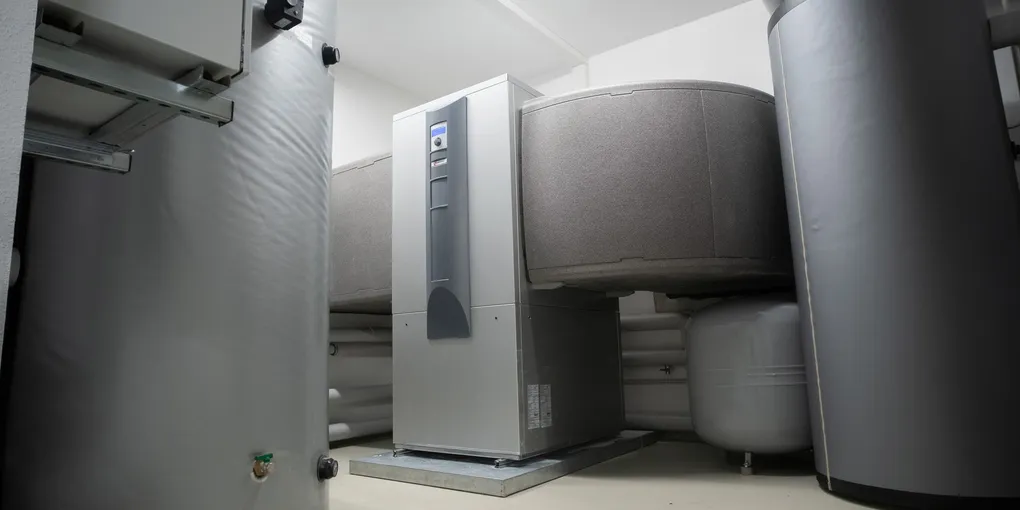
Heat pump installation costs an average of $4,500-$8,000 for a standard air-source system, $8,000-$15,000 for high-efficiency ducted systems, and $18,000-$45,000 for geothermal. Federal tax credits cover up to $2,000 plus rebates up to $8,000 under the Inflation Reduction Act for qualifying homes, often making heat pumps competitive with traditional HVAC.
Frequently Asked Questions
Is a heat pump cheaper than a furnace?
Upfront, heat pumps cost 20-40% more than gas furnaces ($4,500-$8,000 vs $3,500-$5,500). Over 15 years, heat pumps save $300-$1,500 annually on energy bills in moderate climates, making total cost of ownership lower despite higher purchase price.
What size heat pump do I need?
Rule of thumb: 1 ton (12,000 BTU) per 500-600 square feet of well-insulated home. A 2,000 sq ft home needs a 3.5-4 ton unit. An HVAC contractor should run a Manual J load calculation for accuracy—oversizing wastes money and undersized units run constantly.
Do heat pumps work in cold climates?
Yes. Modern cold-climate heat pumps (CCHPs) efficiently heat homes down to -15°F to -25°F. Below that, they switch to backup electric or gas heat. Mitsubishi Hyper-Heat, Bosch IDS, and Daikin Aurora systems are proven cold-climate performers.
How long do heat pumps last?
Air-source heat pumps last 12-15 years with regular maintenance. Ducted systems with quality installations often reach 20 years. Geothermal systems last 25+ years for the indoor unit and 50+ years for the ground loop.
Can I install a heat pump myself?
No. Heat pump installation requires EPA Section 608 certification for handling refrigerant, electrical work often requiring permits, and precise sizing calculations. DIY installation voids warranties and violates EPA regulations. Some mini-split kits are marketed as DIY but still require professional electrical hookup.
What federal tax credits are available for heat pumps in 2026?
The Inflation Reduction Act created two overlapping incentive programs: (1) Section 25C Energy Efficient Home Improvement Credit — covers 30% of heat pump equipment and installation costs, up to $2,000 per year for air-source heat pumps. The equipment must meet minimum efficiency thresholds (ENERGY STAR Most Efficient designation or equivalently specified ratings). This credit is for all income levels. (2) HEEHRA (Home Energy Efficiency and Rebate) program — administered by states, provides up to $8,000 in point-of-sale rebates for heat pump installation for low- and moderate-income households (under 80% of area median income). Rebates are available at the equipment purchase point in participating states. Check your state's energy office website for current rebate availability — programs launched on rolling timelines and some states are still implementing. Stacking the 25C credit and HEEHRA rebates can reduce a $10,000 heat pump installation to $2,000–$3,000 net cost for qualifying households.
What is a mini-split heat pump and when should I choose one over a ducted system?
A mini-split (ductless heat pump) consists of an outdoor compressor unit and one or more wall-mounted indoor air handlers. Unlike central ducted systems, no ductwork is required — refrigerant lines run through a 3-inch hole in the wall. Single-zone mini-splits cost $2,500–$5,500 installed; multi-zone systems (one compressor, multiple air handlers) cost $5,000–$15,000+ for 3–5 zones. Choose a mini-split when: (1) Adding heating/cooling to a space without existing ducts (garage, basement, addition, older radiator-heated home). (2) Providing dedicated temperature control for rooms with different needs (a home office, a master bedroom). (3) Replacing window ACs — mini-splits are quieter, more efficient, and provide both heating and cooling. Choose ducted central air when: the whole home needs HVAC and functional ductwork already exists — central systems are more economical to install whole-home than multiple mini-split zones.
Heat pump installation costs an average of $4,500-$8,000 for a standard air-source system, $8,000-$15,000 for high-efficiency ducted systems, and $18,000-$45,000 for geothermal.
Heat pumps have become the HVAC industry’s hottest category, driven by the Inflation Reduction Act’s generous tax credits, dramatic efficiency improvements, and rising natural gas prices. The US heat pump market grew 42% in 2023 and heat pumps now outsell gas furnaces in new home construction.
If you’re considering a heat pump—whether to replace aging HVAC equipment or to heat a home extension—this comprehensive guide breaks down 2026 installation costs, system types, federal and state incentives, and the ROI calculation that determines whether a heat pump makes financial sense for your home.
Quick Cost Overview by System Type
| System Type | Typical Cost | Efficiency | Best For |
|---|---|---|---|
| Window/Portable Unit | $400–$1,200 | Low | Single room, renters |
| Ductless Mini-Split (1 zone) | $3,500–$7,500 | High | Additions, single zones |
| Ductless Mini-Split (multi-zone) | $7,000–$18,000 | High | Whole-home, no ducts |
| Ducted Air-Source | $4,500–$12,000 | Medium-High | Homes with existing ducts |
| High-Efficiency Ducted (22+ SEER2) | $8,000–$15,000 | Very High | Large homes, cold climates |
| Geothermal (Ground Source) | $18,000–$45,000 | Highest | Long-term owners, large lots |
| Hybrid (Dual-Fuel) | $7,000–$13,000 | Very High | Cold climates with gas lines |
After the 25C federal tax credit ($2,000 max) and potential state rebates ($4,000–$8,000 under HEEHRA for qualifying incomes), net costs can drop by 30–50%.
Cost Breakdown: What You’re Actually Paying For
A typical $7,500 ducted heat pump installation breaks down as follows:
- Equipment (outdoor unit + air handler): $3,500–$5,000
- Labor (2 installers × 1–2 days): $1,500–$2,500
- Refrigerant line set: $200–$500
- Electrical work (new 240V circuit): $400–$900
- Permits and inspection: $100–$400
- Condensate pump/drainage: $100–$300
- Smart thermostat: $150–$300
- Removal/disposal of old equipment: $150–$400
Ask for itemized quotes. Contractors who only give bottom-line pricing often hide markup on equipment or skip components that cost extra later.
The Five Heat Pump Types Explained
1. Air-Source Heat Pumps (ASHP)
The most common type. Uses outdoor air as the heat source/sink. Available as ducted or ductless.
Pros: Lowest cost, proven technology, works with existing ducts Cons: Efficiency drops in extreme cold Cost: $4,500–$12,000 installed Best for: Moderate climates (most of US), homes with ductwork
2. Ductless Mini-Split (Ductless Heat Pumps)
Small indoor air-handling units connect to a single outdoor unit via refrigerant lines. No ductwork required.
Pros: No duct losses (15–30% efficiency gain), zoned heating/cooling, great for additions Cons: Indoor units are visible on walls, more expensive per BTU than ducted Cost: $3,500–$7,500 per zone Best for: Homes without ducts, room additions, garage conversions
We recommend pairing mini-splits with a quality voltage monitor to protect against power surges in the sensitive inverter electronics.
3. Ducted Air-Source Heat Pumps
Replaces your existing central AC + furnace with a heat pump + air handler, using the same ductwork.
Pros: Seamless whole-home heating/cooling, invisible installation Cons: Loses 15–30% efficiency to duct leakage Cost: $4,500–$15,000 Best for: Homes with existing good-condition ductwork
4. Geothermal (Ground-Source) Heat Pumps
Uses underground loops to exchange heat with the earth’s stable 55°F temperature.
Pros: Highest efficiency (COP 4–6 year-round), 50+ year ground loop lifespan, quiet Cons: Very high upfront cost, requires large yard for horizontal loops or drilling for vertical Cost: $18,000–$45,000 installed Best for: Long-term owners (15+ years), large properties, maximum efficiency seekers
5. Hybrid (Dual-Fuel) Systems
Pairs a heat pump with a gas furnace. Heat pump handles most heating; furnace kicks in below ~35°F.
Pros: Best efficiency in cold climates, uses cheapest fuel at any temperature Cons: Two systems to maintain, higher upfront cost Cost: $7,000–$13,000 Best for: Cold climates with existing gas service
Federal Tax Credits and Rebates (2026)
25C Energy Efficient Home Improvement Credit
- 30% of installed cost, up to $2,000 for qualifying heat pumps
- Must meet CEE Tier 1 efficiency (check AHRI certification)
- Claim on IRS Form 5695 with your tax return
- No income limit; available annually through 2032
HEEHRA High-Efficiency Electric Home Rebate Program
Income-based rebate program (administered by states in 2026):
- <80% area median income: Up to $8,000 for heat pump (100% cost coverage up to cap)
- 80–150% area median income: Up to $4,000 (50% cost coverage up to cap)
- >150% area median income: Not eligible for HEEHRA (but still eligible for 25C)
Check your state’s rebate portal: HEEHRA rolls out state-by-state through 2026.
Additional Incentives to Stack
- State tax credits: 15–20 states offer additional $500–$3,000
- Utility rebates: $300–$1,500 from local electric utilities (especially in the Northeast and Pacific Northwest)
- Manufacturer rebates: Trane, Carrier, Lennox offer $200–$1,500 seasonal promotions
- Local contractor financing: 0% APR options from major HVAC brands
A well-timed $12,000 installation could net as low as $3,500 after stacking incentives.
Cost by Home Size
1,000–1,500 sq ft (2–2.5 ton system)
- Ducted air-source: $5,500–$9,000
- Ductless 2-3 zones: $8,000–$13,000
- After 25C credit: $3,500–$7,000
1,500–2,500 sq ft (3–4 ton system)
- Ducted air-source: $6,500–$11,000
- Ductless 3-4 zones: $11,000–$17,000
- After 25C credit: $4,500–$9,000
2,500–3,500 sq ft (4–5 ton system)
- Ducted air-source: $8,500–$14,000
- Ductless 4-5 zones: $14,000–$22,000
- After 25C credit: $6,500–$12,000
3,500+ sq ft (5+ ton or dual systems)
- Ducted air-source: $11,000–$20,000
- Geothermal: $25,000–$45,000
- After 25C credit: $9,000–$18,000
Cost by Brand
| Brand | Pricing | Notable Features |
|---|---|---|
| Mitsubishi Electric | $$$–$$$$ | Hyper-Heat (cold climate), premium quality |
| Daikin | $$$–$$$$ | Largest global manufacturer, long warranties |
| Bosch | $$$ | IDS series, 10-year compressor warranty |
| Trane | $$$–$$$$ | XV20i premium, nationwide service |
| Carrier | $$$–$$$$ | Infinity series, smart grid integration |
| Lennox | $$$–$$$$ | Highest SEER ratings, premium pricing |
| Goodman | $$ | Budget-friendly, 10-year parts warranty |
| Rheem | $$ | Good value, widely available |
| LG | $$–$$$ | ThinQ smart integration, growing US presence |
| Fujitsu | $$$ | Strong mini-split lineup, quiet operation |
Efficiency Ratings Decoded
Understanding these ratings determines whether you qualify for tax credits and how much you’ll save on energy:
SEER2 (Cooling efficiency, 2023+ standard): Higher is better
- Minimum (new): 15 SEER2 (south) / 14.3 SEER2 (north)
- Mid-efficiency: 16–18 SEER2
- High-efficiency: 19+ SEER2 (often qualifies for rebates)
HSPF2 (Heating efficiency, 2023+ standard): Higher is better
- Minimum: 7.5 HSPF2
- High-efficiency: 8.5+ HSPF2
COP (Coefficient of Performance): Ratio of heat output to electricity input
- 1.0 = electric resistance (baseboard heater)
- 2.5–3.5 = typical heat pump at 47°F outside
- 4.0+ = excellent performance or mild conditions
- 5.0+ = typical geothermal
Operating Cost Comparison
Annual heating/cooling costs for a 2,000 sq ft home in different climates:
Moderate Climate (e.g., North Carolina)
- Gas furnace + central AC: $1,200–$1,600/year
- Heat pump (16 SEER2 / 8.5 HSPF2): $900–$1,200/year
- Annual savings: $300–$400
Cold Climate (e.g., Massachusetts)
- Gas furnace + central AC: $1,500–$2,200/year
- Cold-climate heat pump: $1,300–$1,800/year
- Annual savings: $200–$400
Hot Climate (e.g., Arizona)
- Gas + central AC: $1,400–$1,900/year
- Heat pump: $1,100–$1,500/year
- Annual savings: $300–$400
Electric Baseboard Replacement (Anywhere)
- Electric baseboard: $2,500–$4,500/year
- Heat pump: $800–$1,500/year
- Annual savings: $1,500–$3,000
Homes replacing electric resistance heating (baseboard, electric furnace) see the fastest ROI—often 3–5 years.
Installation Timeline
A typical ducted heat pump replacement takes 1–3 days:
Day 1 (Morning):
- Disconnect and remove existing equipment
- Install new refrigerant lines if needed
- Electrical upgrades
Day 1 (Afternoon):
- Set outdoor condenser unit on pad or wall bracket
- Install indoor air handler
- Connect refrigerant lines
Day 2:
- Pressure test and vacuum refrigerant lines
- Charge with refrigerant
- Connect thermostat and commission system
- Test heating and cooling modes
Day 3 (if needed):
- Minor adjustments, final inspection, homeowner walkthrough
Geothermal adds 2–5 days for ground loop installation.
Choosing a Contractor: 8 Non-Negotiables
- EPA Section 608 certified technicians (required by law to handle refrigerant)
- State HVAC license (verify via your state licensing board)
- $1M+ liability insurance
- Workers’ compensation coverage
- Manual J load calculation (not just square footage)
- Itemized written quote with equipment model numbers, AHRI certification
- Manufacturer-certified dealer (Mitsubishi Diamond, Daikin Comfort Pro, Trane Comfort Specialist, etc.)
- Written labor warranty (minimum 1 year, ideally 2+)
Red flags: quotes based on house size alone, pressure to sign same-day, contractor doesn’t pull permits, “I can do it cheaper if we skip the permit.”
Maintenance Costs (Years 1–15)
Annual:
- Filter changes: $15–$50/year (MERV 11 pleated filters are a good baseline)
- Professional tune-up: $150–$250/year
- Coil cleaning: Included in tune-up
Every 5 years:
- Deep cleaning + refrigerant check: $300–$500
Year 10+ possible costs:
- Capacitor replacement: $200–$600
- Fan motor replacement: $400–$800
- Contactor replacement: $150–$300
Total 15-year maintenance: $2,500–$4,500
When a Heat Pump Doesn’t Make Sense
Heat pumps aren’t universally the right choice:
- Very cheap natural gas markets (e.g., Gulf Coast with dated homes): Gas furnace may still win on operating costs
- Plan to sell in <5 years: ROI doesn’t materialize before sale; you may recover 50–70% via higher home value
- Poor insulation / leaky envelope: Fix insulation first; heat pumps struggle in drafty homes
- Undersized electrical panel: If your panel can’t handle another 30–60A circuit, panel upgrade adds $1,500–$4,000
- Extremely cold climate (Maine, North Dakota): Dual-fuel hybrid is usually better than heat pump alone
Smart Thermostats for Heat Pumps
Most heat pumps require smart thermostat specifically rated for heat pump staging. Good options:
- Ecobee Smart Thermostat Premium: Best overall, supports dual-stage heat pumps
- Google Nest Learning Thermostat: Self-learning, heat pump balance feature
- Honeywell T9 Smart Thermostat: Room sensors, multi-zone
- Emerson Sensi Touch: Budget-friendly, strong heat pump support
Most manufacturers include a compatible thermostat in the installation. Upgrading to a premium model costs $150–$300 installed.
Pre-Installation Home Prep
Before the contractor arrives:
- Clear outdoor unit area: 24” clearance on all sides, 60” above
- Clear indoor unit path: Stair protection, furniture moved
- Check attic/crawlspace access: Contractor may need to route ducts
- Inventory old equipment: Photos for insurance/records
- Plan for temperature swings: Schedule installation in mild weather when possible
Financing Your Heat Pump
Options to consider:
- HELOC: 7–10% APR, 10–15 years, interest may be tax-deductible
- Energy-efficiency loan (FHA 203k, Fannie HomeStyle Energy): Favorable rates for high-efficiency installs
- Manufacturer 0% APR: Typically 12–24 months, be sure to pay off before promotional period ends
- State energy loans: Some states offer 3–5% APR through rebate programs
- Credit union HVAC loans: Often 6–8% APR with no fees
Sample ROI Calculation
Scenario: Replacing 15-year-old gas furnace + AC in Ohio (2,000 sq ft home)
-
Installed cost (high-efficiency heat pump): $9,500
-
25C federal tax credit: -$2,000
-
Ohio utility rebate: -$800
-
Net cost: $6,700
-
Current annual energy cost (gas + AC): $1,850
-
New annual cost (heat pump): $1,250
-
Annual savings: $600
-
Payback period: 11.2 years
-
15-year net savings: $2,300 (after install)
-
20-year net savings: $5,300
Additional value: Home resale premium of $3,000–$8,000 for heat pump equipped home.
Common Installation Mistakes
- Oversizing the unit: Short cycles waste energy and reduce comfort
- Undersizing ductwork: Restricts airflow, reduces efficiency
- Skipping Manual J: Rules of thumb are inaccurate; insist on actual calculation
- Poor outdoor unit placement: Near bedrooms (noise), under drip lines (damage), blocked airflow
- Inadequate refrigerant line sizing: Long runs need upsized lines
- Missing dehumidification settings: Heat pumps must be configured for your climate’s humidity load
Final Thoughts
Heat pumps have matured into a mainstream HVAC choice for most US climates, and the combination of federal tax credits, state rebates, and long-term energy savings makes the economics compelling for most homeowners. Expect to invest $5,000–$15,000 for a quality whole-home installation, recover 20–50% through incentives, and save $300–$1,500 annually on energy bills.
The single most important decision isn’t brand or size—it’s contractor quality. A great contractor with a mid-tier unit outperforms a mediocre contractor with premium equipment. Get three quotes, demand itemized bids, insist on Manual J, and verify certifications before signing.
Regional Heat Pump Installation Cost Variations
HVAC contractor labor rates and equipment availability vary significantly by region:
| Region | Single-Zone Mini-Split | Central Air-Source HP | Cold-Climate HP (2-ton) | Dual-Fuel HP System |
|---|---|---|---|---|
| Northeast (NY, MA, NJ) | $3,500–$6,500 | $7,000–$14,000 | $9,000–$18,000 | $9,000–$17,000 |
| Mid-Atlantic (DC, MD, VA) | $3,200–$6,000 | $6,500–$13,000 | $8,500–$16,500 | $8,500–$16,000 |
| Southeast (FL, GA, TX) | $2,500–$5,000 | $5,500–$11,000 | $7,000–$13,000 | $7,000–$13,500 |
| Midwest | $2,800–$5,500 | $6,000–$12,000 | $7,500–$14,500 | $8,000–$15,000 |
| Pacific (CA, WA, OR) | $3,200–$6,000 | $6,500–$13,000 | $8,500–$16,000 | $8,500–$15,500 |
Prices include equipment and installation before tax credits. Federal IRA tax credit (30%, up to $2,000) and state utility rebates apply in most markets. Cold-climate units (Mitsubishi Hyper Heat, Bosch IDS) are required in zones 5–7; standard units lose efficiency below 35°F.
Heat Pump Brand Comparison
| Brand | Type | Efficiency (HSPF2/SEER2) | Price Range | Best For | Notes |
|---|---|---|---|---|---|
| Mitsubishi (Hyper Heat/Zuba-Central) | Mini-split + cold-climate central | 12–14 HSPF2 / 20–30 SEER2 | $1,800–$5,000 (equipment) | Best cold-climate performance; premium quality | Most reliable mini-split brand; excellent dealer network |
| Bosch (IDS Premium) | Mini-split + central | 12–13.5 HSPF2 / 22–28 SEER2 | $1,500–$4,500 | Cold-climate zones; German engineering | Less dealer density than Mitsubishi; slightly lower price |
| Carrier (Infinity/Performance) | Central | 10–14 HSPF2 / 18–22 SEER2 | $2,500–$5,000 | Mainstream central replacement; established dealer network | Infinity communicating system integrates well; widely serviced |
| Trane (XV20i/XR17) | Central | 10–13 HSPF2 / 17–20 SEER2 | $2,400–$4,800 | Reliability; broad service network | Trane sister brand to American Standard; competitive reliability |
| Daikin (Aurora/Fit series) | Mini-split + central | 11–13 HSPF2 / 20–26 SEER2 | $1,400–$4,000 | Mid-tier value; broad product range | Good cold-climate models; growing US dealer network |
| Lennox (XP21/XP25) | Central | 11–13 HSPF2 / 20–24 SEER2 | $2,500–$5,000 | Highest SEER efficiency; compatible with iComfort | Premium efficiency; dealer-dependent quality |
Mitsubishi is the gold standard for mini-splits and cold-climate performance. For central heat pump replacement, Carrier, Trane, and Lennox offer comparable quality — the differentiator is your local dealer’s installation expertise more than brand selection.
Questions to Ask Your Heat Pump Contractor
- Did you perform a Manual J load calculation, and what BTU capacity did it recommend? — proper heat pump sizing requires a Manual J calculation accounting for insulation levels, window area, climate zone, and duct leakage; an oversized heat pump short-cycles and fails to dehumidify in summer; a contractor who sizes by “matching the old equipment” without a calculation is guessing
- Is this a standard or cold-climate heat pump, and at what outdoor temperature does it maintain rated capacity? — standard heat pumps lose significant capacity below 35°F; cold-climate models (Mitsubishi Hyper Heat, Bosch IDS) maintain over 70% capacity at 5°F; if you’re in climate zone 5–7 (most of the Midwest and Northeast) and the contractor doesn’t differentiate, ask why
- What rebates and tax credits are available, and will you help me document them? — the federal Inflation Reduction Act provides a 30% tax credit (up to $2,000) for qualifying heat pumps; many utilities offer additional rebates of $500–$3,000; a knowledgeable contractor should know your specific utility’s rebate program and which models qualify, and should provide documentation for your tax filing
- How will you handle the existing ductwork — is duct sealing or resizing included? — heat pumps operate at lower supply air temperatures than gas furnaces, requiring adequate airflow; if ductwork is leaky or undersized, the system will underperform; ask whether a duct leakage test is included and whether the bid includes any duct modifications needed for proper operation
- What happens to my system when it’s 0°F — what’s the backup heat source? — even good cold-climate heat pumps need backup heat in extreme cold; confirm whether backup electric resistance strips, a gas furnace (dual-fuel), or a supplemental mini-split is included in the scope, and what the automatic switchover temperature is
Related Reading
- Central Air Conditioning Installation Cost
- Mini Split Installation Cost — ductless alternative if your home lacks existing ductwork; $2,000–$14,000 by zone
- Furnace Replacement Cost
- HVAC Maintenance Checklist
- How to Change a Furnace Filter
- Water Heater Replacement Cost
- How to Seal Drafty Windows
- Attic Insulation Cost Guide — insulation upgrades maximize heat pump efficiency — do this first before sizing equipment
- How to Seal Leaky Ductwork — duct leaks cost heat pumps 20-30% of their efficiency
Product links on this page are Amazon affiliate links. As an Amazon Associate, Fix Up First earns from qualifying purchases. All recommendations reflect independent product research.
- Best Portable Generators for Home Backup — heat pumps stop working during outages without backup power
- Duct Cleaning Cost — clean ducts before installing a new heat pump for maximum efficiency
- Get a Manual J load calculation
Hire a qualified HVAC contractor to run a Manual J calculation. This determines the exact BTU capacity your home needs based on insulation, windows, orientation, and climate. Reject contractors who sizing based only on square footage.
- Choose system type
Decide between ducted air-source (uses existing ductwork), ductless mini-split (for additions or homes without ducts), or geothermal (highest efficiency, highest upfront cost). Consider your climate, existing HVAC, and budget.
- Get 3+ quotes from licensed contractors
Request itemized bids showing equipment, labor, permits, electrical work, and disposal. Compare SEER2 and HSPF2 ratings, not just price. Ensure each contractor is EPA 608 certified and licensed in your state.
- Apply for tax credits and rebates
Verify your chosen system qualifies for the 25C federal tax credit (up to $2,000) and state/utility rebates. Some states offer $4,000-$8,000 through the HEEHRA program. Contractor should provide AHRI certification documents.
- Schedule installation
Typical installation takes 1-3 days for air-source systems, 3-5 days for geothermal. Clear installation areas, protect flooring, and plan for HVAC downtime if replacing existing equipment.
- Commission and test
Contractor should test refrigerant charge, airflow, electrical connections, and smart thermostat pairing. Request written commissioning report with measured values. Learn how to change filters and schedule annual maintenance.
Free: 10-Point Home Maintenance Checklist
Prevent costly repairs with this seasonal checklist. Save hundreds every year by catching problems early.
Your checklist is ready!
Open Checklist →Something went wrong. View the checklist here.