Pergola Installation Cost 2026: $3,000–$10,000 Installed
Pergola installation costs $3,000–$7,000 for wood and $4,000–$10,000 for aluminum or vinyl, professionally installed. DIY kit pergolas run $1,500–$4,000 in materials. Pricing by size and material.
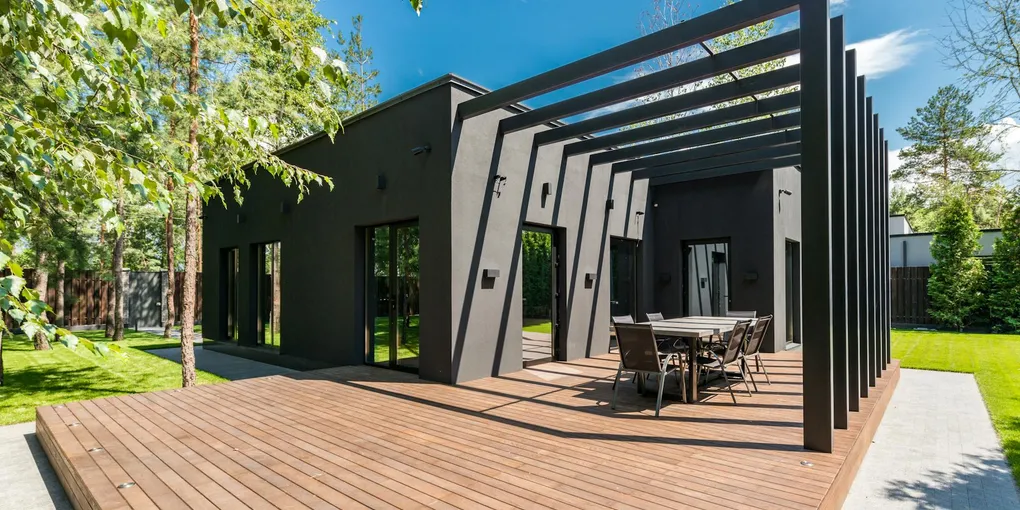
Pergola installation costs $3,000–$10,000 for a professionally built 12×16 ft structure. Wood pergolas (cedar, redwood) run $3,500–$8,000. Aluminum pergolas run $4,000–$12,000. Vinyl pergolas run $3,000–$7,000. DIY pergola kits cost $500–$3,000 for materials only. Size is the primary cost driver — a 10×10 ft pergola costs $1,500–$5,000; a 20×20 ft pergola costs $6,000–$20,000+.
Frequently Asked Questions
How much does a pergola cost?
Pergola costs by size and material: 10×10 ft kit (DIY) $500–$1,500; 10×10 ft installed $1,500–$5,000; 12×16 ft installed $3,000–$8,000; 16×20 ft installed $5,000–$14,000; 20×20 ft installed $8,000–$20,000+. Material pricing: pressure-treated pine (most affordable) $3,000–$7,000 installed; cedar or redwood (natural beauty, good rot resistance) $4,000–$9,000; vinyl (low maintenance, no painting) $3,500–$7,500; powder-coated aluminum (longest lifespan, no maintenance) $5,000–$15,000; fiberglass (premium, very long life) $8,000–$25,000. Labor typically runs 40–60% of total cost.
What is the difference between a pergola and a gazebo?
A pergola has an open slatted or latticed roof that allows partial light and no rain protection — the defining feature is the open overhead structure. A gazebo has a solid roof and is fully covered, providing rain protection. A pergola arbor typically has a curved arch top for a garden entrance. A pavilion is larger than a gazebo with a solid roof, often attached to a house. A shade sail is a tensioned fabric panel — far less expensive ($100–$500) but not a permanent structure. Pergolas are the most popular addition for homeowners wanting to define outdoor space without full enclosure cost.
How long does a pergola last?
Pergola lifespan by material: pressure-treated pine 10–15 years with maintenance (staining every 2–3 years); cedar or redwood 15–25 years with maintenance; vinyl 20–30 years with minimal maintenance (occasional washing); powder-coated aluminum 30–50+ years (the premium durability choice); fiberglass 40–50+ years. Wood pergolas require the most ongoing maintenance — pressure washing and re-staining or re-sealing every 2–3 years extends life significantly. Neglected wood pergolas can fail in 7–10 years in humid climates. Aluminum and vinyl structures require almost no maintenance beyond cleaning.
Do I need a permit for a pergola?
Most municipalities require a permit for pergolas over 200 sq ft or those attached to the house. Freestanding pergolas under 200 sq ft often fall under 'accessory structure' exemptions that skip permit requirements — but this varies by jurisdiction. Attached pergolas (bolted to house structure) almost always require permits because they become part of the home's structural system. Permit costs: $50–$200 for residential permits. Check with your local building department before starting. HOAs may have additional restrictions on size, material, and placement — check CC&Rs before ordering materials or hiring a contractor.
What is the ROI on a pergola?
Pergolas return 50–80% of installation cost at resale according to remodeling industry surveys. A $6,000 pergola adds $3,000–$4,800 in resale value on average. The ROI is higher in markets where outdoor living space is valued (warm-weather states, premium neighborhoods), and lower in cold-weather markets. Beyond resale, pergolas extend outdoor living season by providing partial shade and a defined outdoor room — the practical enjoyment value often exceeds the financial ROI calculation. Pergolas with integrated lighting, fans, or shade sails command higher prices than bare structures.
Should I hire a contractor or use a DIY pergola kit?
DIY kits cost $500–$3,000 for materials and require 2–3 weekends with 1–2 helpers. Pre-cut or pre-drilled kit components reduce the skill requirement significantly — most kits specify only basic carpentry skills (drilling, leveling, basic framing). Professional installation costs $1,500–$5,000+ in labor, avoids permit navigation complexity, and includes structural warranty. Choose DIY when: the pergola is freestanding, under 200 sq ft, your yard has good access for post-setting equipment, and you have a weekend available. Choose professional when: attached to house (structural connection), large (over 16×16), complex terrain, or permit is required (contractor navigates this for you).
Pergola installation costs $3,000–$10,000 for a professionally built 12×16 ft structure. Wood pergolas (cedar, redwood) run $3,500–$8,000.
A pergola defines outdoor space without enclosing it — the structure draws the eye, anchors furniture groupings, and signals “this is a room” without walls or a solid roof. The cost range is wide because pergola materials span from inexpensive pressure-treated pine kits to architectural aluminum and fiberglass custom structures, and because size scales cost non-linearly (a 20×20 ft pergola costs more than double a 10×10).
Pergola Cost by Size and Material
| Size | Pressure-Treated Pine | Cedar/Redwood | Vinyl | Aluminum |
|---|---|---|---|---|
| 10×10 ft | $1,500–$4,000 | $2,500–$5,500 | $2,000–$5,000 | $3,500–$7,000 |
| 12×16 ft | $3,000–$6,000 | $4,000–$8,000 | $3,500–$7,000 | $5,000–$11,000 |
| 16×20 ft | $5,000–$9,000 | $6,500–$12,000 | $5,000–$10,000 | $8,000–$16,000 |
| 20×20 ft | $7,000–$13,000 | $9,000–$17,000 | $8,000–$15,000 | $12,000–$22,000 |
All prices include professional installation.
DIY Kit vs. Custom Build
| Option | Cost | Timeline | Best For |
|---|---|---|---|
| DIY kit (10×10–12×14) | $500–$2,500 materials | 1–2 weekends | Budget, handy homeowners |
| Partial kit + pro assembly | $1,500–$4,000 | 1–2 days labor | Kit buyers who want help |
| Custom contractor build | $3,500–$15,000 | 1–3 days on-site | Complex sites, large structures |
Cost Add-Ons
| Add-On | Cost Range |
|---|---|
| Ceiling fan rough-in (electrical) | $150–$400 |
| String light wiring | $100–$300 |
| Shade sails or retractable canopy | $300–$1,500 |
| Built-in planters | $200–$600 |
| Privacy lattice panels | $300–$800/panel |
| Decorative post caps | $30–$80/post |
Regional Cost Variations
| Region | 12×16 ft Cedar/Redwood | 12×16 ft Aluminum |
|---|---|---|
| Northeast (NY, MA) | $5,000–$11,000 | $7,000–$14,000 |
| Southeast (FL, GA) | $3,500–$8,000 | $5,000–$11,000 |
| Midwest | $3,500–$8,000 | $5,000–$11,000 |
| Southwest | $3,500–$7,500 | $5,000–$10,000 |
| Pacific Northwest | $4,000–$9,000 | $6,000–$12,000 |
Labor markets drive most of the regional variation. Northeast and Pacific Northwest carpenters command $75–$120/hr vs. $50–$75/hr in the Southeast and Midwest.
Popular Pergola Kit Brands (DIY Options)
For homeowners who want to DIY, quality kit brands save significantly on cost while delivering good results:
| Brand | Price Range | Material | Notes |
|---|---|---|---|
| Yardistry | $800–$3,500 | Cedar | Best-reviewed kit brand; mortise-and-tenon joinery |
| Outsunny | $400–$1,200 | Steel/aluminum | Budget option; easy assembly |
| Pergola Depot | $1,200–$5,000 | Cedar | Custom-cut-to-order kits |
| SummerCastle | $600–$2,000 | Cedar/wood | Good mid-range option |
| VEIKOUS | $350–$1,000 | Galvanized steel | Modern look, easy assembly |
Yardistry is the most consistently well-reviewed DIY pergola brand — the cedar is kiln-dried, the joinery is mortise-and-tenon (more structurally sound than bolt-through), and the instructions are thorough. Available at Home Depot.
Bioclimatic Pergolas: Motorized Adjustable Louver Systems
A newer category — bioclimatic pergolas have motorized aluminum louver slats that rotate to control sun, shade, and rain:
| Feature | Bioclimatic Pergola |
|---|---|
| Rain protection | Full (louvers close flat) |
| Shade control | Adjustable 0–100% |
| Ventilation | Adjustable |
| Motor/electronics | Included |
| Price range | $8,000–$25,000 installed |
| Leading brands | Louvr, Brustor, Equinox, UltraFeel |
Bioclimatic pergolas are the premium tier — they essentially function as a weatherproof outdoor room that can be adjusted for any condition. Cost is 2–4× a standard aluminum pergola but they eliminate the need for shade sails, umbrellas, or additional rain covers.
Questions to Ask Your Pergola Contractor
- What post size do you use? — should be minimum 4×6 for spans up to 12 ft, 6×6 for larger
- How deep do you set the posts? — should be below local frost line depth (ask your county extension)
- What hardware do you use? — galvanized or stainless steel only for outdoor; zinc-plated rusts within 5 years
- Is the ledger connection engineered? — for house-attached pergolas, the ledger connection should be specified by plan or code table
- Do you include a finish (stain/seal)? — new wood should be stained or sealed within 30 days of installation; some contractors quote this separately
DIY supplies (if you tackle it yourself)
- Pergola kit (12x12 cedar)
- Post anchor kit (ground)
- Wood stain/sealer for pergola
- Shade sail for pergola
Related Reading
-
Hot Tub Installation Cost — budget for a spa as part of outdoor living projects
-
Screened Porch Cost — fully enclose an outdoor space instead of an open pergola
-
How to Build a Pergola — DIY guide to post setting, beam assembly, and finishing
-
Deck Staining Cost — protect wood pergola the same way you’d stain a deck; $2–$5/sq ft
- Determine attachment vs. freestanding — this drives permit and structural requirements
Attached pergolas (ledger bolted to house) require permits in most jurisdictions and must be engineered to handle lateral loads — the ledger connection is the structural critical point. Freestanding pergolas have only post footings as the permit concern; footings must go below frost line depth (24–42 inches depending on region). Frost line depth is the most common DIY mistake — posts not set deep enough heave and shift within 2–5 years in freeze-thaw climates. Get local frost line depth from your county extension office or building department before setting any posts. Standard footing rule: 10-inch diameter hole, depth = 1/3 of post length above grade + 6 inches below frost line.
- Size and layout: match the pergola footprint to its function
Sizing guidelines: dining area pergola — allow 12 sq ft per person minimum (10×12 for 8-person table); lounge/seating area — 10×10 minimum, 12×14 comfortable; pool surround — 20+ feet on the coverage side. Beam and rafter sizing by span: spans up to 10 ft — 2×6 or 4×6 beams acceptable; spans up to 16 ft — 4×8 or doubled 2×8; spans over 16 ft — 4×10 or 6×8, or add an intermediate post. Undersized beams sag visibly within 1–3 years. Standard column spacing: 8–12 ft between posts (10 ft is most common). A structural sag in a wood beam is very difficult to fix post-construction — size correctly up front.
- Choose material based on maintenance commitment and climate
Climate guides material selection: hot, dry climates (desert Southwest, CA) — cedar and redwood perform excellently, aluminum is also ideal; humid climates (Southeast, Pacific Northwest) — aluminum or vinyl strongly preferred over wood; pressure-treated pine in humid climates needs diligent maintenance to last 15 years. Maintenance reality check for wood: year 1 stain after construction, then every 2–3 years — at $80–$200 in materials per restain cycle, a 20-year wood pergola costs $800–$2,000 more in maintenance than an aluminum equivalent, narrowing the cost gap significantly. For homeowners who won't stain on schedule, vinyl or aluminum delivers better 20-year economics despite higher upfront cost.
- Get 3 quotes specifying post depth, beam sizing, and hardware grade
Pergola quotes vary 40–70% between contractors for identical specifications. Key items to specify in every quote: post size and species (4×4 posts are undersized for most pergolas — specify 4×6 or 6×6); post depth (quote should specify depth below grade matching your frost line); beam sizing (quote should specify beam dimensions and species); hardware grade (galvanized or stainless for outdoor use — contractor-grade zinc-plated hardware rusts within 3–5 years in most climates); finish (sealed, stained, or painted, and by whom). A quote that doesn't specify these items will underbuild — ask each bidder to confirm all five points in writing.
- Plan for add-ons before installation — retrofits cost more
Integrated upgrades are far cheaper during initial construction than as retrofits: ceiling fan rough-in (electrical conduit run to center point) — $150–$300 during construction vs. $400–$800 retrofit; string light attachment points (eyebolts or channels) — $50–$150 during vs. awkward drilling retrofit; shade sail attachment posts or hardware — $100–$200 during vs. structural add-ons post-construction; fire pit gas line stub-out nearby — coordinate with plumber during construction vs. trenching later. Discuss all intended uses before installation so your contractor can plan the rough-ins in a single mobilization.
Free: 10-Point Home Maintenance Checklist
Prevent costly repairs with this seasonal checklist. Save hundreds every year by catching problems early.
Your checklist is ready!
Open Checklist →Something went wrong. View the checklist here.