Concrete Driveway Cost in 2026: $6–$14/sq ft — What You Will Actually Pay
A 20×40 ft concrete driveway costs $4,800–$11,200 for standard gray concrete ($6–$14/sq ft). Stamped: $8,000–$22,400. Add $2–$4/sq ft for old driveway tear-out. What affects your final quote + how to review bids.
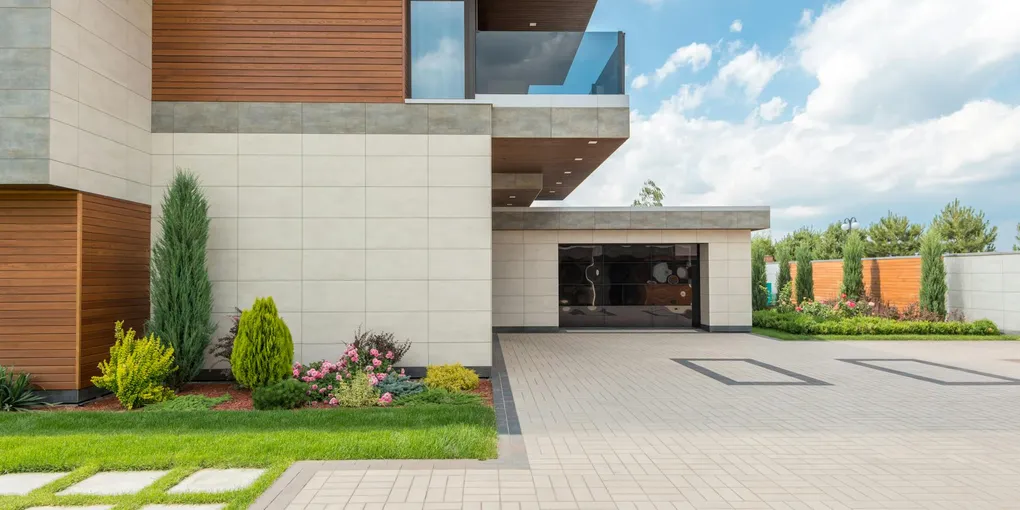
A new concrete driveway costs $6-$14 per square foot installed for standard gray concrete, and $10-$28 per square foot for stamped or decorative finishes. A typical 20x40 ft driveway (800 sq ft) runs $4,800-$11,200 plain, $8,000-$22,400 stamped. Add $2-$4 per sq ft for tear-out of an old driveway and $1-$3 per sq ft for deep sub-base or drainage work.
Frequently Asked Questions
How much does a concrete driveway cost?
Expect $6-$14 per sq ft for standard 4 inch gray concrete with wire mesh or light rebar. An 800 sq ft driveway (20x40) runs $4,800-$11,200. Stamped, stained, or exposed aggregate pushes that to $10-$28 per sq ft. Tear-out of an old driveway adds $2-$4 per sq ft.
Is concrete or asphalt cheaper?
Asphalt is cheaper up front at $3-$7 per sq ft installed (about half the cost of plain concrete), but it needs resealing every 2-5 years and resurfacing every 10-20 years. Concrete costs more but can last 30-50 years with minimal maintenance. Over 30 years, concrete often costs less total.
How thick should a residential concrete driveway be?
4 inches is standard for cars and light trucks. Upgrade to 5-6 inches if you regularly park a heavy truck, boat, or RV, or if the soil is poor. Along with thickness, the sub-base matters — 4-6 inches of compacted gravel under the slab prevents settling and cracking.
Do I need rebar in a driveway?
Wire mesh (welded steel grid) is standard on most residential driveways and adds $0.40-$0.80 per sq ft. Rebar on 18 inch centers is stronger and adds $0.80-$1.50 per sq ft. For clay soil, heavy vehicles, or long spans, rebar is worth the upgrade. Fiber-reinforced concrete is another option that helps reduce surface cracking.
How long does a concrete driveway last?
30-50 years for properly installed, 4 inch thick reinforced concrete on compacted sub-base. Lifespan drops to 15-25 years with poor sub-base, thin pours, freeze-thaw climates without control joints, or aggressive deicing salts. Sealing every 3-5 years extends life.
How long does it take to pour and cure a concrete driveway?
Pouring takes 1-2 days for a standard single-family driveway. Curing takes longer: light foot traffic is possible at 24-48 hours, but vehicles should stay off for 7 days minimum. Full compressive strength is reached at 28 days. Avoid driving heavy vehicles (trucks, RVs) on new concrete for 30 days. In cold weather, curing slows significantly — protect fresh concrete from freezing temperatures for at least 7 days.
What causes concrete driveways to crack?
The most common causes: (1) Freeze-thaw cycles where water in the concrete pores freezes and expands, causing surface flaking (spalling). (2) Inadequate control joints — without planned expansion joints every 10-12 feet, concrete cracks randomly. (3) Thin pours under 4 inches that can't carry vehicle loads. (4) Poor sub-base that settles under the concrete. (5) De-icing salts, which accelerate freeze-thaw surface damage. Sealing the surface annually prevents most freeze-thaw cracking.
How much does it cost to replace a concrete driveway?
Replacing a concrete driveway costs $8-$18 per square foot in 2026 — this includes tear-out of the existing driveway ($2-$4/sq ft) plus the new pour ($6-$14/sq ft). A standard 800 sq ft driveway (20x40 ft) replacement runs $6,400-$14,400 all-in. Two-car driveway (20x20 ft pad plus approach, ~650 sq ft): $5,200-$11,700. The main variables: thickness (4 vs 5-6 inch), reinforcement (wire mesh vs rebar), disposal fees for broken concrete (often $300-$600 extra), and whether any sub-base or drainage work is needed. Get 3 bids — concrete driveway replacement price varies 40-60% between contractors on the same job.
How much does a stamped concrete driveway cost?
Stamped concrete driveways cost $12-$28 per square foot installed in 2026, compared to $6-$14 for plain concrete. A typical 800 sq ft stamped driveway runs $9,600-$22,400 depending on pattern complexity and color count: single-pattern, single-color stamped concrete (brick or cobblestone look): $12-$18/sq ft. Multi-pattern with color release powder: $18-$24/sq ft. Custom multi-color stamped with borders and scoring: $22-$28/sq ft. Stamped concrete also requires sealing every 2-3 years ($0.50-$1.50/sq ft) to maintain the color and protect the surface — factor this into lifetime cost. Stamped concrete offers the look of pavers or stone at 30-50% less cost than the real materials, but it is more difficult to repair invisibly if it cracks compared to brick or flagstone pavers.
What should I look for when getting concrete driveway quotes?
Red flags and what to require: (1) Always get at least 3 itemized quotes — concrete driveway pricing varies 40–60% on identical jobs between contractors. (2) Require the quote to specify: concrete PSI (3,500–4,000 PSI is standard for residential driveways; reject anything under 3,000), thickness (4 vs 5-6 inch), reinforcement type (wire mesh vs rebar), sub-base depth, control joint spacing, and curing method. (3) Avoid contractors who request more than 10% deposit upfront — the industry norm is payment on completion or 50% at pour and 50% at final. (4) Ask about the concrete supplier — reputable contractors use ready-mix from established suppliers and can provide the mix design. (5) Get the warranty in writing: surface defects and workmanship issues should be covered for at least one full freeze-thaw season after installation.
Can I extend or add to an existing concrete driveway?
Yes, but with important caveats. New concrete poured against existing concrete creates a cold joint — the two pours don't bond chemically, only mechanically. To maximize bond strength: (1) Use a concrete bonding adhesive on the existing slab edge before pouring. (2) Connect the new pour with rebar pins drilled and epoxied into the existing slab every 18–24 inches. (3) Match the thickness of the existing slab. (4) Cut a control joint where the old and new concrete meet to give it a planned break point. The cold joint will always be a weak point relative to a single continuous pour — expect cracking at the joint within 10–15 years in freeze-thaw climates. For visible extensions in high-traffic areas, pavers or stamped concrete that visually frame the joint are better aesthetically since any crack line is hidden.
A concrete driveway costs $6–$14 per square foot installed in 2026, or $4,800–$11,200 for a typical 20×40 ft (800 sq ft) driveway in standard gray concrete. Stamped or decorative finishes run $12–$28/sq ft ($9,600–$22,400 total). Add $2–$4/sq ft if removing an old driveway. Get at least 3 bids — concrete driveway pricing varies 40–60% between contractors on identical jobs.
A concrete driveway is a 30-50 year investment — longer than most roofs — and the installed price can vary by 100% on the same house depending on thickness, reinforcement, decorative finishes, and who’s pouring. This guide gives you the 2026 numbers and the questions to ask before you sign a contract.
Quick Answer on Concrete Driveway Cost
For a typical 20 ft wide by 40 ft long driveway (800 sq ft) in 2026:
| Finish / Thickness | Cost per Sq Ft | Total on 800 Sq Ft |
|---|---|---|
| Plain gray, 4” thick, wire mesh | $6 - $10 | $4,800 - $8,000 |
| Plain gray, 5-6” thick, rebar | $8 - $14 | $6,400 - $11,200 |
| Broom finish, 4” thick, wire mesh | $7 - $11 | $5,600 - $8,800 |
| Exposed aggregate | $10 - $18 | $8,000 - $14,400 |
| Stamped (single pattern, one color) | $12 - $20 | $9,600 - $16,000 |
| Stamped (multi-color, borders) | $18 - $28 | $14,400 - $22,400 |
| Stained and sealed | $10 - $16 | $8,000 - $12,800 |
Add:
- Tear-out of old driveway: $2 - $4 per sq ft ($1,600 - $3,200)
- Sub-base prep (compacted gravel 4-6”): typically included, but rebuild of poor sub-base adds $1 - $3 per sq ft
- Drainage work or French drain along the edge: $15 - $40 per linear foot
- Permits: $75 - $500 depending on jurisdiction
Most homeowners land between $6,000 and $14,000 for a standard 800 sq ft concrete driveway replacement including tear-out.
What Drives the Cost Up
Thickness
4 inches is the residential standard and handles cars and light pickups fine. For RVs, boats, work trucks, or heavy equipment access, 5-6 inches is required. Each extra inch adds about $0.75-$1.25 per sq ft in concrete volume plus more rebar and slightly longer finish time.
Reinforcement
- No reinforcement: Occasionally seen in dry, stable climates. Not recommended.
- Wire mesh: $0.40 - $0.80 per sq ft. Standard.
- Rebar grid (#4 on 18” centers): $0.80 - $1.50 per sq ft. Much stronger, especially on clay soils.
- Fiber-reinforced concrete: $0.50 - $1.00 per sq ft. Microfibers reduce surface cracking. Often used with wire mesh for belt-and-suspenders.
For a driveway that has to survive freeze-thaw cycles, rebar or rebar-plus-fiber is worth the upgrade.
Sub-Base and Grading
A concrete slab is only as good as what’s under it. 4-6 inches of compacted gravel (crushed stone, usually #57 or 3/4” minus) under the slab is standard. Poor or thin sub-base is the #1 cause of cracked driveways.
Excavation and sub-base prep typically run $2-$5 per sq ft built into quotes. If your yard has organic soil, high clay content, or standing water, the contractor may need to dig deeper and import more stone, adding $1-$3 per sq ft.
Decorative Finishes
Stamping presses a texture (slate, cobblestone, brick, wood plank) into wet concrete. Integral color or broadcast release agents add tone variation. Sealers lock in the look.
- Broom finish: Standard textured sweep. No extra cost.
- Exposed aggregate: Top layer of cream washed off to reveal stone. Durable and non-slip.
- Single-color stamped: 1.5-2x cost of plain.
- Multi-color with borders: 2-3x cost of plain.
- Acid-stained or dyed: Adds $2-$6 per sq ft over plain concrete.
Decorative finishes look great and boost curb appeal, but they require resealing every 2-4 years to stay sharp. Neglected stamped concrete fades and stains fast.
Control Joints and Expansion Joints
Properly placed saw-cut control joints (typically every 10-15 feet in both directions) force cracks to happen where you want them — in the joints — rather than randomly across the slab. Expansion joints with foam filler separate the driveway from the garage slab, sidewalks, and any adjoining structures.
Any contractor who doesn’t plan control joints is cutting corners. Joints are included in good quotes.
Drainage
Water pooling on or under a driveway is a leading cause of slab failure. A good contractor will grade the slab to drain toward the street or a swale, and may recommend:
- Surface grading to shed water (always included).
- Channel drains or trench drains across the garage apron: $30-$75 per linear foot.
- French drains along the edge: $15-$40 per linear foot.
- Drainage tie-ins to the street or dry well: $500-$2,500.
What Drives the Cost Down
- Plain gray broom finish (no decorative).
- Good existing sub-base that doesn’t need rebuilding.
- Standard dimensions (straight shots, no curves or widening).
- Easy truck access to the pour site.
- Off-season pouring (spring and fall prices are 10-15% lower than summer peak in most markets).
Concrete vs. Alternatives
Asphalt
- $3-$7 per sq ft installed. Fastest and cheapest.
- 15-20 year lifespan with resealing every 2-5 years.
- Softens in hot sun (tire marks, tool dents).
- Best for cold climates where freeze-thaw cracks concrete.
Pavers
- $12-$30 per sq ft installed. Highest upfront cost.
- 30-50+ year lifespan. Individual pavers can be replaced.
- Requires occasional re-sanding of joints and weed control.
- Best for small driveways, curb-appeal priorities, and areas where eventual excavation access (utilities) is expected.
Gravel
- $1-$4 per sq ft installed. Cheapest option.
- Needs regrading and replenishment every 2-5 years.
- Dusts, tracks, and shifts under braking.
- Best for rural or long country driveways.
Crushed Stone with Tar-and-Chip
- $4-$8 per sq ft. Texture of gravel, stability of asphalt.
- Rustic look, common in New England.
- 10-15 year life before needing top-dressing.
Getting Real Quotes
Three-quote rule always applies. For concrete, ask every contractor:
- What thickness are you pouring? Confirm in the contract, not a verbal promise.
- What mix design and PSI? Residential is typically 3,500 - 4,000 PSI. Higher in cold climates.
- What reinforcement? Wire mesh, rebar grid, fibers, or combination.
- What’s the sub-base spec? Inches of compacted stone, and what stone size.
- How many control joints, and where? Should be saw-cut within 24 hours of pour, not just grooved in wet.
- Curing method? A good contractor applies curing compound or wet-cures for 3-7 days. Poorly cured concrete cracks and spalls.
- Is demo included? If you have an existing driveway, confirm tear-out and disposal are in the bid.
- Permit handling? Most contractors pull the permit on your behalf and include the fee.
- Warranty? 1-2 years on workmanship is standard. Material warranties come from the concrete supplier.
Red Flags
- Quotes that don’t specify thickness or PSI
- No mention of reinforcement
- “We pour it directly on the existing dirt” — pass
- Promise of no cracks (all concrete cracks; good installers control where)
- Cash-only deals
- Large up-front deposit (more than 30%)
- No written scope of work
Timing and Curing
A standard 800 sq ft driveway takes 2-4 days from demo to pour. Pouring happens in a few hours; prep is the bulk of the time.
After pour:
- 24 hours: Keep off the slab. Water-mist to slow evaporation.
- 48-72 hours: Saw-cut control joints.
- 3-7 days: Light foot traffic OK. No vehicles.
- 7-10 days: Cars OK. Avoid heavy trucks and turning wheels while stationary.
- 28 days: Full design strength reached.
Seal at 30+ days after the pour with a penetrating or film-forming sealer. Reseal every 3-5 years.
Plan the pour for weather: minimum 40°F and rising for 24 hours, maximum 90°F with no direct sun on fresh concrete, no rain forecast in the first 24 hours. Good contractors won’t pour in bad weather.
DIY Considerations
Pouring a concrete driveway yourself is not a casual weekend project. You need forms, 10+ cubic yards of concrete delivered in one shot (you can’t pause a pour), screeds, bull floats, edgers, jointers, and at least 3-4 experienced workers for an 800 sq ft slab. Mistakes are expensive and hard to fix.
DIY makes sense for small slabs (patio, shed pad) under 200 sq ft, not driveways. Hire it out.
Tools a DIYer would need for even a small slab:
- Rental concrete mixer for small pours
- Bull float
- Magnesium hand float
- Concrete edger
- Groover/jointer
- Concrete curing compound
Maintenance to Protect Your Investment
- Seal every 3-5 years. Penetrating sealers ($30-$80 per gallon, covers 200-400 sq ft) are easier to apply than film-forming sealers and less prone to peeling.
- Avoid rock salt and calcium chloride. They eat concrete surfaces. Use magnesium chloride deicer or sand instead.
- Clean spills promptly. Oil, gas, and transmission fluid stain and weaken concrete.
- Repair joint sealant. Replace cracked or missing joint filler every few years.
- Keep water moving away. Downspout extensions, pop-up emitters, and good grading prevent pooling.
How to Budget the Project
Realistic 2026 budget for a standard 800 sq ft plain concrete driveway replacement:
- Tear-out and disposal: $2,400 ($3/sq ft)
- Sub-base prep: included in pour price
- Concrete pour, 4” with wire mesh, broom finish: $7,200 ($9/sq ft)
- Control joints and sealer (initial): included
- Permit: $150
- Contingency: $500
- Total: $10,250
Stamped decorative version of the same driveway: roughly $15,000 - $18,000.
Get at least three written quotes with itemized line items. The cheapest bid is rarely the best value — ask why one quote is notably lower than the others.
Regional Concrete Driveway Cost Variations
Concrete contractor labor and ready-mix delivery costs vary by region:
| Region | Standard 2-Car (500 sq ft, 4”) | Thick Pour (500 sq ft, 6”) | Stamped (500 sq ft) |
|---|---|---|---|
| Northeast (NY, MA, NJ) | $5,500–$10,000 | $7,000–$13,000 | $9,000–$18,000 |
| Mid-Atlantic (DC, MD, VA) | $5,000–$9,000 | $6,500–$12,000 | $8,500–$16,500 |
| Southeast (FL, GA, TX) | $3,500–$7,000 | $4,500–$10,000 | $6,500–$14,000 |
| Midwest | $3,800–$7,500 | $4,800–$10,500 | $7,000–$14,500 |
| Pacific (CA, WA, OR) | $5,200–$9,500 | $6,800–$12,500 | $9,000–$17,500 |
Prices include excavation, gravel base, formwork, 4” pour, and standard finish. Fiber reinforcement or rebar adds $0.50–$1.50/sq ft. Permitting fees ($50–$300) are additional.
Concrete Contractor and Finish Comparison
| Contractor / Finish Type | Typical Cost | Best For | Watch For |
|---|---|---|---|
| Local licensed concrete contractor | Market rate | Best value; experienced concrete work | Verify licensing and insurance; ask about mix design and PSI |
| Decorative/stamped specialist | +30–60% over standard | Premium aesthetics; outdoor living areas | Requires sealing every 2–3 years to maintain appearance |
| Pavers installer (comparison) | $12–$25/sq ft | High-end curb appeal; replaceable sections | Higher cost; individual pavers easier to replace than cracked concrete |
| Standard broom finish (most common) | Base price | Vehicle traffic; durability | Best durability-per-dollar for residential driveways |
| Exposed aggregate | +$1–$2/sq ft | Texture; slip resistance | Good for slopes and pool surrounds |
Standard broom-finished concrete from a licensed contractor is the best durability-per-dollar option for residential driveways. Stamped concrete delivers premium aesthetics but requires resealing every 2–3 years to maintain color and prevent scaling.
Questions to Ask Your Concrete Contractor
- What is the PSI strength of the concrete mix, and how thick will the pour be? — a residential driveway should use minimum 4,000 PSI concrete at 4 inches thick; heavy vehicles or cold climates benefit from 5,000 PSI at 5–6 inches; ask the contractor to specify the mix design and pour thickness in writing — “standard concrete” varies widely by contractor interpretation
- What subbase preparation is included — will you excavate, compact, and apply gravel before pouring? — concrete poured directly on unprepared soil will crack within a few years; proper preparation includes removing existing material, grading for drainage, compacting the soil, and installing 4–6 inches of compacted gravel; ask what preparation depth and gravel base are included in the quote
- How will you control cracking — control joints, rebar, or fiber reinforcement? — concrete cracks; the question is whether it cracks in controlled lines (control joints cut or formed every 8–10 feet) or randomly; ask whether the quote includes control joints, whether rebar or fiber reinforcement is used, and where control joints will be placed
- What is the cure plan — how long will you keep the concrete moist and protected from temperature extremes? — improper curing is the leading cause of surface scaling and early concrete failure; fresh concrete needs 7 days of moisture curing; ask whether they apply a curing compound or cover with sheeting, and what the weather contingency plan is for rain or freezing temperatures during or after the pour
- Is a permit required, and are you pulling it? — most jurisdictions require a permit for driveway replacement; permits ensure proper drainage design review and inspection; ask whether a permit is required for your specific project and whether the contractor handles permitting or expects the homeowner to do it
Related Reading
- Asphalt Driveway Cost
- Driveway Sealing Cost — protect new concrete from water and UV damage; $150–$300 per application
- How to Seal a Driveway
- Driveway Repair Cost — what crack filling, mudjacking, and resurfacing costs
- Tree Removal Cost
- Fence Installation Cost
- Deck Building Cost per Square Foot
- How to Lay a Paver Patio
- Annual Home Maintenance Schedule
- How to Fix a Garage Floor Crack — repair cracks in the garage slab using the same techniques as driveway crack filling
- How to Fix a Cracked Concrete Step — repair a chipped or cracked entry step with the same concrete patching products used for driveway cracks
- How to Fix a Cracked Concrete Sidewalk Panel — repair a cracked sidewalk slab using the same patching techniques as driveway repair
- How to Fix a Cracked Driveway Concrete — repair surface cracks and scaling in a concrete driveway before they widen
- How to Fix a Cracked Concrete Step Edge — rebuild a chipped step edge with concrete patching compound before it crumbles further
- How to Fix a Cracked Garage Floor — fill and seal cracks in a concrete garage slab using the same repair products as driveway work
- How to Fix a Cracked Pool Deck — repair a cracked concrete pool surround using the same patching techniques as driveway repair
- How to Fix a Cracked Mortar Between Bricks — repoint deteriorating mortar joints using the same masonry patching skills as concrete driveway repair
- How to Fix a Cracked Basement Floor — fill and seal cracks in a concrete basement slab using the same epoxy or polyurethane injection methods as driveway repair
- How to Fix a Broken Garage Floor Drain — repair or replace a damaged garage floor drain set in the concrete slab using the same patching and cutting techniques as driveway work
- How to Fix a Broken Garage Floor Epoxy Coating — repair bubbling or peeling epoxy floor coating on a concrete garage slab before it fails further
- How to Fix a Cracked Concrete Block Wall — repair cracked or spalling concrete block walls using the same masonry patching compound as driveway repair
- How to Fix a Cracked Foundation Block — seal and stabilize a cracked concrete block in the foundation using the same hydraulic patching approach as concrete repair
- How to Fix a Cracked Stone Veneer Wall — repair cracked stone or faux-stone veneer using the same masonry caulk and patching compound as concrete driveway repair
- How to Fix a Cracked Stucco Wall — patch hairline and structural cracks in stucco exterior walls using the same hydraulic cement and masonry patching approach as concrete repair
- How to Fix a Cracked Swimming Pool Step — repair a cracked concrete pool step using the same hydraulic patching compound and surface finishing as concrete driveway repair
- How to Fix a Cracked Walkway — repair cracks in a concrete walkway using the same patching compound and control joint approach as driveway repair
- How to Fix a Crumbling Brick Wall — repoint and rebuild deteriorating brick mortar using the same masonry patching skills as concrete driveway repair
- How to Fix a Dented Garage Door Panel — repair a dented garage door panel that sits adjacent to the concrete driveway apron
Free: 10-Point Home Maintenance Checklist
Prevent costly repairs with this seasonal checklist. Save hundreds every year by catching problems early.
Your checklist is ready!
Open Checklist →Something went wrong. View the checklist here.