Asphalt Driveway Cost 2026: $7–$13/sq ft ($3,500–$7,800 Two-Car)
Asphalt driveway costs $7-$13 per square foot installed. See pricing by driveway size, thickness, and whether resurfacing or full replacement makes sense.
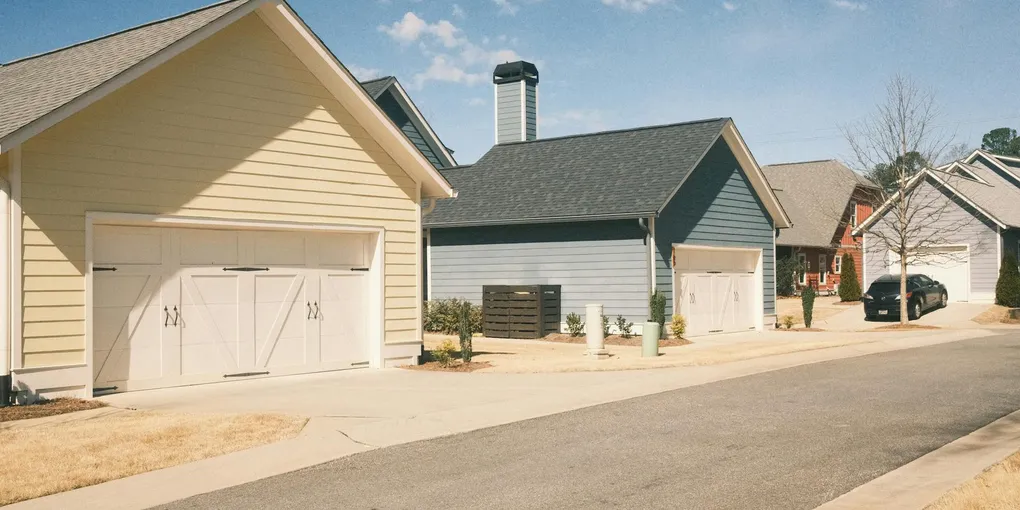
New asphalt driveway installation costs $7-$13 per square foot, or $3,500-$7,800 for a typical 500 sq ft two-car driveway. Resurfacing (overlay) costs $3-$7 per sq ft — a smart fix when the base is solid but the surface is cracked or oxidized. Expect to sealcoat every 2-4 years at $0.15-$0.25/sq ft.
Frequently Asked Questions
Which is cheaper: asphalt or concrete?
Asphalt is 30-40% cheaper upfront. A 500 sq ft asphalt driveway runs $3,500-$7,800 installed, while concrete for the same size runs $6,000-$10,000. Asphalt also installs in 1-2 days vs. concrete's week-long cure. The tradeoff: asphalt lasts 15-25 years with regular sealcoating; concrete lasts 30-50 years with minimal maintenance.
How long does asphalt take to cure before I can drive on it?
Walk on it after 24 hours. Drive on it after 3-5 days. Park heavy vehicles or RVs only after 14-30 days. Full cure (when the surface becomes fully rigid) takes 6-12 months — which is why you shouldn't sealcoat a brand-new driveway for at least 6 months. Hot weather installs cure slower than cool weather installs.
How often should I sealcoat an asphalt driveway?
Every 2-4 years. Sealcoat replenishes the oils in the asphalt binder that UV and weather strip away, preventing cracks and oxidation. Don't overdo it — sealcoating more than every 2 years creates a brittle surface that peels. The first sealcoat should happen 6-12 months after install, not sooner.
Can I seal my own driveway or should I hire a pro?
DIY sealcoating is very feasible and saves $0.10-$0.15 per sq ft. Materials run $50-$120 for a 500 sq ft driveway vs. $75-$200 hired. Key: clean thoroughly first, fill cracks, apply on a warm dry day above 50°F with no rain forecast for 24 hours. Two thin coats beat one thick coat.
When should I replace vs. resurface my asphalt driveway?
Resurface (2-inch overlay) if the base is sound but surface has widespread alligator cracking, oxidation, or minor potholes — about $3-$7/sq ft. Full replacement when there are heaving/sinking sections, failed sub-base (water issues), or more than 30% of surface has structural damage — $7-$13/sq ft. A reputable paver will tell you honestly; get 2-3 opinions on the call.
How thick should an asphalt driveway be?
Standard residential driveways: 2–3 inches of compacted hot-mix asphalt over a 4–6 inch compacted aggregate base (crushed gravel). Total depth from grade: 6–9 inches. For heavier use — frequent parking of pickup trucks, RVs, or delivery vehicles — go 3–4 inches of asphalt over a 6–8 inch base. The base layer is just as important as the asphalt: a properly compacted and graded base prevents settling, heaving, and edge cracking. Budget asphalt jobs that skip adequate base preparation fail faster regardless of how much asphalt is on top.
How long does a new asphalt driveway last?
A properly installed and maintained asphalt driveway lasts 20–30 years. Key maintenance that determines lifespan: sealcoating every 3–4 years (starting 6–12 months after installation), crack filling whenever cracks appear (before water infiltrates the base), and avoiding heavy vehicles during the first 30 days and during hot summer days when the surface is soft. Driveways in cold climates with severe freeze-thaw cycles typically last toward the lower end of that range; well-drained driveways in mild climates regularly last 25+ years with consistent maintenance.
New asphalt driveway installation costs $7-$13 per square foot, or $3,500-$7,800 for a typical 500 sq ft two-car driveway. Resurfacing (overlay) costs $3-$7 per sq ft — a smart fix when the base is solid but the surface is cracked or oxidized.
Asphalt driveways are the budget-friendly durable option that fits most suburban homes. They install fast, handle cold climates better than concrete, and when properly sealcoated last 20+ years. The catch: you do need to maintain them. This guide breaks down what new asphalt costs, when resurfacing is the smarter play, and the hidden costs most homeowners forget to budget for.
Asphalt driveway cost at a glance
| Driveway type | Size range | Total installed cost |
|---|---|---|
| Single-car (10’×20’) | 200 sq ft | $1,400 – $2,600 |
| Standard two-car (20’×24’) | 480 sq ft | $3,360 – $6,240 |
| Wide two-car (24’×24’) | 576 sq ft | $4,000 – $7,500 |
| Long two-car with turnaround | 800 sq ft | $5,600 – $10,400 |
| Three-car / extended | 1,000 sq ft | $7,000 – $13,000 |
| Rural long driveway | 2,000+ sq ft | $12,000 – $26,000+ |
Ballpark: $7-$13 per square foot installed for new construction on a prepared base. Drop to $3-$7 per square foot for resurfacing (overlay) where the existing base is sound.
New install vs. resurface vs. replace
The biggest cost decision is whether you need new asphalt from scratch, an overlay on existing pavement, or full teardown-and-rebuild.
New install (from dirt/gravel): $7-$13/sq ft. Includes excavation, compacted sub-base of crushed stone, 2-3 inches of binder course, and 1.5-2 inches of top (surface) course. Expect crews to spend 1-2 full days on a standard residential driveway.
Resurface / overlay: $3-$7/sq ft. Grinds down about 1 inch of the existing surface and tops with 1.5-2 inches of new asphalt. Only works if the base is stable — meaning no frost heaving, no sub-base failure, no drainage issues. A competent paver will probe the existing pavement before quoting this.
Full replacement: $8-$15/sq ft. Tear out the old asphalt, haul it away (haul-off adds $200-$600), potentially re-grade, and reinstall from scratch. Required when the sub-base has failed or when heaves/sinks indicate frost or water damage below.
Patching / pothole repair: $2-$5 per sq ft for spot repairs. Fine as a stopgap but rarely cosmetic — patches always show.
Cost per square foot by thickness
Most quotes vary by the total asphalt thickness installed. More thickness = more durability = more money.
| Total asphalt thickness | Typical use | Cost per sq ft |
|---|---|---|
| 2 inches (overlay) | Resurface on good base | $3 – $5 |
| 3 inches (1.5 base + 1.5 top) | Light residential | $7 – $9 |
| 4 inches (2.5 base + 1.5 top) | Standard residential | $9 – $11 |
| 5+ inches (3 base + 2+ top) | Heavy vehicles, cold climates | $11 – $13+ |
Recommendation for cold climates (freeze-thaw zones): ask for 4 inches total minimum with 6-8 inches of crushed stone sub-base. This is your best defense against frost heaving and spring mud season.
What’s included in a fair quote
A reputable asphalt contractor should give you a written quote that breaks out these line items rather than a single lump number:
- Excavation and grading — removing topsoil, grading for drainage, hauling off spoils. $1-$3/sq ft.
- Sub-base — 4-8 inches of compacted crushed stone (item #4 or #57). $2-$3/sq ft.
- Geotextile fabric (optional but recommended in clay soils) — $0.25-$0.50/sq ft.
- Binder course (bottom asphalt layer) — coarser aggregate. $2-$3/sq ft.
- Surface course (top asphalt layer) — finer aggregate for smooth finish. $2-$3/sq ft.
- Edge work — feathering, curbing, or transitions to garage slab. Often included.
- First sealcoat (sometimes offered 6-12 months after install) — usually $300-$500 extra.
- Haul-off of old pavement (if replacement) — $200-$600.
If your quote doesn’t break these out, ask for it. Missing sub-base specs are the #1 source of premature driveway failure.
Cost drivers that move the needle
Slope and access. A steep driveway needs heavier compaction equipment. A tight urban lot where the paver can’t back the truck in adds 10-20%.
Drainage. If water pools on your existing driveway, any new install needs a drainage fix — french drains, swales, or re-grading. $500-$3,000 extra depending on severity.
Removal and disposal. Old asphalt is usually recycled, so haul-off is cheaper than concrete ($200-$600). Concrete removal runs $1,500-$3,500 for the same driveway.
Regional climate and seasonal demand. Northern states pay 15-30% more than Sun Belt states due to shorter paving seasons (April-October only). Try to book in early summer, not late fall — fall crews are slammed and asphalt plants sometimes close in winter.
Thickness requirements. If you park a boat, RV, or contractor trucks, you need the 5+ inch spec. Insurance-type driveways where nothing heavy ever sits get by on 3 inches.
Permitting. Some municipalities require permits for new driveways (especially widening or adding a second curb cut). $50-$300 and 2-6 weeks of lead time.
Asphalt vs. concrete vs. gravel vs. pavers
| Material | Install cost/sq ft | Lifespan | Maintenance |
|---|---|---|---|
| Gravel | $1 – $3 | 5-10 years before reshape | Top-up annually |
| Asphalt | $7 – $13 | 15-25 years | Sealcoat every 2-4 years |
| Concrete | $12 – $20 | 30-50 years | Joint sealing, occasional resealing |
| Concrete pavers | $20 – $35 | 40-60+ years | Re-sand joints occasionally |
| Stamped concrete | $15 – $28 | 25-40 years | Reseal every 2-3 years |
| Tar & chip | $4 – $8 | 10-15 years | Re-chip occasionally |
Asphalt sits in the sweet spot for most homeowners: cheaper than concrete, fast to install, handles snow/ice with less cracking, and the black surface absorbs heat so snow melts faster.
DIY vs. hiring a pro
Asphalt driveway installation is genuinely not a DIY job. You need a paver, rollers, a crew of 3-5 experienced hands, access to a hot asphalt supplier (often a 45-minute window from plant to pour), and the ability to compact and finish before the material cools. The equipment rental alone approaches the cost of hiring professionals.
What you can DIY:
- Sealcoating (every 2-4 years) — $50-$150 in materials for a 500 sq ft drive. Save $75-$200 vs. hiring.
- Crack filling — rubberized crack filler runs $15-$30 per tube or $40-$80 per gallon. Cold-pour products let you DIY in 1-2 hours.
- Pothole patching — cold patch asphalt in 50-lb bags, $15-$30 per bag. Good for 1-2 holes up to 6 inches deep.
- Edge repair — $30-$60 in materials to rebuild eroded driveway edges.
Grab a quality driveway sealer and filler kit for routine maintenance. A good push broom and crack filler caulk gun handle most annual upkeep.
Ongoing maintenance costs
Asphalt is the maintenance-heavy pavement. Budget for these recurring costs:
| Maintenance item | Frequency | DIY cost | Hired cost |
|---|---|---|---|
| Sealcoat | Every 2-4 years | $50-$150 | $150-$400 |
| Crack filling | Annually | $20-$60 | $100-$300 |
| Pothole patching | As needed | $15-$30 per hole | $100-$250 per hole |
| Edge rebuild | Every 5-10 years | $30-$80 | $200-$500 |
| Resurface (overlay) | Every 15-20 years | N/A (hire) | $1,500-$4,000 |
Total lifetime maintenance cost on a 500 sq ft driveway: roughly $2,000-$5,000 over 25 years, assuming you DIY the routine stuff.
Hidden costs most homeowners miss
- Lawn repair. Paving crews track dirt and tear up grass along the edges. Budget $100-$300 for reseeding or sod.
- Mailbox and landscaping protection. Some contractors exclude “restoration” — confirm in writing.
- Utility markings. Always call 811 before any excavation. Free for homeowners, but if the contractor forgets and hits a line, repair costs land on you.
- Garage slab transition. If your existing garage slab is higher or lower than the new driveway grade, transitions cost $300-$800 extra.
- Drainage to street. Some municipalities require a specific curb cut profile. Non-compliant installs get torn up.
- First sealcoat timing. Don’t let a paver talk you into sealcoating immediately. Wait 6-12 months. Fresh asphalt needs to oxidize and harden.
Getting accurate quotes
Follow this checklist when calling contractors:
- Get at least 3 quotes, all on the same scope (specify total thickness, sub-base depth, square footage).
- Ask each quote to include warranty terms — good asphalt should carry a 1-year workmanship warranty minimum.
- Request references from jobs 3+ years old — fresh asphalt always looks great; you want to see how it held up.
- Confirm the contractor carries general liability and workers’ comp insurance. Ask for proof.
- Verify the asphalt mix spec (Superpave designation for your state and climate zone).
- Ask what happens if weather cancels — reputable pavers rebook without charging extras.
- Don’t accept the lowest bid blindly. Unrealistically low quotes often skimp on sub-base depth or surface thickness.
When asphalt isn’t the right choice
Skip asphalt if:
- Your driveway is very steep (>15% grade) — hot asphalt can shift under heavy braking.
- You park extremely heavy vehicles regularly (loaded dump trucks, RVs with hydraulic jacks) — better to spec concrete.
- You live in a desert climate where 120°F+ surface temps soften asphalt binder — concrete stays cooler.
- HOA or architectural guidelines require pavers or stamped concrete for curb appeal.
Everywhere else, asphalt delivers the best dollar-per-year durability of any common driveway material.
Regional Asphalt Driveway Cost Variations
Asphalt paving contractor rates vary significantly by market and distance from asphalt plants:
| Region | New 2-Car Driveway (500 sq ft) | Resurfacing (500 sq ft) | Per Square Foot (installed) |
|---|---|---|---|
| Northeast (NY, MA, NJ) | $2,800–$5,500 | $1,200–$2,800 | $5–$11/sq ft |
| Mid-Atlantic (DC, MD, VA) | $2,500–$5,000 | $1,100–$2,500 | $4.50–$10/sq ft |
| Southeast (FL, GA, TX) | $1,800–$4,000 | $850–$2,000 | $3.50–$8/sq ft |
| Midwest | $2,000–$4,200 | $950–$2,100 | $4–$8.50/sq ft |
| Pacific (CA, WA, OR) | $2,600–$5,200 | $1,150–$2,700 | $5–$10.50/sq ft |
Prices include 2-inch base layer and 1.5-inch surface layer. Significant subbase excavation adds $1–$3/sq ft. Rural jobs far from asphalt plants may see a 10–20% premium.
Asphalt Paving Contractor Comparison
| Contractor Type | Typical Cost | Best For | Watch For |
|---|---|---|---|
| Local licensed paving contractor | Market rate | Best value; established equipment | Verify licensing, insurance, and asphalt source plant |
| National paving franchise | +15–25% premium | Consistent process; warranty | Franchise overhead adds to price; quality varies by operator |
| Seal coat specialist | $0.25–$0.40/sq ft | Maintenance sealing every 3 years | For sealing only — not a paving company |
| General handyman/unlicensed | $1.50–$3.50/sq ft | Apparent savings | High risk: improper base, cold asphalt, no warranty; avoid for new installs |
Local licensed paving contractors with compactor equipment deliver the best new installation quality. Avoid any contractor offering new driveway paving under $2/sq ft — they are cutting corners on base preparation or material thickness.
Questions to Ask Your Asphalt Paving Contractor
- What base preparation is included — will you excavate and grade the subbase, and to what depth? — proper asphalt installation requires removing existing material, grading for drainage (water must run away from the house), compacting the subbase, and applying 4–6 inches of compacted gravel before any asphalt; ask specifically what subbase depth is included and whether a gravel base layer is in the quote
- What thickness will the asphalt be — binder course and surface course separately? — a residential driveway should have at least 2 inches of surface asphalt (3 inches for cars and light trucks); ask whether the quote includes a binder course and a finish surface layer, or just a single layer, and get the total compacted thickness in writing
- What is the asphalt mix, and where is it coming from? — fresh hot-mix asphalt from a nearby plant is far superior to cold asphalt; ask which asphalt plant the contractor is sourcing from and how long the material will be in the truck before application — asphalt cools rapidly and must be applied hot; a contractor who can’t name their supplier is a red flag
- How will you handle drainage — is the driveway graded to drain away from the garage and foundation? — improper drainage is the number one cause of asphalt driveway failure; ask how the contractor will ensure water drains off the edges rather than pooling near the foundation; a site grade discussion before work starts indicates a professional operation
- What sealing and maintenance is recommended, and when should sealcoating first be applied? — new asphalt should cure 90 days before first sealcoating; ask whether sealcoating is included or separate, when it should first be applied, and how often thereafter (every 3–5 years); a contractor who includes immediate sealcoating on new asphalt is applying it too early
Related Reading
- Driveway Repair Cost — crack filling, pothole patching, and resurfacing costs
- Driveway Sealing Cost — protect asphalt from UV and water damage; $150–$300 per application
- Concrete Driveway Cost: What You’ll Actually Pay
- How to Seal a Driveway
- Annual Home Maintenance Schedule
- Pressure Washing Your Driveway
- How Much Does a Handyman Cost?
- How to Fix a Crack in Asphalt Driveway — fill hairline cracks before they widen and require costly resurfacing
- How to Fix a Cracked Asphalt Driveway — repair larger cracks and alligator fractures in an aging asphalt surface
- How to Fix a Cracked Mortar Between Bricks — repoint eroded mortar joints on brick edging or retaining walls adjacent to your driveway
- How to Fix a Broken Driveway Gate Hinge — repair or replace a sagging gate hinge that strains the gate frame during the same driveway project
Bottom line
A new asphalt driveway runs $7-$13 per square foot installed, with most suburban two-car driveways landing between $3,500 and $7,800. If your existing base is sound, a $3-$7/sq ft resurface can buy you another 10-15 years for less than half the cost. Maintain with sealcoating every 2-4 years and crack-filling annually, and a quality asphalt driveway will outlast the mortgage on many homes.
Free: 10-Point Home Maintenance Checklist
Prevent costly repairs with this seasonal checklist. Save hundreds every year by catching problems early.
Your checklist is ready!
Open Checklist →Something went wrong. View the checklist here.