Best Pressure Washers for Homeowners in 2026: Gas and Electric Picks
2026 best pressure washers for homes: top electric and gas picks for driveways, decks, siding, and cars. PSI, GPM, and use cases explained.
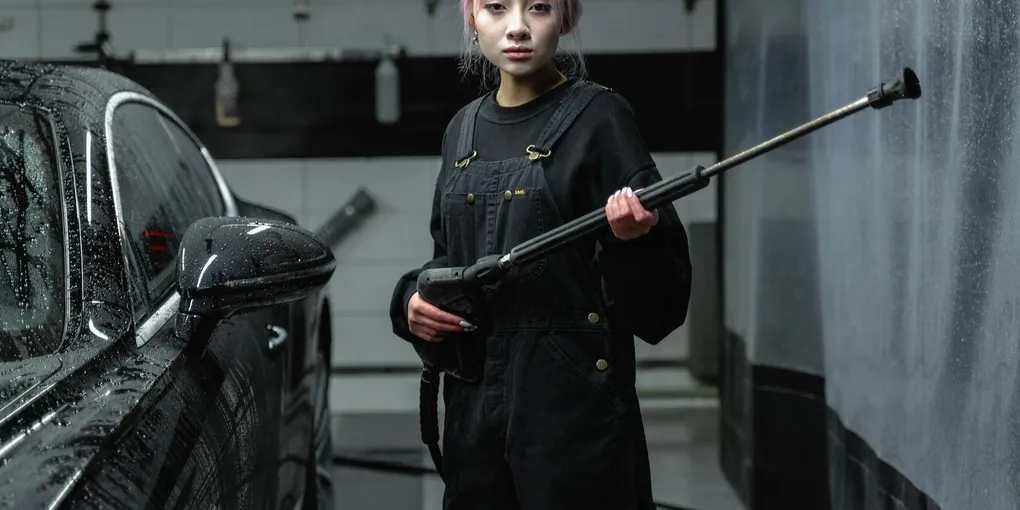
The best all-around homeowner pressure washer for 2026 is the Ryobi RY142300 2,300 PSI electric — quiet, powerful enough for driveways, decks, and siding, and easier to store than a gas unit. For heavy cleaning and driveway oil stains, the Simpson CM60912 3,400 PSI gas unit is the top pick. The budget Greenworks 2000 PSI is excellent for cars, deck boards, and light siding at under $150.
Frequently Asked Questions
What PSI pressure washer do I need for home use?
For cars and outdoor furniture: 1,200-1,900 PSI. For decks, patios, and light siding: 2,000-2,800 PSI. For driveways, concrete, and heavy oil/algae: 3,000-4,000 PSI. Higher PSI isn't always better — too much pressure can gouge wood or chip paint. Most homeowners are well-served by a 2,000-3,000 PSI unit.
Gas or electric pressure washer?
Electric pressure washers are quieter, lower maintenance, and sufficient for 80% of home tasks (cars, decks, furniture, siding). Gas units deliver more power for driveways and large surfaces but need oil changes, winterization, and proper storage. If you have a small-to-medium property, go electric. For a big driveway or acreage, gas pays off.
Can a pressure washer damage my house?
Yes. High PSI can strip paint, gouge wood, drive water behind siding, and crack windows. Use the right nozzle (wider fan for delicate surfaces), maintain distance (12-18 inches for painted wood, 4-6 inches for concrete), and test a small area first. Never spray upward under siding seams or into electrical fixtures.
What accessories are worth buying?
A surface cleaner attachment ($60-$150) is the single biggest upgrade for driveways and patios — much faster than a standard wand. An extension wand adds reach for gutters and second-story siding. A foam cannon is great for car washing. A 50-foot high-pressure hose is worth upgrading from the typical 25-foot stock hose.
How long do pressure washers last?
Quality electric units: 5-10 years with typical homeowner use. Gas units: 5-15 years with proper maintenance (oil changes, winterization, avoid running dry). Pump is usually the first to fail. Prosumer gas units with Honda, Simpson, or Briggs & Stratton engines last longest.
Ryobi vs Sun Joe vs Greenworks — which electric pressure washer brand is best in 2026?
Electric pressure washer brand comparison for homeowners in 2026: Ryobi (1,600–2,300 PSI, $150–$280): best overall brand for homeowners. The RY142300 (2,300 PSI, 1.2 GPM) is the sweet spot — powerful enough for driveways with a surface cleaner, quiet, and solid build quality. Ryobi 40V battery pressure washers ($200–$350) are excellent for portability when no outlet is nearby. Best for: average homeowner use, deck/patio/siding/vehicles. Sun Joe (1,350–2,400 PSI, $100–$220): best budget brand. The SPX3000 (2,030 PSI, $150) is the best-selling pressure washer on Amazon for good reason — reliable, includes two detergent tanks, handles most light-to-medium cleaning. Some build quality compromises vs. Ryobi at the same price. Best for: cost-focused buyers with light-to-medium needs. Greenworks (1,500–2,300 PSI, $120–$250): best for existing Greenworks tool ecosystem users. The 2,000 PSI corded unit at $130–$150 is excellent value. Battery-powered models share the 40V/80V Greenworks platform. Best for: homeowners already using Greenworks tools or wanting battery portability at lower cost than Ryobi. Simpson/Pressure-Pro (2,300–4,200 PSI, $350–$700+): best for heavy duty. Gas-powered, Honda or Kohler engines, brass pump fittings. Overkill for most homeowners but right for large properties, heavy concrete cleaning, or frequent use. Summary: Ryobi for quality balance, Sun Joe for budget, Greenworks for platform compatibility, Simpson for heavy-duty.
What PSI pressure washer is needed to clean a concrete driveway?
Concrete driveway cleaning requirements: Minimum effective PSI: 2,500 PSI. Below this, cleaning is slow and you may need multiple passes to remove embedded dirt, oil stains, or algae. Recommended: 3,000–3,500 PSI for efficient driveway cleaning, especially for oil stains or heavy algae. Best setup for driveways: pair any 2,500+ PSI washer with a surface cleaner attachment ($60–$150). The rotating dual-nozzle head cleans 3–4× faster than a wand and eliminates the striping pattern you get from a fixed nozzle. Without a surface cleaner, even a 4,000 PSI unit is slow on a full driveway. For oil stains: pre-treat with concrete degreaser (spray, let sit 10 minutes) before pressure washing. PSI alone won't remove oil — the detergent breaks the bond so the water can rinse it away. Use the 0-degree (red) nozzle for stubborn stains then switch to the 25-degree (green) nozzle for general washing. Keep the surface cleaner or nozzle moving at all times on concrete — a stationary stream at 3,000+ PSI will etch the surface. Budget pick for driveways: the Ryobi RY142300 at 2,300 PSI with a surface cleaner handles residential driveways well. For heavy concrete or larger driveways, the Simpson CM60912 at 3,400 PSI is the top homeowner gas pick.
The best pressure washer for homeowners in 2026 is the Sun Joe SPX3000 (2,030 PSI, ~$130) for electric, or the Simpson Cleaning MegaShot (3,200 PSI, ~$350) for gas. For most home tasks — driveways, decks, siding, cars — an electric 1,800–2,300 PSI machine is sufficient and easier to maintain. Gas pressure washers are louder and require more maintenance but deliver more consistent power for large jobs. Avoid machines under 1,500 PSI — they won’t clean concrete effectively.
A pressure washer is one of the most genuinely satisfying home maintenance tools. The “before/after” on a dingy concrete driveway, a mildewed deck, or an algae-streaked siding panel is dramatic. But there’s a wide gap between toy-grade machines that struggle on anything harder than a bike and pro-level units that can strip paint if you’re not careful.
This guide picks the best pressure washers for homeowners across gas and electric, cheap and premium, and covers what PSI and GPM numbers actually mean.
Best Overall Electric: Ryobi RY142300 2,300 PSI
The Ryobi RY142300 2,300 PSI electric pressure washer is the sweet spot for most homeowners.
Specs:
- 2,300 PSI at 1.2 GPM
- Brushless induction motor
- 35 ft high-pressure hose
- 4 quick-connect nozzles (0°, 15°, 25°, soap)
- On-board detergent tank
- Wheels and upright frame
Why it wins: Enough power for driveways and concrete, quiet enough that you can use it at 7 AM without waking the neighborhood, and stores easily in a closet or garage. Brushless motor is more durable than brushed motors in cheaper units. The 35 ft hose is 10 feet longer than most competitors.
Tradeoffs: $300-$380 price is higher than budget electrics. Not the right choice for an acre of driveway.
Best Budget Electric: Greenworks GPW2000-1 2,000 PSI
The Greenworks GPW2000-1 2,000 PSI pressure washer is the best under-$200 pressure washer for 2026.
Specs:
- 2,000 PSI at 1.2 GPM
- 25 ft high-pressure hose
- 3 quick-connect nozzles + soap applicator
- 20 ft power cord
- Compact upright design
Why it wins: Genuinely useful power for cars, furniture, decks, and light siding at a price that doesn’t sting if you only use it twice a year. Build quality is notably better than Sun Joe / Wholesun / PowRyte tier competitors. Easy storage.
Tradeoffs: Not strong enough for serious driveway cleaning. Stock hose is short. No onboard detergent tank.
Best Heavy-Duty Electric: Kärcher K5 Premium
If you want the best an electric can offer, the Kärcher K5 Premium pressure washer is the pick.
Specs:
- 2,000 PSI at 1.4 GPM
- Water-cooled induction motor (lasts longer than air-cooled)
- Vario Power Spray wand (adjustable pressure)
- Dirtblaster rotary nozzle included
- 25 ft high-pressure hose on integrated reel
- Detergent tank
Why it wins: Water-cooled motor is a serious durability upgrade. Kärcher’s Vario Power wand adjusts pressure by rotating — no swapping nozzles. The Dirtblaster rotary nozzle is the fastest way to strip grime off concrete. German build quality.
Tradeoffs: $500-$600. Premium pricing. Not more powerful than the Ryobi above; you’re paying for build quality and wand ergonomics.
Best Gas Pressure Washer: Simpson CM60912 MegaShot 3,400 PSI
For homeowners with real driveway or large-property cleaning, the Simpson CM60912 MegaShot 3,400 PSI is the gold standard.
Specs:
- 3,400 PSI at 2.5 GPM
- Honda GC190 engine (best homeowner engine in the business)
- 5 quick-connect nozzles (0°, 15°, 25°, 40°, soap)
- 25 ft high-pressure hose
- Pneumatic tires (handles rough yards)
Why it wins: 2.5 GPM flow rate matters more than PSI for real cleaning speed — this unit cleans twice as fast as a 1.2 GPM electric at roughly the same effective pressure. Honda engine is reliable and serviceable. Simpson is a commercial brand with a strong residential line.
Tradeoffs: Loud. Needs oil changes and winter prep. Heavy (65 lbs). Overkill for small properties.
Best Mid-Range Gas: Ryobi RY803023 3,300 PSI
The Ryobi RY803023 3,300 PSI gas pressure washer competes directly with Simpson at a lower price.
Specs:
- 3,300 PSI at 2.3 GPM
- 212cc Subaru-style engine
- 5 quick-connect nozzles
- 25 ft hose
- Pneumatic wheels
Why it wins: $500-ish price is cheaper than the Simpson. Engine is solid. Ryobi’s Home Depot distribution means parts and service are widely available.
Tradeoffs: Build quality slightly below Simpson. Engine not Honda-branded (lesser resale value).
Best Battery-Powered: EGO Power+ 3,200 PSI
If you already have an EGO 56V ecosystem or want cordless convenience, the EGO Power+ PW3201 3,200 PSI pressure washer is the most capable cordless option.
Specs:
- 3,200 PSI peak / 1.6 GPM
- Runs on 56V EGO batteries
- Runtime: 30-45 minutes on 10Ah battery
- 25 ft hose
- 3 nozzles
Why it wins: True cordless freedom — clean your deck or car without a 100 ft extension cord. Genuinely powerful for a battery unit. Battery is compatible with the EGO lineup.
Tradeoffs: Expensive. Runtime is limited. Only makes sense if you already own EGO tools or value portability enough to pay the premium.
Best Surface Cleaner Attachment
The single biggest upgrade for any pressure washer doing concrete work is a surface cleaner attachment. Spinning nozzles under a covered dome give uniform cleaning without streaks, 3-5x faster than a standard wand.
- Karcher T5 surface cleaner — excellent for pressure washers up to 2,800 PSI
- Simpson 15-inch surface cleaner — rated to 4,400 PSI
- Yamatic 15-inch surface cleaner — budget option at half the price
Match the surface cleaner’s PSI rating to your machine. Using a 3,000 PSI surface cleaner on a 4,000 PSI gas washer can blow out the seals.
Essential Accessories
- Extension wand (18 ft telescoping) — second-story siding, gutter cleaning
- Foam cannon — car washing with soap suds
- Detergent (concrete cleaner) — breaks down oil and algae
- Downspout cleaner attachment — clears gutter clogs
- Drain snake attachment — clears slow drains
- 50 ft high-pressure hose upgrade — more reach without moving the unit
Understanding PSI and GPM
PSI (Pounds per Square Inch): Pressure of the water stream. Higher PSI = more stripping power.
GPM (Gallons per Minute): Volume of water flowing. Higher GPM = faster rinsing and more effective cleaning.
Cleaning Units (CU): PSI × GPM. This is the real measure of cleaning power.
- 1,500 CU (e.g., 1,500 PSI × 1.0 GPM): Light-duty — cars, furniture
- 3,000 CU (2,500 × 1.2): Medium-duty — decks, fences, siding
- 6,000 CU (3,000 × 2.0): Heavy-duty — driveways, concrete, large surfaces
- 10,000+ CU: Commercial
A gas 3,400 PSI × 2.5 GPM machine (8,500 CU) cleans dramatically faster than an electric 2,800 PSI × 1.3 GPM (3,640 CU) even though peak pressure is close.
Nozzle Basics
Color-coded nozzles control spray pattern:
- Red (0°): Pencil stream. Extreme pressure in a single point. Never use on wood or paint — strips instantly. Useful for getting gum off concrete or caulk off tile.
- Yellow (15°): Narrow fan. Hard surfaces only. Concrete, unpainted fence posts, heavy stains.
- Green (25°): Standard fan. Most common for decks, driveways, siding.
- White (40°): Wide fan. Softer materials — painted wood, cars, windows.
- Black (65° / soap): Low pressure for applying detergent.
- Turbo / Rotary (0° spinning): Spins a 0° stream in a circular pattern for fast concrete cleaning. Most popular upgrade nozzle.
Never use the red 0° tip on anything you care about. Start with the 25° green tip for unknown surfaces.
Gas vs. Electric: Decision Table
| Your Use Case | Best Choice |
|---|---|
| Occasional car washing, furniture, small deck | Budget electric (Greenworks 2,000 PSI) |
| Weekly deck/patio cleaning, siding wash | Mid electric (Ryobi 2,300 or Kärcher K5) |
| Large driveway, big concrete area | Gas 3,000+ PSI (Simpson MegaShot) |
| Rural property, barn, outbuildings | Gas 3,400+ PSI with surface cleaner |
| Apartment / no outdoor storage | Budget electric — pack away easily |
| Regular commercial cleaning | Pro-grade 4,000+ PSI, not covered here |
Common Mistakes
- Getting too close. Maintain 12-18 inches for painted surfaces, 4-6 inches for concrete. Closer can gouge or etch.
- Using the red 0° nozzle by default. Start with 25° (green) for almost everything.
- Pointing up under siding. Water gets driven behind siding panels and causes rot.
- Spraying windows and electrical fixtures. Cracked windows, shorted outlets.
- Running the machine dry. Destroys the pump in seconds. Always connect water and trigger the wand before starting.
- Skipping winterization on gas units. Cracked pumps from frozen water are the #1 cause of gas machine death.
- Using hot water in a cold-water-rated machine. Damages seals.
Safety Basics
- Never point the wand at anyone — even a quick spray can cause serious injury.
- Wear safety glasses. Debris flies back.
- Closed-toe shoes.
- Be aware of ladders — pressure washer kickback is stronger than you’d expect.
- Keep hands, pets, and kids away from the spray path.
- Never try to clean yourself or pressure-wash clothes while wearing them.
Storage and Maintenance
Electric Pressure Washers
- Disconnect water. Drain the hose.
- Trigger the wand with the machine off to release residual pressure.
- Store indoors, above freezing.
- Inspect o-rings annually.
Gas Pressure Washers
- Run carb dry at end of season (use the fuel shutoff valve or Sta-Bil fuel stabilizer).
- Change pump oil annually (most have a 100-hour service interval).
- Drain water from the pump — use pump saver / antifreeze before winter storage.
- Change engine oil per schedule (usually after first 20 hours, then every 100 hours).
- Store indoors when possible.
How to Budget
| User | Realistic Budget |
|---|---|
| Occasional homeowner (4-6 uses/year) | $150 - $250 |
| Regular home user | $300 - $500 |
| Serious DIYer with driveway/concrete | $500 - $900 |
| Acreage / multiple properties | $800 - $1,500 |
Buy better than you need. Cheap pressure washers feel great for a month and then struggle. A $300 machine you use happily for 8 years is cheaper than a $150 machine you replace twice.
Related Reading
- How to Power Wash Your House — step-by-step technique for siding, driveway, deck
- Best Budget Power Washers
- How to Seal a Driveway
- How to Stain a Deck
- How to Clean Gutters
- How to Apply Garage Floor Epoxy
- Best Wet/Dry Shop Vacuums — the other garage workhorse alongside a power washer
- Spring Home Maintenance Checklist
Ryobi RY142300 2,300 PSI Electric
Best Overall Electric- 2,300 PSI at 1.2 GPM
- Brushless induction motor
- 35 ft high-pressure hose (10 ft longer than most)
- Quiet enough for early morning use
- On-board detergent tank
- Higher price than budget electrics
- Not enough flow for large driveways
Greenworks GPW2000-1 2,000 PSI
Best Budget Electric- Genuinely useful 2,000 PSI for cars + furniture + decks
- Compact upright form factor
- Better build quality than cheaper competitors
- Not strong for serious driveway cleaning
- Stock 25 ft hose is short
- No detergent tank
Karcher K5 Premium
Best Heavy-Duty Electric- Water-cooled induction motor (longer life)
- Vario Power wand adjusts pressure by rotating
- Dirtblaster rotary nozzle included
- German build quality, integrated hose reel
- Premium pricing
- Not more powerful than cheaper Ryobi
Simpson CM60912 MegaShot 3,400 PSI Gas
Best Gas Pressure Washer- 3,400 PSI at 2.5 GPM (cleans 2x faster than electrics)
- Honda GC190 engine
- 5 quick-connect nozzles
- Pneumatic tires handle rough yards
- Loud operation
- Needs oil changes + winterization
- 65 lbs — heavy to move
Ryobi RY803023 3,300 PSI Gas
Best Mid-Range Gas- 3,300 PSI at 2.3 GPM
- Home Depot parts + service availability
- Cheaper than Simpson MegaShot
- Build quality slightly below Simpson
- Non-Honda engine (lower resale)
EGO Power+ PW3201 3,200 PSI Battery
Best Battery-Powered- True cordless — no extension cord or gas
- 3,200 PSI peak / 1.6 GPM
- Works with EGO 56V battery ecosystem
- Expensive
- 30-45 min runtime on 10Ah battery
- Only worthwhile if you already own EGO tools
Free: 10-Point Home Maintenance Checklist
Prevent costly repairs with this seasonal checklist. Save hundreds every year by catching problems early.
Your checklist is ready!
Open Checklist →Something went wrong. View the checklist here.