Basement Finishing Cost in 2026: What $30K–$100K Actually Gets You
Full 2026 cost guide for finishing a basement — framing, insulation, drywall, flooring, electrical, plumbing, egress, and the hidden costs that double a budget.
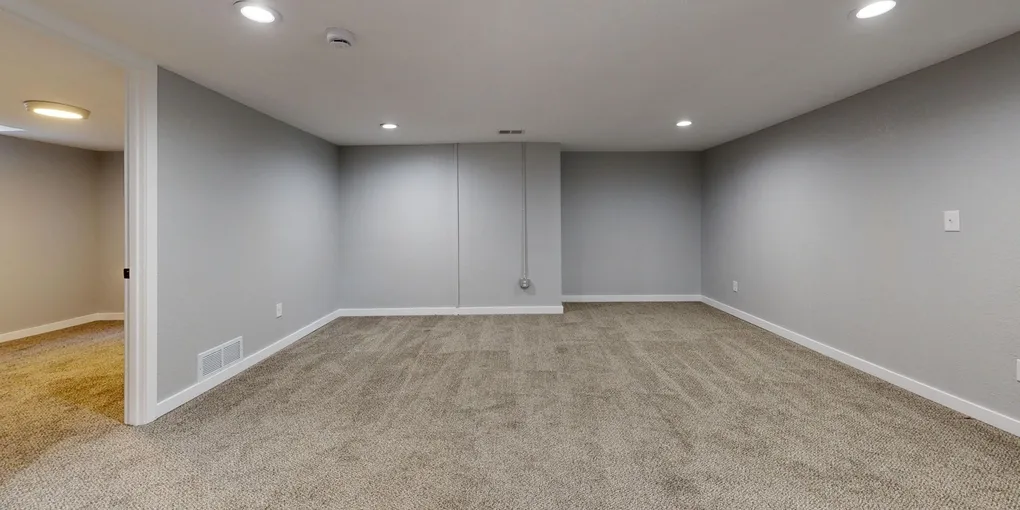
Finishing a basement costs $30,000–$80,000 for a typical 800–1,200 sq ft space in 2026 — roughly $35–$75 per square foot. Basic finishing (framing, insulation, drywall, paint, basic flooring, minimal electrical): $30–$50/sq ft. Full finish with bathroom, bar, and upgraded finishes: $55–$100/sq ft. Egress window addition: $3,500–$8,000. Full bathroom in an unplumbed basement: $8,000–$20,000.
Frequently Asked Questions
Is finishing a basement worth the investment?
For most homeowners, yes — but not as a pure financial play. Basement finishing has an ROI of 70-80% at resale, meaning you typically recoup most but not all of the investment. The real value is in usable square footage while you live there: a home office, guest suite, media room, or kids' playroom at a fraction of an addition's cost. If you plan to stay 5+ years, it almost always makes sense.
What does a basic basement finish include?
A basic finish includes: waterproofing and vapor barrier, framed walls around the perimeter and any interior partitions, insulation (R-13 in walls, R-30 in rim joists), drywall and paint, LVP or carpet flooring, drop ceiling or drywall ceiling, recessed lighting, outlets, and HVAC extension or mini-split. It does not include bathrooms, wet bars, egress windows, or structural changes.
Do I need a permit to finish my basement?
Almost always yes. Building permits are required in nearly every US jurisdiction for work that includes electrical, plumbing, framing, or egress changes. Expect to pay $500–$2,500 in permit fees for a full basement finish. Unpermitted work must be disclosed at resale and can fail home inspections, reducing the sale price by 10-20% or requiring expensive retroactive permitting and inspection.
How long does it take to finish a basement?
A professionally finished basement takes 6–10 weeks from permit approval to final walkthrough. Week 1-2: framing and rough electrical/plumbing. Week 3: insulation and drywall. Weeks 4-5: mud, tape, texture, prime. Week 6: flooring, trim, doors. Week 7-8: paint, fixtures, cabinetry. Weeks 9-10: inspections, punch list, final cleanup. DIY basement finishes typically take 4-8 months of weekends.
Should I hire a general contractor or subcontract myself?
Hire a GC if this is your first major project, if you work full-time, or if you want warranty coverage. Self-contract if you have construction experience, time to coordinate 6-10 subs, and a flexible project schedule. Self-contracting saves 10-20% (the GC's markup) but adds significant risk — missed inspections, warranty gaps, and sub coordination become your problems.
What are the biggest hidden costs in a basement finish?
The most common budget surprises: (1) Egress windows for a legal bedroom ($3,500–$8,000 each, requires excavation and framing). (2) Waterproofing an unmapped moisture problem found during demo ($3,000–$15,000). (3) HVAC extension — running new ductwork to the basement can add $1,500–$5,000 if the existing system can't handle the added load. (4) Electrical panel upgrade — older 100A panels often need upgrading to 200A when adding significant electrical load ($2,000–$4,000). Budget a 15–20% contingency for a basement project.
Does a finished basement add value to a home?
Yes — but not dollar-for-dollar. A finished basement adds 70–75% of its cost to the appraised value, typically adding $20,000–$50,000 to resale price depending on market. Markets with high above-grade cost-per-square-foot value basements more. A finished basement with a legal bedroom and bathroom adds the most value per dollar spent.
What makes a basement bedroom legally conforming?
A legal conforming bedroom below grade requires all of: (1) An egress window or door — minimum 5.7 sq ft net clear opening, 24 inch minimum clear height, 20 inch minimum clear width, sill no higher than 44 inches above the floor. (2) Minimum ceiling height — IRC requires 7 feet in at least 50% of the floor area, with no point lower than 5 feet. (3) Smoke and CO detectors interconnected with the rest of the house. (4) Heating and ventilation connected to the main system or a dedicated source. A space that lacks legal egress can be sold as a den, office, or flex room but not counted as a bedroom for MLS or appraisal purposes — and some markets discount the home for an 'illegal bedroom' if buyers find out.
What basement flooring works best for moisture-prone environments?
Rank by moisture resistance: (1) Epoxy coating on concrete — most waterproof, industrial look, $3–$8/sq ft installed. (2) Luxury vinyl plank (LVP) — fully waterproof, floats above the slab, the most popular choice for finished basements, $4–$8/sq ft installed. (3) Ceramic or porcelain tile — waterproof and durable but cold underfoot, grout requires maintenance, $6–$12/sq ft installed. (4) Engineered hardwood with a vapor barrier — handles humidity better than solid wood but not truly waterproof. (5) Carpet — poorest choice unless the basement is completely dry year-round; absorbs moisture and molds quickly. For any basement with a history of water, skip carpet and solid hardwood entirely.
Finishing a basement costs $30,000–$80,000 for a typical 800–1,200 sq ft space in 2026 — roughly $35–$75 per square foot. Basic finishing (framing, insulation, drywall, paint, basic flooring, minimal electrical): $30–$50/sq ft.
A finished basement is some of the cheapest square footage you can add to a home — typically half the cost per square foot of a second-floor addition, with no exterior construction, no foundation work, and no roof tie-ins. But the budget swings widely depending on what “finished” means to you, what condition your basement starts in, and how many subs have to touch the project.
This guide breaks down 2026 basement finishing costs by scope, component, and the hidden expenses that balloon a $40,000 budget into $70,000 if you’re not paying attention.
The Big Picture
For a typical 800–1,200 sq ft basement in 2026:
- Basic finish (framing, drywall, flooring, paint, basic electrical): $30–$50/sq ft → $24,000–$60,000
- Mid-range finish (+ bathroom, wet bar, recessed lighting, nicer finishes): $50–$75/sq ft → $40,000–$90,000
- High-end finish (+ home theater, full kitchen, premium finishes): $75–$120/sq ft → $60,000–$144,000
The national median for a full mid-range basement finish (1,000 sq ft, one bathroom, bar area, three rooms) lands around $55,000–$70,000 in 2026.
Cost Breakdown by Component
For a typical 1,000 sq ft mid-range finish:
| Component | Typical Cost | Notes |
|---|---|---|
| Permits and inspections | $800–$2,500 | Varies wildly by jurisdiction |
| Waterproofing / moisture prep | $500–$3,000 | If needed |
| Framing (walls, soffits) | $4,000–$8,000 | More for complex layouts |
| Insulation | $1,500–$3,500 | Walls and rim joists |
| Electrical (rough + finish) | $4,000–$10,000 | Includes panel upgrade if needed |
| Plumbing (bathroom + bar) | $5,000–$12,000 | Rough-in plus fixtures |
| HVAC extension | $1,500–$4,500 | Duct run or mini-split |
| Drywall (hang, tape, mud, texture) | $4,000–$8,000 | 3/5/8 coat systems vary |
| Flooring | $3,000–$8,000 | LVP $3-$7/sq ft installed |
| Paint | $1,500–$3,500 | Prime + 2 coats |
| Doors and trim | $1,500–$4,000 | 3-5 interior doors |
| Bathroom fixtures | $2,000–$5,000 | Toilet, vanity, shower, mirror |
| Lighting fixtures | $1,000–$3,000 | Recessed + pendant + closet |
| Egress window (if needed) | $3,500–$8,000 | New cut and window well |
| Cabinetry (bar/kitchenette) | $2,000–$10,000 | Stock to custom |
| Countertops (bar) | $500–$2,500 | Laminate to quartz |
| Final cleanup and punch list | $500–$1,500 |
The Hidden Costs That Blow Budgets
1. Egress Windows ($3,500–$8,000 each)
Any room used as a bedroom must have a legal egress window. For most basements, this means cutting through the foundation wall and installing a window well. Costs include:
- Concrete cutting: $500–$1,500
- New foundation-grade window: $500–$1,500
- Window well (metal or composite): $200–$800
- Well cover: $100–$300
- Drainage tile: $200–$500
- Labor (permit, excavation, install, waterproofing): $2,000–$4,000
If you’re making two basement bedrooms, you need two egress windows. Both must meet code.
2. Plumbing in Unplumbed Basements ($3,000–$10,000+)
Basements plumbed for a bathroom during original construction are a gift. Basements without rough-in plumbing require:
- Breaking the concrete slab: $500–$1,500
- New drain lines under the slab: $1,000–$3,500
- Lift pump or sewage ejector: $800–$2,500 (if below the main sewer line)
- Supply line routing: $500–$1,500
- Venting: $500–$1,500
- Slab patch and re-pour: $300–$800
If your home has a main sewer line that exits above the basement floor, you’ll need a sewage ejector pump — adds $1,000–$2,000 and creates a long-term maintenance item.
3. Electrical Panel Upgrade ($1,500–$4,000)
A full basement finish typically adds 8–15 circuits to your home’s electrical system. If your panel is:
- 100-amp with no open slots: Requires upgrade to 200-amp, cost $1,500–$4,000
- 200-amp with slots: New breakers only, cost $150–$400
- Older Federal Pacific, Zinsco, or Pushmatic panels: Strongly recommended to replace even if slots are available; insurance companies are dropping policies on these brands
4. Asbestos or Lead Paint (Pre-1980 Homes)
If the basement has any of: old duct insulation wrapping, 9x9 inch floor tiles, textured “popcorn” ceiling, or painted walls where paint chips when sanded — testing is required before demo.
- Asbestos test: $50–$200 per sample
- Asbestos abatement: $1,500–$5,000+ depending on scope
- Lead paint abatement: $500–$3,000 per room
5. Structural Issues
Discovered during demo:
- Foundation cracks: $500–$3,000 for repair (minor) to $5,000–$15,000 for wall reinforcement
- Rim joist rot: $1,000–$5,000 for partial repair
- Insufficient ceiling height for code: $5,000–$15,000+ to lower the slab (rarely worth it)
Minimum finished ceiling height in most jurisdictions: 7 feet (84 inches). Measure before planning — if your ceiling is under 7 feet, you may need a variance or the finish may not be legal.
6. HVAC Capacity
Your existing furnace and AC were likely sized for your main floor square footage. Adding 1,000 sq ft of finished space requires:
- Extending ducts: $1,000–$3,500
- Evaluating HVAC capacity: if your existing system is already running at capacity, you may need an upgrade ($5,000–$12,000) or a separate mini-split for the basement ($3,500–$7,000)
See our central AC installation cost guide for the full HVAC math.
DIY vs. Contractor: The Real Math
Full contractor: $30–$120 per sq ft. Hands-off, warranty included, 6–10 weeks.
Self-contracting (you manage the subs): 20–30% less. 3–6 months. Requires you to coordinate permit inspections, schedule subs, order materials, and handle problems.
True DIY (you do the work yourself): 50–70% less on materials only. 6–12 months of weekends. Requires skills in framing, electrical, plumbing, drywall, and tile. You’ll still need licensed electricians and plumbers for inspections.
A realistic DIY on a 1,000 sq ft basement:
- Materials: $15,000–$30,000
- Sub labor (electrical, plumbing, drywall): $8,000–$15,000
- Total: $23,000–$45,000 vs. $50,000–$80,000 fully contracted
Savings: $20,000–$40,000. Cost: 6–12 months of your life.
Permits and Inspections
Almost every jurisdiction requires:
- Building permit ($200–$1,500)
- Electrical permit ($100–$500)
- Plumbing permit ($100–$400)
- HVAC/mechanical permit ($100–$400)
Required inspections typically include:
- Framing (before insulation)
- Rough electrical
- Rough plumbing
- Insulation (some jurisdictions)
- Drywall (some jurisdictions)
- Final (after everything is complete)
Missing an inspection means tearing open walls to expose the work. Don’t skip them.
Resale Value: What Does the Finish Actually Add?
Per the 2025 Remodeling Cost vs. Value report (used as a 2026 reference):
- National average cost of mid-range basement finish: ~$71,115
- Average resale value added: ~$49,580
- Cost recouped: 69.7%
This is an average. Actual ROI depends on:
- Neighborhood: In high-demand areas, ROI hits 80-90%; in slower markets, 50-60%
- Quality of finish: Matching the rest of the house performs better than over- or under-improving
- Bedroom addition: A legal bedroom in the basement (with egress) can add $15,000–$40,000 to sale price alone
- Bathroom addition: A 3/4 bath adds $10,000–$25,000
Design Decisions That Save Money
- Stick with a rectangular floor plan. Curved walls, soffits, and complex framing add 15-30% in labor.
- Drop ceiling in mechanical areas. Drywall in living areas, drop ceiling in the utility room where you need access to HVAC and plumbing.
- Limit bathroom relocations. Putting the new bathroom near existing plumbing saves $2,000–$5,000.
- LVP over engineered hardwood. Same look, half the cost, better moisture performance.
- Stock kitchen cabinets for the bar area. Custom adds $3,000–$8,000 for minimal visual difference.
- Recessed lighting over fancy fixtures. A $25 LED canister looks as good as a $150 fixture in most basements.
Design Decisions Worth Splurging On
- Extra insulation in rim joists. Cheap, high-impact. Keeps the basement 5-10°F warmer in winter.
- Dehumidifier on a drain line. $500 now saves thousands in future moisture damage.
- Extra can lights. Basements feel dark without enough. Aim for 1 can per 25 sq ft.
- Solid-core interior doors. $40 per door upgrade over hollow-core is worth it for sound privacy.
- Quartz or LVT in bathroom. Long-term moisture resistance pays back.
- One good quality main light fixture. A statement piece in the media or bar area anchors the whole space.
Timeline: What to Expect
Pre-construction (2-4 weeks):
- Contractor selection
- Design finalization
- Permit applications
- Material ordering
Week 1-2: Framing, rough electrical, rough plumbing
Week 3: Insulation, vapor barrier, rim joist air sealing
Week 4-5: Drywall (hang, tape, 3-5 coats of mud, prime)
Week 5-6: Flooring, interior doors, trim
Week 6-7: Paint, tile (bathroom), cabinetry, countertops
Week 7-8: Plumbing fixtures, electrical finish, light fixtures
Week 9-10: Final inspection, punch list, cleanup
Total: 8-12 weeks for a typical 1,000 sq ft mid-range finish.
When It’s Not Worth Finishing
Some basements just aren’t good candidates:
- Ceiling height under 7 feet — requires variance, feels cramped, hard to sell
- Chronic flooding or water intrusion — fix this first, not with finishes
- No bathroom possible — limits functionality for bedrooms or media rooms
- Low-value neighborhood — spending $60,000 finishing a basement in a $180,000 house is unlikely to recoup
- Structural issues — foundation repair should come before finishing
Regional Basement Finishing Cost Variations
Labor and material costs for basement finishing vary significantly by region:
| Region | Basic Finish (no bath, 1,000 sq ft) | Mid-Range (with bath, 1,000 sq ft) | Full Finish (bath + bar/bedroom) |
|---|---|---|---|
| Northeast (NY, MA, NJ) | $35,000–$55,000 | $55,000–$90,000 | $80,000–$130,000+ |
| Mid-Atlantic (DC, MD, VA) | $30,000–$50,000 | $50,000–$82,000 | $72,000–$120,000 |
| Southeast (FL, GA, TX) | $22,000–$38,000 | $38,000–$62,000 | $55,000–$90,000 |
| Midwest | $24,000–$42,000 | $42,000–$68,000 | $60,000–$95,000 |
| Pacific (CA, WA, OR) | $33,000–$55,000 | $55,000–$88,000 | $78,000–$125,000+ |
Costs include framing, insulation, drywall, flooring, electrical, and HVAC extension. Egress window installation ($2,500–$5,500), bathroom rough-in ($3,000–$8,000), and wet bar plumbing ($2,000–$5,000) are common additions. Northeast and Pacific markets reflect higher labor costs for all licensed trades.
Basement Finishing Contractor Comparison
| Contractor Type | Typical Cost Range | Best For | Watch For |
|---|---|---|---|
| Full-service basement finishing specialist | $40,000–$120,000+ | Turnkey finish; experienced with basement-specific issues | Higher overhead than GC; verify they handle moisture mitigation, not just framing |
| General contractor with basement experience | $30,000–$100,000 | Complete remodels; single point of contact for all trades | Subcontractor markup 15–25%; vet each sub’s license separately |
| Owens Corning Basement Finishing System (dealer) | $25,000–$60,000 | Non-drywall wall panel systems; faster install, removable | Proprietary system; not full custom; panel look may not suit every buyer |
| Independent framer + electrician + plumber + drywaller | $20,000–$65,000 | Best per-trade pricing; works for experienced homeowners | Requires significant homeowner coordination; permit management falls to you |
| DIY (framing + drywall + flooring) | $8,000–$25,000 | Maximum savings; skilled DIYers | Electrical and plumbing require licensed contractors in most jurisdictions; permits still required |
Basement finishing specialists (local companies that only do basements) often deliver the best outcome for complex projects — they know common moisture problems and code requirements better than general remodelers. For straightforward projects without major plumbing, a GC coordinating licensed subs typically costs less.
Questions to Ask Your Basement Finishing Contractor
- How do you address moisture before framing — what moisture testing will you do, and how do you handle any issues found? — moisture is the single most common cause of finished basement failure; ask whether they test concrete walls and slab for moisture transmission before framing, and what the process is if active seepage or high moisture vapor is found behind walls or under slab
- Will the basement bedroom (if applicable) meet egress code, and are egress windows included in the quote? — a bedroom legally requires an egress window sized to IBC or IRC specifications; if the existing windows don’t meet egress, new window installation runs $2,500–$5,500 per opening and should be explicitly scoped in the bid, not added after permits are pulled
- Which trades will be licensed contractors, and will they pull their own permits? — electrical and plumbing work in a finished basement must be permitted and inspected by licensed contractors; ask specifically which work is DIY (framing, drywall) and which is licensed-contractor work; a basement finish that includes unlicensed electrical or plumbing creates insurance and resale problems
- What is the insulation approach — how are you handling the exterior concrete walls and slab? — improperly insulated basement walls create condensation and mold; ask whether they use closed-cell spray foam (best for concrete walls), rigid foam board, or fiberglass batts in a framed wall cavity, and whether any insulation goes under the slab before flooring is installed
- What is the payment structure, and what does the punch list and warranty look like? — basement finishing is a multi-month project; a reasonable payment schedule ties installments to verified milestones (framing rough inspection, drywall hang, flooring complete); ask for a 1-year workmanship warranty in writing and confirm the scope of items covered (settling cracks in drywall, floor leveling issues, drain clogs from improper slope)
DIY supplies (if you tackle it yourself)
- Moisture barrier paint (DryLok)
- Rigid foam insulation board R-15
- Egress window well
- Dehumidifier (basement)
Related Reading
- Basement waterproofing cost
- Radon Mitigation Cost — test for radon before closing in finished walls; mitigation runs $800–$2,500
- Best sump pumps for basements
- Best dehumidifiers for basements
- Bathroom remodel cost breakdown
- Kitchen remodel cost breakdown
- Central air conditioning installation cost
- Attic insulation cost guide
- Sump Pump Installation Cost — address drainage before closing walls; $490–$1,170 installed
- Egress Window Installation Cost — required for any basement bedroom, $2,500–$5,500 installed
- How to install recessed lighting — essential for low-ceiling basements
- How to install a GFCI outlet — required for all basement outlets per code
- Carpet installation cost — popular basement flooring option
- How to remove popcorn ceiling — if updating the existing basement ceiling
- Popcorn Ceiling Removal Cost — $1–$5/sq ft professional removal if you’d rather not DIY
- How to Seal Leaky Ductwork — fix duct leaks before enclosing them behind finished walls
- Bathroom Addition Cost — basement bathroom rough-in is common in finishing projects; $20,000–$90,000
- Floor Joist Repair Cost — repair damaged joists before finishing the ceiling; $500–$5,000
The Bottom Line
A realistic 2026 basement finish for a typical 1,000 sq ft space with a bathroom and bar area lands at $50,000–$80,000 fully contracted. Basic finishing without a bathroom can come in at $30,000–$45,000. DIY can cut costs by 40-60% if you have the skills and the time. Get three itemized quotes, handle any moisture issues before drywall, budget 15-20% contingency for surprises uncovered during demo, and always pull permits. The ROI at resale is roughly 70%, but the real value is in 5-15 years of additional usable square footage at half the cost per foot of building up or out.
- Plan the layout before estimating cost
Sketch the floor plan including any desired bedroom, bathroom, office, or media room. Measure the basement precisely. Note existing features: support posts, ductwork, low ceiling areas, stairs. Mark the ideal locations for egress windows if adding a bedroom (code requires a bedroom to have an egress window or door).
- Get 3 itemized quotes from licensed contractors
Each quote should itemize: permits, framing, insulation, electrical, plumbing, HVAC extension, drywall, flooring, trim, paint, doors, and any finish upgrades. A flat total price with no breakdown hides 15-30% markup. Check licenses through your state's contractor licensing board.
- Get the moisture situation handled first
Before drywall goes up, solve any water issues. This means: waterproof paint or membrane, a sump pump if below-grade, a dehumidifier, proper grading outside, gutter extensions, and vapor barrier behind framing. Finishing over a wet foundation is the #1 reason basements need to be re-finished in 5-7 years.
- Decide on egress windows for bedrooms
Any bedroom below grade needs a legal egress window (5.7 sq ft opening, 24 inch height minimum, 20 inch width minimum, 44 inch sill height maximum). A new egress cut costs $3,500-$8,000 including the window well and drainage. Without legal egress, the space is an 'office' or 'den' — not a bedroom — and doesn't count toward the home's bedroom count for resale.
- Plan electrical with room for growth
Code requires outlets every 12 feet on walls, plus GFCI in bathrooms and wet bars. Plan 50% more outlets than the minimum — basements become offices, workshops, or media rooms and need outlets everywhere. Dedicate circuits for: media room (20A), office (20A), wet bar (20A), exercise equipment (20A).
- Decide ceiling type: drop vs. drywall
Drop ceiling ($2-$4 per sq ft): lower material/labor cost, easy access to ductwork and plumbing, slightly lower ceiling height. Drywall ($4-$7 per sq ft): higher-end look, slightly more ceiling height, harder to access anything above. Hybrid: drywall in main areas, drop in utility/mechanical rooms.
- Pick flooring appropriate for below-grade
Avoid: solid hardwood (moisture warps it), traditional laminate (below-grade exposure voids warranty), carpet over concrete without a moisture barrier. Choose: LVP/LVT (best all-around), engineered hardwood (if climate-controlled), polished concrete (minimalist), or commercial-grade carpet over a vapor barrier.
Free: 10-Point Home Maintenance Checklist
Prevent costly repairs with this seasonal checklist. Save hundreds every year by catching problems early.
Your checklist is ready!
Open Checklist →Something went wrong. View the checklist here.