Well Pump Replacement Cost 2026: $1,200–$5,500 Installed
Well pump replacement costs $1,200-$5,500 installed. See pricing by submersible vs. jet pump, well depth, and what add-ons to budget for.
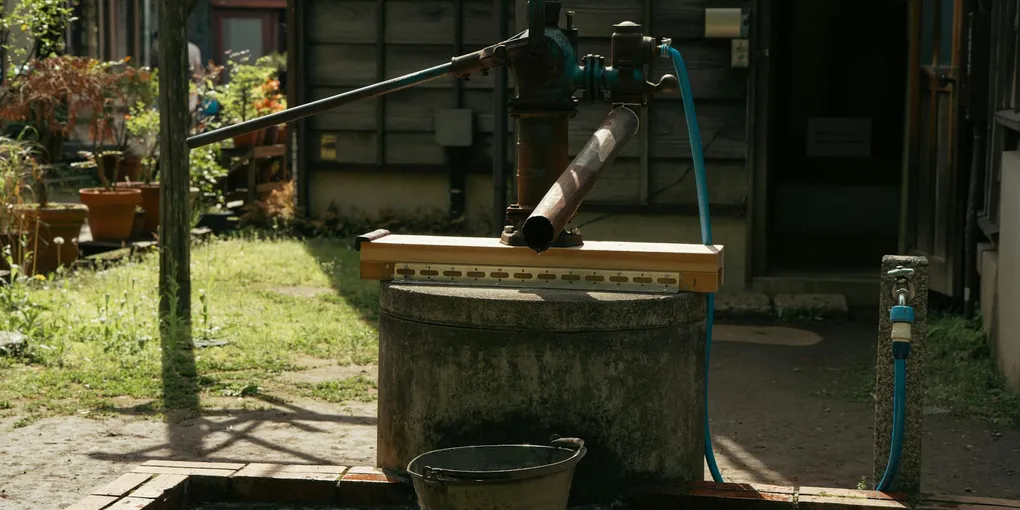
Well pump replacement costs $1,200-$5,500 installed. Submersible pumps (most common for wells over 25 feet deep) run $1,500-$5,500 including pull-and-replace labor. Jet pumps (shallow wells under 25 feet) run $1,200-$2,500 installed. Expect to pay extra for a new pressure tank ($400-$900) and control box ($150-$400) — they usually need replacing together.
Frequently Asked Questions
How long does a well pump last?
Submersible pumps last 8-15 years on average; jet pumps 10-20 years. Sandy or silty water shortens life significantly. Frequent short-cycling (caused by a bad pressure tank or leaking bladder) is the #1 killer — pumps are rated for fewer start cycles than run hours, so worn pressure tanks burn out the pump. Replace the pressure tank with the pump for maximum new-pump lifespan.
What are signs my well pump is failing?
Common signs: loss of water pressure, sputtering faucets (air in lines), muddy/silty water, pump that runs continuously, tripped breaker on well circuit, or simply no water at all. Also watch for higher electric bills — a failing pump works harder and cycles more. A motor that's getting hot or a pressure gauge that won't stabilize both point to near-term failure.
Can I replace a well pump myself?
Jet pumps (above-ground): yes for experienced DIYers, 3-5 hour job. Submersible pumps (down the well): no. You need a pump-pulling truck with a winch and derrick to pull 200-400 feet of pipe out of the ground. Trying without proper equipment risks dropping pipe and pump down the well — a $3,000-$8,000 fishing/retrieval nightmare.
Does homeowner's insurance cover well pump replacement?
Usually not for wear-and-tear failure. Standard policies exclude gradual breakdowns. Some cover sudden damage (lightning strike is common) if the policy has an equipment breakdown rider — $30-$80/year extra. Well pumps are excluded from most home warranties; check before assuming coverage.
Should I replace the pressure tank when I replace the pump?
Yes, in most cases. A worn pressure tank has a failed air bladder that causes the pump to short-cycle (turn on and off every few seconds). Short-cycling is the main reason pumps burn out prematurely. Replacing both at once adds $400-$900 but doubles the expected lifespan of your new pump.
Well pump replacement costs $1,200-$5,500 installed. Submersible pumps (most common for wells over 25 feet deep) run $1,500-$5,500 including pull-and-replace labor.
If you live on a well, a failing pump isn’t a maintenance choice — it’s an emergency. One day you’re living normally, the next your faucets sputter and you’re on bottled water until the well guy arrives. Replacement runs $1,200-$5,500 depending on pump type, well depth, and how much of the system gets refreshed at the same time. This guide walks through what to expect, when DIY is realistic, and how to avoid the common contractor upsells that don’t help lifespan.
Well pump replacement cost at a glance
| Pump type | Typical well depth | Pump alone | Total installed |
|---|---|---|---|
| Shallow jet pump | < 25 ft | $250-$600 | $800-$2,000 |
| Deep jet pump (convertible) | 25-100 ft | $350-$900 | $1,000-$2,500 |
| Submersible pump (100-200 ft) | 100-200 ft | $500-$1,500 | $1,500-$4,000 |
| Submersible pump (200-400 ft) | 200-400 ft | $800-$2,500 | $2,500-$5,500 |
| Deep submersible (400+ ft) | 400-800 ft | $1,200-$3,500+ | $3,500-$8,000+ |
| Constant-pressure variable-speed | Any depth | $1,500-$3,500 | $3,000-$7,500 |
National average: $1,700-$3,500 for most residential well pump replacements.
Pump types explained
Jet pumps (shallow/above-ground)
A jet pump sits above ground (in a well house, basement, or utility room) and uses suction to draw water up from the well. Limited to wells under 25 feet for shallow jet pumps or 100 feet for deep jet pumps with dual pipes.
Pros: Easy DIY replacement (above ground), cheaper pump cost, simple diagnostics.
Cons: Limited depth capability, less efficient than submersible, noisier operation, loses prime if seal fails.
Best for: Shallow wells, point-of-use situations, smaller water needs.
Submersible pumps (in-well)
A submersible pump sits at the bottom of the well, submerged in water. A waterproof motor drives an impeller that pushes water up the drop pipe to the surface. Most modern wells use submersibles.
Pros: Works at any depth, quiet (pump is 100+ ft below ground), more efficient, primes itself (always submerged).
Cons: More expensive, can’t be DIY replaced (requires pump-pulling truck), motor burnout requires full pull.
Best for: Most wells over 25 feet, whole-house water supply.
Constant-pressure / variable-speed pumps
A newer option that varies pump speed to match demand, maintaining steady water pressure regardless of how many fixtures are running. No pressure tank cycling — pump modulates instead.
Pros: Consistent pressure (like city water), smaller pressure tank, longer pump life (fewer start cycles), better for homes with multiple simultaneous water users.
Cons: 2-3× cost of conventional pumps, requires compatible control box, more electronics to fail.
Best for: Whole-house systems where water pressure inconsistency is a pain point.
What’s included in a fair quote
| Component | Typical cost |
|---|---|
| Submersible pump (1/2-1.5 HP, mid-range) | $500-$1,500 |
| Drop pipe (poly or steel, 100-400 ft) | $100-$600 |
| Pump wire (10-12 gauge, 100-400 ft) | $150-$500 |
| Torque arrestor / well seal | $30-$100 |
| Safety rope for pump retrieval | $30-$80 |
| Check valve(s) | $30-$80 |
| Labor (pull old, install new) | $400-$1,200 |
| Truck / winch use fee | $100-$300 |
| Pump-only subtotal | $1,340-$4,360 |
| Pressure tank replacement (if needed) | $400-$900 |
| Control box replacement (if needed) | $150-$400 |
| Pressure switch | $30-$100 |
| Gauge + fittings | $50-$150 |
| Water system bleach / sanitization | $50-$150 |
| Full-system replacement | $2,020-$6,060 |
Most reputable well contractors offer two quotes: pump-only (cheapest, shorter lifespan) and full-system refresh (more expensive upfront, much longer lifespan). Full-system refresh is the better value for pumps over 10 years old.
Cost drivers that matter
Well depth
The deeper the well, the more drop pipe, wire, and labor time required:
| Well depth | Approximate labor hours |
|---|---|
| 0-100 ft | 2-4 hours |
| 100-200 ft | 3-5 hours |
| 200-400 ft | 4-7 hours |
| 400+ ft | 6-10+ hours |
Labor rates for well technicians run $85-$175/hour in most regions, higher in remote areas.
Horsepower
Residential submersible pumps come in sizes from 1/3 HP (small homes, 6-10 GPM) to 3+ HP (large homes, multiple bathrooms, irrigation). Match pump to household needs:
| Household | Pump size | Typical GPM |
|---|---|---|
| 1-2 people, 1 bathroom | 1/3 HP | 6-8 GPM |
| 2-4 people, 2 bathrooms | 1/2 HP | 8-12 GPM |
| 4-6 people, 3+ bathrooms | 3/4 HP | 10-14 GPM |
| Large home + irrigation | 1-1.5 HP | 15-20 GPM |
| Farms / large estates | 2-3+ HP | 20-40 GPM |
Oversized pumps cost more, short-cycle (damaging the pump), and waste electricity. Don’t let a contractor upsell you a larger pump than you need.
Well condition
- Casing in good condition: No additional cost.
- Damaged casing or liner: May require casing repair ($300-$1,500) before pump install.
- Sand or silt in well: Requires well cleaning/redevelopment before new pump ($400-$1,500).
- Low static water level: May need well-deepening evaluation ($250-$600 for assessment).
Regional labor rates
Pacific Northwest and Northeast tend to run 20-40% higher than South and Midwest. Remote rural properties pay travel surcharges of $0.75-$2/mile beyond the typical service radius.
Installation process
For submersible pump replacement, expect:
Day 1 (most jobs):
- Arrival with pump truck, winch, derrick
- Pressure off, power off, well cap removed
- Pull drop pipe section by section (10-20 ft at a time)
- Old pump disconnected and removed
- New pump, torque arrestor, safety rope attached to new pipe
- Drop pipe lowered back into well, connected section by section
- Wires spliced and pulled with pipe
- Well cap replaced, water connections restored
- Pressure tank / control box replaced if included
- Prime, bleed air, test pressure cycles
- Sanitize with bleach solution (stays for 24 hours before use)
Day 2 (sanitization runout):
- Run water at all fixtures until chlorine smell clears
- Resume normal use
For jet pump replacement (above ground): 2-4 hours, no pump truck needed, no sanitization usually required.
DIY feasibility
Jet pump (shallow well): reasonable DIY
Tools needed:
- Pipe wrench set — $40-$100
- Teflon tape + pipe dope — $10-$20
- Pressure gauge — $15-$30
- Jet pump replacement — $250-$600
Savings vs. contractor: $500-$1,200.
Skill level: Plumber-friendly. You need to handle threaded pipe, priming, and basic electrical (always turn off breaker first).
Pressure tank DIY replacement: very reasonable
Pressure tanks are standard plumbing. If your tank is leaking or losing pressure:
- Replacement pressure tank (20-40 gallon) — $180-$500
- Tank tee / installation kit — $40-$80
- Pressure switch — $20-$50
Time: 2-4 hours. Savings: $200-$500 vs. contractor.
Submersible pump: NOT DIY
Reasons:
- Pulling 100-400 ft of drop pipe requires a winch truck with derrick
- Dropping the pipe costs $3,000-$8,000 to retrieve (if at all)
- Electrical splices underwater must be sealed correctly or the pump burns in hours
- Mistake-rich environment; no room for learning
Hire a licensed well contractor every time for submersible work.
Emergency vs. planned replacement
Well pump failures are expensive when they’re emergencies:
- Emergency / after-hours call: +50-100% labor rate
- Weekend service: +25-50%
- Same-day diagnostic + replacement: Often necessary but pricier
Planned replacements save 20-40%. If your pump is over 10 years old and you’re seeing early warning signs (pressure drops, short-cycling, rising electric bill), replace before it fails rather than after.
Warning signs to replace proactively
Schedule replacement — don’t wait for emergency — if you notice:
- Frequent short-cycling (pump runs every few seconds when water is off)
- Rising electric bills with no change in usage (pump working harder)
- Loss of pressure in upper floors
- Muddy or sandy water after heavy use
- Pump cycles when no water is being used (indicates leak or bad pressure tank)
- Pump has been in service 8-12+ years even without symptoms
Extending pump life
- Replace pressure tank every 10-15 years. Worn bladders kill pumps.
- Treat sand/silt issues promptly. Abrasive water wears impellers.
- Install a sediment filter on the pressure tank output ($60-$150 + replaceable cartridges).
- Use properly-sized pump. Oversized pumps short-cycle; undersized pumps run continuously.
- Install a pump-saver / monitor that protects against dry run and rapid cycle ($80-$250).
- Test well water annually. Changes in water chemistry or silt indicate pump stress.
Red flags in quotes
- No diagnostics before quote. A reputable contractor tests pressure and system draw before recommending replacement.
- Insists on upsizing the pump without a water-demand justification.
- Bundled services you don’t need (water treatment, softener sales pitch).
- Refuses to pull old pump up for your inspection — you should see what failed.
- No warranty on labor (should be minimum 1 year).
- No brand/model specified on the new pump.
- Verbal-only estimate or wants cash only.
Good contractor vetting
- Verify state well-contractor license (most states require this)
- Check for insurance (liability and workers’ comp)
- Ask for 3 references from jobs 5+ years old
- Request written estimate with parts list and labor breakdown
- Compare 2-3 quotes before committing (beyond urgent emergencies)
- Verify warranty on pump (2-5 years manufacturer) and labor (1 year minimum)
Regional Well Pump Replacement Cost Variations
| Region | Shallow Jet Pump | Submersible (150 ft) | Deep Submersible (300 ft) |
|---|---|---|---|
| Northeast (NY, MA, NJ) | $1,000–$2,200 | $1,800–$3,800 | $2,800–$6,000 |
| Mid-Atlantic (DC, MD, VA) | $900–$2,000 | $1,700–$3,500 | $2,600–$5,500 |
| Southeast (FL, GA, TX) | $750–$1,700 | $1,400–$2,900 | $2,200–$4,800 |
| Midwest (IL, OH, MI) | $800–$1,800 | $1,500–$3,100 | $2,300–$5,000 |
| Pacific (CA, WA, OR) | $950–$2,100 | $1,700–$3,600 | $2,700–$5,800 |
Prices include pump, installation labor, and basic electrical connection. Pressure tank replacement adds $300–$600. Emergency/after-hours service adds 25–50%.
Well Pump Brand Comparison
| Brand | Type | Price Range (pump only) | Best For |
|---|---|---|---|
| Goulds Water Technology | Submersible & jet | $350–$1,200 | Reliability-focused homeowners; widely serviced |
| Grundfos | Submersible | $400–$1,400 | Premium efficiency; variable-speed models |
| Franklin Electric | Submersible motors | $200–$800 (motor) | OEM choice of many installers; solid warranty |
| Red Lion | Jet & submersible | $150–$700 | Budget-friendly; good for shallow wells |
| Wayne | Jet pumps | $120–$500 | Shallow wells under 25 ft; DIY-friendly |
| Sta-Rite (Pentair) | Submersible | $350–$1,100 | Deep well applications; long service life |
Most installers carry Goulds or Franklin Electric as their default; ask specifically if you want a different brand.
Questions to Ask Your Well Contractor
-
Are you licensed as a well contractor in this state, and can I see your license number? Most states require a separate well-contractor license beyond a plumbing license. An unlicensed contractor may void your well permit and create liability issues if contamination occurs.
-
What pump brand and model are you proposing, and why? A professional should be able to explain why they’ve chosen a specific pump for your well depth, flow rate, and household demand — not just “it’s what I stock.”
-
Will you pull a permit, and who is responsible for the well log update? Many states require permits and updated well logs for pump replacements. Skipping this step can complicate a future home sale.
-
Does the quote include the pressure tank and control box, and what’s the condition of mine? Replacing the pump without addressing a failing pressure tank or control box often means a second service call within 2–3 years.
-
What warranty do you provide on parts and labor separately? Manufacturer pump warranties (2–5 years) and contractor labor warranties (typically 1 year) are separate. Get both terms in writing before signing.
Related Reading
- Septic Tank Pumping Cost
- Water Heater Replacement Cost
- How to Install a Sump Pump
- Water Softener Installation Cost
- Annual Home Maintenance Schedule
- Home Inspection Cost
Bottom line
Well pump replacement runs $1,200-$5,500 installed, with most residential jobs landing $2,000-$3,500 for a mid-depth submersible pump. Budget extra for the pressure tank and control box — replacing them alongside the pump roughly doubles the lifespan of the new install. Get at least two quotes, verify the contractor’s state license, and if you’re at year 10+ on the current pump, plan the replacement before you’re buying bottled water at 11 PM on a Sunday.
Free: 10-Point Home Maintenance Checklist
Prevent costly repairs with this seasonal checklist. Save hundreds every year by catching problems early.
Your checklist is ready!
Open Checklist →Something went wrong. View the checklist here.