Mini Split Installation Cost 2026: $2,000–$5,500 Single-Zone
How much does a mini split cost to install? Average prices for single-zone and multi-zone ductless systems by BTU capacity — plus DIY mini split kits and federal tax credits.
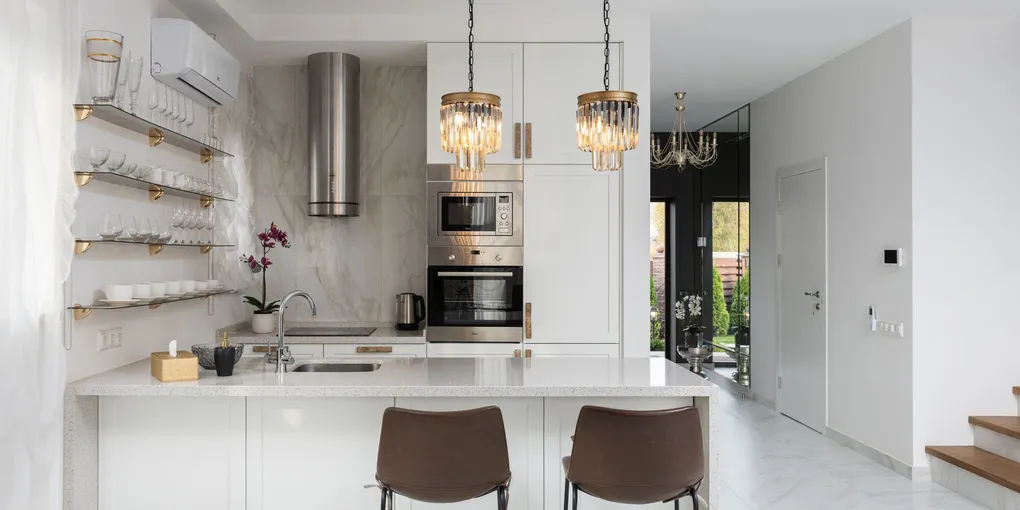
Mini split installation costs $2,000–$5,500 for a single-zone system (one indoor unit + one outdoor unit) professionally installed. Multi-zone systems cost $4,000–$12,000 for 2–4 zones. The system itself costs $700–$2,500; installation labor runs $800–$2,500 per zone. Mini splits qualify for the 25C federal tax credit — up to 30% of cost, $600 maximum per year.
Frequently Asked Questions
How much does a mini split cost to install?
Mini split installation costs: single-zone 9,000 BTU (750 sq ft) $2,000–$4,000; single-zone 12,000 BTU (1,000 sq ft) $2,200–$4,500; single-zone 18,000 BTU (1,500 sq ft) $2,500–$5,500; single-zone 24,000 BTU (2,000 sq ft) $3,000–$6,000; 2-zone multi-split $4,000–$8,000; 3-zone multi-split $5,500–$11,000; 4-zone multi-split $7,000–$14,000. Unit-only cost (without installation): $500–$2,000 for single-zone; $1,500–$4,000 for multi-zone outdoor unit. Installation labor: $500–$1,500 per zone. Permit: $150–$400.
What is a mini split and how does it work?
A mini split (ductless mini split, ductless heat pump) consists of an outdoor compressor/condenser unit connected via refrigerant lines to one or more indoor air handlers. Each indoor unit mounts high on a wall or ceiling and conditions the room directly — no ductwork required. Mini splits both heat and cool (they are heat pumps) and are extremely energy-efficient, with SEER ratings of 18–30+ versus 14–16 for central AC. Primary use cases: rooms without existing ductwork (additions, garages, sunrooms); zones with comfort problems in central HVAC homes; heating and cooling a single room more efficiently than running whole-house HVAC; replacing window AC units with a more efficient and permanent solution.
What size mini split do I need?
Mini split sizing rule of thumb: 20 BTU per sq ft in a typical room. 400 sq ft: 9,000 BTU; 500–600 sq ft: 12,000 BTU; 800–1,000 sq ft: 18,000 BTU; 1,200–1,500 sq ft: 24,000 BTU. Adjust upward for: high ceilings (over 9 ft), lots of windows or south/west sun exposure, poor insulation, very hot or cold climate. Adjust downward for: well-insulated space, minimal windows, mild climate. The most common mistake is over-sizing — an oversized mini split short-cycles (turns on and off too frequently) and doesn't dehumidify properly, leaving the room feeling cool but clammy. Proper sizing is more important for mini splits than for central AC because each unit conditions independently.
Can I install a mini split myself?
DIY mini split installation (using pre-charged line sets or DIY-friendly systems like Mr. Cool DIY, Senville, or Pioneer) is feasible for mechanically skilled homeowners. Mr. Cool DIY units use quick-connect pre-charged line sets — no EPA 608 certification or vacuum pump required; the refrigerant is factory-sealed. Traditional mini split installation requires EPA 608 certification to handle refrigerant, a vacuum pump, and manifold gauges — not practical for DIY. DIY installation cost: $700–$1,800 for a Mr. Cool DIY system (versus $2,000–$4,500 professionally installed). DIY time: 4–8 hours. Permit still required in most jurisdictions regardless of DIY vs. professional installation.
What is the SEER rating and why does it matter?
SEER (Seasonal Energy Efficiency Ratio) measures cooling efficiency — higher is better. Minimum SEER for mini splits sold in the US as of 2023: SEER2 14.3 for most regions. Quality mini splits range from SEER 18 to SEER 30+. A SEER 20 unit is 40% more efficient than a SEER 14 central AC — significant on annual operating cost. Cost impact: a 12,000 BTU (1-ton) mini split running 1,000 hours/year at SEER 20 vs. SEER 14 saves roughly $80–$120/year in electricity at average US rates. Over 15–20 years, the efficiency difference of a premium SEER 22+ unit vs. a budget SEER 16 unit can save $1,000–$2,000. For the 25C federal tax credit, the unit must meet specific SEER2 thresholds.
Is a mini split worth it vs. central air conditioning?
Mini splits vs. central AC: mini splits are better for homes without existing ductwork (the ductwork cost for central AC often exceeds $8,000–$15,000 in a ductless home); for additions, garages, and spaces where running ductwork is impractical; and for zone control (each indoor unit is independently controlled). Central AC is better for large whole-house cooling needs (multi-zone mini split systems covering a whole house cost more than central AC with existing ductwork); and for homes where ductwork already exists and is in good condition. The $2,500 cost to cool a room addition with a mini split vs. extending ductwork ($800–$2,000) often favors the mini split for additions specifically.
Mini split installation costs $2,000–$5,500 for a single-zone system (one indoor unit + one outdoor unit) professionally installed. Multi-zone systems cost $4,000–$12,000 for 2–4 zones.
Mini splits have become the go-to solution for cooling and heating unconditioned spaces and zone-controlled rooms. Their efficiency (18–30 SEER versus 14–16 for central AC) and elimination of ductwork make them cost-competitive over 10–15 years despite higher upfront costs, especially for additions and rooms without existing ductwork.
Mini Split Cost by System Size
| System | BTU | Sq Ft Coverage | Installed Cost |
|---|---|---|---|
| Single-zone, 9K BTU | 9,000 | 350–500 sq ft | $2,000–$4,000 |
| Single-zone, 12K BTU | 12,000 | 500–700 sq ft | $2,200–$4,500 |
| Single-zone, 18K BTU | 18,000 | 750–1,000 sq ft | $2,500–$5,500 |
| Single-zone, 24K BTU | 24,000 | 1,000–1,500 sq ft | $3,000–$6,500 |
| 2-zone multi-split | 18,000–27,000 | 2 rooms | $4,000–$8,000 |
| 3-zone multi-split | 27,000–36,000 | 3 rooms | $5,500–$11,000 |
| 4-zone multi-split | 36,000–48,000 | 4 rooms | $7,000–$14,000 |
Prices above are fully installed (unit + labor + electrical + permit). Unit-only purchase costs $700–$2,500 for single-zone systems and $1,500–$4,500 for multi-zone outdoor units.
Cost Breakdown: What You’re Paying For
| Component | Typical Cost | Notes |
|---|---|---|
| Mini split unit (single-zone) | $700–$2,500 | Varies by brand, BTU, and SEER rating |
| Multi-zone outdoor unit | $1,500–$4,000 | Additional indoor units $300–$800 each |
| HVAC installation labor | $500–$1,500 per zone | Line set routing, refrigerant, startup |
| Electrical hookup | $150–$500 | 240V dedicated circuit; more if panel is full |
| Permit + inspection | $150–$400 | Most jurisdictions require it |
| Line set cover (exterior) | $50–$200 | For visible exterior wall runs |
Labor is the key variable. Complex installations (long line set runs, attic-mounted indoor units, difficult access) push toward the high end. Simple installations (unit on exterior wall, panel nearby) are faster and cheaper.
Mini Split Brands: Which to Choose
| Brand | SEER Range | Warranty | Best For |
|---|---|---|---|
| Mitsubishi | 20–30+ SEER | 12 years (compressor) | Best overall; longest lifespan; Hyper Heat models for cold climates |
| Daikin | 17–28 SEER | 10 years | Professional grade; very quiet; strong performance |
| Fujitsu | 16–25 SEER | 10 years | Excellent cold-climate performance; reliable |
| LG | 16–24 SEER | 7 years | Good value at mid tier; smart home integration |
| Gree | 16–22 SEER | 7 years | Budget-conscious; owned by Daikin parent company |
| Mr. Cool DIY | 16–21 SEER | 5 years | DIY-only; pre-charged line sets; no EPA cert needed |
| Pioneer | 17–22 SEER | 5 years | Budget DIY-compatible; good value |
Premium (Mitsubishi, Daikin, Fujitsu) are the industry standards for HVAC contractors. Expect a 15–20 year service life with proper maintenance.
Mid-range (LG, Gree) offer good performance at 15–20% lower cost than premium brands, with shorter but still acceptable service life.
DIY brands (Mr. Cool, Pioneer, Senville) are designed for homeowner installation and use pre-charged, quick-connect line sets that don’t require an EPA certification or vacuum pump.
DIY Mini Split Installation Cost
The Mr. Cool DIY line makes DIY installation feasible without refrigerant handling certification:
| System Size | Mr. Cool DIY Unit Cost | DIY Total (unit + electrical) | Pro Installed Cost |
|---|---|---|---|
| 9K BTU | $900–$1,200 | $1,100–$1,700 | $2,000–$4,000 |
| 12K BTU | $1,000–$1,400 | $1,200–$1,900 | $2,200–$4,500 |
| 18K BTU | $1,200–$1,700 | $1,400–$2,200 | $2,500–$5,500 |
DIY savings: $800–$2,500 per zone depending on system size.
DIY realistic assessment: The installation involves drilling a 3-inch core through an exterior wall, mounting the indoor and outdoor units, connecting the pre-charged line set, running the condensate drain, and wiring to a disconnect box. Mechanically inclined homeowners with a cordless drill and a basic comfort level with home projects can complete this in 4–8 hours. You still need a permit in most jurisdictions, and most areas require inspection by a licensed inspector.
Warning: Some manufacturers (including Mr. Cool) require a licensed HVAC contractor to do the refrigerant connection for warranty validity on certain models — check your specific model’s warranty terms before purchasing for DIY.
Federal Tax Credit for Mini Splits (2026)
The 25C Energy Efficient Home Improvement Credit covers qualifying mini splits through 2032:
- Credit amount: 30% of installed cost (unit + labor)
- Annual cap: $600 for qualified heat pump systems
- Qualification threshold: SEER2 ≥ 15.2 and EER2 ≥ 11.7 for split systems (most modern mini splits qualify)
- Eligible properties: primary residence only (existing homes, not new construction)
How to claim: Get a Manufacturer Certification Statement from your contractor or unit documentation. File IRS Form 5695. The credit applies against your tax liability — it’s a true credit, not a deduction.
Utility rebates: Many utilities offer $200–$600 per zone for qualifying mini splits, stackable with the federal credit. Check DSIRE or your utility’s website before purchasing.
Total credit example: A 2-zone mini split at $7,000 installed = $2,100 federal credit (capped at $600) + potential $400–$1,200 in utility rebates = $1,000–$1,800 in total incentives.
Mini Split vs. Window AC vs. Central Air
| Factor | Mini Split | Window AC | Central AC |
|---|---|---|---|
| Upfront cost (single room) | $2,000–$4,500 | $150–$600 | $3,000–$8,000+ if ductwork needed |
| Efficiency (SEER) | 18–30 | 10–12 | 14–18 |
| Heating? | Yes (heat pump) | No | Separate furnace |
| Noise level | Very quiet | Moderate | Moderate |
| Appearance | Wall-mounted, unobtrusive | Visible in window | Invisible (vents) |
| Installation | Professional or DIY | DIY | Professional required |
| Lifespan | 15–20 years | 8–12 years | 12–18 years |
| Permits required | Yes (most areas) | No | Yes |
Mini splits win on efficiency and heating capability. Window units win on upfront cost. Central AC wins when ductwork already exists and you’re cooling a whole house.
When Mini Splits Are the Right Choice
Mini splits make financial and practical sense when:
- No existing ductwork: Adding ductwork for central AC costs $8,000–$15,000 in a typical home. A 2–3 zone mini split for the same price or less conditions the spaces that need it.
- Additions and ADUs: Garages, sunrooms, guest houses, converted basements — any space not served by existing ductwork.
- Zone control problems: If certain rooms are always hot or cold while running central HVAC, a supplemental mini split in those zones solves the problem for $2,000–$4,000 vs. a full duct redesign.
- Replacing window units: A single-zone mini split at $2,000–$4,000 pays for itself in 5–8 years vs. the energy waste of a window unit — and provides heating too.
- Cold climates with electric backup: Modern cold-climate mini splits (Mitsubishi Hyper Heat, Daikin, Fujitsu) operate efficiently down to -13°F to -22°F, making them viable primary heat sources in place of electric resistance heat.
Finding a Mini Split Installer
Not all HVAC contractors install mini splits — it’s specialty work. When calling for quotes, ask:
- How many mini split systems have you installed? — 10+ installations is the minimum experience level to ask for.
- What brands do you work with? — Mitsubishi and Daikin have certified Diamond/Elite contractor programs; certification indicates trained installation.
- Do you hold EPA 608 certification? — Required to handle refrigerant; no exception.
- Will you pull the permit and schedule inspection? — If they say “we can skip the permit,” do not hire them. Unpermitted mini split installations can void homeowners insurance and create problems at home sale.
- Is the unit manufacturer warranty honored with your installation? — Some manufacturers require their authorized contractors for full warranty coverage.
Get at least 3 quotes for any multi-zone system. Single-zone quotes from well-reviewed HVAC companies don’t usually require 3 bids — but compare against the DIY option if budget matters.
Maintenance Costs to Budget
Mini splits have low maintenance costs but are not zero:
| Service | Frequency | Cost |
|---|---|---|
| Filter cleaning | Monthly (DIY) | $0 |
| Coil cleaning (indoor) | Annually | $100–$200 per unit |
| Outdoor unit cleaning | Annually (DIY) | $0–$50 |
| Refrigerant check | Every 2–3 years | $75–$150 |
| Annual tune-up (HVAC tech) | Annually | $80–$150 per system |
Most issues arise from dirty filters (reduces efficiency, causes icing) and dirty coils. Regular cleaning extends service life significantly.
Regional Mini-Split Installation Cost Variations
HVAC labor and equipment pricing varies significantly by region:
| Region | Single Zone (12,000 BTU) | Dual Zone (2 heads) | Whole Home (4 zones) |
|---|---|---|---|
| Northeast (NY, MA, NJ) | $3,000–$5,500 | $5,500–$9,500 | $10,000–$18,000 |
| Mid-Atlantic (DC, MD, VA) | $2,800–$5,000 | $5,000–$8,800 | $9,500–$17,000 |
| Southeast (FL, GA, TX) | $2,200–$4,200 | $4,000–$7,500 | $8,000–$14,500 |
| Midwest | $2,400–$4,500 | $4,300–$7,800 | $8,500–$15,000 |
| Pacific (CA, WA, OR) | $2,800–$5,200 | $5,200–$9,000 | $9,800–$17,500 |
Prices include equipment and installation. Electrical panel upgrade ($800–$2,000) may be required for multi-zone systems. Cold-climate mini-splits (Mitsubishi Hyper Heat) required in zones 5–7 add $500–$1,500 to equipment cost.
Mini-Split Brand Comparison
| Brand | SEER2/HSPF2 | Price Range (equipment) | Best For | Notes |
|---|---|---|---|---|
| Mitsubishi (M-Series/H2i) | 19–33 SEER2 / 12–14 HSPF2 | $900–$3,500 per zone | Best cold-climate performance; premium quality | Industry gold standard; Hyper Heat maintains capacity to -13°F |
| Daikin (Aurora/Emura) | 18–28 SEER2 / 11–13 HSPF2 | $800–$3,000 per zone | Mid-tier value; growing US network | Good performance; Aurora series for cold climates; competitive pricing |
| LG (Dual Inverter/Art Cool) | 17–25 SEER2 / 10–12 HSPF2 | $700–$2,500 per zone | Design-conscious buyers; mid-range | Art Cool series has premium aesthetics; good overall reliability |
| Fujitsu (Halcyon/XLTH) | 19–29 SEER2 / 12–14 HSPF2 | $850–$3,200 per zone | Cold-climate reliability; quiet operation | XLTH series rated to -15°F; excellent cold weather performance |
| Senville (SENA/LETO) | 17–22 SEER2 | $400–$1,200 per zone | Budget installs; supplemental heating | Lower price tier; functional quality; limited cold-climate performance |
| Gree (Sapphire/Vireo) | 16–22 SEER2 | $350–$1,100 per zone | Budget installations | Chinese-manufactured; acceptable quality for mild climates; limited cold performance |
Mitsubishi and Fujitsu are the premium tier for cold-climate applications. Daikin and LG offer excellent value for moderate climates. Avoid budget brands for primary heating in cold regions — their efficiency drops sharply below 20°F.
Questions to Ask Your Mini-Split Installer
- Is this a single-zone, multi-zone, or multi-head single-zone system, and which outdoor unit is included? — a multi-head system shares one compressor across multiple indoor units (less expensive, less flexible); a multi-zone system has a larger compressor with modulated output per zone (more efficient, higher cost); confirm the outdoor unit model and rated capacity matches the total load of all indoor heads
- What BTU capacity is correct for each room, and how did you calculate it? — proper sizing requires calculating each room’s heat gain/loss (square footage, windows, insulation level, ceiling height, climate); an oversized head in a small room short-cycles and loses dehumidification efficiency; ask to see the sizing calculation or load estimate for each zone before accepting any equipment recommendation
- Does the installation include running a new dedicated electrical circuit, and is the electrical permit included? — each mini-split outdoor unit requires a dedicated 240V circuit; ask whether a new circuit is included in the quote or priced separately, whether it requires a panel upgrade, and whether the electrical permit and inspection are included — unlicensed electrical work on an HVAC installation is a common shortcut that creates safety and insurance risk
- How will the refrigerant line set be routed, and how will it be concealed? — line sets running along the exterior of the house are functional but visually prominent; ask whether the installer will use conduit/line-hide covers, route through the wall if feasible, or leave exposed copper on the exterior; also confirm the line set length and whether it affects the unit’s rated capacity (long line sets reduce efficiency)
- What is the warranty on equipment and labor, and are you a factory-authorized installer? — Mitsubishi and Daikin require factory-authorized installers for extended warranty coverage; ask whether the contractor is authorized for the brand being installed, what the standard and extended warranty terms are, and whether annual maintenance is required to keep the warranty valid
Related Reading
- Central Air Conditioning Installation Cost
- AC Repair Cost
- Heat Pump Installation Cost
- Electrician Cost
- HVAC Maintenance Checklist
- Annual Home Maintenance Schedule
- Determine the right number of zones before sizing units
A zone is any indoor air handler with its own thermostat — each zone can be independently controlled. Design your zones around spaces that have different heating/cooling needs or occupancy patterns: bedroom zone (cooler at night, occupied at night), living room zone (warmer in day, occupied in evening), home office zone (occupied during work hours only). Mini splits allow true independence — setting one zone to 68°F and another to 72°F simultaneously, which is impossible with single-thermostat central AC. More zones means more indoor units and a larger or additional outdoor unit. Most residential installations are 1–3 zones.
- Size the outdoor unit correctly for multi-zone systems
Multi-zone mini split systems have one outdoor unit serving multiple indoor units — the outdoor unit must be sized to the total load of all indoor units simultaneously. In practice, not all zones are always running at full capacity, but the outdoor unit should be sized at 100% of total indoor unit BTU to handle worst-case simultaneous demand. Example: 3-zone system with 9,000 + 12,000 + 9,000 BTU = 30,000 BTU (2.5-ton) outdoor unit minimum. Common mistake: undersizing the outdoor unit to save cost — the system underperforms on hot or cold peak days when multiple zones need full capacity.
- Plan the line set routing before ordering the system
The refrigerant line set (the copper pipes connecting outdoor to indoor units) runs through a 3-inch hole in the exterior wall. Routing this line set is the most challenging installation step. Ideal routes: through an interior closet or mechanical space to minimize visible exterior conduit; through an exterior wall directly behind the indoor unit (shortest run). Line sets exposed on exterior walls are covered with aluminum or plastic lineset covers ($15–$40 per section) for a finished appearance. Longer line sets (over 25 ft) may require additional refrigerant charge — ask your installer if the unit comes pre-charged for your line set length.
- Hire an HVAC contractor with mini split installation experience
Mini split installation is specialty work — not all HVAC contractors are experienced with ductless systems. Ask: 'How many mini split systems have you installed?' Minimum 10–20 installations is a sign of experience. Also confirm they hold EPA 608 certification (required to handle refrigerant), carry liability insurance and workers' comp, and will pull the required permit. Mini split warranty: most manufacturers (Mitsubishi, Daikin, LG, Fujitsu) offer 5-year parts/compressor warranties, but many require professional installation for warranty validity. DIY or uncertified installation may void the manufacturer warranty.
- Claim the 25C federal tax credit and any utility rebates
The federal 25C Energy Efficient Home Improvement Credit covers mini splits: 30% of cost (unit + installation) up to $600 per year for qualified HVAC equipment through 2032. To qualify: the unit must meet SEER2 15.2 minimum (most modern mini splits qualify); must be installed in your primary residence; must be an existing home (not new construction). Get documentation from your contractor: a Manufacturer Certification Statement and the model number for your tax return. Also check your utility company for rebates — many utilities offer $200–$600 per zone for high-efficiency mini split installation, stackable with the federal credit.
Free: 10-Point Home Maintenance Checklist
Prevent costly repairs with this seasonal checklist. Save hundreds every year by catching problems early.
Your checklist is ready!
Open Checklist →Something went wrong. View the checklist here.