How to Resurface a Concrete Patio: A Complete DIY Guide
Restore a pitted, stained, or worn concrete patio with resurfacer — no full replacement needed.
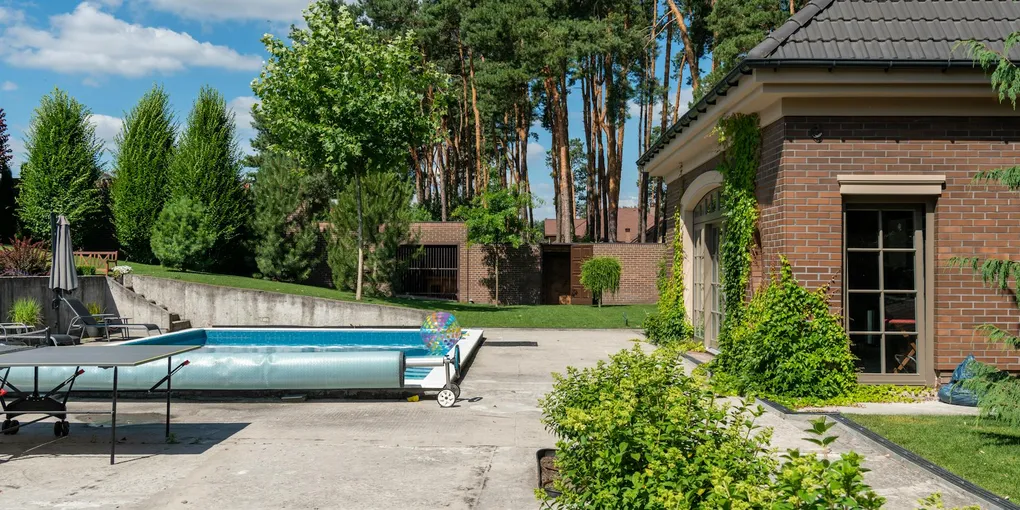
Resurfacing a concrete patio: (1) Patch any cracks first with concrete crack filler — resurfacer bonds to sound concrete, not open cracks. (2) Power wash the patio and let it dry. (3) Etch the surface with concrete etcher or muriatic acid solution (1 part acid to 10 parts water) to open the pores for bonding — rinse thoroughly. (4) Dampen the concrete just before applying (not wet, not dry). (5) Mix concrete resurfacer (Quikrete, Sakrete) per label — consistency like maple syrup. (6) Pour and spread with a squeegee or long-handled floor squeegee in thin 1/8 to 1/4 inch layers. (7) Broom-finish for traction before it sets. (8) Protect from foot traffic 6 hours; vehicles 24 hours. Surface temp must be 50–90 F during application and curing. A 200 sq ft patio takes about 2 hours.
Frequently Asked Questions
How thick can you apply concrete resurfacer?
Most concrete resurfacers are designed for thin applications — 1/16 inch to 1/2 inch. For deeper depressions, fill low spots with a concrete patching compound first, let it cure, then apply the resurfacer as a skim coat over the entire slab. Applying resurfacer too thick in a single coat can cause cracking as it cures.
How long does a resurfaced concrete patio last?
A properly applied concrete resurfacer typically lasts 8 to 15 years with basic maintenance. Lifespan depends on climate, traffic, and whether you seal it. In freeze-thaw climates, apply a penetrating concrete sealer annually to prevent water from entering the resurfaced layer and freeze-cracking it. Without sealing, expect 5 to 8 years before the surface begins to deteriorate again.
Can you resurface concrete that is severely cracked or heaved?
No. Resurfacer is a cosmetic fix for surface-level deterioration — spalling, pitting, minor cracks, and worn surfaces. If the slab has structural cracks where one side is higher than the other, significant heaving from tree roots or frost, or sections that flex when walked on, resurfacing won't address the underlying problem. Those issues require full slab replacement or mudjacking.
Do you need to seal concrete resurfacer after application?
Yes, sealing is strongly recommended. Apply a penetrating concrete sealer or acrylic masonry sealer 24 to 48 hours after the resurfacer has fully cured. Sealing protects the thin resurfaced layer from water infiltration, UV degradation, and staining. In freeze-thaw regions, unsealed resurfacer can begin delaminating within a few seasons.
What temperature do you need to resurface concrete?
Apply concrete resurfacer when air and surface temperatures are between 50°F and 90°F. Do not apply in direct hot sun — the material cures too fast and may crack. Avoid application if rain is expected within 24 hours. Early morning on a cloudy day is ideal: temperatures are moderate and the concrete is not sun-heated.
Can you add color or texture to concrete resurfacer?
Yes. Concrete resurfacer can be tinted with concrete pigment added to the mix. You can also apply a stamped texture with a texture mat or a broom finish while the resurfacer is still wet. For a decorative look, apply a solid-color concrete stain or epoxy coating over cured resurfacer rather than tinting the mix itself — this gives you more color control and an additional protective layer.
Resurfacing a concrete patio: (1) Patch any cracks first with concrete crack filler — resurfacer bonds to sound concrete, not open cracks. (2) Power wash the patio and let it dry.
A worn concrete patio does not have to mean a full tear-out and replacement. Concrete resurfacer — a polymer-modified cement product — bonds to existing concrete and creates a fresh surface layer at a fraction of the cost of replacement. A 40-pound bag covers 50 to 100 square feet and costs around $25 to $35. For a 200-square-foot patio, the total material cost runs $80 to $150, versus $1,500 to $4,000 for replacement.
The key to a successful resurface job is preparation. Resurfacer bonds to clean, sound concrete. Skip the prep work and the new layer will delaminate within a season.
What You Need
- Concrete resurfacer — Quikrete or Rapid Set are the most widely available
- Concrete cleaner and degreaser — removes oil stains and efflorescence before bonding
- Concrete patching compound — for filling cracks and deep pits before resurfacing
- Power washer or pressure washer — 1,500 PSI minimum to open the concrete surface
- Long-handled squeegee — for spreading resurfacer evenly across the slab
- Masonry sealer — applied after curing to protect the new surface
Assess the Condition of Your Concrete
Before buying materials, walk the slab and identify what you are dealing with.
Good candidates for resurfacing:
- Spalled or pitted surface (the top layer is flaking off but the slab is otherwise solid)
- Surface staining or discoloration that won’t power-wash off
- Worn finish that feels rough or dusty
- Minor hairline cracks (under 1/4 inch wide) with no height difference between sides
- Concrete that is 10 to 30 years old and structurally intact
Not suitable for resurfacing:
- Cracks where one side is higher than the other (heaving or settlement)
- Sections that flex or bounce when walked on (void beneath)
- Active water seeping through the slab from below
- More than 25% of the surface area spalled deeper than 1/4 inch
- Slab that is completely deteriorated or crumbling
Run a simple water test: splash water on the concrete. If it absorbs quickly, the surface is open and ready to bond. If it beads up, there may be old sealer or oil contamination that needs more aggressive cleaning.
Step 1: Repair Cracks and Low Spots First
Resurfacer is too thin to bridge existing cracks or fill significant depressions. Fix these first with a concrete patching compound, then resurface over everything once patches have cured.
Filling cracks:
- Wire brush the crack to remove all loose material.
- Blow out debris with compressed air or vacuum thoroughly.
- For cracks over 1/8 inch: apply concrete patch material, pressing firmly into the crack.
- Level flush with surrounding surface using a putty knife.
- Let cure completely — minimum 24 hours, ideally 48 hours.
Filling low spots and pits:
- For pits under 1/2 inch deep: the resurfacer itself can fill these if you work it in thoroughly.
- For depressions over 1/2 inch: fill with concrete patch, cure fully, then resurface over.
Step 2: Clean the Surface Thoroughly
Concrete resurfacer will not bond to dirty, oily, or sealed concrete. This step is non-negotiable.
Degrease first:
- Apply concrete cleaner and degreaser to the entire slab surface.
- Scrub with a stiff brush.
- Let dwell for 10 to 15 minutes.
- Rinse thoroughly.
Power wash:
- Set the pressure washer to at least 1,500 PSI.
- Use a 25-degree tip and hold the wand 6 to 8 inches from the surface.
- Work in overlapping passes across the entire patio.
- Pay extra attention to corners, edges, and areas with visible staining.
- Allow the concrete to dry completely before applying resurfacer — 24 to 48 hours depending on weather.
Test for residual sealer: After washing and drying, drip water on the surface in several spots. It should absorb within a few seconds. If it still beads up, apply a concrete etcher (muriatic acid solution) to open the surface, rinse thoroughly, and allow to dry again.
Step 3: Mask the Edges and Prep the Work Area
- Tape expansion joints with masking tape to keep them clear. Resurfacer filling an expansion joint will crack as the slab moves.
- Tape off adjacent surfaces — grass edges, walls, stairs — to keep overspray contained.
- Have a garden hose ready nearby for pre-wetting the slab.
- Mix resurfacer in a bucket (do not mix more than you can spread in 20 minutes).
Step 4: Mix the Concrete Resurfacer
Follow the manufacturer’s ratio exactly. For Quikrete Concrete Resurfacer, the standard mix is approximately:
- 1 part water to 7 parts resurfacer powder by weight
- Target consistency: thick pancake batter that holds its shape but flows off a trowel slowly
Mix with a drill and mixing paddle for 5 full minutes. Undermixed resurfacer has dry clumps that create weak spots. Let the mix rest 1 minute after mixing, then stir again briefly before applying.
Working time: Resurfacer has a pot life of approximately 20 minutes at 70°F. In hot weather, it sets faster. Mix only what you can spread in 15 to 20 minutes.
Step 5: Pre-Wet the Slab
Immediately before applying resurfacer, dampen the concrete with a hose or a wet mop. The concrete should be damp (Saturated Surface Dry — SSD) but with no standing water puddles. This prevents the dry concrete from pulling moisture out of the resurfacer too quickly, which causes cracking and poor adhesion.
On a hot sunny day, the concrete may dry before you finish spreading. Have a helper pre-wet a section immediately before you apply resurfacer to that section.
Step 6: Apply the Resurfacer
Work in sections of 50 to 100 square feet at a time.
- Pour resurfacer directly onto the pre-wetted slab in a ribbon or puddle in the center of the section.
- Spread with a long-handled squeegee using firm pressure to work the material into the surface. Use a back-and-forth sweeping motion.
- Work to a consistent thickness of approximately 1/8 to 1/4 inch across the entire section.
- Feather the edges where sections meet to avoid a visible line between pours.
- Move quickly — resurfacer begins to stiffen within 20 minutes.
Tips for spreading:
- Pull the squeegee toward you rather than pushing — you get better control of the thickness.
- Overlap each squeegee pass by 3 to 4 inches.
- If resurfacer starts to stiffen before you reach the edge of the section, mist lightly with water and continue — do not add water to the mix bucket.
Step 7: Create a Non-Slip Texture
Before the resurfacer fully sets (while it still has a slight sheen), add texture for safety.
Broom finish: Draw a stiff-bristle push broom across the surface in parallel lines. This creates the classic brushed concrete look and provides excellent slip resistance. Vary the broom angle between sections for a more natural appearance.
Other texture options:
- Rock salt finish: Scatter rock salt over the wet surface, press in with a trowel, then wash out after curing
- Stamped texture: Press a concrete texture mat into the wet surface and peel away
- Trowel finish: Flat-trowel smooth for a polished look (least slip-resistant — not ideal for an exterior patio)
Step 8: Cure and Seal
Curing time:
- Light foot traffic: 6 to 8 hours
- Full foot traffic: 24 hours
- Outdoor furniture: 48 to 72 hours
- Full cure (hardest surface): 28 days
Keep the surface moist during the first 24 hours of curing if the weather is hot and dry — mist lightly with a hose every few hours or cover with plastic sheeting.
Sealing: Apply a penetrating concrete sealer or acrylic masonry sealer 48 hours after completing the resurfacer application. Sealing is critical for patios in freeze-thaw climates. Apply according to the label — most penetrating sealers are rolled on, allowed to absorb, and any excess wiped off before it dries.
Reseal every 2 to 3 years to maintain protection.
Troubleshooting Common Problems
Resurfacer peeling or delaminating: The most common cause is insufficient surface preparation — oil contamination, old sealer, or inadequate cleaning. Strip the peeling area, clean aggressively, and re-apply.
Cracking during cure: Usually caused by applying too thick in a single coat, applying in hot direct sun, or not pre-wetting the slab. Keep thickness under 1/4 inch per coat and work in the shade when possible.
Uneven color or texture: This is almost always a consistency issue — the mix was too thin in some spots and too thick in others. Work to a consistent 1/8-inch thickness across all sections.
Bubbles in the surface: Caused by applying over a slab with voids below, or by working resurfacer into a saturated slab (too wet). Let the slab reach SSD — damp but not puddled — before applying.
Cost Breakdown
| Item | DIY Cost |
|---|---|
| Concrete resurfacer (4 bags for 200 sq ft) | $100–$140 |
| Concrete patch compound | $15–$25 |
| Concrete cleaner/degreaser | $12–$20 |
| Masonry sealer | $25–$45 |
| Squeegee (if needed) | $20–$35 |
| Total DIY | $170–$265 |
| Contractor cost | $800–$2,000 |
| Full slab replacement | $2,000–$6,000 |
Resurfacing is one of the best value-per-dollar projects in home repair. A $200 material investment can add years of life to a slab that would otherwise cost thousands to replace.
When to Call a Contractor
- The slab has areas with vertical displacement (uneven crack edges) — structural issue beyond resurfacing
- More than 30% of the surface is deeply spalled
- The slab is heaved or has sections that flex underfoot
- You want a decorative overlay (stamped, stained, or exposed aggregate) — contractors have the specialty tools for a cleaner result
- The patio is over 500 square feet — DIY resurfacing a large slab is physically demanding and requires keeping a large area wet simultaneously
Related Reading
- Concrete Driveway Cost — pricing for full concrete replacement
- How to Seal a Driveway — sealing concrete and asphalt after repair
- How to Repair Concrete Cracks — targeted crack repair before resurfacing
- How to Lay a Paver Patio — an alternative to concrete if replacement is needed
- Repair Cracks and Low Spots First
Resurfacer is too thin to bridge existing cracks or fill significant depressions. Fix these first with a concrete patching compound, then resurface over everything once patches have cured.
- Clean the Surface Thoroughly
Concrete resurfacer will not bond to dirty, oily, or sealed concrete. This step is non-negotiable.
- Mask the Edges and Prep the Work Area
Tape expansion joints with masking tape to keep them clear. Resurfacer filling an expansion joint will crack as the slab moves.
- Mix the Concrete Resurfacer
Follow the manufacturer's ratio exactly. For Quikrete Concrete Resurfacer, the standard mix is approximately:
- Pre-Wet the Slab
Immediately before applying resurfacer, dampen the concrete with a hose or a wet mop. The concrete should be damp (Saturated Surface Dry — SSD) but with no standing water puddles.
- Apply the Resurfacer
Work in sections of 50 to 100 square feet at a time.
Free: 10-Point Home Maintenance Checklist
Prevent costly repairs with this seasonal checklist. Save hundreds every year by catching problems early.
Your checklist is ready!
Open Checklist →Something went wrong. View the checklist here.