How to Install a Bathroom Sink: Drop-In, Undermount, and Pedestal Sink Guide
Complete guide to installing three types of bathroom sinks — drop-in, undermount, and pedestal — including plumbing connections and silicone sealing.
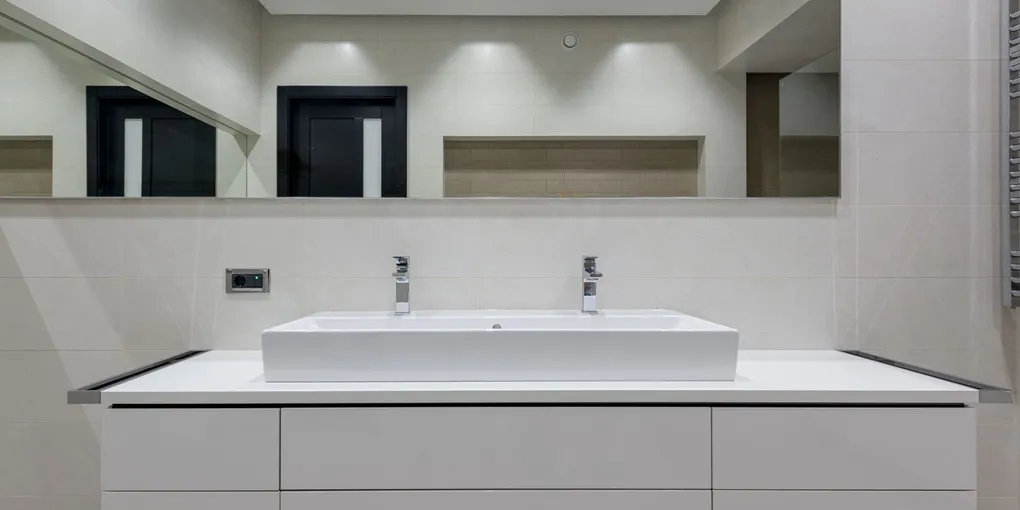
Installing a drop-in bathroom sink: (1) Turn off supply valves under the sink. Disconnect supply lines and P-trap. Remove the old sink. (2) Install the faucet on the new sink before dropping it in — much easier with sink access from above. (3) Apply plumber's putty under the rim (for a drop-in) or silicone for an undermount. (4) Drop the sink into the countertop cutout and secure mounting clips from below. Tighten evenly. (5) Reconnect supply lines: hot to hot (left), cold to cold (right). (6) Reconnect the P-trap. (7) Turn on supply valves slowly and check all connections for leaks. Run water for 2 minutes and inspect underneath. For a pedestal sink: mount the wall bracket first, then hang the basin. For undermount: silicone the rim, drop in, clip from below, grout or caulk the seam.
Frequently Asked Questions
What is the easiest type of bathroom sink to install yourself?
Drop-in sinks are the most DIY-friendly. The rim rests on top of the vanity or countertop, so positioning is forgiving, and the mounting clips are accessible from under the sink. A standard drop-in bathroom sink replacement takes 2–3 hours. Pedestal sinks are moderately easy but require anchoring to wall studs. Undermount sinks are the hardest because the sink hangs from the underside of the countertop and must cure in position overnight.
Do I need a plumber to install a bathroom sink?
Not for a like-for-like replacement. If the existing shutoff valves work, the drain rough-in is in the same location, and you are replacing the same sink style, the plumbing connections — supply lines and P-trap — are straightforward DIY work. Call a plumber if the shutoff valves are corroded and won't fully close, if you are moving the sink location, or if you discover galvanized drain pipes that could crack during work.
How do I connect the drain on a bathroom sink?
Most bathroom sinks use a pop-up drain assembly that links the stopper to a pivot rod and lift rod. Feed the drain flange through the sink hole from above (with plumber's putty or the supplied gasket under it), then thread the locknut onto the flange from below and tighten. Thread the pop-up body onto the drain flange, insert the stopper, connect the pivot rod through the side of the drain body, and clip the clevis strap to the lift rod at the faucet. Adjust the clevis strap position so the stopper opens and closes fully.
How do I install an undermount sink without a professional?
You need two-part epoxy or silicone rated for stone, plus a way to support the sink from below while the adhesive cures — typically 2x4 boards laid across the countertop opening with ratchet straps hanging down to cradle the sink. Apply a bead of silicone to the sink rim, lift the sink into position, attach the mounting clips to the pre-installed studs in the stone, and tighten evenly in a crisscross pattern. Support the sink for 24 hours before removing the bracing.
What size drain do I need for a bathroom sink?
Standard bathroom sink drains are 1-1/4 inch (the drain opening diameter). The P-trap and all piping below also use 1-1/4 inch for most bathroom sinks, though some older homes have 1-1/2 inch drains. Check what your existing drain rough-in uses before buying a pop-up drain assembly or P-trap kit. If the sizes don't match, reducer fittings are available at any hardware store.
How do I seal a drop-in sink to prevent water damage?
Apply a continuous bead of 100% clear silicone caulk around the perimeter of the countertop opening before setting the sink. Once the sink is seated and the mounting clips are tightened, wipe excess silicone from around the rim with a damp paper towel before it skins over. Do not use plumber's putty on a stone, laminate, or cultured marble countertop — the oils in putty stain those surfaces. Silicone is the right call for all modern countertop materials.
Installing a drop-in bathroom sink: (1) Turn off supply valves under the sink. Disconnect supply lines and P-trap.
Installing a bathroom sink is one of the more accessible plumbing DIY projects in the house. The water connections are simple, the drain is straightforward, and most of the work happens in a small, easy-to-access space. The main decisions are which sink style you are working with and whether the shutoff valves under the sink are in usable shape.
This guide covers all three common bathroom sink styles: drop-in, pedestal, and undermount. Choose the section that matches your project and skip the rest.
Sink Style Comparison
| Style | Difficulty | Countertop Required | Typical DIY Time | Best For |
|---|---|---|---|---|
| Drop-In | Easy | Any | 2–3 hours | Vanity cabinets, any countertop material |
| Pedestal | Moderate | None | 2–4 hours | Small bathrooms, half-baths |
| Undermount | Hard | Stone or solid-surface only | 4–6 hours | Clean countertop look, easier cleaning |
| Vessel | Moderate | Any with drain cutout | 2–3 hours | Contemporary style, taller vanities |
Drop-in sinks are the safest first choice for a DIY replacement. Undermount sinks are the trickiest — if the countertop does not have pre-installed mounting studs, you will need epoxy and patience.
What You Need
- Bathroom drop-in sink (or pedestal or undermount, depending on your project)
- Pop-up drain assembly
- P-trap kit, 1-1/4 inch
- Clear silicone sealant
- Sink mounting clips (usually included with the sink)
- Braided supply lines
- Adjustable wrench and channel-lock pliers
- Bucket and rags
- Utility knife
- Plumber’s putty (for porcelain countertops only — not stone or laminate)
Step 1: Shut Off the Water
Before disconnecting anything, close both shutoff valves under the sink — hot on the left, cold on the right. Open the faucet to confirm pressure is released. If either valve does not fully close, stop and replace the valves before proceeding. Working with leaking valves under a sink is not worth the mess.
Disconnect the supply lines from the shutoff valves with an adjustable wrench. Place a bucket under the P-trap and loosen the slip nuts at each end of the trap — at the drain tailpiece above and at the wall stub below. Pull the trap off and empty it into the bucket.
If you have a drain stopper assembly, disconnect the pivot rod from the drain body before attempting to remove the sink. The pivot rod threads through the side of the drain body — squeeze the spring clip and slide it out.
Step 2: Remove the Old Sink
For a drop-in sink, score the silicone bead around the rim with a utility knife. Check under the sink for mounting clips and loosen each one. The sink should lift straight up out of the opening. If it does not move, score the silicone again more aggressively. Clean off all old silicone from the countertop with a plastic scraper and denatured alcohol.
For an undermount sink, the sink hangs below the counter on threaded studs. Loosen the nuts on each stud, support the sink from below, and lower it carefully. Two people are strongly recommended — undermount bathroom sinks are heavier than they look, especially ceramic or porcelain.
For a pedestal sink, unscrew the lag bolt or anchor bolt through the back of the sink into the wall, then lift the basin off the pedestal column. The column usually just rests on the floor — tip it forward and out.
Step 3: Installing a Drop-In Sink
Drop-in sinks are the most forgiving style to install. The rim rests on the countertop and is secured by clips from below.
Install the faucet first. With the new sink on a flat surface, install the faucet, supply line tails, and the pop-up lift rod through the deck holes. This takes 10 minutes on the floor and 30 miserable minutes under the cabinet.
Install the drain flange. Apply a ring of plumber’s putty under the drain flange (for porcelain sinks) or use the rubber gasket supplied with the drain kit (for stone or composite countertops). Drop the flange through the drain hole from above. From below, slide on the rubber gasket, friction ring, and locknut — tighten with channel-lock pliers while holding the flange steady from above with a second pair of pliers. Wipe excess putty from around the flange.
Apply silicone and set the sink. Run a continuous 1/4-inch bead of clear silicone around the perimeter of the countertop opening. Lower the sink straight down into the opening — do not slide it sideways or the silicone will smear unevenly. Press down to seat the rim fully.
Install the mounting clips. From below, hook each clip onto the sink rim’s inner ledge and hand-tighten the screws. Tighten each clip a little at a time in a crisscross pattern so the sink pulls down evenly. Wipe excess silicone from around the rim before it sets.
Step 4: Installing a Pedestal Sink
Pedestal sinks require anchoring to wall studs or using wall anchors — the weight of the sink and the force of leaning on it both go through the wall mount, not the pedestal. The pedestal column is decorative and supports almost no weight.
Locate studs. Use a stud finder to mark stud locations on the wall behind where the sink will sit. Most pedestal sinks have a hanger bracket or two mounting holes in the back of the basin. These need to hit studs or heavy-duty toggle anchors.
Set the pedestal position. Place the pedestal column on the floor and set the basin on top temporarily. Center the setup where you want it, then mark the wall anchor locations through the basin’s mounting holes and the floor anchor location through the pedestal base (if the pedestal has a floor bolt hole).
Mount the wall bracket. Some pedestal sinks use a wall-mounted hanger bracket — attach this to the wall first, leveled, into studs with 3-inch lag bolts. Hang the basin on the bracket.
Level the basin. The basin must be level both front-to-back and side-to-side. Shim the pedestal base if needed before marking the floor anchor location.
Secure the pedestal. Once the basin is level, mark and drill the floor anchor location. Bolt the pedestal column to the floor if the design calls for it. Install lag bolts through the basin’s back mounting holes directly into studs, or use heavy toggle anchors if studs are not in the right location.
Install the faucet and drain. With the basin secured, install the faucet through the top deck holes. Install the pop-up drain assembly the same way as a drop-in sink.
Step 5: Installing an Undermount Sink
Undermount sinks are the hardest because the sink has to be pressed against the underside of the countertop and held there while the adhesive cures. Plan for a full day — the silicone needs 24 hours before the sink is load-bearing.
Check for mounting studs. Stone countertop fabricators typically pre-install threaded mounting studs in the underside of the counter around the sink cutout. If yours does not have studs, you will need a two-part epoxy rated for stone to bond them in.
Build a support rig. Lay two 2x4s across the countertop opening from above. Thread ratchet straps or bungee cords down through the opening to create a sling that cradles the sink from below. This rig will hold the sink in position while the silicone cures.
Apply silicone to the sink rim. Run a 1/4-inch continuous bead of clear silicone around the top flange of the sink — the rim that presses against the underside of the counter.
Lift the sink into position. Hold the sink up against the counter underside, centered in the cutout. The silicone bead should compress slightly against the counter. Use the support rig to hold the sink steady.
Attach the mounting clips. Thread a nut onto each mounting stud coming down from the counter. Tighten each nut a few turns at a time in a crisscross pattern. Do not over-tighten — you want even pressure against the countertop, not a cracked stone slab.
Support for 24 hours. Leave the 2x4 support rig in place for a full 24 hours before removing it. Do not connect plumbing or put any weight on the sink during this time.
Install the faucet and drain after the cure period.
Step 6: Connecting the P-Trap and Drain
Once the sink is mounted and the faucet and drain are installed, the plumbing connections are the same for all three sink styles.
Connect the pop-up linkage. Insert the stopper into the drain body from above. Thread the pivot rod through the side port of the drain body until it clicks into the stopper’s pivot hole. Clip the clevis strap to the pivot rod and connect the clevis strap to the lift rod (the rod that sticks up through the faucet body). Adjust the strap position — the stopper should open when the lift rod is pulled up and close when it is pushed down.
Assemble the P-trap. The tailpiece hangs from the drain body below the sink. The P-trap connects to the tailpiece at the top and to the wall drain stub at the side. Tighten all slip nuts hand-tight plus a quarter turn — over-tightening cracks PVC fittings.
Connect the supply lines. Thread the braided supply lines onto the shutoff valves (hot on left, cold on right) and onto the faucet inlet tails. Hand-tight plus a quarter turn with a wrench. Applying too much torque crushes the rubber gasket and causes slow leaks in 6–12 months.
Step 7: Testing for Leaks
Do not skip the leak test.
- Slowly open the shutoff valves one at a time. Watch every supply line connection for drips.
- Run the faucet for 60 seconds. Check the faucet body, the supply lines, and the shutoff valves with a dry paper towel.
- Plug the drain and fill the sink to within two inches of the overflow port.
- Pull the plug and watch the P-trap joints as the full drain of water passes through.
- Test the pop-up stopper — it should seal completely when closed. Run the faucet with the stopper open and watch the pivot rod port on the drain body for drips.
- Come back in 10 minutes and check every connection again. Slow leaks take time to appear.
If a supply line connection drips, try snugging it a half turn more. If a P-trap slip nut drips, snug it a quarter turn more. If a drip continues after tightening, disassemble, check that the rubber gasket is seated, reassemble.
Related Reading
- How to Replace a Bathroom Faucet
- How to Replace a Bathroom Sink Drain
- How to Install a Bathroom Vanity
- How to Fix a Slow Draining Sink
- Shut Off the Water
Before disconnecting anything, close both shutoff valves under the sink — hot on the left, cold on the right. Open the faucet to confirm pressure is released. If either valve does not fully close, stop and replace the valves before proceeding.
- Remove the Old Sink
For a drop-in sink, score the silicone bead around the rim with a utility knife. Check under the sink for mounting clips and loosen each one. The sink should lift straight up out of the opening.
- Installing a Drop-In Sink
Drop-in sinks are the most forgiving style to install. The rim rests on the countertop and is secured by clips from below.
- Installing a Pedestal Sink
Pedestal sinks require anchoring to wall studs or using wall anchors — the weight of the sink and the force of leaning on it both go through the wall mount, not the pedestal. The pedestal column is decorative and supports almost no weight.
- Installing an Undermount Sink
Undermount sinks are the hardest because the sink has to be pressed against the underside of the countertop and held there while the adhesive cures. Plan for a full day — the silicone needs 24 hours before the sink is load-bearing.
- Connecting the P-Trap and Drain
Once the sink is mounted and the faucet and drain are installed, the plumbing connections are the same for all three sink styles.
Free: 10-Point Home Maintenance Checklist
Prevent costly repairs with this seasonal checklist. Save hundreds every year by catching problems early.
Your checklist is ready!
Open Checklist →Something went wrong. View the checklist here.