How to Fix Peeling Exterior Paint: Prep, Prime, and Repaint (2026)
Peeling exterior paint is almost always a prep failure or a moisture problem. This guide covers diagnosing why paint is peeling, removing all failing paint, priming bare wood correctly, and repainting for a lasting finish.
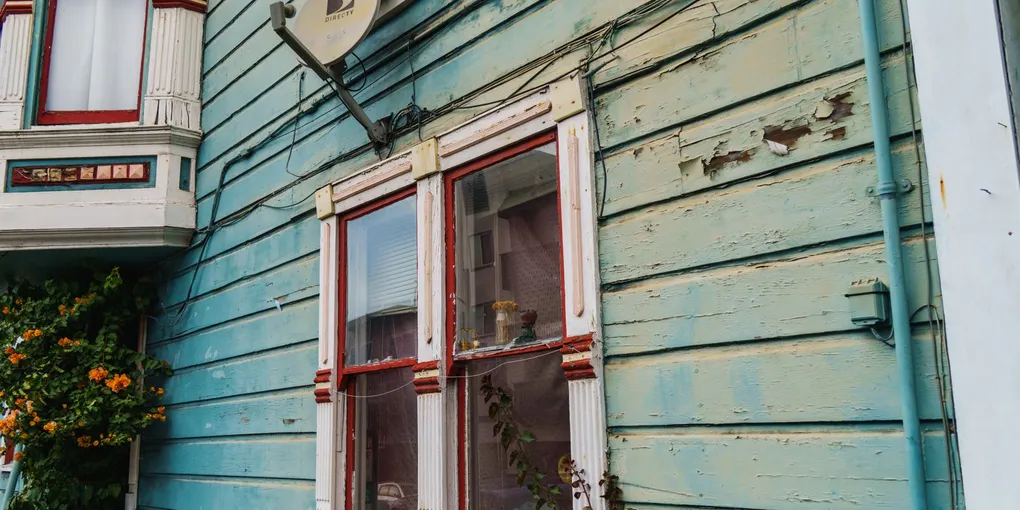
Peeling exterior paint requires removing ALL loose paint before repainting — never paint over peeling paint. Use a paint scraper and 80-grit sandpaper to expose solid paint edges. Prime all bare wood with an oil-based or shellac-based primer before topcoating. If paint keeps peeling in the same spots, find the moisture source (improper flashing, no vapor barrier, missing caulk at penetrations) — fix the moisture first, then repaint.
Frequently Asked Questions
Why does exterior paint peel?
The main causes: (1) Moisture intrusion — water behind the paint layer causes it to bubble and peel. Sources: missing or cracked caulk at windows/doors/trim, improper flashing, humid interior air escaping through walls without a vapor barrier. (2) Improper prep — painting over dirty, chalky, or glossy surfaces. (3) Wrong primer — bare wood painted without primer allows tannins and resins to bleed through and prevent adhesion. (4) Painting in the wrong conditions — painting in direct sun above 90°F, or when temperatures will drop below 50°F within 48 hours. (5) Incompatible paint layers — oil over latex traps moisture at the interface.
Do I need to remove all the old paint down to bare wood?
You must remove all loose and peeling paint. You do not need to strip paint that is still firmly bonded unless you are dealing with lead paint that requires full abatement. Feather the edges of intact paint with 80-grit sandpaper so there is no sharp step between bare wood and the existing paint film. An abrupt paint edge will telegraph through the new paint coat. Sand glossy intact surfaces with 100-grit to improve adhesion.
What primer should I use on bare exterior wood?
Oil-based primer is the best choice for bare wood — it penetrates the wood fibers, seals tannins and resins (critical on cedar and redwood), and provides a stable base for latex topcoats. Water-based primers are faster-drying and lower-VOC but less penetrating. For stained or smoke-damaged areas: shellac-based primer (Zinsser BIN) blocks bleeding better than anything else. Apply primer to all bare areas before applying any topcoat. Do not skip primer on bare wood — it is what actually bonds the paint system to the substrate.
Should I use a pressure washer to prep before painting?
Yes — but with care. Use 1,200–1,500 PSI max with a 25-40 degree nozzle. Higher pressure or narrow nozzles can raise wood grain, force water behind siding, and cause more damage than they fix. Always spray downward (never up into lap joints or under siding). Let the surface dry completely — at least 48 hours in warm weather — before priming. Pressure washing removes chalking, dirt, and mildew that would otherwise destroy adhesion.
How do I deal with mildew before painting?
Mildew must be killed before painting — painting over mildew causes it to grow back through the new paint. Apply a mildew-killing wash: 1 part bleach to 3 parts water with a small amount of dish soap. Let it sit 10–15 minutes, then scrub and rinse thoroughly. Let dry completely. Use an exterior paint with a mildewcide additive in areas prone to mildew (north-facing walls, areas under eaves with poor airflow). Mildewcide only inhibits future growth — it does not kill existing mildew.
Peeling exterior paint requires removing ALL loose paint before repainting — never paint over peeling paint. Use a paint scraper and 80-grit sandpaper to expose solid paint edges.
Repainting peeling exterior paint is mostly prep work. Rushing the prep means the paint will peel again within a season.
What you need
- Paint scraper (rigid, wide blade)
- Sandpaper (80-grit for bare edges, 100-grit for scuffing intact surfaces)
- Orbital sander or sanding block
- Oil-based exterior wood primer
- Exterior latex paint (100% acrylic for best durability)
- Caulk and caulk gun (for sealing gaps before painting)
- Pressure washer or hose
- Drop cloths and painter’s tape
Step 1: Diagnose the moisture source
Before scraping anything, walk the perimeter and look for moisture entry points where paint is failing:
- Cracked or missing caulk at window frames, door frames, trim joints, and siding laps
- Improper or missing flashing above windows, doors, and roof-wall intersections
- Missing drip cap above windows (allows water to run behind siding)
- Bathroom, kitchen, or dryer vents exhausting into a wall cavity rather than outside
Fix moisture sources before painting. Repainting without fixing moisture is guaranteed to fail again in the same spots.
Step 2: Pressure wash and dry
Wash the entire surface to be painted: 1,200–1,500 PSI, 25-40 degree nozzle, downward spray. Add bleach solution if mildew is present (see FAQ).
Let the surface dry completely — minimum 48 hours.
Step 3: Scrape all loose paint
Use a stiff paint scraper to remove every area of loose, peeling, or bubbling paint. Do not try to save paint that doesn’t feel firmly bonded when you push on it.
After scraping, sand the edges of intact paint with 80-grit sandpaper to feather them flush with the bare wood — no sharp steps. Run your hand across to confirm a smooth transition.
Sand any remaining glossy intact paint with 100-grit to improve adhesion.
Step 4: Caulk gaps
Apply paintable exterior caulk (siliconized acrylic or polyurethane) to:
- All gaps between window/door trim and siding
- Butt joints in trim boards
- Any gap where two different materials meet
Smooth caulk with a wet finger. Let cure per manufacturer instructions before priming (usually 4–24 hours).
Step 5: Prime bare wood
Apply oil-based exterior primer to all bare wood areas. Brush the primer into the wood grain — don’t roll prime, brush prime. Back-brush any drips.
Let dry completely (oil primer: 24 hours). Apply a second coat if the wood is very porous or if large areas were stripped.
Step 6: Apply topcoat
Apply 100% acrylic exterior latex in two coats. Brush the first coat into corners and edges, then roll flat surfaces. Apply the second coat after the first is fully dry (check the can — usually 4–6 hours recoat time in good conditions).
Do not paint in direct sun above 85°F — the paint dries too fast to flow and self-level properly.
Related guides
- How to Clean Vinyl Siding — washing and prep for vinyl surfaces
- How to Waterproof a Deck — sealing and staining exterior wood decks
- How to Seal Drafty Windows — sealing windows before painting
- How to Power Wash Your House — full pressure washing technique
- How to Repair Soffit and Fascia — fix rotted or damaged soffit and fascia before repainting
- Diagnose and fix the moisture source
Before scraping, identify why paint is peeling in those spots — painting over the cause guarantees failure again. Check for cracked or missing caulk at window frames, door frames, and trim joints; missing flashing above windows and doors; bathroom or dryer vents exhausting into wall cavities rather than outside. Fix all moisture entry points before proceeding. Repainting without fixing moisture is guaranteed to fail in the same locations within one season.
- Pressure wash, scrape, and sand
Pressure wash the entire surface at 1,200–1,500 PSI with a 25-40 degree nozzle, spraying downward. Add bleach solution (1 part bleach, 3 parts water) if mildew is present — let sit 10 minutes and rinse. Let dry completely (minimum 48 hours). Scrape all loose, peeling, or bubbling paint with a stiff paint scraper. Sand the edges of intact paint with 80-grit to feather them flush with the bare wood — no sharp paint steps. Scuff intact glossy paint with 100-grit to improve adhesion.
- Caulk all gaps
Apply paintable exterior caulk (siliconized acrylic or polyurethane) to all gaps between window and door trim and siding, butt joints in trim boards, and anywhere two different materials meet. Smooth with a wet finger. Let cure per manufacturer instructions before priming (usually 4–24 hours).
- Prime all bare wood
Apply oil-based exterior primer to all bare wood — brush it in, do not roll prime bare wood. Oil-based primer penetrates wood fibers, seals tannins and resins (critical on cedar and redwood), and provides the adhesion bond that the topcoat cannot. For stained or smoke-damaged areas: shellac-based primer (Zinsser BIN) blocks bleed-through better than oil primer. Let oil primer dry 24 hours. Apply a second coat if the wood is very porous or large areas were stripped.
- Apply two coats of topcoat
Apply 100% acrylic exterior latex in two coats. Brush the first coat into corners, edges, and profiles, then roll flat surfaces. Apply the second coat after the first is fully dry (typically 4–6 hours recoat time in good conditions). Do not paint in direct sun above 85°F — the paint dries too fast to flow and self-level. Do not paint when temperatures will drop below 50°F within 48 hours.
Free: 10-Point Home Maintenance Checklist
Prevent costly repairs with this seasonal checklist. Save hundreds every year by catching problems early.
Your checklist is ready!
Open Checklist →Something went wrong. View the checklist here.