Gas Line Installation Cost 2026: $300–$800 Hookup or $15–$25/ft
Gas line: $300–$800 hookup, $15–$25/ft new run. Stove $200–$450, dryer $275–$500, generator feed $500–$1,500. Licensed plumber only — permit and pressure test included in most quotes.
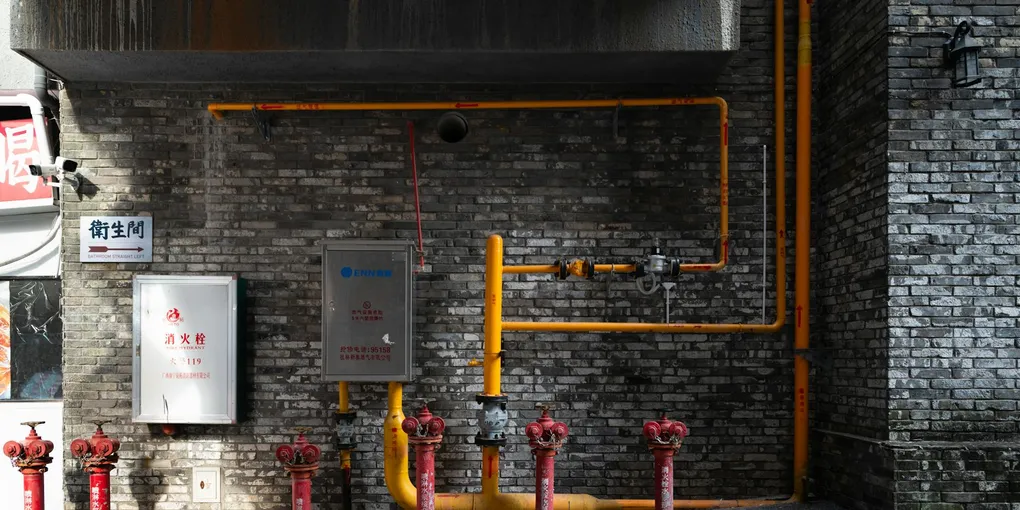
Gas line installation costs $15–$25 per linear foot for new runs, or $300–$800 for a short appliance hookup. A full home gas line project (meter to multiple appliances) runs $1,500–$5,000+. Permits are required and work must be done by a licensed plumber or gas fitter in most jurisdictions. Pressure testing and inspection are required before the line goes into service.
Frequently Asked Questions
How much does gas line installation cost?
Gas line installation costs: short run (under 20 LF, single appliance hookup) $300–$800; standard run (20–50 LF) $500–$1,500; longer run (50–100 LF) $1,000–$2,500; full home gas piping (multiple appliances from meter) $2,000–$6,000. Per-linear-foot rate: $15–$25/LF for black iron pipe; $18–$30/LF for CSST (corrugated stainless steel tubing). Add $150–$500 for permits and inspection. Add $500–$1,500 if the gas meter must be upgraded for higher capacity.
What type of pipe is used for gas lines?
Two common gas pipe types for residential use: (1) Black iron pipe — the traditional material; threaded steel fittings; very durable; used for exposed runs in basements, utility rooms, and outdoors; costs $15–$20/LF installed. (2) CSST (corrugated stainless steel tubing) — flexible yellow-jacketed tubing; faster to install (fewer fittings); approved for most interior runs; requires bonding wire for lightning protection per most codes; costs $18–$25/LF installed. CSST is now the dominant material for new residential gas line runs due to installation speed. Black iron pipe remains preferred for outdoor or high-heat applications (near furnaces, boilers).
Do I need a permit for gas line work?
Yes — a permit is required for virtually all gas line work beyond minor appliance reconnections. The permit process: licensed plumber or gas fitter pulls the permit, installs the line, pressure tests (typically 10–15 PSI for 10 minutes with no pressure drop), then the municipality inspects before covering or activating. Permit cost: $50–$200 depending on jurisdiction. Unpermitted gas work creates serious insurance and liability exposure — most homeowners insurance policies exclude damage from unpermitted work, and an unpermitted gas line discovered at home sale will require remediation.
Can I install a gas line myself?
In most jurisdictions, no — gas line installation requires a licensed plumber, pipefitter, or gas fitter. Even in jurisdictions that technically allow homeowner gas work, it requires pulling a permit and passing inspection. DIY gas work creates serious risks: improper fitting connections cause slow leaks that accumulate to explosive concentrations; incorrect pipe sizing causes appliance performance problems; improper pressure testing misses micro-leaks. Hire a licensed professional for all gas line installation. You can legally connect most gas appliances to existing flexible connectors yourself, but running new pipe or extending the line requires a licensed contractor.
How long does gas line installation take?
Gas line installation timeline: single appliance hookup (short run from existing line) — 2–4 hours; standard run with new branch from main — 4–8 hours; full home gas piping project — 1–3 days. Add 1–2 weeks for permit approval in most jurisdictions (some offer same-day permits for simple work). Inspection scheduling adds 2–5 business days after installation. Plan the full timeline at 2–4 weeks from hiring a contractor to having a live, inspected gas line for a new appliance.
What appliances can be converted to gas?
Appliances that benefit from gas conversion: gas range/stove (most popular conversion — better heat control, lower operating cost); gas dryer (dries faster and at lower cost than electric — conversion runs $300–$800 for a new gas line plus $50–$100 for a gas dryer hookup kit); gas fireplace or fire pit insert (line run to living room or patio — $500–$2,000 depending on distance); tankless water heater (requires dedicated gas line, often a larger pipe size); whole-house generator (standby generator hookup — $500–$1,500 for line; generator itself $3,000–$10,000+). Cooking and heating appliances typically show the fastest payback on conversion cost through lower utility bills.
Gas line installation costs $15–$25 per linear foot for new runs, or $300–$800 for a short appliance hookup. A full home gas line project (meter to multiple appliances) runs $1,500–$5,000+.
Gas line installation is one of the few home improvement projects that genuinely requires a licensed professional — the stakes of a leak are too high for DIY. But knowing the cost structure helps you evaluate quotes, plan the route, and avoid overpaying.
Gas Line Installation Cost by Project Type
| Project | Typical Cost |
|---|---|
| Appliance hookup (short run, existing line) | $300–$800 |
| Standard branch run (20–50 LF) | $500–$1,500 |
| Longer run (50–100 LF) | $1,000–$2,500 |
| Full home gas piping (from meter) | $2,000–$6,000 |
| Outdoor gas line (fire pit, grill) | $400–$1,500 |
| Gas meter upgrade (utility work) | $500–$1,500 |
| Permit and inspection | $50–$200 |
Pipe Type Comparison
| Pipe Type | Cost/LF Installed | Best For |
|---|---|---|
| Black iron pipe | $15–$20 | Outdoor, high-heat, exposed runs |
| CSST (flexible) | $18–$25 | Interior runs, new installations |
| Corrugated PE (underground) | $10–$18 | Buried outdoor runs |
CSST is now standard for most new residential installations — faster to install, fewer fittings, and lower labor cost despite higher material cost.
Common Gas Line Projects and Typical Costs
Gas range conversion (electric to gas): Run a new 3/4-inch gas line from the basement or crawlspace to the kitchen. Typical run: 20–40 LF. Cost: $400–$1,200 including permit, line, shutoff valve, and flexible connector. If the kitchen requires opening walls and patching drywall: add $200–$600.
Outdoor gas fire pit or grill: A dedicated buried line from the house to a patio location (20–50 LF typical). Requires direct-burial rated pipe (PE plastic or coated steel), a shutoff valve at the structure, and a flexible connection at the appliance. Cost: $400–$1,500 depending on distance and site conditions.
Standby generator: Whole-house generators (7.5–22kW) require a dedicated 3/4-inch or 1-inch gas line and often a meter upgrade. The gas line portion runs $500–$2,000; the generator and automatic transfer switch are a separate cost ($3,000–$10,000+). Utilities often require the homeowner to coordinate the meter upgrade.
Gas dryer: Adding a gas dryer where only electric service exists requires a short gas line run (typically 5–20 LF from basement) plus a new 120V outlet (the gas dryer still uses electricity for controls). Gas line portion: $300–$700. Dryer hookup kit: $50–$100.
Permit and Inspection Requirements
| Item | Detail |
|---|---|
| Permit required | Yes — virtually all jurisdictions |
| Who pulls permit | Licensed contractor (not homeowner) |
| Pressure test required | Yes — 10–15 PSI for 10–30 minutes, zero drop |
| Inspection required | Yes — before covering or activating |
| Gas company involvement | Required for meter upgrades; notified for service restoration |
When to Add a Gas Appliance vs. All-Electric
For most cooking and heating applications, gas appliances have lower operating cost than electric (especially vs. electric resistance heating). The breakeven on gas line installation depends on usage:
- Gas range vs. electric: Gas saves $30–$80/year in energy costs. $600 gas line installation breaks even in 8–20 years — marginal unless you value cooking performance.
- Gas water heater vs. electric resistance: Gas saves $200–$400/year. $500–$1,000 line installation breaks even in 1–5 years.
- Gas furnace vs. electric resistance heat: Gas saves $800–$2,000/year in cold climates. Line installation cost typically breaks even in under 2 years.
The heat pump exception: A high-efficiency heat pump (COP 3.0+) running on electricity can match or beat gas on operating cost, especially with low electricity rates or in mild climates. Factor in local utility rates before converting to gas for heating.
Regional Cost Variations
Gas line installation costs track plumber and gas fitter labor rates closely. Gas availability also affects project economics — some rural areas require propane conversion instead of natural gas:
| Region | Short Run (under 20 LF) | Standard Run (20–50 LF) | Full Home Project |
|---|---|---|---|
| Northeast (NY, MA, NJ) | $450–$900 | $800–$2,000 | $3,000–$7,000 |
| Mid-Atlantic (DC, MD, VA) | $400–$800 | $700–$1,800 | $2,500–$6,000 |
| Southeast (FL, GA, TX) | $300–$650 | $550–$1,400 | $1,800–$4,500 |
| Midwest | $325–$700 | $600–$1,500 | $2,000–$5,000 |
| Pacific (CA, WA, OR) | $450–$900 | $800–$2,000 | $3,000–$6,500 |
Propane vs. natural gas: for homes not on the municipal gas grid, propane systems require a buried propane tank in addition to the interior pipe run. Tank installation (300–500 gallon) adds $1,000–$3,000. Propane operating costs are typically 1.5–2× natural gas per BTU.
Gas vs. Electric: When the Line Investment Pays Off
| Application | Gas Annual Savings vs. Electric | Gas Line Payback Period |
|---|---|---|
| Gas range (electric → gas) | $30–$80/year | 8–20 years |
| Gas water heater (electric resistance) | $200–$400/year | 1–5 years |
| Gas dryer (electric → gas) | $50–$100/year | 5–10 years |
| Gas furnace (electric resistance heat) | $800–$2,000/year | Under 2 years |
| Gas fire pit / grill | $50–$100/year | 8–15 years |
The heat pump exception: modern heat pumps at COP 3.0+ can match or beat gas on operating cost depending on local utility rates. If electricity rates are below $0.12/kWh, gas heat rarely wins on economics. Do the math with your local rates before committing to a gas line for heating.
Questions to Ask Your Gas Line Contractor
- Are you licensed for gas line work in this jurisdiction? — gas line licensing is separate from general plumbing in many states; verify the specific credential
- Will you pull the permit yourself, and is the inspection included? — any legitimate gas contractor includes permitting; a contractor who asks you to pull your own permit is avoiding accountability
- What pipe type and size will you use for this run? — should specify CSST or black iron, pipe diameter (3/4-inch or 1-inch), and why
- How will you pressure test, and can I be present? — the pressure test should use nitrogen or air (not gas), 10–15 PSI, 10–30 minutes with zero drop; you should be able to watch the gauge
- Is existing meter capacity adequate for the new appliance? — adding a high-demand appliance (generator, furnace) without checking meter capacity causes performance problems; a good contractor checks before bidding
DIY supplies (if you tackle it yourself)
Related Reading
- How to Fix a Broken Outdoor Gas Line Fitting — repair an existing outdoor gas connection
- Fire Pit Installation Cost — gas fire pit cost including line installation
- Plumber Cost — licensed plumber rates for gas line work
- Water Heater Installation Cost — gas water heater conversion cost
- Generator Installation Cost — standby generator and gas line bundle
- Annual Home Maintenance Schedule
- Get a licensed plumber or gas fitter — don't skip the permit
Gas line work in virtually every U.S. jurisdiction requires a licensed contractor and a pulled permit. The permit is not bureaucratic paperwork — it triggers a pressure test and inspection that confirms the line is leak-free before it goes into service. To hire: ask specifically for a licensed plumber with gas line experience or a dedicated gas fitter (some areas have separate licensing for gas work). Get at least two quotes — gas line pricing varies significantly between contractors. Verify the contractor will pull the permit themselves; a contractor who asks you to pull the permit is a red flag.
- Plan the route before the quote
Gas line cost is primarily driven by linear footage and access difficulty. Before getting quotes, plan the route from the existing gas meter or main line to the new appliance location. Shorter routes = lower cost. Routes through finished walls or under concrete slabs add significant labor cost (cutting, patching). Basement runs along open joists are the cheapest path. Outdoor runs require buried steel or coated pipe rated for direct burial. Tell each contractor the same route so quotes are comparable. Ask specifically: what pipe type (black iron vs. CSST), what size (3/4-inch is standard for most appliances; 1-inch for high-demand appliances like generators), and whether the existing meter capacity is adequate.
- Understand pipe sizing before the installation
Gas pipe must be sized to deliver adequate BTU capacity to every appliance it serves. Undersized pipe causes pressure drop — appliances starve for gas during peak demand, causing ignition problems and incomplete combustion. Standard sizing: 3/4-inch pipe handles most single-appliance runs up to 50 feet; 1-inch pipe for runs over 50 feet or supplying multiple high-demand appliances; 1.25-inch for whole-home systems serving furnace + water heater + stove + dryer simultaneously. Your contractor should perform a load calculation. If you're adding a gas appliance to a home already near the meter's capacity, a meter upgrade ($500–$1,500 from the utility company) may be required.
- Require a pressure test before the line is covered
Before any new gas line is covered by drywall or backfilled, it must be pressure tested to verify no leaks exist at any joint or fitting. Standard residential test: pressurize the line to 10–15 PSI using nitrogen or air (not gas), then monitor for 10–30 minutes with a gauge — zero pressure drop required. The municipal inspection also requires this test before approving the permit. Ask to be present for the pressure test. If a contractor wants to skip pressure testing or cover the line before inspection, stop work — this is a code violation and safety issue, not a time-saving shortcut.
- Test every appliance after the gas is turned on
After the inspector signs off and the gas company restores service, test every appliance on the new line. Gas leak test: apply soapy water or a dedicated leak detector spray to all fittings and connections — bubbles indicate a leak. Check the regulator (if applicable) and all flex connectors from the pipe stub-out to the appliance. Light every burner, test the ignition on the furnace, and verify the water heater pilot or ignition works normally. A gas smell at any time after installation warrants an immediate call to the gas utility emergency line and evacuation — do not use a light switch or phone inside the building.
Free: 10-Point Home Maintenance Checklist
Prevent costly repairs with this seasonal checklist. Save hundreds every year by catching problems early.
Your checklist is ready!
Open Checklist →Something went wrong. View the checklist here.