Fireplace Installation Cost 2026: $600–$25,000 by Type
Fireplace installation costs $1,200-$10,000 for gas or electric, $4,500-$25,000+ for wood-burning. See pricing by fireplace type, chimney needs, and fuel choice.
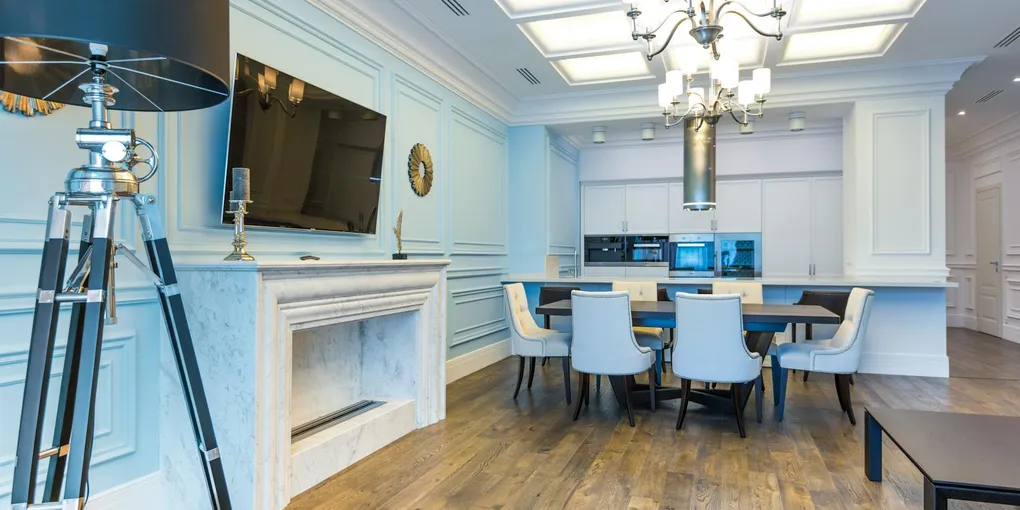
Electric fireplace installs run $600-$3,500. Gas fireplaces cost $2,500-$10,000 installed (insert or direct-vent). Wood-burning fireplaces are the most expensive at $4,500-$25,000+ including chimney. Converting an existing wood fireplace to gas insert runs $3,500-$7,500. Most homeowners land between $3,000 and $8,000 for a complete install.
Frequently Asked Questions
What's the cheapest way to add a fireplace to a home?
Electric fireplaces. A 30-42 inch wall-mount or insert runs $300-$1,200 for the unit and $200-$500 for basic electrical. No venting, no chimney, no gas line. Total installed cost: $600-$1,700. Electric gives you realistic flame visuals without the heat output of real fire, making them popular for bedrooms and basements.
Is a gas fireplace cheaper to install than wood-burning?
Yes — significantly. A gas direct-vent fireplace installs for $2,500-$10,000 total. Wood-burning fireplaces require a full masonry or Class A metal chimney, which adds $3,000-$15,000 alone. Gas also operates cleaner, requires less maintenance, and can be added to homes without existing chimneys.
Do I need permits and inspections for a fireplace?
Yes, for any type except freestanding electric. Gas fireplaces require gas line permits, electrical permits, and often a final combustion inspection. Wood-burning requires structural permits for hearth and framing, plus chimney code compliance inspections. Budget $150-$600 in permit and inspection fees.
Can I convert my wood-burning fireplace to gas?
Yes. Gas logs (visual only, $400-$1,500) install in most existing masonry fireplaces. A gas insert (real heat, $3,500-$7,500 installed) is a sealed unit that fits inside your existing firebox and vents up a steel liner through the existing chimney. Inserts are dramatically more efficient than the original fireplace (70-85% vs. 10-30%) and pay for themselves in 5-10 years for regular users.
How long does a fireplace installation take?
Electric: 2-4 hours. Gas insert (existing chimney): 1 day. Gas direct-vent new install: 2-3 days. Wood-burning with chimney: 3-7 days. Full masonry fireplace addition: 1-3 weeks. Timeline doubles if new framing or structural reinforcement is needed.
Gas vs. electric fireplace: which is better for actually heating a room?
Gas fireplaces produce significantly more heat. A standard gas insert delivers 25,000–40,000 BTU, capable of heating 400–600 sq ft effectively as a primary zone heater. A ventless gas fireplace can push 30,000+ BTU into the room since no heat escapes up a flue. Electric fireplaces max out at 4,000–5,000 BTU (equivalent to a medium space heater) — adequate for supplemental warmth in a small bedroom but not a primary heat source for a large living room. If heat output matters, gas wins decisively. If you want ambiance without heat (bedroom, bathroom), electric is appropriate and cheaper to install. Gas also provides a backup heat source during power outages; electric fireplaces stop functioning the moment the power goes out.
How do I maintain a gas fireplace?
Annual maintenance tasks: (1) Annual professional inspection — a certified chimney or gas appliance technician should inspect the burner, igniter, venting system, and gas connections once per year. Most manufacturers require annual service to maintain warranty coverage. Cost: $100–$200. (2) Clean the glass — use a specialized gas fireplace glass cleaner (not regular glass cleaner, which can streak or leave a film that burns). Do this when the unit is cold. (3) Clean ceramic logs or fire glass — use a soft brush to remove dust and debris from ceramic logs; rinse gas fire glass with water annually. (4) Test the pilot light each fall before heating season and relight if it has gone out following the manufacturer's procedure. (5) Inspect the venting cap outside for bird nests or debris annually. Signs of a gas fireplace needing service: yellow or orange flames (should be primarily blue), soot deposits on the glass or firebox, or a gas odor when the unit is off — the last one requires an immediate service call.
Electric fireplace installs run $600-$3,500. Gas fireplaces cost $2,500-$10,000 installed (insert or direct-vent).
A fireplace is still the single most requested home feature in Zillow searches. The cost to add one ranges from a few hundred dollars for electric to tens of thousands for a full masonry hearth — and choosing the wrong type for your home can double the total budget. This guide breaks down what each fireplace type actually costs, where the money goes, and what to expect from your installer.
Fireplace installation cost at a glance
| Fireplace type | Unit cost | Install cost | Total installed |
|---|---|---|---|
| Electric (wall-mount/insert) | $300-$1,500 | $200-$800 | $600-$2,500 |
| Electric (linear, 50”+) | $1,000-$3,000 | $500-$1,500 | $1,500-$4,500 |
| Gas insert (existing chimney) | $1,500-$4,500 | $1,500-$3,500 | $3,000-$8,000 |
| Gas direct-vent (new install) | $2,000-$6,000 | $2,500-$5,000 | $4,500-$11,000 |
| Gas ventless | $1,200-$3,500 | $800-$2,500 | $2,000-$6,000 |
| Wood-burning insert (existing chimney) | $1,200-$3,500 | $1,000-$2,500 | $2,200-$6,000 |
| Wood-burning with Class A chimney | $2,000-$5,000 | $3,000-$10,000 | $5,000-$15,000 |
| Full masonry fireplace | $5,000-$10,000 | $5,000-$15,000 | $10,000-$25,000+ |
| Outdoor fireplace | $1,500-$5,000 | $2,000-$15,000 | $3,500-$20,000 |
Most homeowner budgets land between $3,000 and $8,000 for a complete installed fireplace.
Electric fireplaces: $600-$4,500
Electric is by far the cheapest path to a fireplace. No venting, no gas, no chimney — just a standard 120V or 240V outlet.
What’s included
- The unit itself: $300-$3,000 depending on size and style
- Basic electrical work: $200-$500 (adding a dedicated 15-amp circuit for larger units)
- Wall framing/recess: $300-$1,200 if built into a wall
- Mantel, hearth, surround: $200-$2,000 if adding decorative elements
Best for
- Bedrooms, basements, offices
- Condos or apartments where no venting is allowed
- Bedrooms where real flame is unwanted
- Renters (freestanding models)
Electric options by type
| Style | Price range | Notes |
|---|---|---|
| Freestanding stove | $200-$700 | Portable, plug-in |
| Wall-mount | $300-$1,500 | Hangs like a TV |
| Recessed insert | $500-$2,500 | Built into wall |
| Linear (50”+) | $1,000-$3,500 | Contemporary, wide flame bed |
| Media console | $600-$2,000 | Fireplace built into TV stand |
The Touchstone Sideline electric fireplace is a popular recessed option in the 50-60 inch range. For smaller spaces, the Duraflame electric stove gives a traditional look at $150-$300.
Heat output: Most electric fireplaces produce 4,000-5,000 BTU — enough to warm a 400 sq ft room. They’re supplemental heat, not primary heat.
Gas fireplaces: $2,500-$11,000
Gas fireplaces are the sweet spot for most homeowners — real flame, good heat output, lower cost than wood-burning, and far less maintenance.
Gas fireplace types
Gas insert: Sealed unit that fits inside an existing wood fireplace. Vents through a flexible stainless liner up the existing chimney. Best ROI for existing fireplaces.
Direct-vent: Sealed unit with coaxial pipe venting through an exterior wall (no chimney needed). Best for new installations.
Ventless (vent-free): No venting required. Controversial — produces water vapor and very low levels of combustion products indoors. Prohibited in some states (California, Massachusetts) and banned in bedrooms/bathrooms in most others. Skip unless specifically approved for your situation.
B-vent: Older-style gas fireplace that requires a traditional chimney flue. Rarely installed new; being phased out.
Cost breakdown (gas insert in existing fireplace)
| Line item | Cost |
|---|---|
| Gas insert unit (mid-range) | $2,500-$4,000 |
| Stainless chimney liner (25-35 ft) | $600-$1,200 |
| Gas line extension or run (10-30 ft) | $400-$1,500 |
| Labor (1-day install) | $800-$1,800 |
| Trim, surround, remote, thermostat | $200-$800 |
| Permits + inspections | $150-$400 |
| Total | $4,650-$9,700 |
Cost breakdown (gas direct-vent, new location)
| Line item | Cost |
|---|---|
| Direct-vent unit + venting kit | $2,500-$5,000 |
| Exterior wall cut + flashing | $300-$800 |
| Gas line run (20-50 ft) | $800-$2,500 |
| Framing and wall prep | $600-$1,500 |
| Labor (2-3 days) | $1,500-$3,500 |
| Trim, mantel, hearth | $500-$2,500 |
| Permits + inspections | $200-$500 |
| Total | $6,400-$16,300 |
Gas fireplace operating cost
- Natural gas: $0.20-$0.50 per hour of full flame
- Propane: $1.00-$2.00 per hour
Most owners run them 2-4 hours per day in winter, so $40-$120/month heating season.
Wood-burning fireplaces: $4,500-$25,000+
The most expensive and highest-maintenance option. Still worth it for the real-fire experience.
Wood-burning types
Wood-burning insert (existing chimney): Most affordable wood option. Sealed unit fits inside existing masonry fireplace, vastly improves efficiency (from 10-30% to 70-85%). Requires stainless steel chimney liner.
Wood-burning stove (freestanding): Stand-alone stove with metal or masonry chimney. Flexible placement, good heat output.
Zero-clearance wood fireplace (Class A chimney): Prefabricated metal firebox that can be framed into combustible walls. Pairs with a Class A insulated metal chimney running to the roof.
Full masonry (hearth + firebox + chimney): Traditional brick or stone fireplace built from the ground up. Usually only viable during new construction or major renovation because of weight and structural requirements.
Cost breakdown (wood insert in existing chimney)
| Line item | Cost |
|---|---|
| Wood insert unit | $1,500-$3,500 |
| Stainless chimney liner | $800-$1,800 |
| Labor + installation | $1,000-$2,500 |
| Hearth extension if needed | $200-$800 |
| Permits + inspections | $150-$400 |
| Total | $3,650-$9,000 |
Cost breakdown (zero-clearance wood with Class A chimney)
| Line item | Cost |
|---|---|
| Zero-clearance firebox | $1,800-$4,500 |
| Class A insulated chimney (20-30 ft) | $2,500-$7,000 |
| Framing, roof penetration, flashing | $1,000-$3,000 |
| Labor (3-5 days) | $2,500-$6,000 |
| Hearth + mantel + trim | $600-$3,000 |
| Permits + inspections | $250-$600 |
| Total | $8,650-$24,100 |
Wood-burning hidden costs
- Chimney caps and spark arrestors: $150-$500
- Firewood: $200-$500/cord. A winter uses 2-5 cords = $400-$2,500/year
- Chimney sweeping: $175-$400/year (required annually for insurance)
- Fireplace tools and accessories: $100-$400
- Creosote sweeping logs/treatment: $20-$40/year
- Insurance premium increase: $30-$120/year in many markets
What affects the total cost
Location of install
- Existing chimney: Cheapest — just need a liner + gas or insert unit.
- Exterior wall, accessible: Moderate — direct-vent through the wall.
- Interior wall with roof access: More expensive — need vertical venting.
- Basement or second-story addition: Most expensive — complex venting paths.
- Adding to a second story with no chimney stack: Often requires structural engineering.
Gas line considerations
If you don’t already have a gas line near the install location:
- Short extension (< 10 ft from existing line): $200-$600
- Medium run (10-30 ft, single story): $500-$1,500
- Long run (30-60 ft, multi-story): $1,200-$3,500
- New gas service from street: $1,000-$4,000+ (utility dependent)
Structural considerations
- Floor reinforcement for wood/masonry: $500-$3,000
- New hearth construction (brick/tile): $500-$3,000
- Mantel and surround (custom): $500-$5,000
- Header and framing changes: $300-$1,500
DIY vs. professional installation
Freestanding electric: 100% DIY. Plug it in.
Recessed electric: DIY if you’re comfortable running a dedicated circuit, framing an opening, and finishing drywall. Budget 4-8 hours.
Gas insert replacement (swap an existing insert for a new one): Possible for advanced DIYers who can handle gas line work and venting. Most states require a licensed gas installer for warranty and insurance reasons. Verify local code.
New gas fireplace, direct-vent, or wood-burning: Hire a certified installer. Gas leaks and venting errors are fatal. Insurance companies require proof of professional installation.
Wood-burning insert (existing chimney): A very small subset of DIY homeowners install these. Realistically, hire a NFI- or CSIA-certified installer. The liner work alone requires specialized tools.
Saving money on fireplace installation
- Buy the fireplace unit separately from a specialty retailer; hire local labor. Often 15-25% cheaper than bundled.
- Use existing chimney if you have one. A gas or wood insert in an existing firebox is the cheapest upgrade that adds real value.
- Choose direct-vent over vertical venting when possible — the vent run is shorter and cheaper.
- Time the install in off-season (April-August). Chimney and fireplace installers are slammed October-January.
- Stack quotes — get at least 3 from certified installers. Wide variance is normal.
- Ask about rebates. Many utilities offer $100-$500 rebates for high-efficiency gas fireplaces.
Best fireplace accessories worth buying
Once your fireplace is installed, these accessories are worth the small investment:
- Fireplace tool set — $40-$120
- Log holder / firewood rack — $30-$90
- Fire-resistant hearth rug — $30-$80
- Glass door enclosure (for wood) — $200-$600
- Programmable thermostat for gas fireplaces — $80-$200
- Chimney cap — $75-$250
Resale value
- Gas fireplace adds roughly 50-70% of install cost to home value.
- Wood-burning insert adds 60-80% of install cost (stronger in cold climates).
- Electric fireplace adds 20-40% — often viewed as a buyer-removable feature.
- Fireplaces in general still rank among the top 10 features that increase buyer interest in single-family homes.
Red flags in quotes
- No NFI (National Fireplace Institute) or CSIA (Chimney Safety Institute of America) certification on crew
- Refusal to pull permits — uninspected fireplaces are an insurance nightmare
- “Vent-free is fine anywhere” — local codes often prohibit in bedrooms, bathrooms, and some states entirely
- No written spec on chimney liner material or thickness
- Pushes you toward a specific brand without alternatives
- No inspection appointment — every gas or wood install should end with a final inspection
Regional Fireplace Installation Cost Variations
| Region | Gas Insert (existing chimney) | Gas Direct-Vent (new install) | Full Masonry |
|---|---|---|---|
| Northeast (NY, MA, NJ) | $4,000–$9,000 | $6,000–$13,000 | $15,000–$30,000+ |
| Mid-Atlantic (DC, MD, VA) | $3,800–$8,500 | $5,500–$12,000 | $14,000–$28,000 |
| Southeast (FL, GA, TX) | $3,000–$7,000 | $4,500–$10,000 | $10,000–$22,000 |
| Midwest | $3,200–$7,500 | $4,800–$10,500 | $11,000–$24,000 |
| Pacific (CA, WA, OR) | $4,000–$9,000 | $6,000–$13,000 | $15,000–$28,000 |
Masonry costs vary more widely than other types — locally sourced stone and brick can cut costs significantly in the Southeast and Midwest compared to Northeast metropolitan markets.
Fireplace Brand Comparison
| Brand | Type | Price Range (unit) | Best For | Notes |
|---|---|---|---|---|
| Napoleon | Gas (direct-vent, insert) | $1,800–$5,000 | Versatile mid-to-premium; widely available | Canadian brand; excellent BTU output and flame realism; strong dealer network |
| Regency | Gas (insert, direct-vent) | $2,000–$5,500 | Premium efficiency; clean-burning | High AFUE ratings; popular for zone-heating applications |
| Heatilator | Gas, wood | $1,500–$4,000 | Mid-range, contractor-installed | Subsidiary of Hearth & Home; wide model selection, reliable but not top-of-line |
| Empire Comfort Systems | Gas (ventless, direct-vent) | $800–$3,000 | Budget gas fireplaces and inserts | Good value; DVLS and VFRD series popular for inserts |
| Majestic | Gas, electric, wood | $1,200–$4,500 | Broad product range | Another Hearth & Home brand; known for clean-face gas models |
| Dimplex | Electric | $400–$3,500 | Electric fireplaces | Market leader in electric; Opti-Myst and Revillusion series offer best flame realism |
Napoleon and Regency lead for gas insert quality and efficiency. Dimplex is the clear choice for electric if realism matters. Avoid unbranded or off-brand inserts for gas — manufacturer certification is required for warranty service and can affect insurance.
Questions to Ask Your Fireplace Installer
-
Are you NFI (National Fireplace Institute) certified, and will you pull all required permits for this installation? — NFI certification (Gas, Wood, or Pellet Specialist) is the primary industry credential for fireplace installation. It requires testing on fuel-specific installation standards, venting codes, and clearance requirements. Ask: “What is your NFI certification number?” and verify at nficertified.org. Permits are non-negotiable for any gas or wood-burning installation — unpermitted fireplaces are an insurance issue and create a title problem when you sell. Any installer who suggests skipping permits is creating liability for you.
-
What chimney liner material will you use, and is it rated for the specific fuel type and BTU output? — Gas inserts require a stainless steel liner through the existing masonry chimney — the liner must be Type 316Ti or 304 stainless (not galvanized) and sized to match the insert’s BTU output and chimney height per manufacturer specs. Wood-burning applications typically use heavier Type 304 stainless. Ask for the specific liner product name, gauge, and sizing calculation. Installers who cannot specify the liner product by name or explain the sizing are working from guesswork, not engineering.
-
What clearances to combustibles are required for this unit, and how will you verify compliance? — Every fireplace manufacturer specifies minimum clearances from the firebox opening, surround, and hearth to combustible materials (wood framing, flooring, mantels). These clearances are in the installation manual and enforced by the permit inspector. Ask: “What are the required clearances for this unit, and are there any locations in my installation that are close to the minimums?” A unit installed with inadequate clearances is a fire hazard — and one that may fail inspection, requiring expensive rework.
-
Is vent-free (ventless) gas allowed in my jurisdiction and room type, and what are your recommendations given my specific situation? — Vent-free gas fireplaces are prohibited in several states (California, Montana, Minnesota, Massachusetts) and often restricted to specific room types even where allowed — most codes prohibit vent-free in bedrooms, bathrooms, and rooms under a certain square footage. Some jurisdictions require CO detectors and oxygen depletion sensors. Ask your installer whether vent-free is code-compliant for your specific location and room. Installers who say “vent-free is fine anywhere” are either uninformed about local codes or hoping you don’t ask.
-
What does the installation warranty cover, and what does the manufacturer warranty require to remain valid? — Most fireplace manufacturers offer 1–5 year warranties on gas components and longer warranties on the firebox itself — but many warranties require annual professional service to remain valid. Ask: “What does the manufacturer warranty cover, and what maintenance is required?” Also ask: “What does your labor warranty cover, and for how long?” A complete answer covers both manufacturer defects and installation workmanship. Installers who offer no labor warranty are signaling confidence in neither their work nor their longevity.
Related Reading
- Chimney Sweep Cost
- Chimney Repair Cost — repair chimney cracks or tuckpointing before or after a fireplace install
- How to Clean a Fireplace — annual maintenance to keep the firebox safe after installation
- Central AC Installation Cost
- Furnace Replacement Cost
- Annual Home Maintenance Schedule
- Smart Home Setup Guide
- Winterize Your Home Checklist
Bottom line
Electric fireplaces run $600-$4,500 installed — cheapest, simplest, supplemental heat. Gas fireplaces run $2,500-$11,000 installed — the sweet spot for most homes, real flame without wood hassle. Wood-burning ranges from $3,600 for an insert in existing chimney up to $25,000+ for full masonry with a Class A chimney. Match the fireplace type to your home’s existing infrastructure: an existing chimney drops the budget by 40-60%, and avoiding a new chimney/venting run is the single biggest cost lever you have.
Free: 10-Point Home Maintenance Checklist
Prevent costly repairs with this seasonal checklist. Save hundreds every year by catching problems early.
Your checklist is ready!
Open Checklist →Something went wrong. View the checklist here.