Best Leaf Blowers for Homeowners in 2026: Battery, Electric, and Gas
The best leaf blowers for homeowners in 2026 across battery, corded electric, and gas — covering CFM, MPH, runtime, noise, and the right blower for your yard size.
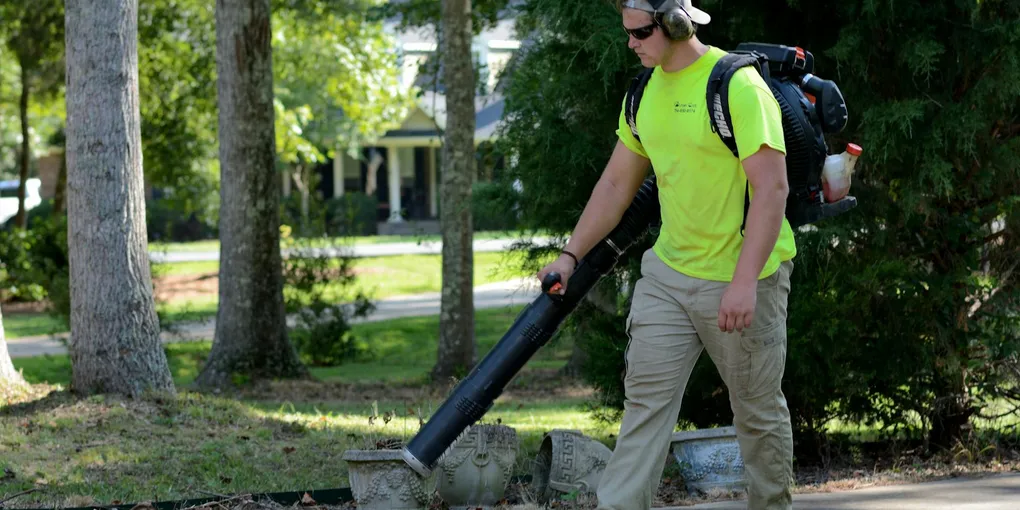
For small yards under 1/4 acre, a 40V battery blower like the EGO LB5300 or Ryobi 40V HP is plenty. For medium yards (1/4 to 1/2 acre), step up to the EGO LB6504 or DeWalt 60V FLEXVOLT. For large yards, leaf-clearing piles, or wet leaves, a gas backpack like the Echo PB-580T or Stihl BR 600 still beats any battery model for sustained power. Corded electric is the budget play under $80 but limits you to cord range.
Frequently Asked Questions
What's the difference between CFM and MPH in leaf blowers?
MPH (miles per hour) is how fast the air exits the nozzle — this is what moves leaves when you point the tube at them. CFM (cubic feet per minute) is how much air volume the blower moves per minute — this is what determines how wide an area you can clear and how well it handles wet or heavy debris. Both numbers matter: high MPH alone is useless if CFM is low, and vice versa. For homeowners, look for at least 400 CFM and 110 MPH as a minimum.
Are battery leaf blowers strong enough to replace gas?
For most homeowners with yards under 1/2 acre, yes. Top-tier 40V–60V battery blowers from EGO, DeWalt, and Milwaukee now put out 600+ CFM and 170+ MPH, which is within 10% of a commercial gas backpack. Runtime is the tradeoff — expect 20–40 minutes on high power per battery. For large properties or full-season professional use, gas backpacks still win.
How loud are leaf blowers?
Gas blowers run 70–80 dB at 50 feet (typical municipal noise ordinance limit is 65 dB at the property line). Battery blowers are much quieter — usually 55–65 dB at 50 feet. Many cities now ban gas leaf blowers outright or restrict them to certain hours; check your local ordinance before buying. Battery blowers are the only legal option in California starting 2026.
Do I need a backpack leaf blower?
Backpack blowers distribute the weight across your shoulders and hips, making them dramatically more comfortable for jobs over 30 minutes. If your yard takes over an hour to clear, a backpack is worth it. For quick 15–20 minute jobs, a handheld is fine. Most homeowner backpacks weigh 16–25 pounds loaded; high-end commercial models are 22–30 pounds.
What size battery do I need?
Look for at least 5Ah capacity on 40V platforms or 9Ah on 60V platforms for 20+ minutes of high-power runtime. Having a second battery on the charger lets you swap and keep going. On the 40V EGO platform, the 7.5Ah or 10Ah packs extend runtime significantly but add weight.
EGO vs Stihl vs Milwaukee — which leaf blower brand is best for homeowners in 2026?
Brand comparison for homeowners in 2026: EGO (56V platform): best overall battery leaf blower brand. The LB5300 (530 CFM/180 MPH) handles most suburban lots, and the LB6504 turbo (650 CFM/180 MPH) matches gas backpacks for raw power. Best if you already own EGO tools — batteries share across 90+ products. Price: $120–$300 without battery, $200–$400 with kit. Stihl (AK and AP platforms): best for homeowners who want dealer service and premium build quality. The BGA 86 (AK battery, $280–$350) is quieter and better-balanced than EGO for longer jobs. Stihl batteries are platform-exclusive — not compatible with other brands. Best if you prioritize ergonomics and local dealer support. Milwaukee (M18 and MX FUEL platforms): best for homeowners already invested in the Milwaukee M18 ecosystem. The M18 FUEL 650 CFM blower ($180–$220 bare tool) shares batteries with drills, saws, and 200+ M18 tools. Commercial-grade build. Gas (Echo, Stihl, Husqvarna): still the best for sustained high-power work. Echo PB-580T ($250–$300) and Stihl BR 200 ($280) are the value picks for homeowners who want top-tier clearing power. No battery swap, no runtime limits. Best for large properties or commercial use. Verdict: EGO for value + platform breadth, Stihl for quality + service, Milwaukee for existing M18 users, gas for large/commercial work.
What is the best leaf blower for clearing wet leaves?
Wet leaves require significantly more CFM and MPH than dry leaves — they're heavier and mat together. For wet leaves: minimum specs to look for: 550+ CFM and 160+ MPH. Top performers for wet leaves: Gas: Echo PB-770T backpack blower (770 CFM / 205 MPH, $450–$500) — still the gold standard for wet, heavy debris. The extra volume and sustained power handles matted wet leaves that stall battery blowers. Battery: EGO LB6504 (650 CFM / 180 MPH, $350–$420 with battery) — the best battery option for wet leaves. The turbo mode delivers gas-comparable power for short bursts, useful for wet-leaf clearing. Technique matters as much as the blower: work at a lower angle (30–45 degrees to the ground, not 90) to get air under the wet leaves and break the suction seal. Work in smaller sections. Do not try to move a large pile in one sweep — scatter first, then consolidate. If leaves are truly soaked and matted: rake to break them up first, then blow. No blower moves wet mats efficiently without some physical disruption first.
For small yards under 1/4 acre, a 40V battery blower like the EGO LB5300 or Ryobi 40V HP is plenty. For medium yards (1/4 to 1/2 acre), step up to the EGO LB6504 or DeWalt 60V FLEXVOLT.
A good leaf blower turns a half-day yard job into a 45-minute one. A bad one leaves you hunched over, stopping every 10 feet to restart a choked gas engine or dragging a 50-foot cord through wet grass. The 2026 market is dominated by battery models that finally match gas power for homeowner-scale jobs, plus a small group of gas backpacks that still rule the large-property segment.
This guide breaks down the best picks by yard size, power class, and budget — with Amazon links for each recommendation.
Top Picks at a Glance
| Pick | Model | CFM | Power | Weight | Price | Best For |
|---|---|---|---|---|---|---|
| Best Overall | EGO LB5302 Power+ | 530 | 56V battery | 7.6 lb | $180–$220 | Small–medium yards; existing EGO tools |
| Best High-Power | EGO LB6504 | 650 | 56V battery | 9.5 lb | $230–$280 | Medium–large yards, wet leaves |
| Best Backpack | DeWalt DCBL772X1 | 600+ | 60V battery | 15 lb | $350–$450 | Large properties; long runs |
| Best Gas Backpack | Echo PB-580T | 510 | Gas | 21 lb | $280–$340 | Rural/acreage; unlimited runtime |
| Best Mulcher | Worx WG520 TRIVAC | 400 | Corded | 6.5 lb | $60–$90 | Small yards; mulching/bagging leaves |
Quick Picks by Yard Size
Small yard (under 1/4 acre): EGO LB5302 Power+ 530 CFM Cordless Leaf Blower — 530 CFM / 110 MPH, great for quick cleanups
Medium yard (1/4 to 1/2 acre): EGO LB6504 Power+ 650 CFM Leaf Blower with 5Ah battery — 650 CFM / 180 MPH, handles wet leaves and sticks
Large yard / semi-pro: DeWalt DCBL772X1 60V FLEXVOLT Backpack Blower — 600 CFM / 175 MPH, backpack comfort for long jobs
Gas backpack (large property): Echo PB-580T Backpack Blower — 510 CFM / 215 MPH, legendary reliability
Budget corded electric: Worx WG520 TRIVAC Blower/Vac/Mulcher — 3-in-1 use for under $80
The Top Battery Leaf Blowers
EGO LB5302 Power+ 530 CFM (Best for Most Homeowners)
Specs: 530 CFM / 110 MPH, variable speed trigger, turbo boost, uses EGO 56V platform. Weighs 7.2 lbs with a 2.5Ah battery.
Why it wins: The EGO 56V platform has been the gold standard for battery yard tools since 2018, and this blower represents the sweet spot of power, runtime, and price. A 5Ah battery gives you roughly 25–35 minutes of normal use or 12–18 minutes on turbo. Noise at 50 feet is about 64 dB — quiet enough for early-morning use in most neighborhoods.
The axial fan design is the highlight: more CFM per dollar than competing centrifugal fan designs. Leaves move, light debris clears, and driveways are handled in minutes.
EGO LB6504 Power+ 650 CFM (Medium Yards)
Specs: 650 CFM / 180 MPH, variable speed, turbo, 56V. Weighs 9.4 lbs.
The big brother to the LB5302. You get roughly 25% more CFM and a much higher MPH for punching through piles of wet leaves and moving sticks. Comes with a 5Ah battery in the standard kit. If you own any other EGO tools, this is the no-brainer pick for a medium yard.
DeWalt DCBL772X1 60V FLEXVOLT Backpack
Specs: 600 CFM / 175 MPH, 3.0Ah FLEXVOLT battery, backpack-style, 14.5 lbs.
The only battery backpack blower that genuinely competes with a gas Stihl or Echo for power. The runtime is the bottleneck — plan on 20–30 minutes per 3.0Ah battery at medium power. For homeowners doing 45+ minute jobs, buy two batteries.
The FLEXVOLT platform is also cross-compatible with DeWalt’s 20V MAX tools, so you can run this off 20V batteries in a pinch (at reduced performance) or run 20V tools off the 60V blower battery.
Ryobi 40V HP Brushless Whisper Series
Specs: 730 CFM / 190 MPH, 40V platform, 10 lbs with battery.
The value play. Ryobi’s 40V HP Whisper is rated higher on spec sheet than some $400 competitors but sells for under $250 with a battery and charger. The tradeoff: the Ryobi 40V battery platform is the widest homeowner tool ecosystem in the US, but the individual tool quality runs a notch below EGO and DeWalt on durability.
For a second or backup blower, or for homeowners who don’t want to commit to a premium platform, Ryobi is hard to beat.
Milwaukee M18 FUEL Dual Battery (For M18 Platform Owners)
Specs: 600 CFM / 145 MPH, runs two M18 batteries simultaneously, 9.5 lbs.
Only makes sense if you already own the Milwaukee M18 FUEL ecosystem. Performance is on par with the DeWalt FLEXVOLT. Using two 8Ah M18 batteries together delivers roughly 30 minutes of sustained high power. For homeowners who already have four or more M18 batteries on hand, this is the easy choice.
The Best Gas Backpack Blowers
Echo PB-580T (Best Overall Gas)
Specs: 510 CFM / 215 MPH, 58.2cc 2-stroke engine, 22 lbs loaded.
The Echo PB-580T is the most-recommended homeowner-to-semi-pro gas backpack. Reliability is the story: these run for years with basic carburetor maintenance and fresh gas. 2-stroke mix at 50:1, pull-start, padded harness, and a tube-mounted throttle trigger.
Stihl BR 600 (Premium Pick)
Specs: 677 CFM / 201 MPH, 64.8cc 4-MIX engine, 22 lbs loaded.
The BR 600 is the gold standard for professional landscapers, and the power-to-weight ratio is still class-leading. The 4-MIX engine is lower-emission than a 2-stroke and runs on straight gas (no mix required). Only sold through Stihl dealers — not available on Amazon.
The Best Corded Electric (Budget Picks)
Worx WG520 TRIVAC
Specs: 600 CFM / 110 MPH, 12 amp motor, 8.1 lbs.
Blower/vacuum/mulcher combo for under $80. The 3-in-1 functionality is surprisingly useful — the mulcher shreds leaves at a 16:1 reduction ratio, which makes leaf bagging a fraction of the hassle. The cord limits working range to 50–100 feet from an outlet.
Toro 51621 UltraPlus
Specs: 410 CFM / 250 MPH, 12 amp motor, 8.5 lbs.
Toro’s UltraPlus line has been a homeowner favorite for years. The very high MPH rating comes at the cost of lower CFM — it’s great for clearing driveways but not as efficient at moving big leaf piles. Also a 3-in-1 blower/vac/mulcher.
How to Choose: The Decision Tree
Do you own cordless tools already?
- Yes, DeWalt 20V/60V → DeWalt FLEXVOLT blower
- Yes, Milwaukee M18 → M18 FUEL Dual Battery
- Yes, EGO 56V → EGO LB5302 or LB6504
- Yes, Ryobi 40V → Ryobi 40V HP Whisper
- No existing platform → EGO LB5302 is the best all-around entry
How big is your yard?
- Under 1/4 acre → 40V or 56V handheld
- 1/4 to 1/2 acre → 56V handheld with turbo
- 1/2 acre to 1 acre → Battery backpack or gas handheld
- 1+ acre → Gas backpack
How often will you use it?
- A few times per season → corded electric or entry battery handheld
- Weekly during fall → premium 40V/56V handheld
- Multiple times per week, year-round → gas backpack
The Maintenance Factor
Battery blowers require almost zero maintenance: charge, use, store indoors. Gas blowers need:
- 2-stroke mix (fresh, no ethanol if possible)
- Annual carburetor cleaning or replacement
- Air filter cleaning every 20 hours of use
- Spark plug replacement annually
- Fuel line inspection (ethanol-degraded fuel lines crack and leak)
Over 5 years, expect to spend $50–$150 on gas maintenance vs. $0 on battery. Battery replacement is the offset — a 5Ah battery costs $130–$180 to replace after 3–5 years.
Noise Considerations
Many cities and HOAs restrict gas leaf blowers. Common restrictions:
- California: gas-powered lawn equipment ban begins 2026
- Washington, D.C.: gas blower ban in effect
- Many suburban HOAs: 65 dB at property line maximum
- Most municipalities: no use before 7 AM or after 9 PM
Battery blowers are quieter by 10–20 dB — the difference between “loud” and “noticeable.” If you live in a restricted zone or have close neighbors, battery is the only civil option.
Accessories Worth Buying
- Shoulder strap (for handheld blowers over 8 lbs) — $10–$20
- Flat nozzle for driveways and hardscapes — included with most blowers
- Second battery — doubles your effective runtime
- Fast charger — 60 minutes vs. 3 hours
- Cordless ear protection — $20–$40, essential for blowers over 65 dB
- Blower holster for garage storage — $15–$25
Our garage organization ideas guide covers wall-mount storage for yard tools.
Seasonal Timing for Best Deals
- Best prices: Black Friday through Cyber Monday (November)
- Second-best: late March / early April (when brands clear winter inventory)
- Worst prices: October (peak fall demand)
Major tool platforms (DeWalt, Milwaukee, EGO) rarely discount their batteries; the blowers themselves are where the savings live. A December bundle deal often gives you a blower + 2 batteries + charger for 30% off the a la carte price.
Related Reading
- How to clean gutters
- How to fertilize your lawn
- Best lawn mowers for homeowners — the matching platform pick for cutting, not clearing
- Spring home maintenance checklist
- Best budget power washers
- Best cordless drills for homeowners
- Garage organization ideas
The Bottom Line
For most homeowners in 2026, a battery leaf blower from the EGO 56V, DeWalt 60V, or Ryobi 40V platforms delivers all the power you need, eliminates gas-engine maintenance, and stays within noise ordinances. The EGO LB5302 is the strongest pick for new buyers not already on a platform. Gas backpack blowers remain the winner for large properties, commercial use, and wet-season cleanup — the Echo PB-580T is the most homeowner-friendly pick, with the Stihl BR 600 as the premium option. Match the power class to your yard size, buy a second battery if you’re going cordless, and you’ll cut your leaf-clearing time in half.
- Measure your yard size
Walk your property or check your lot size on county GIS records. Under 1/4 acre (11,000 sq ft) is small; 1/4 to 1/2 acre is medium; over 1/2 acre is large. Factor in how many trees drop leaves — one large oak can triple the workload vs. an open lawn.
- Decide power source: battery, corded electric, or gas
Battery is the current best-balance for most homeowners — quiet, zero maintenance, good power. Corded electric is cheapest but the cord limits range. Gas is still best for large yards, commercial use, and wet-leaf season but requires mix gas, maintenance, and deals with noise ordinances.
- Check CFM and MPH specs
Minimum for homeowner use: 400 CFM / 110 MPH. For medium-to-large yards, target 600+ CFM / 150+ MPH. Avoid blowers marketed only by MPH — that's a marketing tell that the CFM number is weak.
- Pick a platform if you already own cordless tools
If you own DeWalt 20V/60V, Milwaukee M18, Ryobi 40V, or EGO 56V tools, stay within that platform — battery compatibility across multiple tools is a real cost saver. The blower will be within 10% of any other brand on performance but you'll save on batteries and chargers.
- Test for weight and balance at a store if possible
Even 2 pounds of difference matters after 30 minutes of blowing. Pick the blower up with a battery installed, hold it at arm's length, and see how your wrist feels after 60 seconds. Backpack models are much easier on the body but add strap-fit considerations.
- Consider accessories: extensions, flat tips, and leaf vacuums
Some blowers convert to vacuum/mulcher mode — useful for reducing leaf volume by 10:1 but slower than pure blowing. Extended nozzles help clear under bushes and decks. Flat (rectangular) tips are better for driveways and patios; round tips are better for lawns.
- Buy a second battery for medium/large jobs
A 5Ah 40V battery runs 20–30 minutes at high power. For yards that take an hour to clear, plan on at least two batteries. A fast charger (60–90 minutes for a full charge) lets you keep one charging while the other is in use.
EGO LB5302 Power+ 530 CFM
Best Battery for Most Homeowners- 530 CFM / 110 MPH
- EGO 56V platform (cross-compatible with 10+ tools)
- 64 dB quiet enough for early morning
- Variable speed + turbo trigger
- 7.2 lbs with battery
- 25-35 min runtime on 5Ah battery
- Less power than 650 CFM models
EGO LB6504 Power+ 650 CFM
Best for Medium Yards- 650 CFM / 180 MPH
- Handles wet leaves + stick piles
- Ships with 5Ah battery
- Same EGO 56V platform
- 9.4 lbs with battery
- Shorter runtime at full power
DeWalt DCBL772X1 60V FLEXVOLT Backpack
Best Battery Backpack- 600 CFM / 175 MPH — gas-competitive
- Backpack comfort for long jobs
- FLEXVOLT platform works with DeWalt 20V tools
- 20-30 min runtime — plan on 2 batteries
- 14.5 lbs base weight
Echo PB-580T Backpack
Best Gas Backpack- 510 CFM / 215 MPH
- Legendary Echo reliability
- Dominates large-property + wet-leaf jobs
- 80 dB — check local noise ordinance
- Banned in California starting 2026
- Gas/oil mixing + maintenance
Worx WG520 TRIVAC Blower/Vac/Mulcher
Best Budget Corded Electric- 3-in-1: blower + vacuum + mulcher
- Under $80
- 600 CFM blower mode
- 100+ ft extension cord required
- Cord management drag on big yards
Free: 10-Point Home Maintenance Checklist
Prevent costly repairs with this seasonal checklist. Save hundreds every year by catching problems early.
Your checklist is ready!
Open Checklist →Something went wrong. View the checklist here.