Walk-In Closet Cost 2026: $500–$2,500 Modular or Custom
Walk-in closet systems cost $500–$1,500 for modular wire or laminate, $1,500–$4,000 for professional installation, and $5,000–$15,000+ for custom built-ins. Pricing by scope and material.
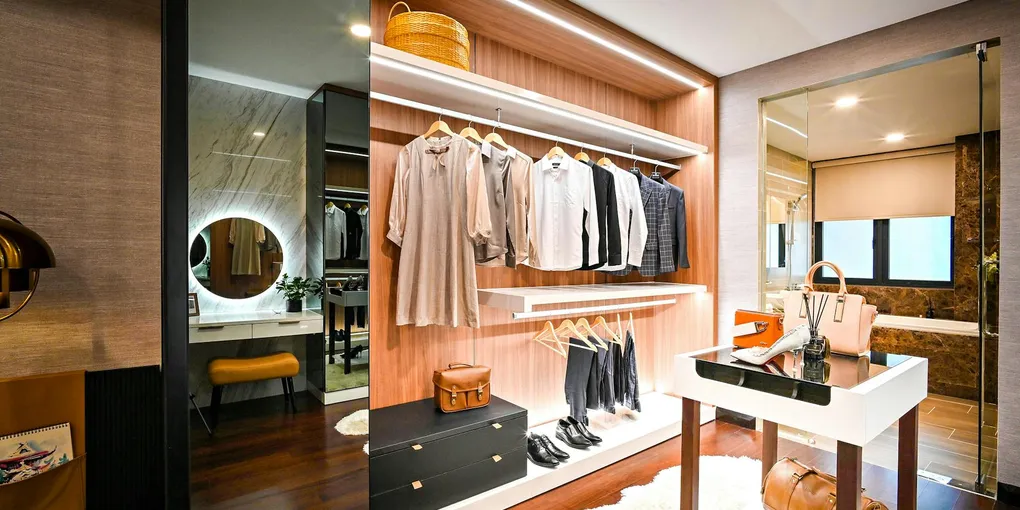
Walk-in closet costs: a modular closet system (IKEA PAX or ClosetMaid) runs $500–$2,500 for a typical 6×8 ft walk-in. A custom-designed and installed closet system costs $2,000–$8,000. Adding a true walk-in closet by converting a spare room or extending a bedroom runs $5,000–$15,000 for construction. Reach-in closet systems for a standard 5-foot closet cost $200–$1,500.
Frequently Asked Questions
How much does a walk-in closet cost?
Walk-in closet costs by scope: modular system (IKEA PAX, ClosetMaid) self-installed $500–$2,500; semi-custom modular (California Closets, Inspired Closets) $2,000–$6,000; fully custom built-in (local cabinetmaker) $3,000–$10,000; converting a spare room to a master walk-in $5,000–$15,000; adding new square footage for a walk-in (bump-out or addition) $15,000–$40,000. Pricing per linear foot of hanging and shelving: economy modular $30–$60/LF; mid-grade modular $60–$100/LF; custom built-in $100–$200/LF.
What is the difference between modular and custom closet systems?
Modular closet systems (IKEA PAX, ClosetMaid, Rubbermaid, Elfa) use pre-made components — hanging rods, shelves, and uprights that combine in standard configurations. Lower cost, faster installation, DIY-friendly, but limited in fitting irregular spaces. Semi-custom (California Closets, Closets by Design) use modular components with custom design — sales rep designs the layout, manufacturer builds to that design, professional installer sets it up. Custom built-in (local cabinetmaker or millwork shop) — designed and built from scratch for your exact space, using solid wood or high-quality plywood with dovetail joints and furniture-grade finishes. Custom built-ins look the best, fit perfectly, and cost 3–5× more than modular.
Is IKEA PAX a good closet system?
IKEA PAX is the best value closet system at the $800–$2,000 price point. It uses a 23-inch deep cabinet that works well as a built-in (fits inside a standard closet rough opening with standard-height ceilings). The KOMPLEMENT interior accessories (pull-out trays, drawers, shoe shelves) are well-designed and affordable. DIY installation is feasible for a handy homeowner in 4–8 hours for a typical walk-in configuration. Downsides: PAX uses particleboard with foil laminate — durable under normal use but not as furniture-quality as solid wood or quality plywood built-ins; all units are 23 inches deep (no option for 14-inch or 12-inch depth); standard heights (58 in, 79 in, 93 in) may not fill custom ceiling heights without awkward gaps.
What is the ROI on a walk-in closet?
A well-designed master bedroom walk-in closet adds 5–10% to master bedroom appeal in buyer surveys and is among the top-requested features in new home purchase research. However, walk-in closet additions and custom systems rarely return 100% at resale — a $5,000 modular walk-in might add $2,000–$3,000 in perceived value. The ROI is strongest when: the home previously had no master bedroom closet (significant functional gap); the closet is clean and organized at sale time; and the market is premium (buyers in the $400,000+ range value closet quality more). For a renovation purely for resale, a modular system is more cost-effective than custom built-ins.
How do I maximize a small walk-in closet space?
Space maximization for walk-in closets: (1) Double-hang wherever possible — two rods (above and below) for folded shirts, jackets, and pants in half-lengths; double hanging holds 2× the garments of single hang in the same linear feet. (2) Use the full height — shelving to ceiling maximizes cubic footage; use a small step stool for top shelves. (3) Separate hanging by length — full-length items (dresses, coats) in one zone; shorter items (shirts, folded pants) in double-hang zones. (4) Shoe storage on angled shelves uses less depth than a flat shelf. (5) Pull-out drawers for folded items beats flat shelving for the same depth. (6) Center island (if space allows, 6×8 ft minimum) adds drawer and surface space.
What is the best closet system brand?
Best closet systems by budget and quality: budget (under $1,500) — IKEA PAX (best value), ClosetMaid shelftrack (most flexible, steel shelf system), Rubbermaid FastTrack; mid-range ($1,500–$4,000) — Elfa by The Container Store (very well-designed, fully adjustable, can be DIY-installed), California Closets basic modular; premium modular ($4,000–$8,000) — California Closets Signature, Inspired Closets; custom built-in ($6,000+) — local cabinetmakers using Blum hardware and quality plywood. For DIY: IKEA PAX or Elfa are the best combinations of design quality and install-ability. For semi-custom: California Closets or Inspired Closets provide design service with their installation.
Walk-in closet costs: a modular closet system (IKEA PAX or ClosetMaid) runs $500–$2,500 for a typical 6×8 ft walk-in. A custom-designed and installed closet system costs $2,000–$8,000.
A functional walk-in closet adds daily quality-of-life value that few home improvements match — the ability to see your entire wardrobe at once, find anything in 30 seconds, and start the morning without frustration is significant. The cost ranges from a $500 modular weekend project to a $10,000 custom built-in, with the best value often in the $1,500–$3,000 range using Elfa or California Closets semi-custom systems.
Cost by System Type
| System | Size | Cost Range | Best For |
|---|---|---|---|
| IKEA PAX (DIY) | 6×8 ft walk-in | $600–$1,800 | Best value |
| ClosetMaid/Rubbermaid | Reach-in 5 ft | $200–$600 | Budget |
| Elfa (Container Store) | 6×8 ft walk-in | $1,200–$3,000 | Best adjustable |
| California Closets | 6×8 ft walk-in | $2,000–$6,000 | Semi-custom design |
| Custom built-in | 6×8 ft walk-in | $3,500–$10,000 | Premium quality |
What a Walk-In Closet Needs (per person)
| Category | Typical Wardrobe | Space Required |
|---|---|---|
| Full-length hanging | 10–20 items | 2–4 LF |
| Double-hang (shirts/pants) | 40–80 items | 4–8 LF |
| Shoe storage | 20–40 pairs | 4–8 LF of shelf |
| Drawers (folded items) | 3–6 drawers | 1–2 units |
| Accessories/bags | Varies | 6–12 hooks |
Converting a Spare Room to a Walk-In Closet
Converting an existing small bedroom, office, or large hallway into a walk-in closet is the highest-cost option but produces the most functional result.
| Scope | Cost |
|---|---|
| Convert existing room (closet system only, room already has door/electricity) | $800–$4,000 |
| Add door to existing room, install system | $1,500–$5,000 |
| Move wall to expand master bedroom closet | $3,000–$8,000 |
| Add a bump-out addition for a new walk-in | $15,000–$40,000 |
What the conversion includes: walk-in closet systems don’t require plumbing or HVAC changes — the main costs are the closet system itself, a door (if needed), lighting, and any drywall work from a wall modification. Conversions are far cheaper than additions.
Minimum walk-in size: 5×7 ft (35 sq ft) is the practical minimum for a functional walk-in. Anything under 4 feet wide is a reach-in by function even if you can technically step in. The sweet spot for a couple sharing a closet is 8×10 ft or larger.
Material and Finish Comparison
| Material | Cost Premium | Durability | Look |
|---|---|---|---|
| Laminate (thermofoil) — IKEA, ClosetMaid | Baseline | Good, resists scratches | Clean, modern |
| Melamine board — mid-grade modular | +10–20% | Very good, easy to clean | Smooth, professional |
| Solid wood drawer boxes + plywood carcass | +50–100% | Excellent | Premium, furniture-grade |
| Painted MDF (custom built-in) | +30–60% | Good (soft, can dent) | Traditional, built-in look |
| Plywood with veneer — best custom | +75–150% | Best (no delamination) | Custom furniture quality |
What degrades first in budget closet systems: laminate edge banding peels at corners, drawer slides wear out (replace with Blum soft-close slides for $15–$30 per drawer), and particleboard swells if the closet gets damp. Higher-end systems use thicker substrates and better edge treatments.
Regional Cost Variations: Walk-In Closet Installation
Custom and semi-custom closet prices vary by labor market:
| City | Modular System (Installed) | Custom Built-In |
|---|---|---|
| New York City, NY | $2,500–$8,000 | $6,000–$18,000 |
| Los Angeles, CA | $2,000–$7,000 | $5,500–$15,000 |
| Chicago, IL | $1,800–$6,000 | $4,500–$12,000 |
| Dallas/Houston, TX | $1,500–$5,000 | $3,500–$10,000 |
| Phoenix, AZ | $1,500–$5,000 | $3,500–$9,000 |
| Atlanta, GA | $1,600–$5,500 | $4,000–$10,000 |
| Seattle, WA | $2,000–$6,500 | $5,000–$13,000 |
IKEA PAX DIY costs are largely material-only and don’t vary by city — just buy locally or ship from IKEA. The regional variation shows up in semi-custom installer labor.
DIY vs. Professional Installation
| System | DIY Feasibility | Time | Professional Install Cost |
|---|---|---|---|
| IKEA PAX | High — clear instructions | 4–10 hours | +$300–$800 |
| Elfa (Container Store) | High — track-based system | 2–6 hours | +$200–$600 |
| ClosetMaid | High — wire shelving easy | 2–4 hours | +$150–$400 |
| California Closets | Company-installed (included in quote) | N/A | Included |
| Custom built-in | Not practical | N/A | Labor is the majority of cost |
IKEA PAX DIY tip: the most time-consuming part is leveling and anchoring the units to the wall. Secure PAX units to wall studs with 3-inch screws. Use a horizontal 1×4 blocking board if studs don’t align. Filler panels at the ceiling and cove molding at the top transform it from flat-pack to built-in appearance.
Signs Your Current Closet Needs an Upgrade
- Clothes are piled because there isn’t enough hanging space
- Shoes are stacked or stored in boxes because there’s no shelf system
- You can’t find items quickly — clothes are out of sight and forgotten
- A second wardrobe or dresser in the bedroom is taking up floor space that could be in the closet
- The closet has only a single rod with no shelving utilization
The practical standard: a well-designed walk-in closet should hold everything you wear, with nothing needing to be stored in dressers, extra wardrobes, or under the bed.
Questions to Ask When Getting Closet Quotes
- Is installation included? Some semi-custom companies quote design and materials only; installation is separate.
- What substrate material is used? Specify whether you want plywood (better) or particleboard carcasses.
- What drawer slide brand? Blum soft-close slides are the standard for quality; cheap slides fail within 3–5 years.
- Are wall anchors and installation hardware included? Some base quotes exclude mounting hardware.
- Is there a design fee? Most semi-custom companies (California Closets, Inspired Closets) waive the design fee if you proceed with installation.
ROI: Does a Walk-In Closet Add Home Value?
- A master bedroom walk-in is one of the top requested features in buyer surveys
- Semi-custom closet system ($2,000–$5,000): expected resale value add of $1,500–$3,000 — approximately 50–75% return
- Custom built-in ($6,000–$12,000): rarely returns full cost at resale — value is in daily quality of life during ownership
- Converting a small bedroom to a walk-in: reduces bedroom count (can hurt value in the $300K range, neutral-to-positive in $500K+)
- Best ROI scenario: installing a quality modular system ($1,500–$2,500) in a home with no existing master closet — adds significant perceived value
DIY supplies (if you tackle it yourself)
- Closet organizer system (modular)
- Wire shelving (chrome, 16-inch)
- Closet rod and bracket set
- Closet lighting (LED strip)
Related Reading
- Small Bathroom Remodel Ideas
- Bedroom Addition Cost
- Interior Door Replacement Cost
- How to Add Storage to a Small Bedroom
- How to Fix a Broken Closet Rod — repair a bent or sagging rod before investing in a full closet system
- Annual Home Maintenance Schedule
- Measure and map your closet before shopping for any system
Measurements needed: room width, depth, and ceiling height; exact position of door, light fixture, and any electrical outlets; any sloped ceiling areas; rough opening dimension vs. finished wall dimensions. Map where double-hanging zones vs. full-length zones will go based on your wardrobe. Most closet systems require a minimum 24-inch depth for standard hangers (IKEA PAX is 23.5 inches exactly). For irregular or angled spaces, custom modular from California Closets or Elfa accommodates better than IKEA PAX. Take photos to reference when designing — the layout design matters more than the specific hardware.
- Design for your actual wardrobe, not a magazine photo
Closet design failure: building a beautiful walk-in that doesn't fit what you own. Before finalizing a design: count your hanging garments (shirts, jackets, pants) and how many are full-length vs. half-length; measure shoe collection for shelf space needed; allocate drawer space for folded items; plan for accessories (belts, jewelry, bags) with specific hooks, trays, or drawers. A closet with excessive full-length hanging and no double-hang zones wastes vertical space for someone with mostly shirts and folded pants. A design that matches what you own will be more functional than any magazine-photo layout that doesn't.
- Paint the closet before installing the system — far easier to work in an empty closet
If you're repainting the closet (highly recommended — fresh white makes closets look larger and cleaner), do it before any system installation. Cutting in around installed components is 3× more time-consuming than painting an empty room. Paint recommendation: semi-gloss white in a bright white or soft white — high sheen reflects light (important in a small, low-light space), and is cleanable. Paint the ceiling too; a dark closet ceiling makes the space feel smaller. Add lighting before the system goes in as well — LED strip lights or puck lights under shelves transform usability; closets with only an overhead bulb are dark and unpleasant to use.
- For IKEA PAX: secure units to the wall and use proper anchors
IKEA PAX units are tall and must be secured to wall studs. The included mounting hardware requires locating studs and using 3-inch screws into solid wood framing. In drywall without studs at the required location: use toggle bolts rated for the weight, or install a horizontal blocking board (1×4 screwed into multiple studs) that the PAX units can then secure to anywhere along its length. Unsecured tall units are a tip-over hazard — closet units fall on people. This is the safety-critical step in PAX installation. The seam between adjacent PAX units also needs a visual filler panel at the ceiling for a built-in appearance.
- Light the closet properly — it makes the space dramatically more functional
Closet lighting options: battery-powered LED puck lights ($8–$15 each) — no wiring, motion-activated, easiest install; hardwired LED strip under shelves ($25–$60 per zone) — best for a finished look, requires electrician to add circuit if no existing outlet; overhead fixture upgrade from single bulb to LED surface mount — easy swap if existing fixture exists; motion-sensor light switch ($15–$30) — automatically turns off when you leave (reduces energy waste in frequently forgotten-light areas). Minimum: overhead fixture plus one under-shelf strip in the main hanging zone. Without adequate lighting, a large closet is worse to use than a small one — clothes don't appear their true color in dark amber light.
Free: 10-Point Home Maintenance Checklist
Prevent costly repairs with this seasonal checklist. Save hundreds every year by catching problems early.
Your checklist is ready!
Open Checklist →Something went wrong. View the checklist here.