Tree Trimming Cost 2026: $200–$2,500 by Tree Size
How much does tree trimming cost? Average prices for pruning by tree size, species, and complexity — plus when trimming prevents the much higher cost of tree removal.
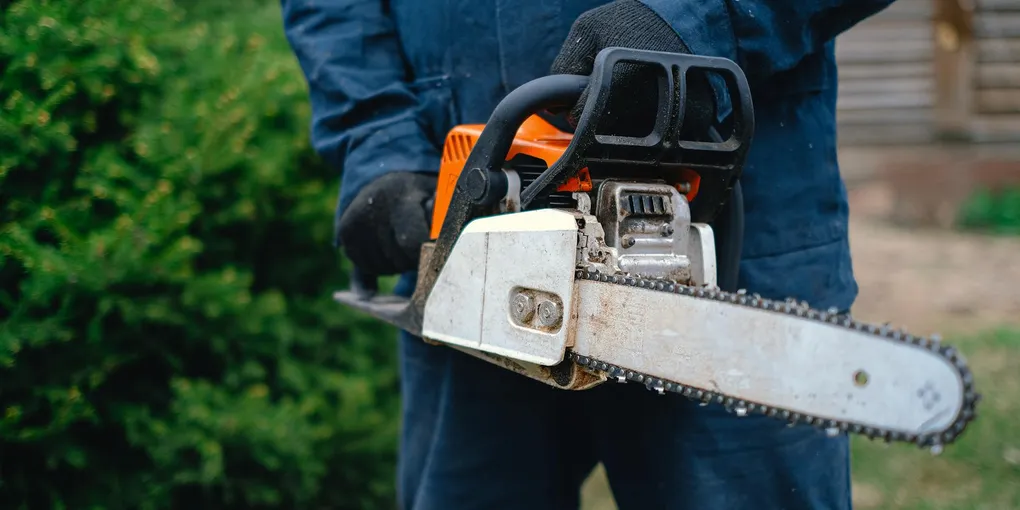
Tree trimming costs $200–$800 for a standard residential tree, $800–$2,500 for large trees over 60 feet, and $75–$250 for small shrubs or ornamental trees. Trimming one to three trees at once reduces per-tree cost 20–30% from scheduling efficiency. Regular trimming every 3–5 years costs far less than emergency removal after storm damage or structural failure. An arborist inspection ($75–$150) identifies which branches are hazards.
Frequently Asked Questions
How much does tree trimming cost?
Tree trimming costs by tree size: small trees under 30 feet (ornamental, young trees) $100–$350; medium trees 30–60 feet (mature oak, maple, ash) $300–$800; large trees 60–80 feet $600–$1,500; very large trees over 80 feet $1,000–$2,500+. Prices increase when: the tree is near power lines (+$150–$400), the tree hangs over structures ($200–$500 extra), a crane is required for large sections ($500–$1,000), or the job requires equipment setup on a narrow lot. Trimming 3–5 trees in one visit often reduces per-tree price 20–30%.
What is the difference between tree trimming and tree pruning?
Tree trimming: removing branches for aesthetic shape, clearance, or maintaining size — mostly live wood. Tree pruning: targeted removal of dead, diseased, or structurally weak branches for tree health and safety — a more surgical process. In practice, the terms are often used interchangeably by contractors. From a cost standpoint, dead wood removal (pruning) is simpler and faster than reshaping a large canopy (trimming). Crown reduction (reducing overall tree height and spread) is the most expensive trimming service — it requires significant labor and arborist expertise to do without permanently damaging the tree.
How often should trees be trimmed?
General guidance: young trees (under 10 years) benefit from structural pruning every 2–3 years to establish good branching habits; established mature trees every 3–5 years for routine maintenance. Fruit trees: annual pruning in late winter or early spring. Fast-growing species (Bradford pear, silver maple) may need trimming every 2–3 years. Slow-growing species (oak, beech) every 5–7 years. Dead or hazard branches should be removed as identified, not waited for. Trees near structures or power lines benefit from annual inspection and trimming every 2–3 years to prevent damage.
Should I trim trees near power lines myself?
No. Trees near power lines should only be trimmed by ISA-certified arborists or your utility company's line-clearing contractors. Contact with live power lines can cause electrocution. Many utilities offer free or subsidized trimming for trees near power lines — call your utility company before hiring a private arborist for line clearance work. If the tree is on your property but touching utility lines, the utility company has the right to trim it (often at no cost to you) but their trimming is for line clearance only, not aesthetics.
What is crown reduction vs. crown cleaning?
Crown cleaning (the basic service): removing dead, diseased, and crossing branches throughout the canopy. Fast, relatively inexpensive. Crown reduction: reducing the overall height and spread of the canopy by cutting back to lateral branches. More expensive (more cuts, more skill required). Crown thinning: selectively removing branches throughout the canopy to allow more light and air movement through. Crown lifting: removing lower branches to raise the canopy above ground level (for clearance over a lawn, driveway, or structure). Most tree trimming quotes describe which service they include — ask specifically which crown services are included.
Does trimming a tree prevent it from falling?
Trimming reduces weight and wind sail area, but does not prevent a structurally failed tree from falling. A tree with internal decay, root damage, or a compromised trunk can fail even after expert trimming. An ISA-certified arborist's risk assessment ($75–$150) evaluates structural integrity using probing, resistograph drilling, and visual inspection — this is the only way to assess fall risk accurately. If an arborist identifies the tree as a hazard due to structural failure, removal ($500–$3,000) is the correct action, not trimming.
Tree trimming costs $200–$800 for a standard residential tree, $800–$2,500 for large trees over 60 feet, and $75–$250 for small shrubs or ornamental trees. Trimming one to three trees at once reduces per-tree cost 20–30% from scheduling efficiency.
Tree trimming is maintenance that pays for itself in avoided removal costs. A $400 trim every 4 years costs $1,600 over 16 years; an emergency removal after a limb fails into a roof costs $2,000–$8,000 in tree work plus $5,000–$30,000 in roof and interior damage.
Tree Trimming Cost by Size
| Tree Height | Typical Cost | Examples |
|---|---|---|
| Under 25 feet | $100–$300 | Young trees, ornamentals, Japanese maple |
| 25–50 feet | $250–$700 | Mature ornamentals, mid-sized shade trees |
| 50–75 feet | $500–$1,300 | Large maple, ash, elm |
| 75–100 feet | $800–$2,000 | Large oak, pine, cottonwood |
| Over 100 feet | $1,500–$3,000+ | Mature white oak, large pine, eucalyptus |
Cost Factors That Increase the Price
| Factor | Added Cost |
|---|---|
| Near power lines | $150–$400 |
| Overhanging structure (roof, patio) | $200–$500 |
| Crane required | $500–$1,500 |
| Steep slope or difficult access | $200–$500 |
| Emergency/storm response | 50–100% premium |
| Debris removal and chipping | $100–$300 |
Trimming vs. Removal: The Decision
- Trim: Tree is structurally sound, has no root/trunk decay, issues are crown-only (dead branches, clearance, aesthetics)
- Remove: Tree has advanced trunk decay (>30% of trunk circumference), root system is compromised, tree is leaning toward structure, or arborist identifies imminent failure risk
Tree Trimming Cost by City
Labor rates for ISA-certified arborists vary significantly by market.
| City | Small Tree | Large Tree (60+ ft) |
|---|---|---|
| New York City, NY | $250–$600 | $1,000–$3,000 |
| Los Angeles, CA | $200–$500 | $800–$2,500 |
| Chicago, IL | $175–$450 | $700–$2,000 |
| Dallas/Houston, TX | $150–$350 | $500–$1,500 |
| Atlanta, GA | $150–$350 | $500–$1,500 |
| Phoenix, AZ | $150–$300 | $450–$1,400 |
| Seattle, WA | $200–$500 | $800–$2,200 |
| Minneapolis, MN | $175–$400 | $600–$1,800 |
Tree services are cheaper in warmer climates (longer operating season, higher competition) and more expensive in expensive labor markets like NYC and Seattle.
What ISA Certification Means and Why It Matters
The International Society of Arboriculture (ISA) certification requires passing a written exam on tree biology, identification, pruning practices, soil science, and safety. It’s verifiable at isa-arbor.com/findanarborist.
Why it matters for your trees:
- ISA-certified arborists know proper cut placement (outside the branch collar — the swollen base where the branch meets the trunk)
- They don’t top trees — topping is the most destructive “pruning” practice and leads to structural failure, rapid decay entry, and vigorous but weakly-attached regrowth
- They can identify disease and pest issues that non-certified tree workers miss
- They carry arborist-specific liability insurance
What to ask any tree service: “Are you ISA-certified?” and “Can I verify your certification number?” Any hesitation is a red flag.
Tree Pruning for Different Species
Different trees have different pruning requirements and timing sensitivities:
| Species | Timing | Notes |
|---|---|---|
| Oak | Late fall to early winter only | Oak wilt risk if trimmed Feb–June in Midwest/TX |
| Elm | Dormant season only | Dutch elm disease risk in spring |
| Maple | Late fall to early winter | Heavy sap bleed if trimmed in late winter |
| Fruit trees | Late winter before bud break | Encourages fruiting; annual pruning recommended |
| Evergreens (pine, spruce) | Late winter to early spring | Avoid major pruning in hot summer |
| Flowering trees (cherry, crabapple) | Immediately after bloom | Pruning before bloom removes buds |
| Birch | Midsummer | Susceptible to bronze birch borer in spring |
Tree Inspection: When to Call an Arborist (Not Just a Trimmer)
An arborist inspection ($75–$200) is different from tree trimming — it’s a health and risk assessment. Schedule an inspection when:
- You notice a large dead branch or dead upper canopy (possibly Dutch elm disease, emerald ash borer, or other systemic issues)
- The tree is leaning noticeably more than previous years
- The base of the tree shows mushrooms (fungal fruiting bodies indicate internal decay)
- The tree lost major limbs in a storm and you’re unsure if it’s structurally sound
- Purchasing a home with large, mature trees near the structure
An arborist’s written report documents the tree’s condition — useful for insurance purposes and home sale disclosures.
Hiring a Tree Service: Red Flags and Green Lights
Red flags:
- Cannot provide ISA certification number
- Recommends “topping” the tree (cutting the main leader)
- No proof of insurance (general liability and workers’ comp are both required)
- Leaves stub cuts (cuts made away from the branch collar leave stubs that rot)
- Wants to be paid entirely in cash with no written contract
- Solicits door-to-door after a storm (“storm chasers” often overcharge and do poor work)
Green lights:
- Provides ISA certification number proactively
- Walks the tree with you and explains each cut
- Uses sharp, clean tools (dull saws tear bark rather than cutting cleanly)
- Uses a bucket truck or climbing gear with proper rigging (not just cutting and dropping branches)
- Provides a written work order with scope, price, and insurance info
Questions to Ask Your Tree Service
- Are you ISA-certified, and can I verify your certification number at isa-arbor.com? — ISA certification is the industry standard for proper pruning technique and tree biology knowledge; verify it before accepting any bid
- Do you carry both general liability and workers’ compensation insurance? — tree work is one of the most dangerous residential trades; uninsured workers on your property can create personal liability if someone is injured
- Will you walk the tree with me and explain which branches you’re removing and why? — a reputable arborist describes each cut rationale; vague “clean up the canopy” without specifics often means unnecessary volume removal to inflate the bill
- Does the quote include debris removal and chipping, or is that extra? — some tree service bids exclude hauling; clarify whether branches and chips will be removed from the property or left for your disposal
- For large trees near structures: will you provide a written risk assessment? — a tree leaning toward a structure or showing signs of internal decay (mushrooms at the base, hollow sound when tapped) needs a formal risk assessment, not just a trimming quote; confirm the arborist will assess structural integrity, not just trim
DIY supplies (if you tackle it yourself)
- Pruning saw (folding)
- Bypass loppers (2-inch capacity)
- Tree wound sealant
- Rope and block for limb lowering
Related Reading
- Tree Removal Cost
- Stump Grinding Cost
- Landscaping Cost
- Spring Home Maintenance Checklist
- Annual Home Maintenance Schedule
- Identify what you're hiring for: trimming vs. hazard removal vs. aesthetics
Different objectives, different approaches: (1) Dead branch removal — straightforward, any certified arborist can do it. Clear hazard. (2) Clearance trimming (over a roof, driveway, fence) — focused, cost-effective. Specify the clearance needed. (3) Aesthetic shaping — most subjective and most expensive. Define the desired outcome before getting quotes. (4) Storm damage repair — emergency, often requires crane. (5) Utility line clearance — call your utility first; they may do it free. Knowing what you're asking for helps you compare quotes accurately and avoid paying for full crown work when you need dead branch removal.
- Hire an ISA-certified arborist, not just a 'tree guy'
The International Society of Arboriculture (ISA) certification (verifiable at isa-arbor.com/findanarborist) indicates training in proper pruning techniques, tree biology, and safety. Uncertified tree services may use improper pruning cuts (topping, flush cuts) that create decay entry points, leading to structural failure within 5–10 years. Tree topping (cutting the main leader) is the most common improper practice — it creates large wounds that invite decay, sprouts that grow weakly attached (storm hazard), and ultimately destroys the tree's structure. An ISA-certified arborist won't top a tree; a tree topper who offers to 'shape it up' by cutting the top is a red flag.
- Get 3 quotes and ask each arborist to walk the tree with you
Tree trimming quotes vary 40–100% for the same tree between contractors. Walk the tree with each arborist and ask: 'What branches specifically are you removing?' Good arborists explain each cut's rationale (dead wood, crossing branch, weight reduction). Lower-tier services propose removing maximum volume (more work = more charge) or minimum volume (less work, still charges full price). Also ask: 'Are you carrying liability insurance and workers' comp?' Tree work is one of the most dangerous residential trades — uninsured tree workers operating on your property expose you to injury liability.
- Time trimming for late winter or fall — avoid spring and midsummer for most species
Optimal trimming timing: late winter (dormant season, January–March for most of the US) is best for structural pruning of most hardwoods — no leaves means better visibility of branch structure, wounds close faster as growth resumes in spring, and insect/disease pressure is lower. Fall trimming is also acceptable for most species after leaves drop. Avoid spring (April–June): trees are actively growing and cuts bleed heavily; disease and insect pressure is highest. Exception: oak trees should NEVER be trimmed from February through June in regions where oak wilt is present (Midwest, Texas) — fresh cuts attract the beetle vector of oak wilt, which can kill the tree.
- Keep records of who trimmed the tree and what was done
A brief record of tree work (date, arborist name, work performed) serves three purposes: (1) If the tree later fails and causes property damage, documentation of professional care demonstrates due diligence and can protect against liability claims. (2) When selling the home, a documented tree care history is reassuring to buyers who can see a mature tree near the house. (3) It establishes a maintenance schedule — if you noted last trim in 2023, you know 2026–2027 is due. Many ISA arborists provide a written work order with specs; file it with your home maintenance records.
Free: 10-Point Home Maintenance Checklist
Prevent costly repairs with this seasonal checklist. Save hundreds every year by catching problems early.
Your checklist is ready!
Open Checklist →Something went wrong. View the checklist here.