Spray Foam Insulation Cost 2026: $1–$4.50/sq ft by Type
Spray foam insulation costs $1–$2/sq ft for open-cell and $2–$4.50/sq ft for closed-cell, installed. A 1,000 sq ft attic runs $1,500–$4,500. Higher R-value and air sealing justify the premium.
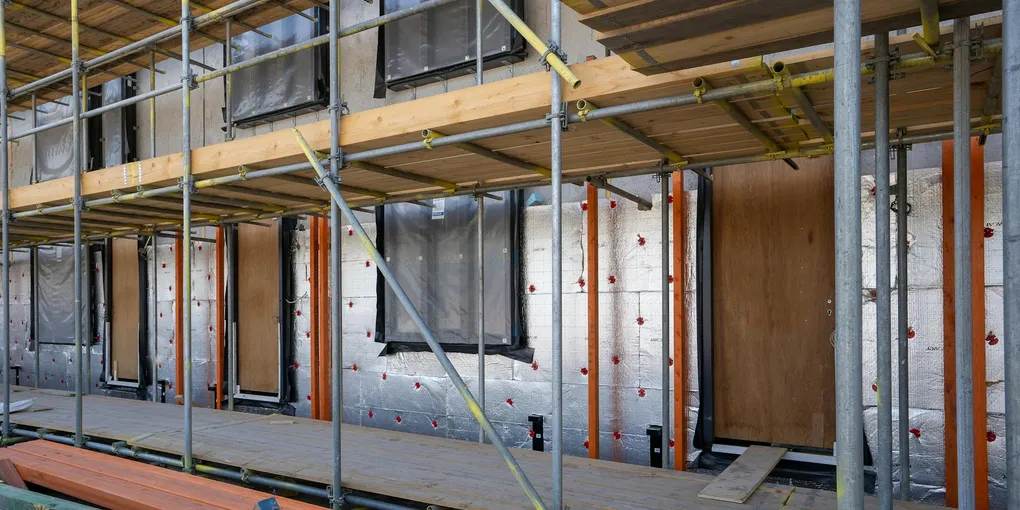
Spray foam insulation costs $1.00–$2.50 per square foot for open-cell foam and $1.50–$4.50 per square foot for closed-cell foam, plus a minimum service charge of $500–$1,500. A typical attic rim joist seal (100–200 sq ft) costs $500–$1,500. A full crawlspace spray (1,000 sq ft) runs $2,000–$6,000. Whole-house spray foam insulation (new construction) runs $8,000–$25,000. Spray foam delivers the best air sealing performance of any insulation type, often reducing HVAC energy costs 15–30%.
Frequently Asked Questions
How much does spray foam insulation cost?
Spray foam insulation costs $1.00–$2.50/sq ft for open-cell foam and $1.50–$4.50/sq ft for closed-cell foam, material and labor included. Minimum job charges run $500–$1,500 — small jobs aren't cost-effective. A 1,500 sq ft attic floor with open-cell foam runs $1,500–$3,750. Closed-cell foam in a 1,200 sq ft crawlspace runs $1,800–$5,400. Whole-house spray foam in new construction runs $8,000–$25,000 depending on house size and foam type.
What is the difference between open-cell and closed-cell spray foam?
Open-cell foam (R-3.7 per inch) is softer, less dense, and vapor-permeable. It's cheaper ($1.00–$2.50/sq ft) and works well for interior applications (attic floors, wall cavities) where vapor transmission isn't critical. Closed-cell foam (R-6.5+ per inch) is denser, rigid, and acts as a vapor barrier. It's better for below-grade applications (crawlspaces, basement walls, rim joists in cold climates) but costs more ($1.50–$4.50/sq ft). Closed-cell also adds structural rigidity.
Is spray foam insulation worth the cost?
Spray foam is worth it in specific applications: rim joist sealing (most cost-effective air sealing in any house), crawlspace encapsulation (prevents moisture and air infiltration), and cathedral ceilings where depth is limited. The 15–30% HVAC savings often pay back the premium over blown fiberglass in 5–10 years. It's not cost-effective everywhere — attic floors with open access are much cheaper to insulate with blown fiberglass (R-38 blanket for $1–$2/sq ft vs. $3–$5/sq ft for equivalent R-value spray foam).
How much does rim joist spray foam cost?
Rim joist spray foam (sealing the band joist where the floor system meets the foundation) costs $500–$1,500 for a typical 1,500–2,500 sq ft home (100–200 linear feet of rim joist). This is the single most cost-effective air sealing application in most houses — rim joists are responsible for 15–25% of air infiltration. Closed-cell foam to 2 inches (R-12+) is the recommended specification.
Can I spray foam my attic myself?
DIY spray foam kits (Dow FROTH-PAK, Loctite TITE FOAM) are available for small jobs under 100 sq ft — rim joists, around penetrations, small gaps. Two-part DIY kits run $40–$80 per 12-board-foot kit. Whole-area spray foam requires professional equipment (heated proportioners, plural-component spray guns) and proper PPE — DIY beyond spot applications isn't practical or safe without training. The chemicals (isocyanate components) are respiratory hazards.
How much does crawlspace spray foam cost?
Crawlspace spray foam insulation costs $2,000–$6,000 for a typical 1,000–1,500 sq ft crawlspace. This includes spraying the floor joists and rim joists (if unencapsulated) or the foundation walls and floor (for a conditioned crawlspace). Closed-cell foam at 2 inches on crawlspace walls (R-12+) converts an unconditioned crawlspace to a conditioned one, eliminating frozen pipes and floor cold spots. Combined with vapor barrier, complete crawlspace encapsulation costs $5,000–$15,000.
Spray foam insulation costs $1–$2.50 per board foot installed in 2026 — a typical 2,000 sq ft attic runs $4,000–$8,000 for open-cell or $6,000–$14,000 for closed-cell. Open-cell foam (R-3.5/inch, $1–$1.50/board ft) is best for interior walls and attic undersides. Closed-cell (R-6.5/inch, $1.50–$2.50/board ft) is better for crawl spaces, rim joists, and exterior walls. DIY kits ($300–$600) cover small areas; anything over 200 sq ft requires professional equipment.
Spray foam insulation earns its premium price in specific applications where no other product delivers the same combination of air sealing and thermal resistance in one pass. Understanding where it’s worth it — and where cheaper alternatives compete — is the key to smart insulation spending.
Spray Foam Insulation Cost by Application
| Application | Foam Type | Cost Range |
|---|---|---|
| Rim joist sealing (whole house) | Closed-cell | $500–$1,500 |
| Crawlspace walls (1,000 sq ft) | Closed-cell | $2,000–$5,000 |
| Attic rafter bays (cathedral ceiling) | Open or closed | $2,000–$7,000 |
| Attic floor (1,500 sq ft) | Open-cell | $1,500–$3,750 |
| Basement walls (1,000 sq ft) | Closed-cell | $2,500–$6,000 |
| Whole house (new construction, 2,000 sq ft) | Mixed | $8,000–$20,000 |
| Around penetrations / spot sealing | Open-cell | $500–$1,500 |
Open-Cell vs. Closed-Cell: When to Use Each
| Factor | Open-Cell | Closed-Cell |
|---|---|---|
| R-value per inch | R-3.7 | R-6.0–6.7 |
| Cost per sq ft | $1.00–$2.50 | $1.50–$4.50 |
| Vapor permeability | Vapor-open (breathes) | Vapor barrier (Class II) |
| Best for | Interior walls, attic floors, sound dampening | Crawlspaces, rim joists, below-grade, limited-depth applications |
| Adds structural rigidity | Minimal | Yes (significant in walls) |
| Water exposure tolerance | Low (absorbs moisture) | High (resists liquid water) |
Rule of thumb: Use closed-cell wherever moisture is a concern (below grade, exterior-facing assemblies in cold climates). Use open-cell where cost matters more than vapor control (interior walls, attic floors with adequate depth).
Spray Foam vs. Other Insulation Types
| Type | R-Value/Inch | Cost/Sq Ft Installed | Air Sealing |
|---|---|---|---|
| Spray foam (open-cell) | R-3.7 | $1.00–$2.50 | Excellent |
| Spray foam (closed-cell) | R-6.5 | $1.50–$4.50 | Excellent |
| Blown fiberglass | R-2.5 | $0.50–$1.50 | Poor (needs air barrier) |
| Blown cellulose | R-3.7 | $0.60–$1.80 | Good (dense-pack) |
| Fiberglass batts | R-3.2 | $0.40–$1.20 | Poor |
| Rigid foam boards | R-4–7 | $0.80–$2.00 | Good (if seams taped) |
Spray foam’s advantage is air sealing + insulation in one step. Fiberglass batts have good R-values per dollar but essentially zero air sealing — they need a separate air barrier to achieve equivalent performance.
The Rim Joist: Best ROI in the House
The rim joist (band joist) is the perimeter framing between the foundation and the first floor. In a typical basement or crawlspace, these boards are exposed to outside air and often uninsulated or covered with a friction-fit fiberglass batt (which does nothing for air sealing).
A blower door test in most pre-2000 homes shows the rim joist as one of the top three infiltration points. Closed-cell spray foam at 2 inches (R-12) applied directly to the rim joist:
- Seals 100% of the air infiltration at the rim
- Delivers R-12+ thermal resistance
- Takes 2–4 hours for a typical house
Cost: $500–$1,500 for a 1,500–2,500 sq ft house. Payback period: often 3–5 years in heating climates.
Federal Tax Credits and Utility Rebates (2025–2026)
The Inflation Reduction Act Section 25C provides:
- 30% tax credit on qualifying insulation and air sealing costs
- Maximum credit: $1,200/year for insulation
- Applies to insulation that meets applicable International Energy Conservation Code (IECC) standards
On a $3,000 spray foam project, the 30% credit = $900 back at tax time. Effective cost: $2,100.
Check your utility’s rebate program additionally — many offer $0.10–$0.50/sq ft for air sealing. Combined federal credit + utility rebate can reduce effective cost by 40–50%.
Regional Cost Variations
Spray foam costs vary by region due to both labor rates and climate-driven demand. Cold-climate states have higher demand for rim joist and crawlspace work; hot-humid climates prioritize attic applications:
| Region | Rim Joist (whole house) | Crawlspace (1,000 sq ft) | Attic Floor (1,500 sq ft) |
|---|---|---|---|
| Northeast (NY, MA, NJ) | $700–$1,800 | $2,800–$6,500 | $1,800–$4,500 |
| Mid-Atlantic (DC, MD, VA) | $600–$1,600 | $2,500–$6,000 | $1,600–$4,000 |
| Southeast (FL, GA, TX) | $450–$1,200 | $2,000–$5,000 | $1,400–$3,500 |
| Midwest | $500–$1,400 | $2,200–$5,500 | $1,500–$3,800 |
| Pacific (CA, WA, OR) | $600–$1,600 | $2,500–$6,000 | $1,700–$4,200 |
Climate matters for product choice: In hot-humid climates (Southeast, Gulf Coast), closed-cell foam in attic rafter bays creates a conditioned attic that keeps HVAC equipment in conditioned space — a significant energy efficiency benefit not achievable with open-cell or blown insulation.
Spray Foam Insulation Contractors: What to Look For
| Credential / Factor | Why It Matters |
|---|---|
| SPFA certification (Spray Polyurethane Foam Alliance) | Training on application technique, mixing ratios, and safety |
| Uses major brand foam | Icynene, Lapolla, Demilec, Covestro — consistent chemistry; avoid off-brand kits |
| Provides R-value certificate | Written documentation of installed R-value for permit/rebate/tax credit compliance |
| Full protective equipment | Full Tyvek suit, supplied-air respirator — not just a dust mask |
| References from similar jobs | Ask for references from attic or crawlspace jobs, not just general residential |
The mixing ratio issue: improperly mixed two-component foam (wrong A-to-B ratio) never fully cures and off-gasses for months. This is more common with uncertified installers using off-brand components. Always ask about the foam manufacturer and the installer’s training. A persistent “fishy” or chemical smell after 72 hours is a sign of bad foam — remediating it requires foam removal, which is expensive.
DIY Spot Foam: When It Makes Sense
| Application | DIY-Practical? | Kit Cost | Notes |
|---|---|---|---|
| Rim joist, small section (under 50 sq ft) | Yes | $40–$120 per kit | DOW FROTH-PAK 200 covers ~25 sq ft at 2 inches |
| Around pipe penetrations | Yes | $15–$40 per can | Single-component foam (Great Stuff Pro) |
| Around window/door frames | Yes | $10–$20 per can | Use low-expansion window/door foam only |
| Whole crawlspace or attic | No | — | Requires professional equipment and PPE |
| Cathedral ceiling bays | No | — | Requires precise coverage; no access after install |
DOW FROTH-PAK is the most reliable DIY two-component kit for spot applications. Note that it has a shelf life of ~6 months once produced — always buy fresh kits from high-turnover suppliers.
Questions to Ask an Insulation Contractor
- What brand and type of foam are you using? — should name a specific manufacturer (not “our brand”); ask for the product data sheet
- What R-value per inch will be achieved at your specified thickness? — should match published specs for the product
- Can you provide a certificate of installed R-value? — required for 25C tax credits and many utility rebates
- How long is the off-gassing period, and what ventilation do you provide? — professional should specify cure time and ventilation protocol
- What’s your remediation policy if the foam off-gasses persistently? — any legitimate spray foam contractor should have a policy for bad foam
DIY supplies (if you tackle it yourself)
- DIY spray foam kit (200 BF)
- Foam gun applicator
- Foam spray cans (gaps/cracks)
- Protective suit/goggles
Related Reading
- Attic Insulation Cost
- Crawl Space Encapsulation Cost
- AC Tune-Up Cost
- Furnace Replacement Cost
- How to Install Attic Insulation
- Annual Home Maintenance Schedule
- Attic Insulation Cost Guide — batt and blown-in cost comparison alongside spray foam
- Identify the highest-impact applications before getting quotes
Spray foam is not always the right insulation for every location. Priority applications where spray foam outperforms alternatives: (1) Rim joists — 15–25% of air infiltration, hardest to air-seal with batts; (2) Crawlspace walls — moisture and air control in an enclosed space; (3) Cathedral ceilings — limited depth requires high R-value per inch; (4) Around penetrations (pipes, wires, ducts). Low-priority applications: attic floors with open access (blown insulation is more cost-effective per R-value), standard 2x4 walls in new construction (batts + sheathing air barrier is competitive).
- Get an energy audit before choosing insulation type and location
A blower door test ($200–$500) identifies where air is infiltrating your home with thermal imaging and pressure testing. The results tell you exactly which applications will deliver the biggest energy savings. Spray foam without an energy audit is like treating symptoms without a diagnosis — you might spray the wrong area and miss the biggest infiltration points. Many utility companies offer free or subsidized energy audits. The audit pays for itself many times over in targeted insulation investment.
- Verify installer has experience with your specific application
Spray foam application requires precise training. Over-application causes off-gassing odor issues that can last months. Under-application leaves thermal bridges. Ask for references from similar jobs (crawlspace, rim joists, attic rafter bays) — not just general residential experience. The Spray Polyurethane Foam Alliance (SPFA) offers installer certification; SPFA-certified installers have completed training programs. Verify that the installer uses product from a major manufacturer (Icynene, Lapolla, Demilec, Covestro) not off-brand components.
- Plan for the 24-hour off-gassing window
Spray foam requires 24 hours of cure time before occupancy. During application and curing, the space must be vacated and ventilated. Open-cell foam has stronger initial off-gassing than closed-cell. In rare cases, improperly mixed foam (wrong ratio) causes persistent odor that requires remediation. This is more common with DIY kits and uncertified installers. Schedule spray foam when you can vacate the space for 24–48 hours.
- Check for utility rebates and tax credits before committing
Spray foam insulation often qualifies for federal energy efficiency tax credits (25C — 30% of cost up to $1,200 as of 2025–2026) and state/utility rebates. Check ENERGY STAR's rebate finder or dsireusa.org before signing a contract. Many utilities offer $0.10–$0.25/sq ft rebates for air sealing work. The 25C federal credit applies to insulation that meets certain R-value thresholds — confirm with your installer that the specified installation qualifies.
Free: 10-Point Home Maintenance Checklist
Prevent costly repairs with this seasonal checklist. Save hundreds every year by catching problems early.
Your checklist is ready!
Open Checklist →Something went wrong. View the checklist here.