Pool Maintenance Cost 2026: $80–$200/Month Service
Pool maintenance costs $80–$200/month for professional weekly service. Annual cost with chemicals, cleaning, and seasonal open/close runs $1,500–$4,000. Full breakdown by service type.
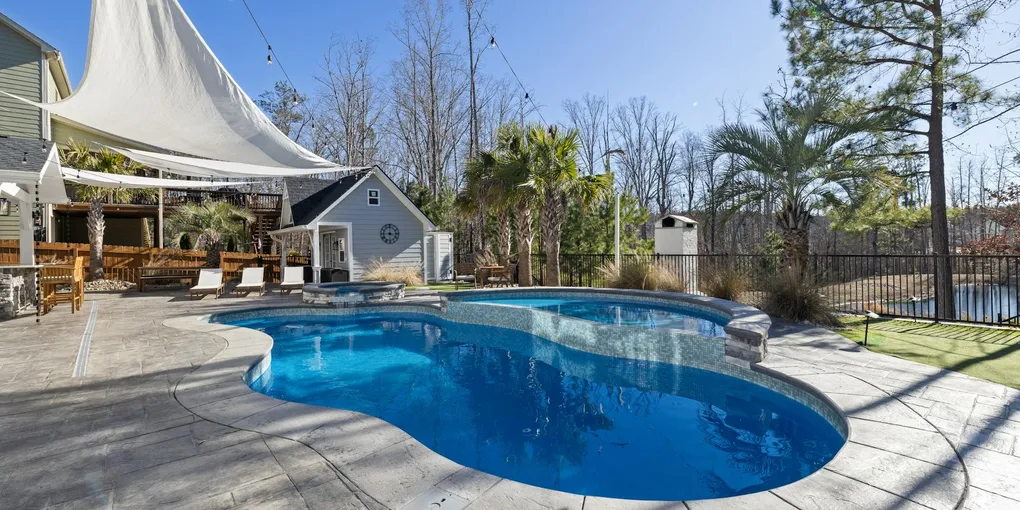
Pool maintenance costs $80–$200/month for professional weekly chemical service and cleaning. Annual pool service (chemicals + cleaning + seasonal open/close + minor repairs) runs $1,500–$4,000 for most homeowners. DIY pool maintenance costs $500–$1,500/year in chemicals and supplies. Opening a pool in spring costs $150–$500 professionally; winterizing/closing costs $200–$600. Major equipment repairs (pump, filter, heater) add $300–$2,500 when needed.
Frequently Asked Questions
How much does pool maintenance cost per month?
Professional weekly pool service (chemicals, vacuuming, skimming, filter maintenance) costs $80–$200/month depending on pool size, region, and service level. Basic chemical-only service runs $60–$100/month. Full-service weekly visits (cleaning + chemicals + equipment check) run $150–$250/month. Monthly costs for DIY maintenance (chemicals only): $50–$150/month. Total annual professional service cost: $1,000–$3,000 for maintenance plus $300–$800 for seasonal open/close.
How much does it cost to open a pool in spring?
Professional pool opening costs $150–$500 depending on your region and what the winterizing left behind. Opening includes: removing and storing the pool cover, reconnecting equipment, priming the pump, checking and adjusting chemical levels, and vacuuming accumulated debris. Pools in warmer climates (Texas, Florida, California) that stay partially operational cost less to open. Pools in northern states that were fully winterized with antifreeze in the lines cost more ($300–$500). Green pool remediation after a winter that allowed algae growth adds $150–$400.
How much does it cost to close a pool for winter?
Pool winterizing (closing) costs $200–$600 professionally. Includes: balancing chemicals with a winter chemical kit, lowering water level, blowing out plumbing lines, adding antifreeze to lines in freeze-prone regions, installing the winter cover, and storing equipment. Skipping proper winterizing in freeze climates causes cracked pipes and fittings, which costs $500–$2,000 to repair in spring. DIY winterizing kit (chemicals + plugs + cover) costs $100–$300.
How much do pool chemicals cost per year?
DIY pool chemicals cost $500–$1,500/year depending on pool size, usage, and water chemistry. Major ongoing chemical costs: chlorine tablets ($100–$300/season), shock treatment ($50–$150/season), pH up/down ($30–$80), algaecide ($30–$60), cyanuric acid (stabilizer, $30–$80 annually), and test strips or kit ($15–$40). Salt water pools cost $300–$500/year for salt and supplemental chemicals — less than traditional chlorine but require a $500–$2,000 salt chlorinator cell replacement every 3–7 years.
What are the most common pool equipment repairs?
Pool pump motor failure: $300–$700 to rebuild or replace. Pool pump (complete replacement): $500–$1,500 installed. Filter cleaning (cartridge): $75–$150 labor, replace cartridge every 2–3 years ($50–$150). Sand filter sand replacement: $150–$350. Pool heater repair: $200–$800 depending on issue. Pool heater replacement: $1,500–$5,000 installed. Pool leak detection: $300–$500, plus repair. Resurfacing (replastering, pebble finish): $4,000–$10,000 every 10–15 years. Automatic pool cleaner repair: $100–$400.
How much does it cost to heat a pool?
Gas pool heater operating cost: $200–$600/month to heat a pool to 80°F in cold weather (highly variable by climate, pool size, and gas prices). Heat pump operating cost: $50–$150/month (much more efficient, only works above 45–50°F ambient temperature). Solar pool heating: $1,500–$3,500 installed, near-zero operating cost. For pools used year-round in cold climates, a pool cover reduces heating costs 50–70% by preventing evaporative heat loss.
Pool maintenance costs $80–$200/month for professional weekly chemical service and cleaning. Annual pool service (chemicals + cleaning + seasonal open/close + minor repairs) runs $1,500–$4,000 for most homeowners.
Pool ownership costs $1,500–$4,000/year in maintenance — a number most homeowners underestimate when buying a home with a pool. Understanding where the money goes, what’s DIY-able, and what requires a professional helps you budget accurately and prevent the expensive failures.
Pool Maintenance Cost Summary
| Service | DIY Annual Cost | Professional Annual Cost |
|---|---|---|
| Chemicals | $500–$1,500 | Included in service |
| Weekly cleaning service | — | $1,000–$3,000 |
| Spring opening | $100–$250 | $150–$500 |
| Winterizing / closing | $100–$300 | $200–$600 |
| Equipment maintenance | $50–$200 | $100–$300 |
| Total annual | $750–$2,250 | $1,500–$4,400 |
Equipment Repair Cost Reference
| Equipment | Typical Issue | Repair Cost | Replace Cost |
|---|---|---|---|
| Pool pump motor | Bearing failure | $200–$400 | $300–$700 |
| Pool pump (complete) | End of life | — | $500–$1,500 |
| Cartridge filter | Torn cartridge | $50–$150 (cartridge) | $400–$800 |
| Sand filter | Old sand | $150–$350 | $500–$1,200 |
| Pool heater (gas) | Various | $200–$800 | $1,500–$3,500 |
| Salt chlorinator cell | End of life (5 yr) | — | $300–$700 |
| Automatic cleaner | Various | $100–$400 | $400–$1,200 |
| Pool light | Bulb or fixture | $75–$400 | $400–$1,500 |
Salt Water vs. Chlorine: Ongoing Cost Comparison
| Factor | Traditional Chlorine | Salt Water |
|---|---|---|
| Annual chemical cost | $500–$1,000 | $200–$400 |
| Equipment (salt cell) replacement | — | $300–$700 every 5 yr |
| Water feel | Harsher | Softer, less eye irritation |
| Upfront conversion cost | — | $800–$2,000 |
Salt water pools are not chlorine-free — the salt chlorinator converts salt to chlorine continuously. The advantage is lower chemical handling and softer-feeling water. The salt cell is the main ongoing expense, running $300–$700 every 3–7 years.
When to Hire a Pool Service Company
Professional service makes sense if:
- You travel frequently or can’t maintain a consistent weekly schedule
- You don’t want to learn water chemistry or equipment troubleshooting
- Your pool has recurring problems (algae, equipment issues)
- You have a complex water feature, spa, or automation system
DIY makes sense if:
- You can commit 2–3 hours per week during swim season
- You’re willing to learn chemistry testing and adjustment
- You have a simple pool without complex equipment
Many homeowners do a hybrid: DIY chemical maintenance + professional opening/closing + professional equipment repair. This typically costs $800–$1,500/year vs. $2,000–$4,000 for full service.
Regional Cost Variations
Pool service costs track local labor rates and vary significantly by climate (seasonal vs. year-round use):
| Region | Monthly Service | Spring Opening | Winter Closing |
|---|---|---|---|
| Northeast (NY, MA, NJ) | $120–$250 | $250–$500 | $300–$600 |
| Southeast (FL, GA) | $80–$160 | $100–$250 | $100–$250 (minimal) |
| Texas / Southwest | $85–$175 | $100–$250 | $150–$350 |
| Midwest | $120–$225 | $200–$450 | $250–$550 |
| Pacific Coast (CA, OR, WA) | $100–$200 | $150–$350 | $200–$450 |
Year-round pools: Florida, Southern California, and Texas have the lowest annual maintenance costs because pools don’t need full winterization. Midwest and Northeast pools need complete seasonal closure, adding $500–$1,100/year in open/close costs.
Pool Size: How It Affects Cost
| Pool Type | Volume (gallons) | Chemical Cost (DIY/yr) | Monthly Service |
|---|---|---|---|
| Small (10×20 ft) | 10,000–15,000 | $400–$800 | $80–$150 |
| Medium (12×24 ft) | 15,000–25,000 | $500–$1,000 | $100–$200 |
| Large (16×32 ft) | 25,000–40,000 | $700–$1,500 | $150–$250 |
| Very large / freeform | 40,000+ | $1,000–$2,000 | $175–$300 |
Pool Service Company Comparison
| Option | Monthly Cost | What’s Included | Notes |
|---|---|---|---|
| National franchise (e.g., Swimming Pool Steve) | $150–$250 | Full service, chemicals | Consistent but higher priced |
| Local pool company | $100–$200 | Full service, chemicals | Best value; quality varies |
| Chemicals-only service | $60–$100 | Chemicals, test | Owner handles cleaning |
| Pool builders’ service dept. | $120–$220 | Full service | Convenient for warranty work |
| App-based pool service | $100–$180 | Weekly visits | Emerging model; variable quality |
The hybrid approach most pool owners settle into: hire a local pool company for seasonal opening/closing and equipment repairs ($600–$1,200/year) while doing weekly DIY chemical maintenance ($500–$1,000/year). Total: $1,100–$2,200/year vs. $2,000–$4,000 for full service.
Robotic Cleaner vs. Service Labor
A robotic pool cleaner ($500–$1,200 upfront) can reduce service labor by 50–80% by handling weekly vacuuming autonomously:
| Robotic Cleaner | Price | Best For |
|---|---|---|
| Dolphin Nautilus CC Plus | $650–$750 | Best value overall; most recommended |
| Polaris 9650iQ | $900–$1,100 | Larger pools; app control |
| Dolphin E10 | $400–$500 | Small pools; budget entry point |
| Hayward SharkVac | $350–$450 | Basic cleaning; minimal features |
At $150/month in service savings, a $700 Dolphin Nautilus pays back in under 5 months.
Questions to Ask a Pool Service Company
- Is the weekly service price all-inclusive, or are chemicals extra? — most companies charge separately for chemicals; get a complete cost picture before comparing quotes
- How many pools does your technician service per day? — over 10–12 pools/day means less time per pool; 8 or fewer means more thorough attention
- What happens if my chemistry is out of range between visits? — should have a callback or mid-week visit policy for problem pools
- Do you do equipment repairs, or do you subcontract? — companies that do their own repairs respond faster and charge less than those who subcontract
- What chemicals do you use? — trichlor tablets are standard but can lower pH aggressively; ask if they supplement with liquid chlorine
DIY supplies (if you tackle it yourself)
- Pool test strips
- Pool shock (calcium hypochlorite)
- Pool algaecide
- Pool skimmer net
- Robotic pool cleaner
Related Reading
-
Hot Tub Installation Cost — budget for a spa as part of outdoor living projects
-
How to Clean a Pool — DIY weekly maintenance routine for skimming, chemistry, and shock treatment
- Test water chemistry twice a week — this is non-negotiable
Pool chemistry must be tested 2–3 times per week during swim season. The minimum parameters to test: free chlorine (target 1–3 ppm), pH (target 7.4–7.6), and alkalinity (target 80–120 ppm). Chlorine kills pathogens. pH controls how effective chlorine is — at pH 8.0, chlorine is only 20% effective; at pH 7.0 it's 70% effective. Alkalinity stabilizes pH so it doesn't swing wildly. Use a digital test kit ($40–$80) rather than test strips for more accurate readings, or bring a water sample to a pool supply store for free analysis (which also usually reveals what chemicals they'd like to sell you).
- Run the pump the right number of hours daily
The pool pump should run long enough to turn over the entire pool volume once per day. Calculate turnover time: pool volume (gallons) ÷ pump flow rate (GPM) = hours. For a 15,000-gallon pool with a 60 GPM pump: 15,000 ÷ 60 = 250 minutes = 4.2 hours minimum. Most pools should run 6–12 hours/day. Running the pump during the hottest part of the day maximizes UV-assisted chlorine usage. Variable-speed pumps (Pentair IntelliFlo, Hayward TriStar VS) reduce pump electricity costs 70–80% vs. single-speed — $500–$900 installed, pays back in 2–4 years in electricity savings.
- Brush walls and vacuum weekly — don't skip this for chemicals
Manual brushing of pool walls, steps, and corners prevents algae from establishing before it's visible. Algae starts as microscopic growth on rough surfaces before blooming into a green pool. Brush with a wall brush (nylon for vinyl and fiberglass, stainless for plaster) twice weekly, then vacuum using an automatic cleaner or manual vacuum head. Robotic pool cleaners ($400–$1,200) handle this automatically — the Dolphin Nautilus CC Plus ($700) is the most-recommended entry-level robotic cleaner and pays back vs. weekly manual cleaning labor within 1–2 seasons of professional service.
- Learn to read and prevent algae — catching it early costs $20 instead of $200
Early algae: water looks slightly hazy or green-tinged, walls feel slightly slimy. Treatment: shock with calcium hypochlorite (1–2 lbs per 10,000 gallons for green algae), run pump 24 hours, brush every 6 hours, vacuum dead algae. Cost: $20–$50 in chemicals. Full algae bloom (green pool): shock with 4–6 lbs per 10,000 gallons, repeat for 2–3 days, backwash filter frequently, vacuum to waste. Cost: $50–$150 in chemicals + $100–$300 in service fees if you hire out. Completely green/black pool (mustard or black algae): $200–$400 professionally treated. Algaecide is most effective as a preventive (weekly maintenance dose) rather than a treatment after the fact.
- Budget for equipment replacement before it fails
Pool equipment has predictable lifespans: pump motor 8–12 years, filter 15–25 years (cartridge, sand, or DE), pool cleaner 3–7 years, chlorinator cell (salt pool) 3–7 years, heater 8–15 years. The pump is the heart of the pool — if it fails mid-summer, you need emergency repair or the pool turns green in 48–72 hours. Budget $100–$200/year in a pool repair fund. Replace cartridge filters ($50–$150 each) every 2–3 years rather than trying to extend life indefinitely — a torn cartridge bypasses filtration entirely. Watch for these early signs: pump runs but barely moves water (impeller partially blocked), filter needs backwashing more frequently than usual (filter media failing), pump motor runs hot or makes a high-pitched whine (bearings failing).
Free: 10-Point Home Maintenance Checklist
Prevent costly repairs with this seasonal checklist. Save hundreds every year by catching problems early.
Your checklist is ready!
Open Checklist →Something went wrong. View the checklist here.