How to Paint a Ceiling: Technique for a Smooth, Drip-Free Finish (2026)
Painting a ceiling is harder than painting walls because of gravity — drips fall on you and the floor. This guide covers prep, the right paint and tools, cutting in around the perimeter, rolling technique, and how to avoid lap marks.
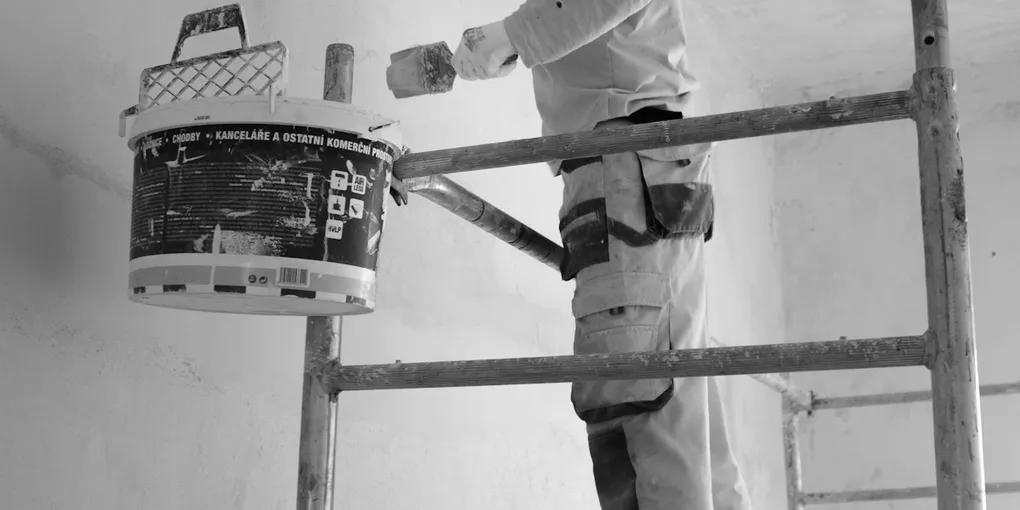
Ceiling paint technique: (1) Use flat ceiling paint — it hides surface imperfections better than eggshell or satin and minimizes sheen variations. (2) Roll in one direction only (north-south or east-south, not random), in sections no more than 3 feet wide, keeping a wet edge. (3) Work quickly: rolled ceiling paint dries within minutes — rolling over partially-dried paint creates visible lap marks. (4) Two thin coats are better than one thick coat. (5) Do not stop in the middle of a wall — finish one continuous pass from corner to corner before taking a break.
Frequently Asked Questions
What is the best paint for a ceiling?
Flat (matte) sheen is the correct finish for almost all ceilings. Flat paint scatters light and hides surface irregularities: texture, patched areas, brush strokes from cutting in. Avoid eggshell or satin on ceilings — any sheen makes roller texture and lap marks much more visible from below. Exception: bathroom ceilings benefit from a flat sheen with mildew resistance (look for 'ceiling paint with mildew protection' or use satin if the bathroom has poor ventilation). Dedicated ceiling paints (Sherwin-Williams Ceiling Flat, Behr Ceiling Paint) are slightly thicker than wall paint, which reduces dripping and provides better coverage per coat.
How do I avoid lap marks on a ceiling?
Lap marks appear when paint is rolled over an area that has already partially dried, creating a visible seam. Prevent them by: (1) Maintaining a wet edge — always roll into the wet area of the previously applied paint, not beyond it. (2) Working in manageable sections — paint a 3-foot wide strip the full length of the room before moving to the next strip. (3) Keeping the pace up — don't stop for long breaks mid-room. (4) Feathering the edge — at the transition between strips, roll lightly with minimal paint to blend the wet edges. (5) Using extension roller covers ($15–$25) with a thicker nap (3/4 inch) for textured ceilings — thicker nap holds more paint and reduces the need to re-roll.
Should I cut in before or after rolling the ceiling?
Cut in first, roll second — always. Cutting in creates a 2–3 inch painted border at the ceiling perimeter (along the walls and around any light fixtures). This border is done with a brush, which leaves visible brush texture. Rolling comes second and is done right after cutting in, while the cut-in paint is still wet. Rolling into wet cut-in blends the brush texture into the rolled texture invisibly. If you wait for the cut-in to dry before rolling: you'll see the brushed border through the final finish. The objective is one continuous wet film across the ceiling.
How do I paint around a ceiling light fixture or ceiling fan?
Turn off the circuit breaker for the fixture. If painting close to the fixture: loosen the canopy (the cover plate at the ceiling) and drop it down 1–2 inches on its mounting bracket — this gives you clean access to cut in behind it. For light fixtures: most canopies unscrew counterclockwise. Cut in around the fixture with a brush, then push the canopy back up when paint is dry. For a ceiling fan: lower any blade bracket screws slightly, remove blades if convenient. Never spray paint into a junction box or electrical fixture. Cover the fixture with a plastic bag secured with painter's tape if overspray is a risk.
Do I need to prime a ceiling before painting?
Prime when: (1) The ceiling has water stains (old leaks, shower condensation). Use a shellac-based or oil-based stain-blocking primer (Zinsser BIN or Kilz Original) — latex primer will not block stains. (2) The ceiling was never painted (new drywall). (3) You're covering a dark color with a light one. (4) The existing paint is peeling or chalky. If the ceiling is in good condition and you're doing a refresh coat: no primer needed — two coats of ceiling paint over sound existing paint provides adequate coverage. Paint labeled 'paint + primer in one' usually performs no better than regular paint for ceiling repaints.
Ceiling paint technique: (1) Use flat ceiling paint — it hides surface imperfections better than eggshell or satin and minimizes sheen variations. (2) Roll in one direction only (north-south or east-south, not random), in sections no more than 3 feet wide, keeping a wet edge.
A smooth ceiling finish requires fast work, the right roller nap, and keeping the wet edge.
What you need
- Ceiling paint, flat sheen (Behr Ceiling Paint, Sherwin-Williams Ceiling Flat)
- Paint roller with extension pole
- 3/4-inch nap roller cover (for textured ceilings) or 1/2-inch (smooth ceilings)
- 2-inch angled sash brush (for cutting in)
- Paint tray and liner
- Plastic drop cloths
- Stain-blocking primer (if water stains are present)
Step 1: Prepare the room
Cover the floor with drop cloths — ceiling drips are inevitable. Move furniture to the center of the room or out entirely. Remove light fixture covers and register vents if accessible. Fill any cracks or holes with lightweight spackle; let dry fully.
If the ceiling has water stains: spot-prime with Zinsser BIN or Kilz Original first. Let primer dry before topcoating.
Step 2: Cut in the perimeter
Pour a small amount of ceiling paint into a separate bucket or cut-in cup. Using a 2-inch angled sash brush, cut a 2–3 inch painted line along every edge where the ceiling meets the walls. Also cut around any light fixtures, fans, or vents.
Work in sections — don’t cut in the entire room before rolling. Cut in one wall at a time and then immediately roll that section while the cut-in is still wet.
Step 3: Roll the ceiling
Load the roller with ceiling paint (roll in the tray to distribute paint evenly — no dripping). Stand with the extension pole at a comfortable angle so you can apply moderate pressure.
Start at one end of the room. Roll a 3-foot wide strip the full length of the room in one direction. Keep a wet edge at the far side of each strip. Move to the next parallel 3-foot strip, overlapping the wet edge of the previous strip by 6 inches.
Do not press hard enough to splatter. Maintain a consistent speed.
Step 4: Second coat
Allow the first coat to dry (30–60 minutes for most ceiling paints). Inspect from the doorway with a raking light — a light source positioned low and angled across the ceiling shows missed spots and lap marks.
Apply the second coat. The second coat can be rolled perpendicular to the first to fill any gaps. Second coat is typically 25% faster than the first because you’re filling an even base.
Related guides
- How to Prep a Room for Painting — wall and trim prep before painting
- How to Paint Baseboards and Trim — trim work done after the ceiling and walls
- How to Patch Drywall — fixing ceiling cracks and holes before painting
- Prepare the room and prime stains
Cover the floor with drop cloths — ceiling drips are inevitable. Move furniture to the center or out entirely. Remove light fixture covers and register vents where accessible. Fill any cracks or holes with lightweight spackle and let dry. If the ceiling has water stains: spot-prime with Zinsser BIN (shellac-based) or Kilz Original before painting — latex ceiling paint will not block stains and they will bleed through no matter how many coats are applied.
- Cut in the perimeter
Pour a small amount of ceiling paint into a cut-in cup. Using a 2-inch angled brush, paint a 2–3 inch border where the ceiling meets the walls and around any light fixtures, fans, and vents. Do not cut in the entire ceiling before rolling — cut one section at a time and roll it immediately while the cut-in is still wet. Rolling into wet cut-in blends the brush texture invisibly. If cut-in dries before rolling: the brushed border will show through the finished coat.
- Roll the ceiling in strips
Load the roller with ceiling paint and apply in 3-foot-wide strips running the full length of the room in one direction. Maintain a wet edge: always roll into the wet edge of the previously applied strip, not beyond it. Work quickly — ceiling paint dries in minutes and rolling over partially-dried paint creates visible lap marks. Do not stop mid-room for breaks. Use a 3/4-inch nap roller for textured ceilings, 1/2-inch for smooth ceilings.
- Apply a second coat after inspection
Allow the first coat to dry (30–60 minutes for most ceiling paints). Inspect from the doorway in raking light — position a lamp low and angled across the ceiling to reveal missed spots and lap marks. Apply the second coat perpendicular to the first to fill any gaps. The second coat typically covers faster because it's going over an even base.
Free: 10-Point Home Maintenance Checklist
Prevent costly repairs with this seasonal checklist. Save hundreds every year by catching problems early.
Your checklist is ready!
Open Checklist →Something went wrong. View the checklist here.