How to Remove Hard Water Stains: Toilets, Showers, and Faucets (2026)
Hard water stains are calcium and magnesium deposits that regular cleaners won't touch. This guide covers removing hard water buildup from toilets, shower glass, faucets, and showerheads using acid-based cleaners — and preventing future buildup.
Hard water deposits (white or rust-colored scale on surfaces that have contact with water) are alkaline minerals. The cleaner must be acidic to dissolve them. The safest and cheapest option: white vinegar soaked onto the deposit for 30–60 minutes. For heavy buildup: a CLR or LimeAway (citric/acid-based) product. For toilet bowl ring stains: Bar Keepers Friend (oxalic acid) applied with a wet pumice stone. Do not use abrasive scrubbers on chrome or glass — they scratch permanently.
Frequently Asked Questions
Will regular bathroom cleaner remove hard water stains?
Regular bathroom cleaners (bleach-based like Lysol or Tilex) are designed to kill mold and bacteria — they are not acidic enough to dissolve mineral deposits. Bleach on a hard water stain makes it look cleaner temporarily but doesn't remove the buildup. You need an acid-based cleaner. CLR (Calcium Lime Rust), LimeAway, Bar Keepers Friend (oxalic acid powder), or plain white vinegar all work by chemical reaction with the alkaline mineral deposit.
How do I remove hard water deposits from toilet bowl rings?
Toilet rings are typically iron, calcium, or a combination. Method 1: pour 1–2 cups of white vinegar into the bowl, let sit 30 minutes, scrub with the toilet brush. For persistent rings: use Bar Keepers Friend powder — wet the bowl sides, sprinkle BKF, let sit 10 minutes, scrub. Method 2: for severe staining, use a pumice stone (specifically a pumice cleaning stone designed for toilets) — wet both the stone and the surface first, scrub gently in circular motions. Do not use a pumice stone on colored toilets or glass — for porcelain only.
How do I clean hard water off shower glass?
Shower glass scale requires a different approach than toilet porcelain — no abrasives. Spray undiluted white vinegar on the glass, let soak 15–30 minutes, scrub with a non-scratch pad. For heavy buildup: make a paste of baking soda and white vinegar, apply to the glass, let sit, then scrub. Commercial products specifically for shower glass (Rain-X, CLR Bath & Kitchen Spray): spray on, let dwell per instructions, wipe off. After cleaning: apply Rain-X or a shower glass treatment to create a hydrophobic surface — water beads off and doesn't leave deposits.
How do I remove scale from a faucet aerator or showerhead?
Unscrew the aerator from the faucet (counterclockwise by hand, or with pliers if stuck — wrap with tape to avoid scratches). Soak in undiluted white vinegar for 1–2 hours. Scrub with an old toothbrush and rinse. For showerheads: unscrew if possible and soak. If not removable: fill a plastic bag with white vinegar, secure it over the showerhead with a rubber band so the head is submerged, and let it soak overnight. The flow holes will be clear in the morning.
The hard water stains keep coming back. Is there a permanent fix?
The only permanent fix is treating the water source: a whole-house water softener exchanges calcium and magnesium ions for sodium, preventing scale formation on all surfaces. Cost: $800–$2,500 installed. Alternative: a salt-free water conditioner (doesn't remove hardness minerals but changes their crystal structure so they don't adhere as strongly). Ongoing management without softening: squeegee shower glass after each use, apply hydrophobic glass treatment every 3–6 months, clean faucet aerators every 6 months.
Hard water deposits (white or rust-colored scale on surfaces that have contact with water) are alkaline minerals. The cleaner must be acidic to dissolve them.
Hard water stains are chemistry problems. The right acid dissolves them; scrubbing alone doesn’t.
What you need
- White vinegar (most versatile, inexpensive)
- CLR or LimeAway (for heavy buildup)
- Bar Keepers Friend (for toilet bowls and sinks)
- Pumice stone (toilet cleaning type)
- Non-scratch scrubbing pad
- Old toothbrush (for aerators and grout lines)
- Plastic bag and rubber band (for showerhead soaking)
Toilet bowl stains
Pour 2 cups of white vinegar directly into the bowl. Let sit 30–60 minutes. Scrub with a toilet brush, focusing on the ring line and under the rim.
For stubborn iron-based ring: drain the bowl as low as possible (shut off the supply, flush to empty), then apply Bar Keepers Friend powder and scrub with a wet pumice stone using circular strokes. Keep both wet while scrubbing.
Shower glass
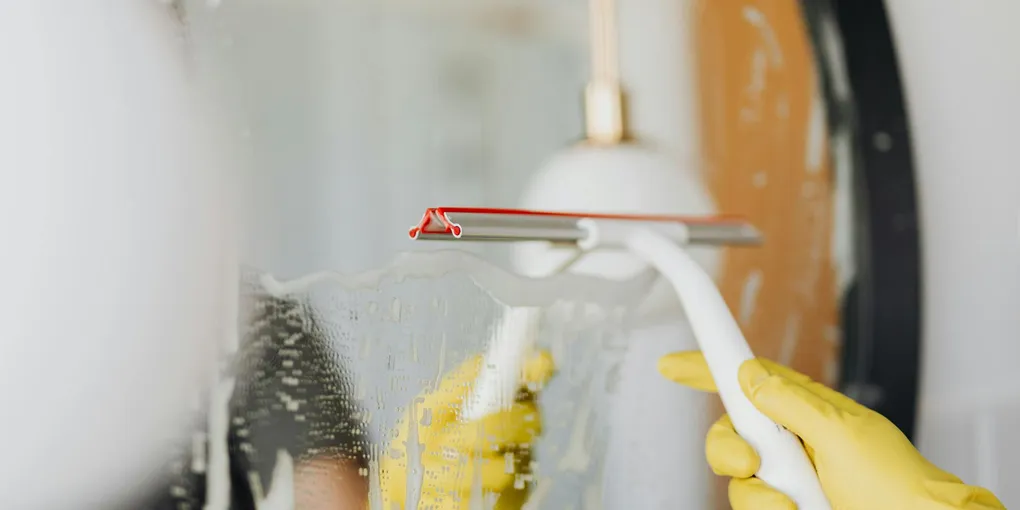
Spray or wipe undiluted white vinegar over all affected glass. Let sit 15–30 minutes (the smell is strong — ventilate the bathroom). Scrub with a non-scratch nylon pad. Rinse and squeegee.
For scale that vinegar doesn’t cut: apply CLR per label directions. Do not leave CLR on surfaces longer than 2 minutes — rinse thoroughly.
Faucet and fixture scale
Soak paper towels in white vinegar and press them against crusty deposits on faucet bases, around handles, and on spout tips. Leave for 30–60 minutes. Scrub with a toothbrush. Remove aerators and soak separately.
For chrome fixtures: never use abrasive cleaners or steel wool — they scratch chrome permanently.
Showerhead flow holes
Fill a plastic bag with white vinegar. Submerge the showerhead in the bag and secure with a rubber band. Leave overnight. Remove bag, run hot water through the head for 1 minute to flush debris from the holes.
Prevention
- Squeegee shower glass after every use — takes 30 seconds and prevents most buildup
- Apply shower glass treatment (Rain-X shower) every 3–6 months
- Clean aerators every 6 months
- Consider a whole-house water softener if buildup is severe and recurring
Related guides
- How to Clean a Shower Head — detailed showerhead cleaning and descaling
- How to Clean a Shower — full shower cleaning routine
- How to Install a Water Softener — permanent hard water solution
- Confirm the deposit type and select cleaner
Hard water stains (white, chalky, or rust-colored scale on surfaces with regular water contact) are alkaline mineral deposits that require an acid-based cleaner. Regular bathroom cleaners and bleach will not dissolve them. Light buildup: white vinegar. Moderate buildup: CLR or LimeAway. Toilet rings with iron staining: Bar Keepers Friend oxalic acid powder. Do not use abrasive scrubbers on chrome or glass — use only non-scratch nylon pads on those surfaces.
- Clean toilet bowl rings
Pour 2 cups of white vinegar into the bowl and let sit 30–60 minutes, then scrub with a toilet brush. For stubborn iron rings: shut off the water supply and flush to lower the water level, apply Bar Keepers Friend powder directly on the ring, wet a pumice toilet stone, and scrub in circular motions keeping both the stone and the surface wet. Use pumice only on white porcelain — not colored toilets or glass.
- Clean shower glass, faucets, and fixtures
Shower glass: spray undiluted white vinegar on the glass and let soak 15–30 minutes, then scrub with a non-scratch pad. For heavy buildup: apply CLR per label and rinse within 2 minutes. Faucets: press vinegar-soaked paper towels against deposits for 30–60 minutes, then scrub with an old toothbrush. Remove faucet aerators and soak them in undiluted vinegar for 1–2 hours, scrub, and reinstall.
- Descale showerhead and prevent future buildup
For a fixed showerhead: fill a plastic bag with white vinegar, submerge the showerhead, and secure with a rubber band overnight. Remove the bag and run hot water for 1 minute to flush loosened scale from the holes. Prevention going forward: squeegee shower glass after every use, apply Rain-X shower treatment every 3–6 months, clean aerators every 6 months. For severe recurring buildup: a whole-house water softener eliminates scale formation at the source.
Free: 10-Point Home Maintenance Checklist
Prevent costly repairs with this seasonal checklist. Save hundreds every year by catching problems early.
Your checklist is ready!
Open Checklist →Something went wrong. View the checklist here.