How to Fix a Stripped Screw Hole in Wood: Toothpick Method, Golf Tee, and Epoxy (2026)
A stripped screw hole in wood no longer grips the screw — the screw spins freely. This guide covers the toothpick-and-glue method, the golf tee method for larger holes, and when to use wood epoxy filler for the most permanent fix.
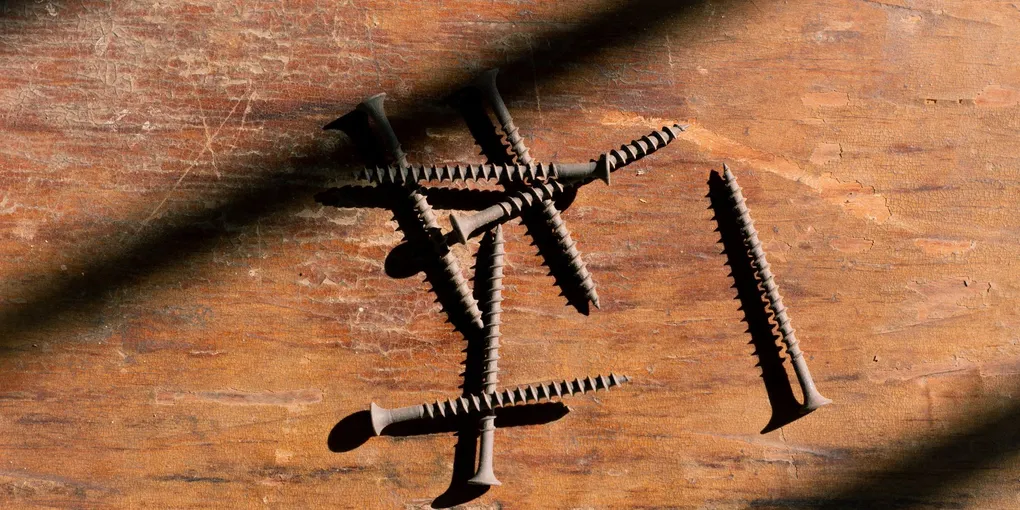
Stripped screw hole fix: (1) Push 2–3 toothpicks with a dab of wood glue into the stripped hole. Let dry 30 minutes. (2) Drive the original screw back in — the toothpick material fills the gap and gives the threads something to grip. (3) This works for small holes (under 1/4 inch). For larger holes (hinge mortises, cabinet hardware): use a wooden golf tee with glue for more fill volume, or a hardwood dowel cut to length. (4) For the most durable repair: fill the hole with two-part epoxy filler, let cure, re-drill a pilot hole, and drive the screw into fresh material.
Frequently Asked Questions
Why does a screw hole strip out and what is happening mechanically?
Wood screw threads grip by pressing into the surrounding wood fiber. When a hole strips out, the threads have cut or crushed all the wood fiber around the hole — subsequent tightening just spins the screw because there is no intact fiber to press against. This happens by: over-torquing during installation, using too fine a thread screw for the wood (fine thread screws grip better in metal; coarse thread screws grip better in soft wood), or repeated removal and re-installation of the same screw. Dense hardwoods strip less easily than soft woods and particleboard. Particleboard and MDF are the most prone to stripping — the compressed fiber is easily crushed.
How do the toothpick and golf tee methods work?
Both methods use the same principle: fill the stripped hole with new wood fiber, then drive the screw into that fiber. Toothpick method: push 2–3 wooden toothpicks with wood glue into the hole, break off flush, and re-drive the screw while the glue is still tacky (or wait 30 min and drill a new pilot hole). Works for screws up to #8 or #10. Golf tee method: if the hole is wider, push a wooden golf tee with glue into the hole, let dry, cut flush with a utility knife, drill a new pilot hole, drive the screw. The golf tee is larger than toothpicks and fills more of the void. Tip: use the same screw diameter as before — using a larger screw is also an option, but may require enlarging the hardware slot.
A hinge on my door keeps stripping the same screw holes. What is the permanent fix?
Door hinge screw holes that repeatedly strip are usually caused by: the door is heavy and the hinge is transferring high loads, the screws are short (the included 3/4-inch screws barely penetrate the door frame), or the door frame wood is soft or deteriorated. Permanent fix: (1) Fill the stripped holes with golf tees or a hardwood plug and glue. (2) Replace the hinge screws with 3-inch screws that penetrate through the door casing and into the structural framing — these transfer the hinge load to solid framing rather than the doorstop casing alone. (3) If one screw hole repeatedly strips: use a longer screw at that location. This fix is permanent — the load is now carried by 3+ inches of solid framing.
Can I just use a larger screw to fix a stripped hole?
Yes — a screw with a larger diameter (one size up, such as #10 instead of #8) will grip in the same hole because its threads are cutting into fresh, undamaged wood at the sides of the old hole. This is the fastest fix when hardware allows: door knobs, cabinet pulls, and hinges often have elongated or oversized holes that accommodate a slightly larger screw. The limitation: if the hardware hole (in the metal fitting) is exactly sized for the original screw, a larger screw won't pass through it. In that case, the toothpick or golf tee method is better — it restores the original size hole.
The stripped hole is in a critical structural location. Is toothpicks enough?
For critical connections (structural hinge screws, deck ledger bolts, load-bearing hardware): the toothpick method is not sufficient. Use: (1) Two-part epoxy wood filler or polyurethane adhesive — fill the hole completely, let cure 24 hours, then drill a fresh pilot hole into the solid filler. Epoxy fills are stronger than the surrounding wood once cured. (2) Hardwood dowel — drill out the stripped hole to a clean circle (usually 3/8 or 1/2 inch), glue in a hardwood dowel, cut flush, let cure, drill a new pilot hole to the original screw diameter. The dowel is solid wood and provides full grip. (3) Fastener movement: for a structural bolt that has stripped the wood, consult an engineer — adding a sister member or metal connector may be necessary.
Stripped screw hole fix: (1) Push 2–3 toothpicks with a dab of wood glue into the stripped hole. Let dry 30 minutes.
Push the toothpicks in while the glue is wet, then drive the screw — letting glue cure fully and re-drilling gives the cleanest result.
What you need
- Wooden toothpicks (for small holes)
- Wooden golf tees (for larger holes)
- Wood glue (Titebond or similar)
- Utility knife or chisel (to trim flush)
- Drill with correct bit for pilot holes (optional)
- Two-part wood epoxy filler (for critical repairs)
Step 1: Clean the hole
Remove the screw and any loose wood fiber from the hole. The hole should be clean and free of debris.
Step 2: Fill with toothpicks or golf tee
Small holes: push 2–3 toothpicks into the hole with a few drops of wood glue. For larger holes: push a wooden golf tee into the hole with glue, narrow end first. Let the fill stick out beyond the surface.
Step 3: Let cure and trim flush
Let the glue cure 30 minutes. Use a utility knife or chisel to trim the protruding wood flush with the surface. For a very tight fit against hardware: sand flush.
Step 4: Drive the screw
Option A: Drive the original screw back in while the glue is still tacky (the screw threads cut into the soft glue + wood mix as it cures). Option B: Let glue cure fully (1 hour), drill a new pilot hole, drive the screw.
The screw should turn with resistance from the beginning — that resistance is the grip.
Related guides
- How to Fix a Squeaky Door Hinge — hinge repairs that often involve stripped screws
- How to Fix a Cabinet Hinge — cabinet hardware screw repairs
- How to Fix a Sticking Door — door fitting when hardware is repaired
- Toothpick method for small stripped holes
For stripped screw holes in hinges, cabinet hardware, or furniture: apply a small amount of wood glue inside the hole and around 2–4 wooden toothpicks. Push the toothpicks into the hole until they fill it snugly. Let dry 1 hour. Break or cut the toothpicks flush with the surface. Drive the original screw back in — the wood fibers of the toothpicks give the screw threads something to grip. This method works for most standard wood screws up to #10 size and is the fastest fix.
- Golf tee method for larger holes
For larger stripped holes (over 1/4 inch diameter) such as hinge screws that have repeatedly stripped: apply wood glue inside the hole and on a standard golf tee. Tap the tee into the hole until it is fully seated. Cut the tee flush with a chisel or oscillating tool. Let dry 1 hour. Drill a new pilot hole through the center of the tee and drive the screw. The tee provides solid wood for the screw to grip and is stronger than the toothpick method for larger fasteners.
- Wood epoxy filler for permanent repair
For the most durable repair, especially for structural joints or when the original hole is completely blown out: clean the hole of debris. Mix two-part wood epoxy (Minwax High Performance Wood Filler or equivalent) per instructions. Pack the epoxy into the hole and let it overfill slightly. Allow to cure fully (15–30 minutes for most fast-setting epoxies). Sand or pare flush with a chisel. Drill a new pilot hole and drive the screw. Epoxy filler does not shrink, bonds to wood, and is harder than the surrounding wood once cured.
- Use a longer or wider screw as an alternative
When the stripped hole is in a structural application (hinge, door closer, grab bar): the fastest fix is often replacing the screw with a longer screw that reaches past the stripped zone into solid wood. Replace a 1-inch hinge screw with a 3-inch screw that passes through the jamb into the framing stud — this is the single most effective fix for door hinge strip-out. Alternatively, go up one screw diameter (from #8 to #10) to engage fresh wood threads. Only use this approach if the wider screw fits through the hardware's hole.
Free: 10-Point Home Maintenance Checklist
Prevent costly repairs with this seasonal checklist. Save hundreds every year by catching problems early.
Your checklist is ready!
Open Checklist →Something went wrong. View the checklist here.