How to Fix a Sticky or Misaligned Cabinet Door: Hinge Adjustment and Leveling
Most cabinet door problems — crooked gaps, rubbing frames, doors that won't close — are fixed in five minutes by adjusting the hinges, not replacing anything.
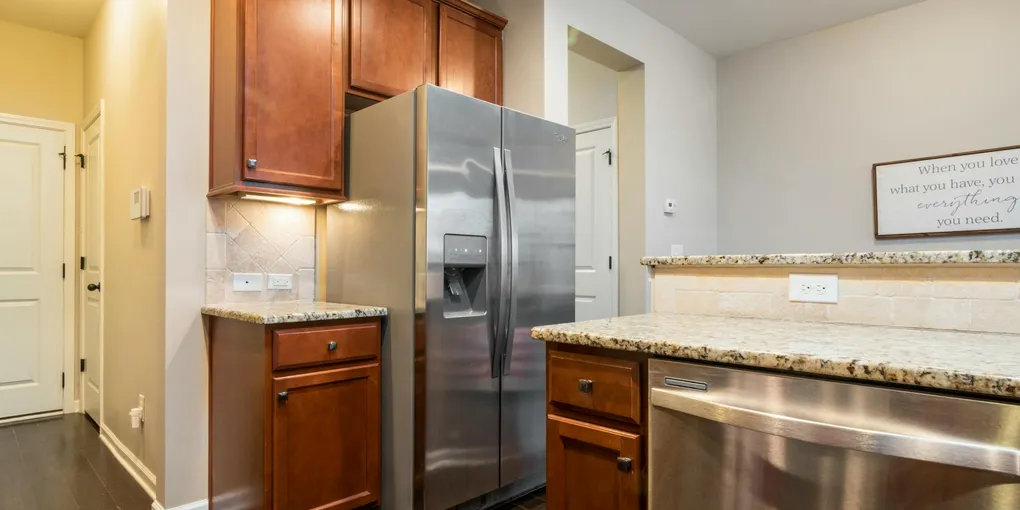
Most cabinet door problems look worse than they are. A door that’s crooked, rubbing, or won’t close fully almost always has one cause: the hinges need adjustment.
Most cabinet door problems look worse than they are. A door that’s crooked, rubbing, or won’t close fully almost always has one cause: the hinges need adjustment. Not replacement, not new hardware — just a few turns of a screwdriver.
Modern European-style cup hinges (the concealed hinges used on nearly every cabinet made in the last 40 years) are designed to be adjusted after installation. They have three screws that control the door’s position on three different axes. Once you understand what each screw does, you can dial in a door precisely in under five minutes.
This guide covers the full range of cabinet door problems: misalignment, rubbing, loose hinges, stripped screw holes, and doors that won’t stay closed.
Diagnosing the Problem
Before touching a screwdriver, look at the door carefully and describe the problem to yourself. This determines which adjustment to make.
The door is crooked — one corner is higher than the other. This is a height alignment problem. On European hinges, you adjust the height at each hinge independently to level the door.
The door is not flush with adjacent doors — it sits too far in or sticks out too far. This is a depth problem. The depth screw controls how far the door sits from the cabinet face.
The door has an unequal gap on the left and right sides. This is a lateral alignment problem. The lateral screw shifts the door left or right within the opening.
The door rubs on the frame when opening or closing. Usually a lateral problem, sometimes a depth problem. Watch where it contacts and adjust accordingly.
The door won’t stay closed. This is not a hinge alignment issue — it’s a catch problem. Skip to the section on magnetic catches and soft-close dampers.
The hinge itself moves or feels loose. The hinge mounting screws have either stripped the holes or worked loose. Tighten the screws first. If they spin freely, the holes are stripped — see the toothpick repair below.
Adjusting European Cup Hinges
European cup hinges are the concealed hinges used on virtually all frameless (Euro-style) cabinets and most modern face-frame cabinets. They mount with a large round cup pressed into a 35mm hole in the door, and a mounting plate screwed to the cabinet interior. If you open your cabinet and see the hinge from inside the box, this is your hinge type.
You will need a Phillips head screwdriver or a T20 bit. Most European hinges use Phillips, but some premium brands use Torx.
The Depth Screw
The depth screw is usually the largest screw on the mounting plate — the one that attaches the hinge arm to the plate. On most hinges, it is the screw closest to the cabinet interior.
Turning it clockwise pulls the door in (closer to the cabinet frame). Turning it counterclockwise pushes the door out (away from the frame). Adjust this screw when the door does not sit flush with neighboring doors or when there is a gap at the door edge when closed.
Turn it a half-turn at a time. Close the door, check the alignment, and repeat as needed.
The Lateral Screw
The lateral screw is a smaller screw on the mounting plate that slides the plate — and the door — left or right. On most hinges it is a screw with an elongated slot in the plate, or a cam that rotates to shift the plate sideways.
Turning it one direction moves the door toward the hinge side. Turning it the other moves the door away. Use this screw when the door is not centered in the opening, when the gap is wider on one side than the other, or when the door is rubbing on one side of the frame.
Adjust both hinges equally to keep the door level while shifting it laterally.
The Height Screw
Some mounting plates have a third screw or an eccentric cam (an off-center disc) that moves the plate — and the door — up or down. On hinges that use an eccentric cam, turning the cam with a screwdriver lifts or lowers the door.
If only one corner of the door is off, adjust the height at just that hinge. If the whole door is too high or too low relative to neighboring doors, adjust both hinges equally.
On hinges without a dedicated height adjustment, you can shim the mounting plate with a thin piece of cardboard or paper under one screw to raise that corner slightly.
After adjusting, step back and look at the door from a few feet away. Close it slowly and watch the gap around the perimeter. The gap should be even on all sides. If you’re adjusting multiple doors, do them all before making fine corrections — what looks right in isolation sometimes looks different next to a freshly adjusted neighbor.
Tightening Loose Hinges and Fixing Stripped Holes
A loose hinge often looks like a misalignment problem. Before adjusting the hinge position, check whether the mounting screws are tight. Sometimes the fix is just tightening two screws.
If the screws tighten down and feel solid, you’re done. If they spin or feel like they’re not catching anything, the screw holes are stripped. Here’s how to fix them without replacing the cabinet.
What you need:
- Toothpicks and wood glue
- A utility knife or flush-cut saw
- The original hinge screws
The process:
Remove the hinge from the cabinet by backing out all screws. If it’s a mounting plate, remove the plate entirely.
Dip the tip of a toothpick in wood glue and push it into one of the stripped holes. Repeat until you’ve filled the hole with toothpicks — usually two or three per hole for a standard screw. Don’t worry about being tidy.
Let the glue cure for at least one hour. The longer you wait, the better. Overnight is ideal if you can avoid using that cabinet.
Once dry, snap or cut the toothpicks flush with the surface using a utility knife or saw. You’ll have a solid, wood-filled hole.
Reinstall the hinge and drive the screws in. The threads will bite into the toothpick wood as if the hole were new. The repair is permanent under normal use.
If the cabinet box itself is particleboard and the holes have blown out completely (the area around the hole is crumbling), you may need to use a larger screw or a screw repair insert instead of toothpicks.
Replacing a Hinge
If a hinge is bent, broken, or so corroded it can’t be adjusted, replace it. You don’t need to replace all the hinges — just the damaged one.
Take the damaged hinge with you to the hardware store or measure these three things before ordering a replacement Blum or European hinge:
- Cup diameter: Standard is 35mm. This is the round hole drilled into the door.
- Overlay: How far the door overlaps the cabinet frame. Full overlay, half overlay, and inset are the three types. Look at the side of the door — if it covers the full frame thickness, it’s full overlay. If it covers half, half overlay.
- Opening angle: Most hinges open to 100-110 degrees. Corner cabinets use 170-degree hinges.
The mounting plate from the old hinge usually stays in place if it’s undamaged. You’re just swapping the hinge arm and cup. Snap the new arm onto the existing plate and test the fit.
If the 35mm cup hole is in good shape, installation takes about two minutes. If you need to drill a new cup hole, you’ll need a 35mm Forstner bit and a drill press or a very steady hand to keep the hole straight.
Fixing a Door That Won’t Stay Closed
A door that swings open on its own is not a hinge alignment problem. It’s a catch problem — the mechanism holding the door closed has failed or is missing.
Magnetic catches are small magnets mounted inside the cabinet that hold a metal strike plate on the door. They’re inexpensive, easy to install, and last for years. If your door won’t stay closed and there’s no soft-close mechanism, a magnetic catch is the fix.
Install the magnet body on the cabinet shelf or frame, and the metal strike on the inside of the door, positioned so they meet when the door closes. Most magnetic catches are adjustable — slide the magnet body forward or back until the strike aligns.
Soft-close dampers are built into the hinge on soft-close cabinet systems. If the door closes but doesn’t hold, the damper isn’t the issue — the catch is. But if the door used to close softly and now slams, the damper has lost tension.
Check for an adjustment screw on the soft-close hinge. It is typically a small Phillips screw on the damper body near where the arm meets the cup. Turning clockwise increases resistance; counterclockwise reduces it. If the screw is at its limit and the door still slams, the damper is worn out and the hinge needs replacement.
If the door barely closes at all — meaning it stops before fully latching — the damper tension is too high. Back off the tension screw or check whether something is obstructing the door from fully closing (often a dish or pan stored too close to the door interior).
Using a Door Alignment Tool
If you’re adjusting multiple doors at once — after a kitchen renovation, for example — a cabinet door alignment tool speeds things up considerably. These are plastic or metal gauges that clip to the cabinet and hold the door in the correct position while you adjust the hinges, so you’re not eyeballing gaps.
They’re not necessary for a single door, but if you’re doing a whole kitchen, they reduce the adjustment-and-check cycle significantly.
Related Reading
- How to Fix a Kitchen Cabinet Door
- How to Fix a Cabinet Hinge
- How to Paint Kitchen Cabinets
- Diagnosing the Problem
Before touching a screwdriver, look at the door carefully and describe the problem to yourself. This determines which adjustment to make.
- Adjusting European Cup Hinges
European cup hinges are the concealed hinges used on virtually all frameless (Euro-style) cabinets and most modern face-frame cabinets.
- Tightening Loose Hinges and Fixing Stripped Holes
A loose hinge often looks like a misalignment problem. Before adjusting the hinge position, check whether the mounting screws are tight. Sometimes the fix is just tightening two screws.
- Replacing a Hinge
If a hinge is bent, broken, or so corroded it can't be adjusted, replace it. You don't need to replace all the hinges — just the damaged one.
- Fixing a Door That Won't Stay Closed
A door that swings open on its own is not a hinge alignment problem. It's a catch problem — the mechanism holding the door closed has failed or is missing.
- Using a Door Alignment Tool
If you're adjusting multiple doors at once — after a kitchen renovation, for example — a cabinet door alignment tool speeds things up considerably.
Free: 10-Point Home Maintenance Checklist
Prevent costly repairs with this seasonal checklist. Save hundreds every year by catching problems early.
Your checklist is ready!
Open Checklist →Something went wrong. View the checklist here.