How to Fix a Kitchen Cabinet Door: Alignment, Hinges, and Warping (2026)
Kitchen cabinet doors that hang crooked, won't close flush, or have gaps at the corners are almost always fixed by adjusting the European cup hinges. This guide covers 3-way hinge adjustment, fixing stripped hinge holes, and addressing warped cabinet doors.
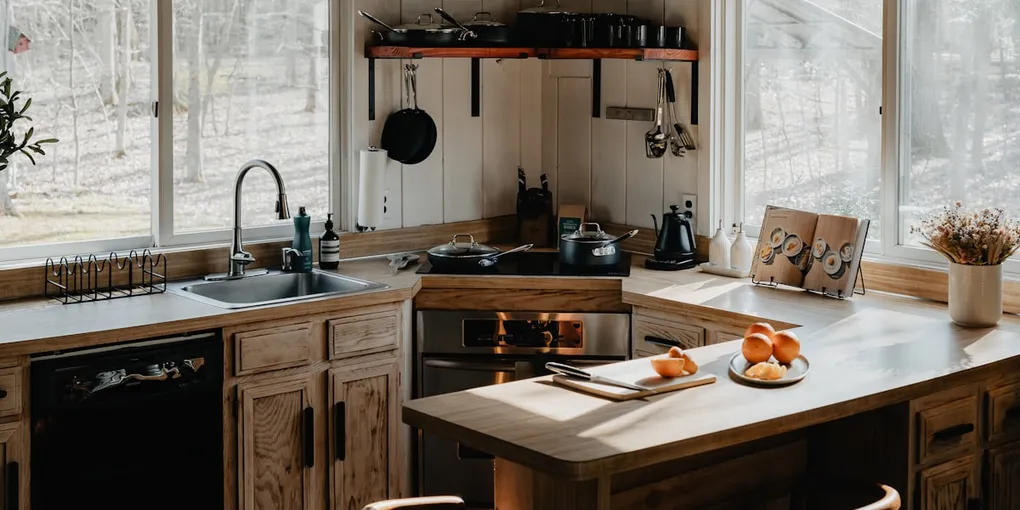
Most modern kitchen cabinet doors use 6-way adjustable European cup hinges with three adjustment screws. You can move the door up/down, in/out, and side-to-side without removing the hinge. A door that is uneven with the adjacent door: adjust the side screw (the screw closest to the cabinet edge moves the door left/right). A door that doesn't close flush: adjust the depth screw. A door that catches at the top or bottom: adjust the height at the hinge plate.
Frequently Asked Questions
What are the three adjustment directions on a European hinge?
Modern European soft-close hinges have three screws that provide 6-way adjustment: (1) Side adjustment (the screw closest to the cabinet opening) — moves the door left or right. Turn clockwise to move the door away from the adjacent door; counterclockwise to move it closer. (2) Depth adjustment (middle screw or rear screw) — moves the door in or out relative to the face frame. Affects how flush the door sits. (3) Height adjustment — built into the mounting plate that attaches to the cabinet box. Loosen the plate screws, slide up or down, retighten.
My cabinet door is warped — bent in the middle. Can I fix it?
Minor warp: adjust the hinges to close the gap the warp creates — this works when the warp is small and the door is rigid enough to be pulled flat by the hinges. Significant warp: the door itself needs correction. Remove the door. Lay it on a flat surface with the concave side up. Clamp the ends down to a flat workbench or floor. Dampen the concave face with a wet cloth, then leave it flat under weight for 24–48 hours — wood's cellular moisture rebalances and the door often flattens. Severe warp in MDF doors usually requires replacement — MDF warp is permanent.
The hinge screw holes are stripped and the hinge keeps falling out. How do I fix that?
The classic stripped screw hole fix: remove the hinge, apply wood glue to the tips of 4–5 toothpicks, pack them into the stripped hole, let cure 30–60 minutes, snap off flush, redrive the hinge screw. The toothpicks give the screw fresh wood fiber to grip. Alternative: drill out the stripped hole to 3/8 inch, glue in a 3/8-inch wooden dowel, let cure, re-drill the pilot hole for the original screw. Both methods are permanent repairs.
How do I fill the holes from old hinges when replacing cabinets or moving hinges?
Old hinge holes in the door face frame: fill with a wood filler (Elmer's Wood Filler, Minwax Wood Filler), sand flush when dry, prime, and paint or stain to match. For painted cabinets: a two-part polyester filler (like Bondo Wood Filler) sands flat and takes paint cleanly. For stained wood cabinets: use a wood filler that matches the stain color, or use a wax fill stick that matches after staining. The repair will rarely be invisible on stained wood — plan the new hinge placement to minimize visibility of old holes.
My cabinet doors hit each other when opened. How do I adjust them?
Two adjacent doors that collide when opened: the inner edges of each door are set too close to the cabinet centerline. Adjust both doors: use the side adjustment screw on each door to move the inner edge away from center (toward the adjacent cabinet frame or wall). Also check the gap between doors when closed — there should be a consistent 1/8-inch gap between all doors. Set the side adjustment to achieve this gap uniformly top to bottom.
Most modern kitchen cabinet doors use 6-way adjustable European cup hinges with three adjustment screws. You can move the door up/down, in/out, and side-to-side without removing the hinge.
Cabinet door alignment takes 5–10 minutes per door once you understand the three-screw system.
What you need
- Phillips screwdriver
- Replacement European cup hinges (if hinge itself is broken)
- Toothpicks and wood glue (for stripped screw holes)
- Level or straightedge (for alignment checking)
Step 1: Identify what’s wrong
Close the cabinet door and observe:
- Gap at top corner, touching at bottom: door is rotated — adjust the top hinge only, or make opposite adjustments at top and bottom hinges
- Door sticking out from cabinet face on one side: depth adjustment needed
- Door shifted left or right relative to adjacent doors: side adjustment
- Door won’t close at all / spring-loaded open: hinge depth too far out, or magnetic catch missing
Step 2: Adjust the side screw
The screw closest to the opening edge of the cabinet controls left/right position. Turn with a Phillips screwdriver:
- Clockwise: moves door toward this hinge’s side
- Counterclockwise: moves door away from this hinge’s side
Adjust the same direction on both hinges for a parallel shift. Adjust only one hinge for a rotational correction.
Step 3: Adjust the depth screw
The rear screw on the hinge arm controls how far the door face protrudes from the cabinet. Clockwise brings the door in flush; counterclockwise pushes it out.
Step 4: Adjust the height
Loosen the two screws on the mounting plate (the part screwed to the cabinet box interior). Slide the plate up or down, retighten. Both hinges on a door must be shifted the same amount for parallel adjustment.
Step 5: Fix stripped hinge holes
Push 4–5 toothpicks with wood glue into each stripped hole. Let cure 30 minutes. Snap off. Predrill with a thin bit, then drive the original screw.
Related guides
- How to Fix a Cabinet Hinge — detailed European hinge adjustment for all cabinet types
- How to Paint Kitchen Cabinets — full cabinet painting after fixing doors
- How to Fix Squeaky Floors — while doing kitchen work
- Diagnose the alignment problem
Close the cabinet door and observe: gap at the top corner with touching at the bottom = the door is rotated (adjust one hinge differently from the other). Door sticking out on one side = depth adjustment needed. Door shifted left or right relative to adjacent doors = side adjustment. Door won't stay closed = depth too far out, or magnetic catch missing or misaligned.
- Adjust the side screw for left/right position
The screw closest to the opening edge of the hinge arm controls left/right position. Turn with a Phillips screwdriver: clockwise moves the door toward that hinge's side, counterclockwise moves it away. Adjust both hinges by the same amount for a parallel left/right shift. Adjust only one hinge to rotate the door (correct a gap at one corner).
- Adjust the depth screw for flush fit
The rear screw on the hinge arm controls how far the door face sits from the cabinet. Clockwise brings the door in flush with adjacent doors; counterclockwise pushes it out. Adjust both hinges by the same amount. A door that won't stay closed usually needs the depth screws tightened to pull it snug against the frame.
- Adjust the height via the mounting plate
To raise or lower the door: loosen the two screws on the mounting plate (the part screwed to the inside of the cabinet box). Slide the plate up or down to the desired position, then retighten both screws. Both hinges on the door must be shifted the same amount to keep the door level.
- Fix stripped hinge screw holes
Remove the hinge. Apply wood glue to the tips of 4–5 toothpicks and pack them into the stripped hole. Let cure 30–60 minutes. Snap off flush. Re-drive the hinge screw — the toothpick wood fibers give the screw fresh material to grip. For deeply stripped holes: drill out to 3/8 inch, glue in a 3/8-inch dowel, let cure, re-drill the pilot hole, then reinstall the hinge.
Free: 10-Point Home Maintenance Checklist
Prevent costly repairs with this seasonal checklist. Save hundreds every year by catching problems early.
Your checklist is ready!
Open Checklist →Something went wrong. View the checklist here.