How to Fix a Dripping Faucet: The Quick Guide for Any Faucet Type
Quick reference guide to stopping a dripping faucet — matching faucet type to repair method so you can find the right fix without reading four different guides.
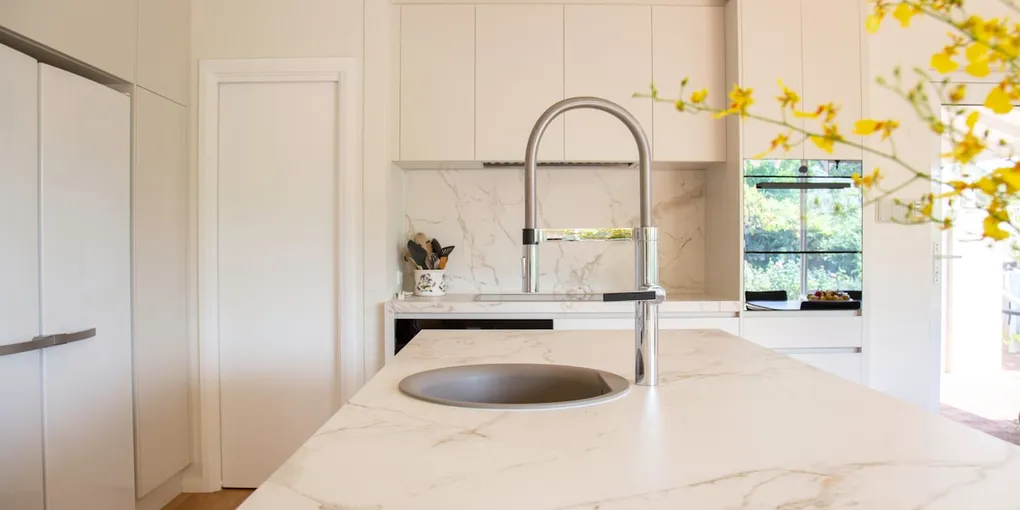
A dripping faucet is always a worn internal component — never a plumbing emergency, and almost never a reason to call a plumber.
A dripping faucet is always a worn internal component — never a plumbing emergency, and almost never a reason to call a plumber. The challenge is that different faucet types need completely different repairs, and the wrong repair wastes an afternoon without fixing anything.
This guide works as a quick reference: identify your faucet type, find the correct repair, and get the right parts before you disassemble anything.
Step 1: Identify Your Faucet Type
Single-handle faucets use one lever or knob to control both hot and cold water. Most modern single-handle kitchen and bathroom faucets are cartridge faucets. Older single-handle faucets (particularly ball faucets from the 1980s and 1990s) use a rotating ball mechanism.
Two-handle faucets have a separate hot and cold handle. These are either cartridge (modern) or compression (older). The quick test: if you can tighten the handle against the drip by turning it harder, it is compression. If the handle stops at a fixed position regardless of how much force you apply, it is cartridge.
Ceramic disc faucets have a single wide lever that pivots forward (open) and back (closed) without rotating. These are common in higher-end European-style fixtures. They are extremely durable — repairs are rare but do happen.
Faucet Type Quick Reference
| Faucet Type | What Wears Out | Repair | DIY Difficulty |
|---|---|---|---|
| Single-handle cartridge | Cartridge O-rings and seals | Replace cartridge | Easy |
| Two-handle cartridge | One cartridge per side | Replace cartridge on leaking side | Easy |
| Compression (two-handle) | Seat washer and O-ring | Replace seat washer | Easy |
| Ball (single-handle) | Ball, seats, springs, O-rings | Replace full kit | Moderate |
| Ceramic disc | Disc seals or disc itself | Clean or replace disc | Easy |
Repair 1: Cartridge Faucet (Most Common)
Cartridge faucets are the most common type in modern homes. The cartridge is a self-contained valve unit inside the faucet body. When the cartridge wears out, it no longer seals completely in the off position.
What you need:
- Faucet cartridge repair kit (match to your brand)
- Moen faucet cartridge replacement (for Moen faucets — most common brand)
- Cartridge puller tool (essential for Moen cartridges, which can be very difficult to remove by hand)
- Phillips screwdriver, adjustable wrench, needle-nose pliers
The repair:
- Shut off the hot and cold supply valves under the sink. Open the faucet to drain pressure.
- Pry off the decorative cap on the handle (usually a small snap-on disk). Remove the handle screw underneath and pull the handle off.
- Depending on the brand, you may need to remove a retaining clip or nut before pulling the cartridge. Look for a small U-shaped clip holding the cartridge in place — pull it with pliers.
- Pull the old cartridge straight up and out of the faucet body. Use a cartridge puller if it is stuck. Note the orientation — the cartridge must go back in exactly the same way or the hot and cold will be reversed.
- Take the old cartridge to a hardware store for exact matching, or order online using your faucet brand and model number.
- Insert the new cartridge in the same orientation. Replace the retaining clip. Reassemble the handle. Turn on the supply valves and test.
Brand identification matters. Moen, Delta, Kohler, Pfister, and American Standard all use proprietary cartridges that are not interchangeable. Look for a logo on the faucet body or handles. If you cannot identify the brand, remove the old cartridge and take it to a plumbing supply store — staff can usually match it.
Repair 2: Compression Faucet
Compression faucets are found in older homes, often pre-1985. You are literally screwing a rubber washer down against a brass seat to stop the water flow. The rubber seat washer wears out and no longer makes a complete seal.
What you need:
- Faucet seat washer repair kit (includes assorted washers and O-rings)
- Phillips screwdriver, adjustable wrench
The repair:
- Shut off the supply valve on the leaking side only (hot or cold — determine which side drips by checking if the drip is warm or cool).
- Remove the handle by prying off the decorative cap and unscrewing the handle screw.
- Unscrew the packing nut underneath with an adjustable wrench (turn counterclockwise).
- Pull out the stem assembly. At the bottom of the stem you will see a rubber seat washer held by a brass screw.
- Remove the brass screw and the old seat washer. Replace with a new washer of the same diameter and thickness from your repair kit.
- While the stem is out, also replace the O-ring around the stem body — this prevents handle-area leaks.
- Reinstall the stem, tighten the packing nut, replace the handle, and turn on the supply valve.
If the new washer does not stop the drip, the brass seat inside the faucet body is probably pitted or corroded. A seat wrench and replacement seat can fix this, but at that point many plumbers recommend replacing the entire faucet.
Repair 3: Ball Faucet
Ball faucets are common in kitchens, particularly older Delta and Price Pfister fixtures. Inside is a slotted rotating ball that controls hot and cold water mixing. The seals, springs, and ball itself all wear independently.
What you need:
- Ball faucet repair kit — buy a complete kit for your brand rather than individual parts. Kits include the ball, seats, springs, O-rings, and cam.
Ball faucets have many small parts that go back together in a specific order. Take photos at each disassembly step. The repair kit will include an instruction sheet — follow it exactly for your brand.
Repair 4: Ceramic Disc Faucet
Ceramic disc faucets are extremely durable. Most drips from a disc faucet are caused by mineral deposits on the ceramic surface rather than actual disc failure.
What you need:
- Ceramic disc faucet repair kit
- White vinegar
The repair:
- Shut off supply valves and drain the line.
- Remove the handle and unscrew the disc cylinder from the faucet body.
- Remove the ceramic discs from the cylinder. You will typically find two — an upper and lower.
- Soak the discs in white vinegar for 30 to 60 minutes to dissolve mineral scale. Rinse and gently scrub with a soft cloth — do not use abrasives on ceramic.
- Replace the rubber seals around the discs.
- Reassemble in reverse order.
If cleaning does not stop the drip, a disc is chipped or cracked and needs replacement. A replacement ceramic disc costs $10 to $30 depending on the brand.
Shutting Off Water Before You Start
Always shut off both the hot and cold supply valves under the sink before disassembling any faucet. The supply valves are the oval-handled or round-handled valves on the supply lines running up to the faucet from the wall or floor.
If the supply valves are old, stiff, or leaking, do not force them. A stuck valve can break, creating a much bigger problem. Instead, shut off the main water supply to the house, then proceed with the faucet repair and replace the supply valves while you are at it.
The main shutoff is typically in the basement, crawl space, or utility room — here is how to shut off water to your house if you need a walkthrough.
Estimated Savings
| Repair | Parts Cost | Time | Plumber Cost |
|---|---|---|---|
| Cartridge replacement | $8 – $25 | 30 – 60 min | $150 – $300 |
| Seat washer replacement | $3 – $8 | 20 – 30 min | $100 – $200 |
| Ball faucet rebuild kit | $15 – $30 | 45 – 90 min | $150 – $300 |
| Ceramic disc cleaning | $0 | 30 min | $100 – $200 |
A dripping faucet repaired DIY pays back in two ways: you stop the water waste immediately, and you avoid a service call that costs more than the repair parts by a factor of ten.
Related Articles
- How to Fix Low Water Pressure
- How to Fix a Leaking Bathroom Faucet
- How to Replace a Shower Head
- How to Shut Off Water to Your House
- Identify Your Faucet Type
Single-handle faucets use one lever or knob to control both hot and cold water. Most modern single-handle kitchen and bathroom faucets are cartridge faucets.
- Repair 1: Cartridge Faucet (Most Common)
Cartridge faucets are the most common type in modern homes. The cartridge is a self-contained valve unit inside the faucet body. When the cartridge wears out, it no longer seals completely in the off position.
- Repair 2: Compression Faucet
Compression faucets are found in older homes, often pre-1985. You are literally screwing a rubber washer down against a brass seat to stop the water flow. The rubber seat washer wears out and no longer makes a complete seal.
- Repair 3: Ball Faucet
Ball faucets are common in kitchens, particularly older Delta and Price Pfister fixtures. Inside is a slotted rotating ball that controls hot and cold water mixing. The seals, springs, and ball itself all wear independently.
- Repair 4: Ceramic Disc Faucet
Ceramic disc faucets are extremely durable. Most drips from a disc faucet are caused by mineral deposits on the ceramic surface rather than actual disc failure.
Free: 10-Point Home Maintenance Checklist
Prevent costly repairs with this seasonal checklist. Save hundreds every year by catching problems early.
Your checklist is ready!
Open Checklist →Something went wrong. View the checklist here.