How to Fix a Broken Interior Door Knob Lock
Learn how to diagnose and repair a stuck, loose, or non-locking interior privacy door knob so your bathroom or bedroom door locks reliably again.
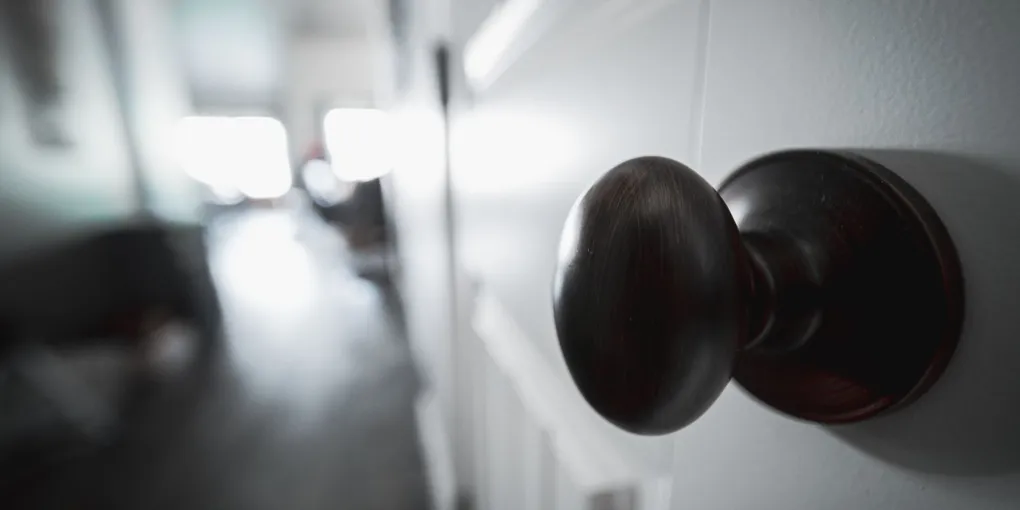
Fixing an interior door knob lock: (1) Knob that turns but doesn't retract latch: the spindle (square drive rod) connecting both knobs is broken or bent. Remove both knobs (look for a set screw on the side or a release hole with a pin), pull the spindle out, and replace it. (2) Lock that won't turn with the key: insert the key and spray graphite powder ($4) into the keyway — never use WD-40 in a lock, it attracts dust. Work the key in and out while spraying. (3) Privacy lock that won't release from the locked side (accidentally locked): use the emergency release — insert a thin straightened paper clip into the small hole on the outside knob to press the release button. (4) Full replacement: write down the backset distance (2-3/8 or 2-3/4 inch from edge of door to center of hole) before buying a replacement. Interior passage sets run $15 to $40; privacy sets $20 to $60.
Frequently Asked Questions
Why does my interior door knob turn but not latch?
The most likely cause is a worn or broken spring cartridge inside the knob. Removing the knob and replacing the cartridge or the entire lockset resolves this.
How do I remove a door knob with no visible screws?
Look for a small slot or hole on the shank of the knob. Insert a small flathead screwdriver or a release pin tool into that hole, press inward, and pull the knob off.
Can I fix a privacy lock without replacing the whole knob?
Sometimes. If the locking pin or turn button is stuck, a shot of dry lubricant may free it. If the internal mechanism is broken, replacing just the lock cartridge or the full lockset is more reliable.
What is a privacy lock versus a passage knob?
A privacy lock has a locking turn button on the inside and an emergency release slot on the outside. A passage knob has no lock at all and is used for closets and hallways.
Are interior door knobs standard sizes?
Most residential interior doors have a 2-3/8-inch or 2-3/4-inch backset and a standard 2-1/8-inch bore hole. Measure your door before buying a replacement to ensure it fits.
How do I tighten a loose door knob?
Remove the knob from the spindle, find the set screw or mounting screws on the rose plate, tighten them firmly, and reinstall the knob. Apply thread-locking fluid to prevent future loosening.
Fixing an interior door knob lock: (1) Knob that turns but doesn’t retract latch: the spindle (square drive rod) connecting both knobs is broken or bent. Remove both knobs (look for a set screw on the side or a release hole with a pin), pull the spindle out, and replace it.
An interior privacy lock that sticks, spins freely, or simply refuses to latch is a daily annoyance — and on a bathroom or bedroom door, a lock that does not work is also a real privacy problem. Most interior knob failures come down to a few common culprits: a worn spring inside the knob mechanism, a misaligned latch bolt, or a stripped set screw that lets the knob spin on the spindle. All of these are DIY repairs that take less than 30 minutes.
What You Will Need
- Phillips and flathead screwdrivers
- Small pick tool or release pin (or a paper clip)
- Dry lubricant spray (graphite or PTFE-based)
- Replacement privacy lockset (if needed)
- Tape measure (backset and bore measurement)
- Thread-locking fluid
- Needle-nose pliers
Before buying a replacement, try lubricating the mechanism. A can of dry graphite lock lubricant often restores a sticky or sluggish privacy turn button without any disassembly. If the mechanism is truly broken, a replacement interior privacy lockset typically costs under $20 and installs in minutes.
Step 1: Diagnose the Problem
Test the knob carefully to narrow down the issue before you open anything up.
- Knob turns but does not retract the latch: broken spring inside the knob or a seized latch mechanism.
- Knob spins without resistance in any direction: the set screw is stripped or missing and the knob has separated from the spindle.
- Turn button does not engage the lock pin: dry or corroded locking mechanism; try lubricant first.
- Latch bolt sticks out but does not catch the strike plate: the door has shifted or the strike plate needs adjustment.
Step 2: Remove the Door Knob
Most interior knobs hide their mounting screws behind a decorative rose plate. Look for a small slot or pin hole on the knob shank (between the knob head and the door). Insert a small flathead screwdriver or straightened paper clip, press the release tab, and pull the knob straight off the spindle.
With the knob removed, the rose plate usually lifts away with a gentle pry at its edge, exposing two mounting screws. Remove both screws and pull the exterior knob and rose off from the other side.
Step 3: Address the Specific Failure
Loose knob (stripped set screw): Find the set screw on the shank of the knob — it is a small screw perpendicular to the spindle. If the screw turns without gripping, the threads are stripped. Remove the screw, apply a drop of thread-locking fluid, reinstall, and tighten firmly. If the hole itself is stripped, replace the knob.
Stuck or broken latch: Pull the latch bolt assembly out of the door edge by removing its two face screws. Spray dry lubricant into the latch case, work the bolt in and out several times, and reinstall. If the bolt still does not spring back smartly, replace the latch assembly — they are sold separately and clip into the same door bore.
Non-functioning privacy turn button: Spray dry lubricant into the turn button slot and the keyhole on the opposite side. Rotate the button back and forth 10 to 15 times to work the lubricant into the mechanism. If the internal cam is broken, replace the entire lockset.
Step 4: Install a Replacement Lockset
Measure the backset — the distance from the edge of the door to the center of the knob bore hole. Standard options are 2-3/8 inches and 2-3/4 inches. Purchase a replacement privacy lockset matching your backset.
Slide the latch bolt into the door edge and secure with its two face screws. Insert the exterior knob and rose from the outside, threading the spindle through the latch. Align the interior rose, press it flat against the door, and drive the two mounting screws until snug. Snap the interior knob onto the spindle until it clicks. Test the knob, latch, and privacy turn button before closing the door completely.
Step 5: Adjust the Strike Plate If Needed
If the latch bolt does not seat fully into the strike plate, loosen the two strike plate screws and shift the plate up, down, or outward until the bolt snaps cleanly into the opening. If the gap is larger than 1/8 inch, use a door strike plate extension kit to fill the space without chiseling the jamb.
With the knob reinstalled, the latch properly aligned, and the privacy lock engaging smoothly, your door is back to doing its job reliably.
Related guides
- How to Fix a Loose Door Handle — tighten a lever or knob handle that wobbles or has excessive play
- How to Fix a Sticky Door Lock — lubricate a stiff lock cylinder
- How to Replace a Door Knob — full replacement when the mechanism is beyond repair
- Diagnose the Problem
Test the knob carefully to narrow down the issue before you open anything up.
- Remove the Door Knob
Most interior knobs hide their mounting screws behind a decorative rose plate. Look for a small slot or pin hole on the knob shank (between the knob head and the door).
- Address the Specific Failure
Loose knob (stripped set screw): Find the set screw on the shank of the knob — it is a small screw perpendicular to the spindle. If the screw turns without gripping, the threads are stripped.
- Install a Replacement Lockset
Measure the backset — the distance from the edge of the door to the center of the knob bore hole. Standard options are 2-3/8 inches and 2-3/4 inches. Purchase a replacement privacy lockset matching your backset.
- Adjust the Strike Plate If Needed
If the latch bolt does not seat fully into the strike plate, loosen the two strike plate screws and shift the plate up, down, or outward until the bolt snaps cleanly into the opening.
Free: 10-Point Home Maintenance Checklist
Prevent costly repairs with this seasonal checklist. Save hundreds every year by catching problems early.
Your checklist is ready!
Open Checklist →Something went wrong. View the checklist here.