Solar Installation Cost 2026: $15,000–$35,000 + 30% Tax Credit
Residential solar costs $15,000-$35,000 in 2026 before incentives. Full breakdown of panels, inverters, labor, and the 30% federal tax credit that cuts the net cost.
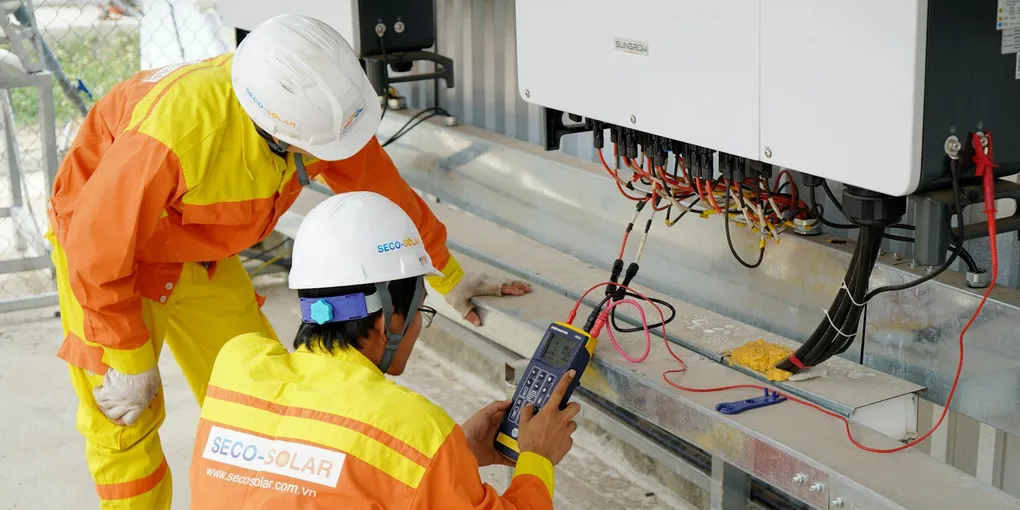
Residential solar installation costs $15,000-$35,000 in 2026 for a typical 6-10 kW system before incentives. After the 30% federal tax credit (extended through 2032), the net cost drops to $10,500-$24,500. Cost per watt averages $2.50-$3.50 installed. Most homeowners break even in 7-12 years from electric bill savings. Battery storage adds $10,000-$20,000 and is only cost-effective in states with net metering limits, frequent outages, or time-of-use pricing.
Frequently Asked Questions
Is residential solar worth it in 2026?
Yes in most states, especially those with net metering (CA, AZ, NV, NM, MA, NY, NJ), high electric rates (Northeast, Hawaii, California), or strong incentives. Not worth it in states with low electric rates, no net metering, and heavy tree shade. Always run a free quote from 2-3 installers to see your specific payback before committing.
How much can solar save on electric bills?
Most homeowners offset 70-100% of their electric bill with a properly-sized solar system. Typical savings: $1,200-$3,000 per year. Savings vary by local sun, system size, net metering policy, and electric rates. High-rate states like California, Hawaii, and the Northeast see the biggest bills savings.
What size solar system do I need?
Take your annual kWh consumption (on your utility bill) and divide by 1,200-1,500 depending on your region's sun. A home using 12,000 kWh/year in a moderate sun area needs 8-10 kW. Installers size systems based on your last 12 months of bills — ask for the calculation.
Does solar increase home value?
Yes, typically 3-4% on average. A $25,000 solar system on a $400,000 home typically adds $12,000-$16,000 in appraised value. Owned systems add value; leased systems typically do not (and can actually complicate home sales).
What is net metering?
Net metering lets you sell excess solar power back to the grid at retail rates. When your panels produce more than you use, the meter runs backward, building a credit you can use at night or in winter. Strong net metering is the #1 factor making solar economically attractive — check your state's policy before committing.
Do solar panels work when the power goes out?
No, unless you have a battery. Most grid-tied systems shut down during outages for safety (to protect utility workers on the line). Adding a battery ($10K-$20K) lets the system provide backup power. Whole-home batteries like the Tesla Powerwall store 13.5 kWh — enough to run a house for 10-24 hours.
Should I install solar panels or a heat pump first?
Install the heat pump first if you currently heat with gas or propane. Switching from gas to a heat pump electric system adds 3,000–6,000 kWh of annual electricity demand — sizing solar before this conversion means buying a system that's immediately undersized. Install the heat pump, live with one year of new electric bills, then size solar off your updated consumption. If you're already all-electric, install solar first to start offsetting your existing bills. The one exception: if you get a premium solar quote that's time-limited (a manufacturer promotion or local installer deal), take the quote and plan to add a panel or two when the heat pump goes in.
How do I compare solar installer quotes and know if I'm getting a fair deal?
Compare on cost per watt (total price ÷ system kW), not just total price — a cheaper quote may use smaller, lower-efficiency panels. Verify the equipment: panel brand + wattage, inverter type (microinverter vs string + optimizer), and racking brand. Check warranties: 25-year panel product warranty, 12-year (minimum) inverter warranty, and 10-year workmanship warranty from the installer. Read the production guarantee — some contracts guarantee a specific annual kWh output and compensate you if production falls short. Get 3 installer quotes: 2026 fair range is $2.50–$3.50/W installed. Above $4.00/W for a standard system with no complex roof features means you're being overcharged. Use EnergySage's marketplace or the Solar Energy Industries Association installer directory to find vetted local quotes.
Residential solar installation costs $15,000-$35,000 in 2026 for a typical 6-10 kW system before incentives. After the 30% federal tax credit (extended through 2032), the net cost drops to $10,500-$24,500.
Residential solar has matured enormously. In 2026, installed costs have stabilized around $2.50-$3.50 per watt — down 80% from 2010 — and the federal 30% tax credit is locked in through 2032. This guide breaks down real 2026 costs, state-by-state payback periods, and how to get quotes that don’t leave you paying too much.
2026 Installation Costs by System Size
For most US homes, the right system size is 6-10 kW. Here’s what installed cost looks like before incentives:
| System Size | Typical Home Size | Average Cost (2026) | Cost per Watt |
|---|---|---|---|
| 4 kW | Small (1,000 sq ft) | $11,500-$15,500 | $2.90-$3.90 |
| 6 kW | Standard (1,800 sq ft) | $16,000-$22,000 | $2.65-$3.65 |
| 8 kW | Average US home | $20,500-$28,000 | $2.55-$3.50 |
| 10 kW | Large (3,000+ sq ft) | $24,500-$34,500 | $2.45-$3.45 |
| 12 kW | XL or 2 EVs | $28,500-$40,000 | $2.37-$3.33 |
National average 2026: $2.85 per watt installed. A typical 8 kW system: $22,800 before incentives, $16,000 after the 30% federal credit.
What You’re Actually Paying For
Solar Panels (25-35% of Total)
In 2026, most residential installs use monocrystalline panels at 400-450 watts each. Top brands:
- Budget: Canadian Solar, JA Solar, Hanwha Q CELLS — $180-$280 per panel
- Mid-range: LG, Trina — $280-$380 per panel
- Premium: SunPower/Maxeon — $380-$500 per panel
An 8 kW system needs 18-20 panels.
Inverters (8-15% of Total)
Inverters convert the DC power from panels to AC for your home. Three types:
- String inverter (central): $1,200-$2,500. Cheapest, simplest. One panel’s shading reduces the whole string.
- Microinverters (one per panel, Enphase is dominant): $2,500-$4,500. Individual panel optimization, best in shaded roofs.
- Power optimizers (SolarEdge): $2,000-$3,500. Middle ground; string inverter with per-panel optimizers.
Racking and Mounting (10-15%)
Aluminum rails that attach panels to the roof. $2,500-$4,000.
Labor and Installation (25-35%)
Install labor, permitting, engineering, and inspection. $5,000-$12,000 depending on complexity. Includes:
- Roof penetrations and flashing
- Electrical tie-in to the main panel
- Disconnect switch
- Net-meter installation
- Permit and inspection coordination
Permits and Fees (3-8%)
$500-$2,500. Varies hugely by jurisdiction. California and New York have extensive permitting; Texas and Florida are faster.
Additional Items (Optional)
- Main electrical panel upgrade ($2,500-$5,000) — required if your panel is under 200A or at capacity
- Roof replacement — many installers recommend a new roof if yours is over 10 years old (solar panels last 25+ years; you don’t want to remove them in 5)
- Battery backup (see below) — $10K-$20K added
The 30% Federal Tax Credit (Investment Tax Credit)
Extended through 2032 by the Inflation Reduction Act:
- 30% through 2032
- 26% in 2033
- 22% in 2034
- Expires 2035 (unless renewed)
Applies to:
- Panels, inverters, racking
- Labor for installation
- Permit fees
- Battery storage (if 3+ kWh capacity)
- Sales tax
Not available for cash-leased systems. Purchased or financed systems only.
On a $22,000 install: $6,600 federal credit, net cost $15,400.
Important: This is a tax credit, not a rebate. You need tax liability to use it. If your credit exceeds your annual tax bill, you can roll the unused amount to the next year.
State and Local Incentives
Strong Incentive States (2026)
- New York: NY-Sun rebate ($350/kW, up to $3,500), 25% state tax credit, property tax exemption
- Massachusetts: SMART program (performance-based payments), property tax exemption
- New Jersey: SuSI program (transition from SRECs), sales tax exemption
- California: Property tax exemption; strong net metering (until NEM 3.0 reforms)
- Texas: No state incentive but utility-specific rebates (Austin Energy, CPS) plus excellent sun
- Florida: Property tax exemption, net metering available in most utility areas
Weaker States
- Louisiana, Alabama, Mississippi, Nevada (non-NV Energy) — no state incentives, poor net metering
- Tennessee, Georgia, Kentucky — limited incentives and net metering
Always check your specific utility — some offer rebates even if the state doesn’t.
Payback Period by Region
Payback periods in 2026, assuming a 7 kW system at $20,000 net after 30% credit:
| Region | Typical Annual Savings | Payback |
|---|---|---|
| Hawaii | $4,200 | 4-5 years |
| California | $2,800 | 7-8 years |
| Massachusetts / NY | $2,500 | 8-9 years |
| New Jersey / CT | $2,200 | 9-10 years |
| Arizona / Nevada | $2,000 | 10-11 years |
| Texas | $1,800 | 11-12 years |
| Florida | $1,800 | 11-12 years |
| Midwest | $1,500 | 13-15 years |
| Tennessee / Alabama | $1,200 | 17-20 years |
Panel lifespans are 25-30 years, so even in slower-payback states, solar is profitable over the system’s life. Focus on payback period if you plan to move within 10 years.
Battery Storage: Worth It?
Adding a battery (Tesla Powerwall 3, Enphase IQ Battery, LG Chem):
- Cost: $10,000-$20,000 installed per unit
- Capacity: 10-14 kWh per unit
- 30% federal tax credit applies
Worth it if:
- You’re in a state with net metering cuts (California NEM 3.0 makes batteries much more valuable)
- You have frequent outages (hurricanes, wildfires)
- You’re on time-of-use pricing (store day production, use at peak evening rates)
Not worth it if:
- Your utility has strong 1:1 net metering (you’re already getting paid for excess)
- Your area has rare outages
- Your annual savings don’t cover the battery’s 15-year lifespan
How to Get Quotes Without Getting Ripped Off
Get 3 Quotes, Same System Size
Shopping is essential in solar. Pricing varies 20-40% between installers in the same zip code.
Use quote aggregators:
- EnergySage (free, 5+ quotes)
- SolarReviews
- Direct from local installers
Avoid door-to-door solar salespeople — almost always overpriced.
Compare Apples to Apples
Each quote should include:
- System size (kW DC)
- Panel brand, model, wattage, quantity
- Inverter brand, model
- Labor, permits, interconnection fees
- Payment options (cash, loan, lease, PPA)
- Estimated annual production (kWh)
- Warranty terms (equipment, production, labor)
Don’t evaluate quotes on total cost alone. The relevant metric is cost per watt ($/W) and cost per annual kWh produced.
Payment Structure: Cash vs. Loan vs. Lease
- Cash: Best long-term ROI. Full 30% federal credit. $20K out of pocket.
- Solar loan (typical 5.99-8.99% APR): Still receive the 30% credit. Monthly payment may be similar to electric bill. Good option if you don’t have cash.
- Lease or PPA (Power Purchase Agreement): No credit. Installer owns system. Lower ongoing electric cost but no equity. Avoid unless you can’t finance.
Red Flags
- “Free solar” — Usually a lease with an escalator clause. Read carefully.
- Pressure to sign same-day — Quality installers expect 1-2 weeks for decision.
- Warranty less than 25 years on panels — Industry standard is 25 years production warranty.
- No itemized pricing — Force transparency on labor, hardware, margin.
- Unproven local installer — Check reviews, BBB, and that they’ve been in business 3+ years.
System Design: What Matters
Roof Direction
- South-facing: Best in the US. 100% production.
- East/West: 70-85% of south-facing production.
- North-facing (US): Skip. 50-60% of south.
Shading
Large trees over the roof kill production. An afternoon shadow of 30% over one panel can reduce full-string production by 30%. Microinverters help minimize shading losses.
Roof Age
If your roof is over 10 years old, replace before installing solar. Removing panels to replace a roof later costs $3,000-$8,000.
Panel Placement
Most permits require 3-foot fire setbacks from roof edges. A typical 2,000 sq ft roof can fit 7-10 kW of panels.
Maintenance
Solar panels are surprisingly maintenance-free:
- Annual: Visual inspection for damage or shading from tree growth.
- Every 2-3 years: Rinse with garden hose if dust accumulates.
- Every 10-15 years: Inverters typically need replacement ($1,500-$3,000).
Most installers offer 25-year production warranties. If your system produces less than expected, they’ll fix or replace components.
When Solar Doesn’t Make Sense
Skip solar if:
- You plan to move within 5 years
- Your roof is under 10 years from replacement
- Your home has heavy tree shade
- You live in a state with no net metering and low electric rates (Tennessee, Alabama, Louisiana)
- Your electric bill is under $80/month
Quick Decision Framework
Solar likely makes sense if:
- Your monthly electric bill is over $150
- Your roof is south-facing or east/west with minimal shade
- Your state has net metering
- You plan to stay 7+ years
- You have tax liability to use the 30% credit
Regional Solar Installation Cost Variations
| Region | 6kW System | 10kW System | 10kW + Battery Backup |
|---|---|---|---|
| Northeast (NY, MA, NJ) | $16,500–$24,000 | $26,000–$38,000 | $36,000–$52,000 |
| Mid-Atlantic (DC, MD, VA) | $15,000–$22,000 | $24,000–$35,000 | $34,000–$49,000 |
| Southeast (FL, GA, TX) | $13,000–$19,000 | $20,000–$30,000 | $30,000–$44,000 |
| Midwest | $14,000–$20,000 | $22,000–$32,000 | $32,000–$46,000 |
| Pacific (CA, WA, OR) | $16,000–$23,000 | $25,000–$37,000 | $35,000–$51,000 |
Before federal 30% tax credit. California adds SGIP battery incentives (up to $200/kWh); Northeast markets have strong state incentive programs (MA SMART, NJ TRECs) that improve ROI significantly.
Solar Installer Comparison
| Installer Type | Best For | Cost Level | Notes |
|---|---|---|---|
| Local/regional installer | Best value; competitive pricing; accountability | Moderate | Local installers often 15–25% cheaper than nationals; easier to contact post-install |
| Sunrun | Lease/PPA financing; no upfront cost option | Moderate–High | Largest residential installer; lease model means Sunrun owns the panels |
| SunPower (Maxeon) | Premium efficiency panels; 25-year combined warranty | High | Highest-efficiency panels available; most expensive per watt |
| Tesla Energy (Solar Roof or Solar Panels) | Full home energy integration with Powerwall | High | Solar Roof is premium product with installation variability; Tesla panels are competitive |
| Costco Solar (Sunrun partnership) | Costco members wanting national brand + member pricing | Moderate | Competitive pricing through Costco; still Sunrun-installed |
| EnergySage marketplace | Price comparison across multiple installers | Varies | Get 3–7 quotes from vetted installers simultaneously; best for comparison shopping |
EnergySage is the single best tool for solar comparison shopping — submit one request, get multiple competing quotes. Local installers frequently beat national brands by $2,000–$6,000 on the same system.
Questions to Ask Your Solar Installer
-
What specific panel brand, model, and efficiency rating will you use, and what is the system’s expected annual output in kWh? — “Solar panels” covers a range from 19% efficient budget panels to 22%+ efficient premium Maxeon/TOPCon panels. Ask for the specific panel model and efficiency rating, then ask: “What is the estimated annual output of this system in kWh?” This number lets you calculate payback period yourself (your annual electric bill divided by annual output = cost per kWh from solar, compared to your utility rate). Installers who won’t commit to an expected output estimate are not being transparent about system performance.
-
Is this a lease, PPA (power purchase agreement), or purchase — and what are the long-term financial implications of each? — A lease or PPA means the installer owns the panels; you pay a monthly fee or per-kWh rate lower than the utility rate. A purchase means you own the system, claim the 30% federal tax credit, and receive all future utility savings. Ask: “Who owns the system under this agreement?” Leases and PPAs transfer no ownership, no tax credit, and create a contract obligation that complicates home sales. For most homeowners who will stay 7+ years and have federal tax liability, purchasing (or a loan purchase) provides far better long-term returns than leasing.
-
What is the inverter brand and type — string inverter or microinverters — and what monitoring will I have access to? — The inverter converts DC power from panels to AC power for your home; it is the component most likely to need replacement (10–15 year lifespan vs. 25–30 for panels). String inverters are less expensive but create “Christmas light” failure (one shaded panel reduces the whole string). Microinverters (Enphase) are on each panel and provide panel-level monitoring and redundancy. Ask: “What inverter brand and type are you using, and what is the warranty?” Enphase microinverters are the gold standard; SolarEdge power optimizers with a string inverter are the mid-range choice.
-
Does this installation include a system production guarantee, and how does the contract address underperformance? — Some installers offer a production guarantee — if the system produces less than X kWh per year, they compensate you for the difference. Ask: “Do you offer a production guarantee, and what triggers compensation?” Also ask how underperformance is measured and documented — a monitoring system accessible to you is essential for verifying actual vs. projected production. Installers who make no commitments about actual production are leaving you with only projected (often optimistic) estimates and no accountability if the system underperforms.
-
Who handles the permit process, utility interconnection, and inspection — and what is the timeline from contract to system activation? — Solar installation involves: permit application (1–4 weeks), physical installation (1–3 days), utility inspection and interconnection application (2–12 weeks depending on utility). The total time from contract to your first bill credit can be 2–4 months. Ask: “Who handles permits and utility interconnection — your team or me?” and “What is your average time from contract to PTO (permission to operate)?” A complete installation includes all of this; installers who leave utility interconnection to the homeowner are passing the hardest administrative step to the person least equipped to handle it.
DIY supplies (if you tackle it yourself)
Related Reading
- Eco-Friendly Home Improvements — other efficiency upgrades that pair with solar
- How Much Does Roof Replacement Cost in 2026? — replace before installing solar
- EV Charger Installation Cost — common solar add-on project
- Best Smart Thermostats — reduce the electric load solar needs to cover
- Attic Insulation Cost Guide — cheaper first step for cutting electric bills
- Annual Home Maintenance Schedule — year-round homeowner calendar
Free: 10-Point Home Maintenance Checklist
Prevent costly repairs with this seasonal checklist. Save hundreds every year by catching problems early.
Your checklist is ready!
Open Checklist →Something went wrong. View the checklist here.