Hardwood Floor Refinishing Cost 2026: $3–$8/sq ft Installed
Full breakdown of hardwood floor refinishing costs in 2026 — sand-and-finish, screen-and-recoat, dustless systems, stain choices, and when to refinish vs. replace.
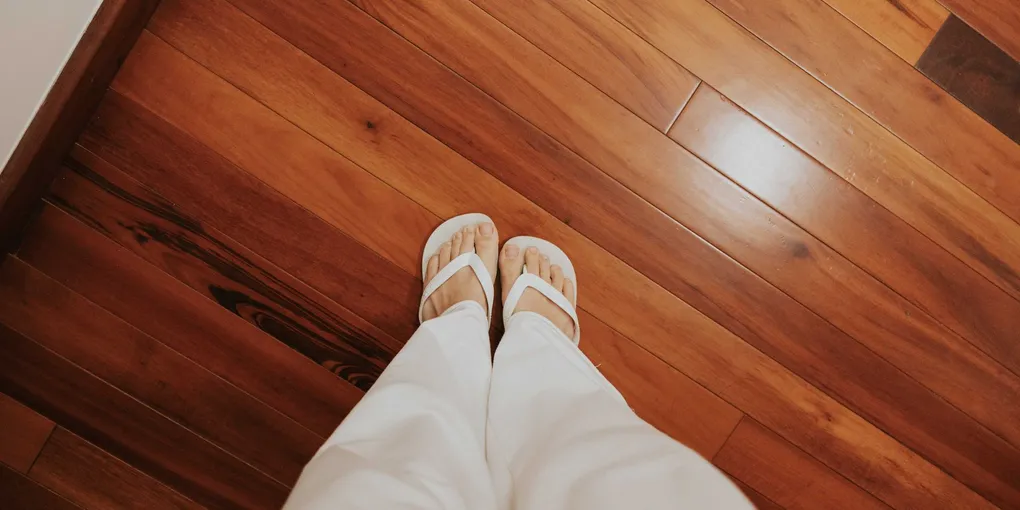
Refinishing hardwood floors costs $3–$8 per square foot for a full sand-and-refinish ($900–$2,400 for a 300 sq ft room, $1,800–$4,800 for a 600 sq ft floor). A screen-and-recoat (surface refresh without full sanding) runs $1–$2 per sq ft. Dustless systems add 10–20%. Stain color change and water-based poly add another 15–25%. The national average for a whole-main-floor refinish on a 1,000 sq ft home is $4,500.
Frequently Asked Questions
How do I know if my floors need refinishing vs. just recoating?
Pour a tablespoon of water on the floor. If it beads up and sits there for 5 minutes, the finish is intact and you only need a screen-and-recoat ($1-$2/sq ft). If water soaks in within a minute or turns the wood darker, the finish is worn through — you need a full sand-and-refinish ($3-$8/sq ft). Visual cues: deep scratches that expose raw wood, worn-through traffic paths, grayed or blackened boards (water damage), or cupping/buckling.
How much does it cost to refinish hardwood floors in a 2000 square foot home?
A full sand-and-refinish of 2,000 sq ft of hardwood runs $6,000–$16,000 at national averages, with most homes landing around $8,000–$11,000. Dustless sanding systems add $800–$2,000. Custom stain work adds $400–$1,000. Water-based polyurethane (lower VOC) vs. oil-based adds $500–$1,500. The spread is wide because labor and material costs vary significantly by region and wood species.
How many times can hardwood floors be refinished?
Solid 3/4-inch hardwood can typically be refinished 4–8 times over its lifetime. Each refinish removes roughly 1/32 inch of wood. Engineered hardwood with a wear layer of 3mm or thicker can be refinished 2–3 times; thinner wear layers (less than 2mm) can only be screen-and-recoated, never fully sanded. Check the wear layer thickness before paying for a full sand-and-refinish on engineered wood.
How long does hardwood floor refinishing take?
Full sand-and-refinish: 3–5 days from start to finish. Day 1: sanding (2 coarse passes, 2 fine passes). Day 2: stain application (if changing color) plus 24-hour dry. Days 3–5: three coats of polyurethane, each with 8–24 hour dry times. Screen-and-recoat: 1–2 days. You cannot walk on freshly refinished floors for 24 hours; you should not replace furniture for 7–14 days, depending on finish type.
Can I refinish my hardwood floors myself?
Yes, but it's one of the hardest DIY projects for homeowners. Drum sanders are unforgiving — a few seconds in one spot leaves a divot that's impossible to hide. Floor finishes require precise drying conditions, lap marks, and dust contamination ruin the finish. For first-timers, DIY on a 200 sq ft room (like a walk-in closet or pantry) is a reasonable test. Full-house DIY saves $3,000–$8,000 in labor but typically produces a visibly amateur result.
Which floor finish is best — oil-based or water-based polyurethane?
Oil-based polyurethane: adds a warm amber tone that many homeowners prefer, harder and more scratch-resistant film, but has strong VOC fumes requiring 24–48 hours of ventilation per coat (3 coats = up to a week out of the house). Costs $40–$60/gallon. Water-based polyurethane: cures clear (no amber), faster dry time (2–4 hours between coats), much lower VOC and odor, easier cleanup. Costs $60–$90/gallon. Slightly less scratch-resistant than oil-based but the gap has narrowed with modern formulations. For white oak, maple, or lighter woods: water-based preserves the natural color better. For red oak and floors where warmth is wanted: oil-based enhances the grain. For families with children, pets, or low tolerance for fumes: water-based is the default choice.
How do I maintain refinished hardwood floors to extend the finish life?
Daily/weekly: sweep or vacuum with a soft-bristle attachment (avoid beater bars, which scratch). Never use a wet mop — use a barely-damp microfiber mop only. Annual: apply a hardwood floor polish compatible with your finish type (Bona Polish for polyurethane floors; do NOT use Pledge, Murphy's Oil Soap, or oil soaps — they leave a residue that prevents future recoating from bonding). For longevity: place felt pads on all furniture legs, use area rugs in high-traffic areas (especially entryways and kitchen transitions), and maintain indoor humidity between 35–55% — hardwood expands and contracts with humidity swings, which stresses the finish. Refinished floors should not need re-refinishing for 8–15 years if maintained properly.
Refinishing hardwood floors costs $3–$8 per square foot for a full sand-and-refinish ($900–$2,400 for a 300 sq ft room, $1,800–$4,800 for a 600 sq ft floor). A screen-and-recoat (surface refresh without full sanding) runs $1–$2 per sq ft.
Hardwood floors are one of the few things in a house that get more valuable as they age — when they’re refinished properly. Worn, dull, or water-damaged floors can be restored to better-than-new condition for a fraction of what replacement would cost. But the pricing varies more widely than most homeowners realize, and the technique matters more than the quote.
This guide covers what hardwood refinishing actually costs in 2026, the difference between a screen-and-recoat and a full sand-and-finish, and how to avoid the common upsells.
Cost at a Glance
| Service | Per Sq Ft | 300 Sq Ft Room | 1,000 Sq Ft Home | 2,000 Sq Ft Home |
|---|---|---|---|---|
| Screen-and-recoat | $1–$2 | $300–$600 | $1,000–$2,000 | $2,000–$4,000 |
| Standard sand-and-refinish | $3–$5 | $900–$1,500 | $3,000–$5,000 | $6,000–$10,000 |
| Premium sand-and-refinish | $5–$8 | $1,500–$2,400 | $5,000–$8,000 | $10,000–$16,000 |
| Dustless sand-and-refinish | $4–$7 | $1,200–$2,100 | $4,000–$7,000 | $8,000–$14,000 |
| Custom stain change | +$0.50–$1.50 | +$150–$450 | +$500–$1,500 | +$1,000–$3,000 |
| Water-based polyurethane | +$0.75–$1.25 | +$225–$375 | +$750–$1,250 | +$1,500–$2,500 |
Stairs: $50–$120 per step ($650–$1,560 per standard flight)
Screen-and-Recoat (The Smart Option for Many Homes)
If your floors are worn but still have an intact finish layer, a screen-and-recoat is all you need. It’s 1/3 the cost of a full refinish and takes 1–2 days.
What it is: The top finish layer is lightly buffed with a fine abrasive screen (typically 120–150 grit), dust is vacuumed thoroughly, and one or two fresh coats of polyurethane are applied.
What it fixes: Surface scratches, dullness, light wear, minor scuffs, and white marks from water droplets.
What it doesn’t fix: Deep scratches exposing raw wood, grey/black boards, cupping, or any damage below the finish layer.
The water test is the quickest diagnostic: drop water on the worn areas. If it beads up and sits there, the finish is intact — recoat is enough. If it soaks in or darkens the wood, the finish has worn through to the bare wood — you need a full sand-and-refinish.
Most homeowners can stretch the life of their floors by doing a recoat every 5–10 years, avoiding a full refinish every time.
Full Sand-and-Refinish: What’s Actually Involved
A full refinish is a multi-step process done over 3–5 days:
Day 1: Sanding
- Furniture moved or removed.
- Vents masked, baseboards taped.
- Rough cut with 36-grit on a drum sander — removes the old finish and any surface damage.
- Second pass with 60-grit — smooths out the rough-cut scratches.
- Fine pass with 80-100-grit — final surface prep.
- Edger work with progressively finer grits along walls and under kickspaces.
- Screen with 120-150 grit to eliminate any drum-sander marks.
Day 2 (optional): Stain
- If you’re changing the floor color, stain is applied with lambswool applicators or rags, left to absorb, and excess wiped off.
- 24-hour dry time between stain and the first finish coat.
Days 3–5: Finish
- Coat 1 of polyurethane. 8–24 hours dry (water-based is faster).
- Light sand with 220-grit screen between coats.
- Coat 2. 8–24 hours.
- Light sand.
- Coat 3. 24 hours to walk-ready, 7–14 days to furniture-ready.
Total: 3–5 days of work, plus 1–2 weeks before you can reposition heavy furniture.
Stain vs. Natural Finish
Natural finish (clear poly only) shows the wood’s true color. Cheapest option — no stain labor or material cost.
Custom stain is where aesthetic preferences and 2026 trends collide with budgets:
- Dark walnut: +$0.75–$1.25/sq ft
- Jacobean / Minwax Dark Ebony: +$0.75–$1.50/sq ft
- Whitewash / fumed / bleach-treated: +$1–$2.50/sq ft (requires specialized process)
- Wire-brushed and distressed: +$2–$4/sq ft (adds hours of hand labor)
Current trends (2026):
- Light neutrals — white oak with a very light stain or pure matte finish
- Matte and satin finishes (not glossy)
- Hand-scraped and wire-brushed textures in rustic homes
- True ebony on red oak in modern homes
Always test stain on the actual wood before committing. A “Provincial” stain looks amber on white oak, reddish on red oak, and bronze on maple.
Oil-Based vs. Water-Based Polyurethane
Oil-based polyurethane:
- Deeper amber tone over time (ages yellower)
- 48–72 hour cure per coat
- Strong fumes for 72+ hours
- Slightly more scratch-resistant
- $30–$50 per gallon
Water-based polyurethane:
- Crystal clear (preserves the wood’s real color)
- 6–12 hour cure per coat
- Low VOC, mild odor
- Slightly less scratch-resistant (about 10–15% softer per industry tests)
- $50–$90 per gallon
Water-based is now the industry default. It’s safer for the applicator and the homeowner (especially kids and pets), dries faster so the job finishes sooner, and doesn’t yellow the wood over time.
The old argument about durability is mostly gone — commercial-grade water-based finishes (Bona Traffic HD, Loba 2K Supra) now rival or exceed oil-based durability and are standard in high-traffic restaurants and retail spaces.
Dustless Sanding: Is It Worth It?
“Dustless” sanding systems use HEPA vacuums connected directly to the sanders, capturing 95–98% of the dust at the source.
Cost premium: +10–20% over standard sanding.
Worth it if:
- You’re living in the house during the refinish
- Anyone in the household has asthma or allergies
- Your home has forced-air heating (ducts suck dust everywhere)
- You have valuable art, books, electronics, or instruments that can’t be fully protected
Worth skipping if:
- You’re doing the whole house and moving out for 5 days anyway
- The budget is tight and you can mask everything thoroughly
No system is truly dustless, but the good ones (Bona DCS, BOSS system) reduce cleanup from a 6-hour deep clean to a 30-minute wipe-down.
When to Refinish vs. Replace
Refinish if:
- Floors are solid hardwood (not engineered with a thin wear layer)
- Boards are structurally sound (not rotted or insect-damaged)
- Fewer than 4–5 prior refinishes have been done
- Subfloor is solid and level
- Total project cost is under 60% of replacement cost
Replace if:
- Floors are engineered with less than 2mm wear layer
- Multiple boards are cupped, crowned, or buckled
- Water damage has reached the subfloor
- Boards are so thin you can see nail heads through the finish
- Species is a soft wood (pine, fir) that has aged poorly
Replacement runs $8–$20 per square foot installed for engineered or solid hardwood — see our how to install hardwood flooring guide for the full DIY path.
Engineered Hardwood: A Special Case
Engineered hardwood is real wood on top of a plywood substrate. The “wear layer” (the real wood on top) determines whether it can be refinished.
- Wear layer 3mm+: Can be refinished 1–2 times (most luxury engineered)
- Wear layer 2–3mm: One light refinish possible
- Wear layer 1–2mm: Screen-and-recoat only — never a full sand
- Wear layer under 1mm: No refinishing of any kind — sand-through damage is permanent
Check the wear layer with a caliper before assuming a full refinish is possible. A contractor who says “yes we can refinish that” without measuring should be a red flag.
How to Get a Fair Price
-
Get 3 itemized quotes. Ask each contractor to break out: sanding, stain, finish type, number of coats, edge/stair work, dustless system (if included), furniture moving, and cleanup.
-
Check for licensing and insurance. Floor refinishing requires a state contractor’s license in many states. Ask for proof of general liability ($1M minimum) and workers’ comp.
-
Check references within the last 6 months. Call 2–3 and ask about dust, completion time, and whether any issues came up after the job.
-
Look at sample boards. Any pro should have sample boards of their stains and finishes on the same species as your floor.
-
Avoid cash-only, drive-by quotes. Unlicensed refinishers often give rock-bottom prices but leave drum-sander marks, incomplete coats, and no warranty.
-
Time the project right. Spring and fall are peak seasons — book 6–8 weeks out. Winter and mid-summer often have 20–30% better pricing and faster scheduling.
Maintenance After Refinishing
To get 10+ years out of a fresh refinish:
- Felt pads under all furniture legs — the single most important protection
- Walk-off rugs at every entrance — keeps grit off the floor
- Microfiber dust mop weekly — never wet mop unless using a wood-safe cleaner
- Wood-specific cleaner only (Bona Hardwood Floor Cleaner, Libman, Method Squirt + Mop) — never vinegar, never ammonia, never all-purpose
- Humidifier in winter — keeps wood from shrinking and opening gaps
- Re-screen-and-recoat every 5–10 years — prevents full-refinish wear-through
Regional Hardwood Floor Refinishing Cost Variations
| Region | 500 sq ft (1–2 rooms) | 1,000 sq ft | Screen-and-Recoat (1,000 sq ft) |
|---|---|---|---|
| Northeast (NY, MA, NJ) | $1,500–$2,800 | $2,800–$5,000 | $600–$1,200 |
| Mid-Atlantic (DC, MD, VA) | $1,400–$2,600 | $2,600–$4,700 | $550–$1,100 |
| Southeast (FL, GA, TX) | $1,000–$2,000 | $1,900–$3,600 | $400–$850 |
| Midwest | $1,100–$2,200 | $2,000–$3,900 | $425–$900 |
| Pacific (CA, WA, OR) | $1,500–$2,800 | $2,800–$5,000 | $600–$1,200 |
Full sand-and-finish prices. Dustless/dust-containment services add 15–25% in most markets. Stain changes add $0.50–$1.50/sq ft for extra coats and dry time.
Hardwood Floor Refinishing Company Comparison
| Service Type | Best For | Cost Level | Notes |
|---|---|---|---|
| Local hardwood floor specialist | Full sand-and-finish; best quality control | Moderate | Dedicated floor companies do this work every day; best sanding and finish application |
| Floor Coverings International | Local franchise with consistent pricing | Moderate | National backing; quality varies by franchise owner |
| Lumber Liquidators (LL Flooring) install | Refinishing bundled with new floor purchase | Moderate | Better for installations than refinishing only |
| Local painting contractor | Screen-and-recoat only (not full refinishing) | Low–Moderate | Many painters offer recoating; not appropriate for full sand-and-finish |
| DIY drum sander rental | Significant cost savings on simple jobs | Materials + rental ($150–$250/day) | Realistic only for large rectangular rooms with experienced DIYers; mistakes are expensive to undo |
| Dustless refinishing specialist | Homes with occupants, allergies, or finished basements | High (15–25% premium) | Negative-pressure containment; worth it for occupied spaces |
Local hardwood floor specialists consistently produce the best results — this is skilled work that benefits from specialization. Get at least 2 quotes and ask to see photos of recent jobs.
Questions to Ask Your Floor Refinishing Contractor
-
How many coats of finish will you apply, and what specific finish product will you use (oil-based polyurethane, water-based, Rubio Monocoat, etc.)? — The finish type determines sheen, durability, dry time, and VOC exposure during the job. Oil-based polyurethane is the most durable (3–4 coats, 3+ days to reoccupy) but highest in VOCs. Water-based (2–3 coats, 1–2 days) has low odor but slightly lower durability. Hardwax oils (Rubio, Osmo) are increasingly popular for their natural look and easy spot-repair. Ask for the specific product name and brand so you can verify it’s a commercial-grade product — not consumer-grade finish from a hardware store.
-
What is your sanding sequence — what grits do you start and finish with — and how do you handle edges and corners? — A proper sand-and-finish starts with a coarse grit (36–40 grit) to remove the old finish, progresses through intermediate grits (60, 80), and finishes with a fine grit (100–120) before applying stain or sealer. Ask: “What grits do you use, and how do you sand edges and corners?” Edges and corners require edger sanding and hand-scraping — contractors who only use a drum sander leave visible orbital marks at the perimeter. The detail work is where shortcuts show.
-
Will you screen between coats, and how long must the floor dry before we can move back in? — Screening (light abrasion between finish coats) creates the mechanical bond that makes each coat adhere to the previous one. Without inter-coat screening, the finish layers don’t bond properly and will eventually peel. Ask: “Do you screen between every coat?” Also get specific occupancy timelines: when can you walk on it with socks, place furniture, and bring in rugs? Oil-based typically requires 3–5 days before light traffic and 30 days before covering with rugs; water-based is usually 24–48 hours before light traffic.
-
What does your quote include — furniture moving, floor prep (nail setting, crack filling), and debris removal? — Full refinishing quotes should include: moving furniture out of and back into the room, setting any protruding nail heads flush, filling cracks or gaps with colored filler (if applicable), sanding, staining (if applicable), applying finish coats, and final cleanup. Ask what is and isn’t included. Surprises on this list turn a $2,000 quote into a $2,600 invoice. Also ask: “Are there any conditions I should know about — board thickness, previous repairs, known problem areas — that could affect the final cost?”
-
What is the minimum floor thickness remaining after sanding, and is my floor suitable for refinishing? — Hardwood floors can only be sanded a finite number of times before the boards become too thin to refinish again. Most solid hardwood (3/4-inch) can be refinished 4–5 times; engineered hardwood depends entirely on the veneer thickness (typically 2–4mm wear layer). Ask: “How thick is my wear layer, and is there adequate thickness remaining for refinishing?” A contractor who doesn’t measure this before quoting is guessing whether your floor is even refinishable — finding out the answer is destructive only with sanding, which you’ve already committed to paying for.
Related Reading
- Hardwood Floor Installation Cost — new hardwood vs. refinishing: when each makes sense
- How to Refinish Hardwood Floors (DIY Guide)
- How to install hardwood flooring
- How to install vinyl plank flooring
- How to fix squeaky floors
- Kitchen remodel cost breakdown
- Bathroom remodel cost breakdown
- Annual home maintenance schedule
- How to Fix a Floor Tile That Is Loose — repair loose tiles in bathrooms or kitchens while refinishing adjacent hardwood
The Bottom Line
For most homeowners, a full hardwood refinish on a 1,000 sq ft main floor costs $3,000–$5,000 with standard sanding and $4,000–$7,000 with a dustless system, using water-based polyurethane. A screen-and-recoat every 5–10 years is a smart way to extend the finish between full refinishes at 1/3 the cost. Get itemized quotes, verify that your engineered hardwood has enough wear layer for a full refinish, and plan to be out of the house for 3–5 days. Done right, a refinished hardwood floor looks better than new and adds thousands to the home’s resale value.
- Determine if you need refinish or recoat
Do the water test. If water beads on the finish for 5+ minutes, a screen-and-recoat is sufficient. If it soaks in or darkens the wood, you need a full sand-and-refinish. Also check for: deep scratches exposing raw wood, grey/black boards (water damage below finish), and any cupping.
- Measure the floor accurately
Measure length × width of each room getting refinished, including closets and under moveable furniture. Add 5-10% for waste and edge work. Don't forget stairs — they're typically quoted separately at $50-$120 per step. A standard 13-step flight adds $650-$1,560.
- Get 3 itemized quotes
Quotes should specify: sanding method (drum + edger vs. dustless system), number of sanding grits, stain brand and color, finish type (oil vs. water-based polyurethane, aluminum oxide), number of finish coats, edge work, moving of furniture, and cleanup. A flat 'we'll refinish the floor for $X' quote hides markups.
- Plan to be displaced for 3-5 days
You cannot live in the rooms being refinished. Oil-based poly gives off strong fumes for 48-72 hours. Water-based is milder but still not ideal. Pets especially need to be elsewhere — floor solvents are toxic to birds, reptiles, and cats. Plan for a hotel or guest room for the duration.
- Pick the right stain color
Always sample 3-4 stain colors on your actual wood in good light before committing. Stain colors look completely different on white oak vs. red oak vs. maple. Ask the contractor to apply samples in a 2x2 foot patch of a closet or under-furniture area 24 hours before starting the main job.
- Choose between oil and water-based polyurethane
Oil-based: deeper amber tone, 48-72 hour cure per coat, stronger fumes, slightly more durable. Water-based: clearer finish (preserves the wood's natural color), 6-12 hour cure per coat, low VOC, easier cleanup, slightly less scratch-resistant. Water-based is now the industry default for most residential work.
- Protect vents, switches, and adjacent surfaces
Cover every HVAC supply and return vent with plastic and tape to prevent dust spread through the system. Mask baseboards with painter's tape. Remove outlet covers. Close doors to rooms not being refinished and tape the gap underneath. Professional refinishers do this as part of the job; DIYers often skip it and regret it.
Free: 10-Point Home Maintenance Checklist
Prevent costly repairs with this seasonal checklist. Save hundreds every year by catching problems early.
Your checklist is ready!
Open Checklist →Something went wrong. View the checklist here.