How Much Does Duct Cleaning Cost? 2026: $300–$500 per Home
Duct cleaning costs $300–$500 for a typical home (10–15 vents) with a NADCA-certified company. Budget services advertising $49–$99 are bait-and-switch. Dryer vent add-on: $75–$150. When duct cleaning actually helps — and the upsells to skip every time.
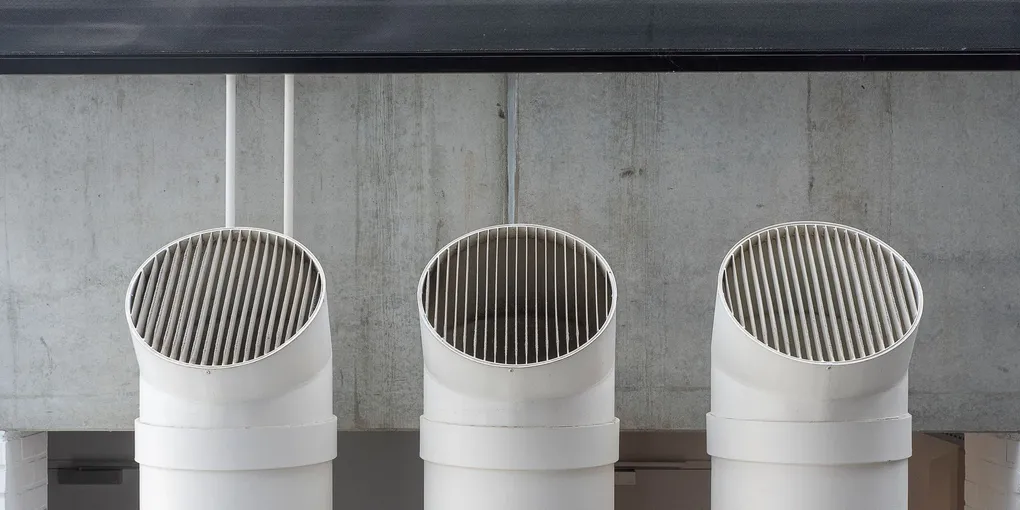
Professional duct cleaning costs $400-$700 for a typical 2,000 sq ft home in 2026, with $350-$500 being the national average for a standard job. NADCA-certified companies using truck-mounted negative-pressure systems run $500-$900. Whole-home sanitization or antimicrobial add-ons add $100-$300. Dryer vent cleaning (often sold as an add-on) adds $75-$150 and is more valuable than duct cleaning for most homes — lint fires cause 2,900 home fires per year. Avoid any company quoting under $150 for a full home; these are bait-and-switch operations that will upsell to $1,500+ on arrival.
Frequently Asked Questions
How much does duct cleaning cost?
Standard professional duct cleaning runs $400-$700 for a typical 2,000 sq ft home. Per-vent pricing is $30-$50 each (10-20 vents average). Whole-home flat pricing from national chains is $350-$600. NADCA-certified services using commercial negative-pressure equipment run $500-$900. Add-ons: dryer vent cleaning +$75-$150, HVAC coil cleaning +$100-$200, antimicrobial treatment +$100-$250, sanitizer +$50-$150.
Is duct cleaning actually worth it?
For most homes, no. The EPA states duct cleaning has not been shown to prevent health problems or improve indoor air quality in normal conditions. It IS worth it for: visible mold in ductwork, rodent or pest contamination, significant dust accumulation after construction/renovation, homes where a previous owner smoked heavily, or documented duct damage. For a routine 'maintenance' cleaning, a good HVAC tune-up and filter replacement gives more value for less money.
How often should ducts be cleaned?
Most HVAC professionals recommend every 3-5 years IF any cleaning is needed at all. The EPA recommends cleaning only when visible contamination is present (mold, pest infestation, debris blocking airflow). Routine annual or bi-annual cleaning is almost always unnecessary and is often the sign of an aggressive sales model. Dryer vent cleaning, by contrast, should be annual.
What's the difference between duct cleaning and dryer vent cleaning?
Duct cleaning removes dust and debris from HVAC supply and return ductwork — the branching system that delivers heated/cooled air throughout the home. Dryer vent cleaning removes lint from the 4-inch vent line running from the dryer to the exterior exhaust. They're entirely separate jobs. Dryer vent cleaning is meaningful preventative maintenance (fire prevention, efficiency); duct cleaning is discretionary and mostly marketing.
How do I know if I'm being scammed on duct cleaning?
Classic red flags: coupon pricing under $150 for full home (bait-and-switch), door-to-door sales, before-and-after photos that don't match your actual ducts, claims of 'found mold' without identifiable samples, pressure to add antimicrobial/sanitizer/UV treatment during the visit, and refusal to be NADCA (National Air Duct Cleaners Association) certified. A $79 duct cleaning coupon almost always turns into a $800-$2,000 bill by the time the crew leaves.
Can I clean ducts myself?
Partially. You can vacuum accessible vent registers, wash them in soapy water, and clean the return air grate. Full duct cleaning requires a commercial rotary brush system and high-powered negative pressure collection — consumer vacs don't come close. DIY dryer vent cleaning is genuinely possible with a vent brush kit ($20-$40) and takes 15-30 minutes annually.
What does professional duct cleaning include?
A legitimate NADCA-certified duct cleaning job includes: inspection of the entire duct system, negative air pressure setup (large truck-mounted vacuum connected to your main trunk), rotary brush agitation through all supply and return branches, cleaning of the air handler cabinet and coil, and re-sealing any duct panels opened during cleaning. You should receive before/after photos. The job takes 3-6 hours for an average home. Anything shorter is almost certainly inadequate.
How long does professional duct cleaning take?
A proper whole-home duct cleaning takes 3 to 6 hours for a 2,000-2,500 sq ft home with a standard 1-2 zone HVAC system. Larger homes with 3+ zones take 6-8+ hours. Jobs completed in under 2 hours by a small crew are using inadequate equipment — the truck-mounted vacuum alone needs time to create sufficient negative pressure and the technicians need time to brush every branch run.
How much does duct cleaning cost per vent?
Per-vent pricing runs $25–$50 per supply vent and $30–$60 per return vent for legitimate NADCA-certified services in 2026. A typical 2,000 sq ft home has 10–15 supply vents and 3–6 return air vents, making the per-vent total $300–$700 — consistent with whole-home flat rate quotes. Flat-rate pricing ($400–$700) is usually a better deal for average homes. Per-vent pricing can become expensive for homes with many vents (20+). Key warning: companies advertising $79 or $99 for 'the whole house' are almost always bait-and-switch — the low price covers only a visual inspection, then the upsell begins. Legitimate per-vent pricing should never be below $20 per vent for full service.
How do I find a reputable duct cleaning company?
The fastest filter is NADCA certification (National Air Duct Cleaners Association). NADCA-certified companies use truck-mounted negative-pressure systems and trained technicians — verify certification at NADCA.com before booking. Other vetting steps: (1) Get three quotes — legitimate services cluster around $400–$700 for a typical home. Any quote under $150 for whole-home cleaning is a warning sign. (2) Ask specifically about equipment — they should mention negative-pressure collection and rotary brush agitation. If they can't describe their process clearly, move on. (3) Check reviews for mentions of upsells during the job — mold claims, antimicrobial treatment, and 'findings' that appear only after arrival are classic red flags. (4) Verify they will clean both supply AND return ducts, the air handler cabinet, and provide before/after photos. (5) Avoid door-to-door solicitations and unsolicited mailers with discount coupons — these are almost always bait-and-switch operations.
Duct cleaning costs $300–$600 for a typical 2,000 sq ft home in 2026, or $25–$50 per vent. Most homeowners don’t need it — EPA research shows routine duct cleaning doesn’t improve air quality for most homes. It’s worth doing after mold remediation, major renovation, rodent infestation, or if it’s never been done in 20+ years. Beware: the $69 “whole house” ad is a bait-and-switch setup; a legitimate job costs $300+.
Duct cleaning is one of the most oversold services in home maintenance. The industry has a well-known bait-and-switch problem, EPA research shows it rarely delivers the health benefits marketing promises, and yet quality services at fair prices do exist for the situations where it’s actually needed. This guide covers 2026 pricing, when duct cleaning makes sense, and how to avoid the classic scam patterns.
2026 Duct Cleaning Cost at a Glance
| Service Type | Typical Price |
|---|---|
| Selective cleaning (1-2 problem zones) | $150-$300 |
| Basic full home, 1,500 sq ft | $350-$550 |
| Standard full home, 2,000 sq ft | $400-$700 |
| Large home, 3,000+ sq ft | $600-$1,000 |
| NADCA-certified premium service | $500-$900 |
| Per-vent pricing (some contractors) | $30-$50 per vent |
| Dryer vent cleaning add-on | $75-$150 |
| HVAC coil cleaning add-on | $100-$200 |
| Antimicrobial treatment (usually skip) | $100-$250 |
| UV light retrofit (rarely worth it) | $300-$800 |
| Typical installed “total” | $450-$900 |
Suspicious pricing: Anything under $150 for a full home is bait-and-switch — the crew arrives and finds “problems” that push the total to $800-$2,000.
What Drives the Price
Home size and vent count — Most pricing scales with supply/return vent count (10-20 vents typical) or total square footage. A 3,000 sq ft home with 20 vents costs roughly 2x what a 1,500 sq ft home with 10 vents costs.
Equipment type — Truck-mounted negative-pressure systems (commercial, loud, 16,000+ CFM) cost more to operate and command higher service pricing than portable equipment. They also do a dramatically better job. Portable systems are acceptable for single-story homes with simple ductwork.
NADCA certification — Companies certified by the National Air Duct Cleaners Association typically charge 20-40% more than uncertified competitors. They also have documented training standards, equipment specs, and inspection protocols.
Access difficulty — Attic ductwork or crawl space equipment takes longer. Expect 15-30% surcharge if your HVAC air handler is in a hard-to-reach location.
Contamination level — Heavy pest or mold contamination adds $200-$600 to the base price. If contamination is the reason you’re calling, expect an inspection fee first ($75-$150) to confirm.
Regional labor — Northeast and California markets run 30-50% above national averages. Midwest and Southeast are below.
The Honest Truth: Does Duct Cleaning Actually Help?
The EPA position is explicit: duct cleaning has not been shown to prevent health problems or improve indoor air quality under normal conditions.
When Duct Cleaning IS Worth It
- Visible mold in ducts — inspector-confirmed (not a sales claim)
- Pest or rodent contamination — droppings, nesting material
- Post-renovation debris — drywall dust, sawdust got into system
- Previous owner smoked heavily — new homeowners may want a reset
- Unusual odors coming from vents — musty, chemical, dead animal
- Documented duct damage — animals chewed through, major leaks allowing attic insulation in
When It Isn’t
- Routine “maintenance” every 3-5 years on a normal home
- Allergy symptoms (a HEPA filter or air purifier helps more)
- “Dust accumulation” around registers (clean the registers themselves)
- Door-to-door solicitation
- Groupon-style coupons
- “My HVAC hasn’t been cleaned since we bought the house”
Better Alternatives for Most Homes
- High-efficiency HVAC filter (MERV 11-13) — $15-$40, replaced quarterly, catches 90%+ of indoor particles
- Stand-alone HEPA air purifier in bedrooms — $150-$600, better ROI than whole-home duct cleaning
- Annual HVAC tune-up — $75-$200, catches the actual efficiency issues — see our AC tune-up cost guide
- Dryer vent cleaning — $75-$150, actual fire-prevention value
The Classic Duct Cleaning Scams
The $79 Whole-Home Coupon
Groupons and mailers promising “Whole home duct cleaning for $79” are the most common scam pattern. The crew arrives, “discovers” mold/contamination/damage/improper previous work, and upsells to $800-$2,000 in on-the-spot required services.
How to avoid: Any quote under $150 for a full home is bait pricing. Get flat-rate written quotes from three certified companies and compare.
The “We Found Black Mold” Pitch
Mid-service, the crew shows you a photo of “black mold in your main trunk” and recommends a $400-$600 remediation. Often:
- The photo is from another customer’s home
- The “mold” is dust buildup
- Real mold requires lab verification, not a sales rep’s visual ID
How to avoid: Insist on lab-tested confirmation ($25-$75 independent test) before authorizing any mold remediation.
UV Light and Antimicrobial Upsells
During cleaning, upsell to $300-$800 UV light retrofits or $100-$250 antimicrobial treatments. Most UV lights installed in residential HVAC have negligible real-world effect. Antimicrobials are sprays that kill some mold/bacteria on surfaces but don’t prevent future growth and often leave chemical residue.
How to avoid: Decline all chemical and UV add-ons during the initial visit. If you think you need them, research independently afterward.
Door-to-Door Solicitation
Almost universally shady. Legitimate NADCA-certified companies advertise through standard channels (website, local search, professional referrals). Door-to-door crews often:
- Aren’t certified
- Use inadequate equipment
- Have no permanent business address
- Pressure for same-day service
How to avoid: Tell them no and don’t schedule. Any service can wait 24-48 hours while you get quotes.
What a Legitimate Service Looks Like
A proper duct cleaning by a NADCA-certified contractor:
- Inspection first — visual inspection and often camera snake, before any cleaning begins
- Written estimate — itemized by scope (supply, return, main trunk, coil, registers)
- Truck-mounted or commercial portable equipment — 4,000+ CFM minimum, negative pressure
- Source removal method — brushes/whips loosen debris, vacuum extracts it, no blowing dust into living space
- Register cleaning — wash registers separately, remove years of dust that vacuuming alone won’t reach
- Main trunk cleaning — often skipped by cheap services, most important for real benefit
- Coil access (with permission) — if your evaporator coil is visibly dirty, it matters more than the ducts
- Before/after photos — documentation of main trunk and representative vents
- Written completion report — what was cleaned, what was found, what wasn’t cleaned and why
Total time: 2-4 hours for a typical home.
DIY Alternatives
Full duct cleaning requires commercial negative-pressure equipment. DIY alternatives:
Register + Return Grate Cleaning
Remove register covers (usually 2-4 screws each). Wash in soapy water. Use a vacuum crevice tool to clean as far into the boot as you can reach.
Cost: free if you have a vacuum. Time: 20-45 minutes for a typical home.
Gets you maybe 5-10% of what a full professional cleaning gets, but handles 80% of the visible dust issues.
Dryer Vent Cleaning (DO This One)
- Dryer vent brush kit with flexible rods ($20-$40)
- Extension kit that attaches to a cordless drill
- Takes 15-30 minutes
- Should be done annually
This matters more than full duct cleaning for most homes. Clogged dryer vents cause 2,900 home fires per year.
See our dedicated dryer vent cleaning guide for the full process.
HVAC Filter Upgrade
Replace your standard 1-inch filter with a MERV 11-13 filter. This catches 90%+ of the indoor particles that would otherwise end up in ducts. $15-$40 per filter, replace every 3 months.
Brands: Filtrete 1900 MPR, Honeywell FPR 10, Nordic Pure MERV 12.
Indoor Air Quality Monitors
If you’re worried about your home’s air quality, measure it rather than speculate.
Airthings Wave Plus, Awair Element, or Temtop M10 — all under $300 and all provide objective data on particulate matter, VOCs, and humidity.
If the numbers are normal, duct cleaning isn’t going to meaningfully change them.
Red Flags in Duct Cleaning Quotes
| Red Flag | What It Means |
|---|---|
| ”Today only” pricing | Pressure tactic — real companies don’t need it |
| Flat “whole home” under $150 | Bait-and-switch guaranteed |
| Door-to-door solicitation | Uncertified operator |
| Refusal to itemize | Hiding upsells |
| No NADCA membership | Not necessarily bad but be cautious |
| ”Found mold” without lab test | Sales tactic, not real diagnosis |
| UV light retrofit recommendation | Rarely worth it residentially |
| Antimicrobial sprays | Mostly cosmetic |
| Yellow pages ad with too-good pricing | Likely rent-a-truck operation |
| Can’t provide a work order | Huge red flag |
NADCA: Is It Worth Paying More?
NADCA (National Air Duct Cleaners Association) certification requires:
- Passing a technical exam
- Using compliant equipment
- Following documented procedures
- Maintaining ongoing training hours
A NADCA-certified company typically charges 20-40% more than an uncertified competitor. For most homes, the price premium is worth it for the reduced scam risk alone. Find one at nadca.com.
Comparison: Duct Cleaning vs Other Air-Quality Investments
For a typical $600 duct cleaning budget, these alternatives often deliver more value:
| Alternative | Cost | Duration of Benefit |
|---|---|---|
| Duct cleaning | $400-$900 | 3-5 years |
| HEPA air purifier (per room) | $150-$600 | 5-10 years |
| MERV 13 filter + quarterly replacement | $60-$150/year | Ongoing |
| HVAC tune-up | $75-$200 | 1 year efficiency improvement |
| Air quality monitor | $200-$300 | Permanent data |
| Whole-home dehumidifier | $1,200-$2,000 | 10+ years |
| Attic insulation + air sealing | $1,500-$3,500 | 15-25 years |
For most homes, the money is better spent on upstream fixes (filtration, air sealing, HVAC maintenance) than downstream cleanup (duct cleaning).
If You Decide to Hire: The Checklist
- Get 3 quotes from NADCA-certified companies
- Insist on itemized written estimates
- Ask specifically about equipment (truck-mounted negative pressure = ideal)
- Decline all antimicrobial/UV/sanitizer add-ons during first call
- Schedule during business hours, not evening/weekend premium slots
- Be home for the service
- Request before/after photos as part of the work
- Pay by credit card (dispute protection)
- Decline same-day upsells — “I’ll think about it” is always OK
- Leave an honest review based on experience
Regional Duct Cleaning Cost Variations
| Region | Standard Home (2,000 sq ft) | Large Home (3,500+ sq ft) | Add-Ons (dryer vent, sanitizer) |
|---|---|---|---|
| Northeast (NY, MA, NJ) | $450–$900 | $700–$1,400 | +$100–$250 |
| Mid-Atlantic (DC, MD, VA) | $400–$850 | $650–$1,300 | +$90–$225 |
| Southeast (FL, GA, TX) | $300–$650 | $500–$1,000 | +$75–$200 |
| Midwest | $325–$700 | $525–$1,050 | +$80–$200 |
| Pacific (CA, WA, OR) | $450–$900 | $700–$1,400 | +$100–$250 |
Prices assume NADCA-certified company with truck-mounted negative pressure equipment. “$49–$99 whole-home specials” are bait-and-switch prices — actual job costs 5–10x that after upsells.
Duct Cleaning Service Provider Comparison
| Provider Type | Price Range | NADCA Certified? | Best For |
|---|---|---|---|
| Local NADCA-certified company | $300–$900 | Yes | Best all-around choice — trained, accountable, equipment-verified |
| Stanley Steemer | $300–$600 | Varies by franchise | Convenient nationwide booking; variable quality by location |
| Air Duct Brothers / regional chains | $250–$700 | Varies | Mid-range option; check NADCA certification per location |
| ServPro | $400–$900+ | Varies | Better for post-disaster (water/fire) restoration; not the best pure duct cleaning value |
| HVAC contractor add-on | $200–$500 | Varies | Cost-effective bundled with system maintenance; quality depends on dedicated equipment |
| Non-certified “special offer” ($49–$99) | $49 bait + $500–$1,500 upsells | No | Avoid — predatory upselling model, inadequate equipment, no accountability |
The NADCA standard: find NADCA-certified companies at nadca.com. Certification is not a guarantee of quality but eliminates most predatory operators.
Questions to Ask Your Duct Cleaning Company
-
Are you NADCA-certified, and can you provide your ASCS certification number so I can verify it? — NADCA (National Air Duct Cleaners Association) certification (ASCS — Air Systems Cleaning Specialist) requires training, testing, and adherence to the NADCA Assessment, Cleaning, and Restoration standard. Ask for the certification number and verify it at nadca.com before booking. A company that claims NADCA membership but can’t provide a verifiable number is using the credential as a sales tactic. This single check eliminates most predatory operators in the industry.
-
What equipment will you use — truck-mounted vacuum or portable unit — and what is the negative pressure specification? — Effective duct cleaning requires negative pressure equipment powerful enough to pull dislodged debris out of the duct system rather than redistributing it through your home. Truck-mounted systems (5,000–10,000+ CFM) are significantly more effective than portable units. Ask specifically: “What is your vacuum CFM rating, and is it truck-mounted?” The NADCA standard requires equipment capable of maintaining -0.1 inches of water column throughout the system. A company that can’t explain their equipment specifications is not doing professional-grade work.
-
What is the exact scope — how many supply registers, return registers, and air handler components are included in the quoted price? — “Whole-home duct cleaning” means different things to different companies. Some include only supply ducts; others add return ducts and the air handler as $100–$300 add-ons. Ask for a written list: number of supply registers, return registers, main trunk lines, and whether the air handler unit (coil, blower) is included. Compare quotes on equal scope — a 25-register home should be quoted as 25 registers, not “whole home” at a flat rate that expands on arrival.
-
What is your policy on mold, and under what circumstances do you recommend antimicrobial treatment? — Antimicrobial and biocide spraying is one of the most aggressively upsold services in duct cleaning — and one of the least evidence-backed. The EPA does not recommend routine antimicrobial application in ducts. Legitimate treatment is appropriate only when there is laboratory-confirmed microbial contamination. Ask: “Do you automatically recommend antimicrobial treatment, or only when there’s confirmed contamination?” A company that sells it to every customer is not following EPA guidance.
-
Will you provide before-and-after photos of representative duct sections, and what is your callback policy if I’m not satisfied? — Before-and-after documentation is the only objective evidence that cleaning occurred and was effective. Ask for photos of a representative supply register and main trunk before and after cleaning. Also ask: “What’s your callback policy within 30 days?” A professional company with confidence in their work will commit to a callback inspection. One that won’t provide documentation or a callback policy has no incentive to do thorough work — you have no way to verify what they actually did.
Related Reading
- HVAC Maintenance Checklist — routine tune-up beats duct cleaning for most homes
- AC Tune-Up Cost — the seasonal service that actually helps
- How to Change a Furnace Filter — the single highest-ROI DIY HVAC task
- How to Clean a Dryer Vent — legitimate fire-prevention task, unlike duct cleaning
- Best Air Purifiers for Allergies and Pet Hair — often better than duct cleaning for air quality
- Annual Home Maintenance Schedule — where HVAC tasks fit in the year
- Attic Insulation Cost Guide — upstream investment that beats downstream cleanup
- How to Seal Leaky Ductwork — mastic vs. foil tape, and how to cut your HVAC bill 20-30%
- Decide if you actually need cleaning
Visible mold in ducts, known rodent/pest infestation, or recent major renovation where debris got into the HVAC = yes. Routine maintenance, 'my allergies seem worse', or a door-to-door sales pitch = no. Check air-register surfaces for dust accumulation (some is normal) and the return air filter for saturation pattern. Dark streaks around registers usually indicate poor filter sealing, not duct contamination.
- Determine scope — full home vs selective
Selective cleaning (just supply or just return ducts, or just one problem area) costs $150-$300 and solves most real issues. Full-home includes all supply ducts + all return ducts + main trunk + registers + plenum + coil access. Unless there's contamination throughout, selective is often the smarter spend.
- Get three quotes from NADCA-certified companies
NADCA (National Air Duct Cleaners Association) certification is the industry standard. NADCA website has a searchable directory by ZIP. Quotes should include: number of vents included, whether truck-mounted or portable equipment is used, whether HVAC system access is included, what happens if they find damage or mold, and itemization of add-ons. Avoid companies that refuse to itemize.
- Ask about equipment
Truck-mounted negative-pressure systems (ideal): deliver 16,000+ CFM of suction, attach to the main trunk, and draw all debris out through a central unit. Portable negative-pressure systems (acceptable): 4,000-8,000 CFM, more work required by the tech. Just-a-shop-vac systems (avoid): inadequate suction, debris blows into living space.
- Schedule and prep for the service
Most cleanings take 2-4 hours. Clear a 6-foot radius around each vent. Clear the area around the HVAC air handler for equipment access. Move vehicles if the truck-mounted system needs driveway access. Pets should be kept out of work areas — the negative pressure is loud and unfamiliar.
- Skip or decline add-ons strategically
Genuinely useful add-ons: evaporator coil cleaning ($100-$200 if your coil is visibly dirty), dryer vent cleaning ($75-$150 — actually worth it). Skip: 'antimicrobial' sprays, 'sanitizer fogging', UV light retrofits, 'proprietary deodorizers'. These are where most price inflation happens. A clean duct doesn't need chemical follow-up.
- Review the completion walkthrough
A legitimate NADCA-certified service will walk you through the results — show before/after photos or video of registers and main trunk. They should provide a written report and vacuum the work area. If they rush out the door without a walkthrough, the job likely wasn't as thorough as promised.
Free: 10-Point Home Maintenance Checklist
Prevent costly repairs with this seasonal checklist. Save hundreds every year by catching problems early.
Your checklist is ready!
Open Checklist →Something went wrong. View the checklist here.